Atelje — Besplatna dostava širom sveta — Rok isporuke: 2–6 nedelja
      Чимабуе, 1240 – 1302

      49 najpoznatijih dela umetnika Чимабуе prema popularnosti

      Najomiljenije delo umetnika Чимабуе je Ismevanje Hristosa (1280), koje se nalazi u muzeju Luvr, Pariz. Križ Cimabuea u Santa Croce (1287) i Sveti Franja iz Asizije (detalj) su sledeći na listi najpoznatijih platana koje čitaoci najbolje poznaju. Naš katalog sadrži 52 dela umetnika Чимабуе: evo 49 najpoznatijih, od kojih svako nosi godinu nastanka, naziv muzeja i opis onoga što ga čini nezaborotljivim.

      Rangirano prema našem koeficijentu popularnosti, koji kombinuje pretrage, posete i porudžbine za svako delo. Ažurirano новембар 2026. Svaku sliku sa ove stranice možete naručiti kao ručno oslikano ulje na platnu od lana ili kao umetnički print, izrađen u dimenzijama koje sami odaberete.

      Portret Чимабуе
      Чимабуе · 1240 – 1302
      Rođen · umro
      1240 – 1302, Фиренца
      Pokret
      Protorenesansa
      Radovi u našem katalogu
      52
      Najpoznatije dela
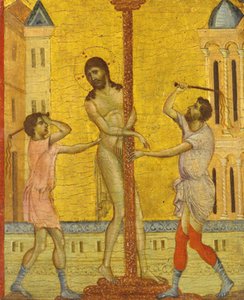
      Ismevanje Hristosa (1280)
      Najviše dela u
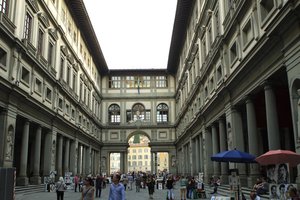
      Galerija Ufizi

      Top 10 slika umetnika Чимабуе: platna koja svi poznaju

      Ismevanje Hristosa (1280) čiji je autor Чимабуе
      1

      Ismevanje Hristosa

      1280 · Tempera na drvenoj podlozi · Luvr, Pariz

      Vazduh unutar okvira deluje teško, gust od napetosti gomile koja pritiska ka unutra. U centru ovog malog, drvenog sveta stoji Isus, čije je telo prekriveno dubokim plavim ogrtačem preko crvene tunike. On se ne opire. Njegove ruke vise beznažno, a izraz lica ostaje nepomičan, čak i dok figure oko njega izbijaju u agresiji. Jedan čovek se uzdire, prstima hvatajući ivicu Hristovog nimbusa, pokušavajući da mu oguli sam simbol božanstva. Oko…

      Rukom oslikana uljana reprodukcija od $620 28 × 36 cm
      Križ Cimabuea u Santa Croce (1287) čiji je autor Чимабуе
      2

      Križ Cimabuea u Santa Croce

      1287 · Tempera na drvenoj podlozi · Museo dell'Opera di Santa Croce, Firenca

      Remek-delo bizantijanskog uticaja Cimabuejev „Razapani” stoji kao monumentalno delo kasnog 13. veka, oličavajući tranziciju od vizantijske ikonografije ka ranoj renesansnoj realizmu. Stvoren oko 1287. godine, ovaj krst koji je impozantnih dimenzija svedoči o Cimabuejevom inovativnom pristupu, spajajući tradicionalni religijski simbolizam sa novonastalim umetničkim tehnikama koje će otvoriti put budućim majstorima poput Đota. Tema i kompozicija Ovo umetničko delo prikazuje razapanje Isusa Hrista, centralnu temu hrišćanske umetnosti. Kompozicija prati tradicionalni krstasti…

      Rukom oslikana uljana reprodukcija od $220 30 × 33 cm
      Sveti Franja iz Asizije (detalj) čiji je autor Чимабуе
      3

      Sveti Franja iz Asizije (detalj)

      Akril na platnu

      Cimabueovo delo „Sveti Franja iz Asizije (detalj)” nije samo prikaz religijske figure; to je dirljiva enkapsulacija naglog humanizma koji će ubrzo definisati italijanski renesans. Naslikana oko 1285–1290. godine, ova intimna scena hvata nežan trenutak – zagrljaj između Svetog Franje i mladog deteta, koji zrači gotovo opipljivim mirom. Ovo delo stoji kao ključni dokaz Cimabueove uloge u prebacivanju zapadne umetnosti iz rigidne formalnosti bizantijskog ikonografije ka prirodističijem i emocionalno rezonantnijem stilu.…

      Rukom oslikana uljana reprodukcija od $195 23 × 43 cm
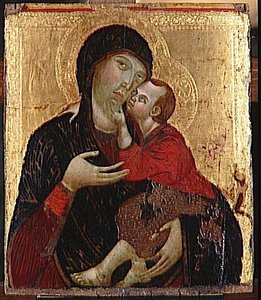
      Bogorodična veličina (detalj) (1285) čiji je autor Чимабуе
      4

      Bogorodična veličina (detalj)

      1285 · Akril na platnu · Galerija Ufizi, Firenca

      Pogled u božanstveno veličanstvo: Cimabueovo *Madonna u veličanstvu (detalj)* Ovaj prefinjeni detalj iz Cimabueovog dela *Madonna u veličanstvu*, nastalog 1285. godine, nudi očaravajući prozor u period tranzicije između vizantijske tradicije i rađajućeg renesansnog duha u italijanskoj umetnosti. Meren dimenzija 91 x 75 cm, ovaj fragment utelovljuje duhovnu žudnju i umetničku inovaciju svog vremena. Vizantijski koreni i rađajući realizam Cimabue (oko 1240–1302), rođen kao Cenni di Pepo u Firenci, predstavlja ključnu…

      Rukom oslikana uljana reprodukcija od $220 29 × 35 cm Isti veličine kao original $410 75 × 91 cm Naručite u originalnim dimenzijama →
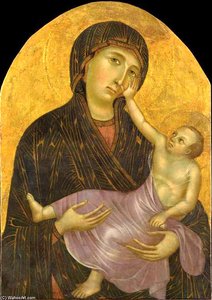
      Bogorica u veličanstvenosti (detalj) (1285) čiji je autor Чимабуе
      5

      Bogorica u veličanstvenosti (detalj)

      1285 · Tempera na drvenoj podlozi · Galerija Ufizi, Firenca

      Pogled u božanstvenu veličinu: Cimabuejeva *Madonna u veličanstvenosti* (detalj) Ovaj prefinjeni detalj Cimabuejevog dela *Madonna u veličanstvenosti*, nastalog 1285. godine, nudi očaravajući prozor u period tranzicije između vizantijske tradicije i rađajućeg renesansnog duha. Meren na svega 48 x 39 cm, ovaj panel – koji se trenutno čuva u prestižnoj galeriji Uffizi u Firenci – svoju malu veličinu nadmašuje ogromnom umetničkom snagom i istorijskim značajem. Tema i kompozicija Ovaj fragment fokusira…

      Rukom oslikana uljana reprodukcija od $195 29 × 35 cm Isti veličine kao original $224 39 × 48 cm Naručite u originalnim dimenzijama →
      Распљети (1272) čiji je autor Чимабуе
      6

      Распљети

      1272 · Tempera na drvenoj podlozi

      The Crucifix by Cimabue emerges from the shadows of the late thirteenth century, a profound religious work that captures the central moment of the crucifixion of Jesus Christ. Painted about 1272, this piece exists as a powerful meditation on divine suffering. The figure of Christ hangs upon the cross, his body caught in a moment of profound agony. It is a scene that demands an immediate, visceral response from anyone…

      Rukom oslikana uljana reprodukcija od $195 26 × 38 cm
      Crucifix (1268) čiji je autor Чимабуе
      7

      Crucifix

      1268 · Tempera On Panel · San Domenico, Arezzo

      In the heart of Italian art history, Giovanni Cimabue stands as a monumental figure, a master who skillfully navigated the artistic currents flowing from the rigid grandeur of the Byzantine Empire toward the burgeoning innovations of the early Renaissance. His Crucifix is not merely a religious icon; it is a profound testament to a period of transformative change. Painted with an unwavering determination that earned him the nickname “bull-ed,” Cimabue…

      Rukom oslikana uljana reprodukcija od $195 28 × 35 cm
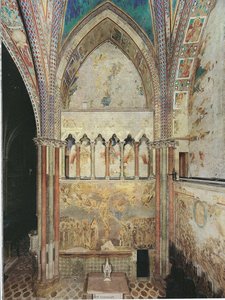
      Apocalyptical Christ (detail) (1280) čiji je autor Чимабуе
      8

      Apocalyptical Christ (detail)

      1280 · Fresco

      Three angels surge upward in a vertical composition, their forms appearing to burst from the wall. This detail, part of a larger fresco cycle, captures a moment of urgent divine announcement. The figures possess elongated limbs and stylized silhouettes, a hallmark of the transition from the rigid Byzantine tradition toward a more naturalistic approach. Their movement is directed heavenward, mirroring the spiritual aspiration of the viewer. Each angel carries a…

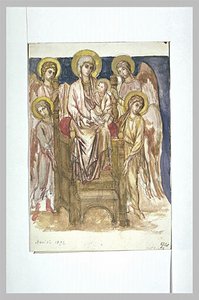
      Madonna Enthroned with the Child, St Francis and four Angels (detail) (1278) čiji je autor Чимабуе
      9

      Madonna Enthroned with the Child, St Francis and four Angels (detail)

      1278 · Acrylic On Canvas

      Giovanni Cimabue's “Madonna Enthroned with the Child, St Francis and four Angels (detail)” – a captivating work from 1278 – isn’t merely a depiction of biblical figures; it’s a pivotal moment in the evolution of Western art. Born Cenni di Pepo in Florence, Cimabue was a courageous innovator who dared to subtly challenge the rigid conventions inherited from Byzantine iconography, laying the groundwork for the vibrant artistic revolution that would…

      Rukom oslikana uljana reprodukcija od $195 29 × 35 cm Isti veličine kao original $306 60 × 73 cm Naručite u originalnim dimenzijama →
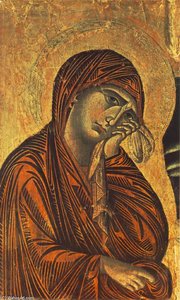
      Crucifix (detail) (1268) čiji je autor Чимабуе
      10

      Crucifix (detail)

      1268 · Acrylic On Canvas · San Domenico, Arezzo

      A Glimpse into Divine Sorrow: Cimabue’s *Crucifix (detail)* This exquisite detail from Cimabue's larger *Crucifix* (circa 1268) offers a profoundly moving encounter with the Virgin Mary and infant Jesus. Painted during a pivotal moment in art history, this work transcends mere religious iconography to become a powerful expression of maternal grief and spiritual contemplation. It’s a piece that resonates across centuries, offering both artistic beauty and emotional depth. Historical Context…

      Rukom oslikana uljana reprodukcija od $220 25 × 41 cm Isti veličine kao original $229 28 × 45 cm Naručite u originalnim dimenzijama →

      Još Чимабуе platna, od 11 do 49

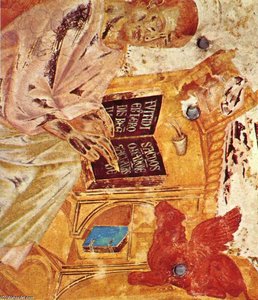
      St Luke (detail) (1280) čiji je autor Чимабуе
      #17

      St Luke (detail)

      1280

      This captivating detail from Cimabue's fresco of St. Luke offers a profound window into a pivotal moment in art. Painted around 1280, the fragment focuses on St. Luke,…

      Vision of the Throne (1277) čiji je autor Чимабуе

      The composition of Vision of the Throne by Cimabue is organized through a hierarchical and symmetrical arrangement. At the center of the work, a luminous mandorla encloses a…

      Miracle of Saint Peter (1277) čiji je autor Чимабуе

      The air within the Upper Basilica in Assisi feels heavy with the weight of centuries, yet the scene unfolding on the plaster remains startlingly immediate. In this late…

      Vault of the Evangelists (1277) čiji je autor Чимабуе

      To look upward within the Upper Church of San Francesco in Assisi is to encounter a ceiling that breathes with the weight of the late thirteenth century. The…

      Dormition (1277) čiji je autor Чимабуе
      #40

      Dormition

      1277

      The transept of the Upper Basilica of San Francesco in Assisi holds this fragmented fresco, a scene of profound solemnity. It captures the death of the Virgin Mary,…

      Peter heals a lame man (1277) čiji je autor Чимабуе

      The religious fresco titled Peter heals a lame man was executed by the artist Cimabue. This work captures a moment of divine intervention, where the apostle reaches out…

      Platna umetnika Чимабуе po periodima

      Florentine Dawn

      1280 – 1284 · 3 dela na ovoj listi

      Šta je Чимабуе najčešće slikao

      Četiri teme koje se najčešće pojavljuju na ovim platnima, svaka sa svojim najomiljenijim primerom.

      Gde se nalaze platna umetnika Чимабуе

      8 muzeja u kojima se nalazi najviše slika sa ove stranice.

      Muzeji Grad Radovi umetnika Чимабуе Slike iz ovog spiska
      Galerija Ufizi, FirencaGalerija Ufizi Firenca 5 Bogorodična veličina (detalj), Bogorica u veličanstvenosti (detalj), The Madonna in Majesty (Maestà)
      San Domenico, ArezzoSan Domenico Arezzo 4 Crucifix, Crucifix (detail), Crucifix (detail)
      Luvr, ParizLuvr Pariz 2 Ismevanje Hristosa, Virgin Enthroned with Angels
      Museo dell'Opera di Santa Croce, FirencaMuseo dell'Opera di Santa Croce Firenca 1 Križ Cimabuea u Santa Croce
      Museo dell'Opera del Duomo, PizaMuseo dell'Opera del Duomo Piza 1 Christ Enthroned between the Virgin and St John the Evangelist (detail)
      The Frick Collection, Њу ЈоркThe Frick Collection Њу Јорк 1 The Flagellation of Christ
      Santa Maria dei Servi, BolonjaSanta Maria dei Servi Bolonja 1 Madonna Enthroned with the Child and Two Angels
      National Gallery, LondonNational Gallery London 1 The Virgin and Child Enthroned with Two Angels

      Najomiljenije platno umetnika Чимабуе iz svakog decenije

      1. 1260s
        Crucifix (1268) čiji je autor Чимабуе
        Rangiran/a 7 od 49

        Crucifix

        Godine 20 – 29 · San Domenico

        In the heart of Italian art history, Giovanni Cimabue stands as a monumental figure, a master who skillfully navigated the artistic currents flowing from the rigid grandeur of…

      2. 1270s
        Распљети (1272) čiji je autor Чимабуе
        6 od 49

        Распљети

        Godine 30 – 39

        The Crucifix by Cimabue emerges from the shadows of the late thirteenth century, a profound religious work that captures the central moment of the crucifixion of Jesus Christ.…

      3. 1280s
        Ismevanje Hristosa (1280) čiji je autor Чимабуе
        1 od 49

        Ismevanje Hristosa

        Godine 40 – 49 · Luvr

        Vazduh unutar okvira deluje teško, gust od napetosti gomile koja pritiska ka unutra. U centru ovog malog, drvenog sveta stoji Isus, čije je telo prekriveno dubokim plavim ogrtačem…

      4. 1290s
        Virgin Enthroned with Angels (1290) čiji je autor Чимабуе
        32 od 49

        Virgin Enthroned with Angels

        Godine 50 – 59 · Luvr

        A Dawn of Innovation: Cimabue’s Virgin Enthroned with Angels Giovanni Cimabue, born Cenni di Pepo around 1240 in Florence, represents a pivotal moment in the artistic landscape—a courageous…

      5. 1300s

      O platnima Чимабуе: odgovori na vaša pitanja

      Koje je najpoznatije delo umetnika Чимабуе?Pročitajte odgovor

      Ismevanje Hristosa (1280), Luvr, Pariz. Prate ih Križ Cimabuea u Santa Croce (1287) i Sveti Franja iz Asizije (detalj).

      Koliko je godina imao/la Чимабуе kada je slika Ismevanje Hristosa nastala?Pročitajte odgovor

      Чимабуе, rođen/a 1240, imao/la je 40 godina: Ismevanje Hristosa datira iz 1280.

      Koja su 10 najpoznatijih dela Чимабуе?Pročitajte odgovor

      Ismevanje Hristosa, Križ Cimabuea u Santa Croce, Sveti Franja iz Asizije (detalj), Bogorodična veličina (detalj), Bogorica u veličanstvenosti (detalj), Распљети, Crucifix, Apocalyptical Christ (detail), Madonna Enthroned with the Child, St Francis and four Angels (detail) i Crucifix (detail). Svako platno u gornjem rangiranju sadrži godinu nastanka i naziv muzeja.

      Koliko je ukupno dela naslikao Чимабуе?Pročitajte odgovor

      U našem katalogu se nalazi 52 dela umetnika Чимабуе, datiranih od 1268 do 1301.

      Gde mogu da vidim najpoznatija platna umetnika Чимабуе?Pročitajte odgovor

      Većinom u Galerija Ufizi (Firenca), San Domenico (Arezzo) i Luvr (Pariz); gornja lista navodi svaki muzej i njegova platna.

      Kada je Чимабуе naslikao svoje najomiljenije platna?Pročitajte odgovor

      U 1280s, koji obuhvata 20 od 49 dela na ovoj stranici, među njima je i Ismevanje Hristosa.

      Koja su najranija i najkasnija čuvena platna umetnika Чимабуе?Pročitajte odgovor

      Najstarije platno ovde je iz Crucifix (1268) godine; najnovije je iz Christ Enthroned between the Virgin and St John the Evangelist (detail) (1301) godine.

      Šta je Чимабуе najčešće slikao?Pročitajte odgovor

      Medieval art (13), Angels (13) i Virgin mary (11), kroz svih 49 dela na ovoj stranici.

      U kojoj je tehnici Чимабуе najčešće slikao/la?Pročitajte odgovor

      Tempera On Panel, korišćeno u 10 od 49 dela na ovoj stranici.

      Kojoj umetničkom pravcu pripada delo Чимабуе?Pročitajte odgovor

      Protorenesansa, kao što pokazuju platna na ovoj stranici.

      Čija se dela Чимабуе nalaze u Galerija Ufizi?Pročitajte odgovor

      Muzej Galerija Ufizi, Firenca čuva 5 dela sa ove stranice, među kojima su i Bogorodična veličina (detalj), Bogorica u veličanstvenosti (detalj) i The Madonna in Majesty (Maestà).

      Mogu li da kupim reprodukciju platna od Чимабуе?Pročitajte odgovor

      Da. Svaku sliku sa ove stranice možete naručiti sa njene posebne stranice kao ručno oslikano ulje na platnu ili kao umetnički print, u veličini koju odaberete.

      Чимабуе: život u bojama

      Cimabue: Grandfather of the Italian Renaissance

      Giovanni Cimabue, born Cenni di Pepo around 1240 in Florence, stands as a monumental figure—a bridge between the established artistic traditions of the Byzantine world and the burgeoning innovations that would define the Italian Renaissance. His life, though partially obscured by time and romanticized accounts – most notably those penned by Giorgio Vasari centuries later – marks an undeniable turning point in Western art history. Cimabue wasn’t simply a painter; he was a courageous innovator who dared to subtly challenge artistic conventions, laying the groundwork for the revolutionary changes that would soon sweep across Italy. Even his nickname, believed to mean “bull-headed,” hints at a strong will and perhaps a rebellious spirit—qualities demonstrably present in his willingness to experiment with form and expression. He represents a crucial moment where art began to shift from being solely devotional imagery towards something more humanistic and emotionally resonant.
      Early Influences and Artistic Development

      Initially immersed in the Italo-Byzantine style prevalent throughout Florence, Cimabue’s early work adhered closely to established aesthetic principles: flattened figures adorned with shimmering gold leaf, symbolic rather than realistic depictions of space, and a profound focus on religious iconography. However, even within these constraints, a nascent desire for naturalism began to emerge. He wasn't content merely replicating existing forms; he sought to imbue his paintings with a greater sense of life and emotional depth. While the precise nature of his early training remains debated, it’s likely he honed his skills within Florentine workshops, absorbing the techniques and influences of the time while simultaneously developing his own unique artistic voice. The Byzantine style, characterized by its formality and spiritual focus, provided him with a solid foundation, but Cimabue began to subtly introduce elements that would foreshadow the coming Renaissance—a greater attention to volume, more expressive facial features, and a nascent understanding of spatial relationships. This wasn’t a sudden break from tradition, but rather a gradual evolution, a delicate balancing act between honoring the past and embracing new possibilities.

      The Maestro's Vision: Giotto and Beyond

      Despite Cimabue’s untimely demise in 1302—leaving behind scant biographical details—his influence on subsequent generations of artists is undeniable. Most notably, he mentored Giotto di Bondone, arguably the first true Renaissance Master. Vasari recounts a legendary tale – one that captures the spirit of their relationship – wherein Cimabue playfully painted a fly onto Giotto’s face, symbolizing his surpassing brilliance. This anecdote underscores not only Cimabue's generosity as a teacher but also the dynamic tension between mentor and pupil—a rivalry fueled by mutual respect and culminating in Giotto’s triumph over his predecessor. Cimabue’s artistic innovations extended beyond Giotto’s training; he challenged the conventions of his time, demonstrating that art could transcend mere symbolism and express profound human emotion. His willingness to experiment with form, proportion, and color paved the way for the groundbreaking achievements of the Renaissance—establishing him as a pivotal transitional figure in Western art history.

      Notable Works: A Legacy of Innovation

      Cimabue’s artistic output is characterized by remarkable stylistic diversity, reflecting his evolving understanding of artistic principles throughout his career. The *Maestà*, commissioned for the Church of San Francesco in Pisa around 1280, stands as a testament to Cimabue's mastery of composition and color—a bold departure from the rigid Byzantine aesthetic that dominated earlier medieval painting. Unlike its predecessors, the *Maestà* achieves a palpable sense of depth and volume, conveying an emotional resonance previously absent from devotional art. The figures are rendered with meticulous detail, capturing subtle nuances of expression and embodying a newfound appreciation for human anatomy. This monumental altarpiece signaled Cimabue’s embrace of Renaissance ideals—a shift toward naturalism and psychological realism that would profoundly reshape the artistic landscape of Italy. Similarly impressive is *The Crucifixion*, executed circa 1270 for the Basilica of San Domenico in Arezzo. Cimabue's depiction of Christ on the cross represents a decisive step away from Byzantine conventions—characterized by stylized figures and distant perspectives. The artist skillfully employs shading to imbue the crucified figure with flesh-like plasticity, conveying the agony of suffering with remarkable sensitivity. Furthermore, Cimabue’s masterful use of color enhances the dramatic impact of the scene—creating a visual experience that transcends mere representation and engages the viewer emotionally. Finally, Cimabue's contribution to Florentine art is cemented through his involvement in the decoration of the Baptistery of Florence – specifically the mosaic depicting Saint John the Evangelist completed between 1301 and 1302. This monumental artwork exemplifies Cimabue’s artistic prowess as a mosaicist—demonstrating his ability to integrate intricate geometric patterns with vibrant colors—creating a visually stunning masterpiece that continues to inspire awe and admiration centuries later. Cimabue's legacy endures not merely as an artist but as a catalyst for change—a visionary who ushered in the dawn of the Renaissance, forever altering the course of Western art history.