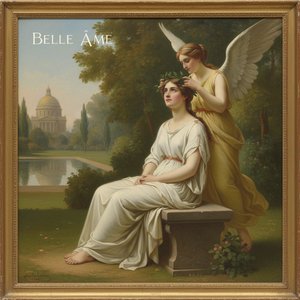
The Observer of Atmosphere
Born in Paris, Jules Benoit-Lévy moved through the French art world with a quiet, observant precision. His education began at the Paris School of Decorative Arts, where he studied under Gustave Boulanger and Henri Lucien Doucet, before refining his technique in the Jules Joseph Lefebvre workshop at the School of Fine Arts. He was a man of many lenses, working as a painter, printmaker, and photographer. His early years were spent navigating various genres, from historical scenes to genre paintings of cardinals in everyday situations, a subject that held significant popularity during his era.
His eye for detail was not limited to the canvas. During his travels, he sought out the specific character of places, most notably during a stay on the island of Marken in the Netherlands. There, he produced fifty paintings that captured the sensitive nature of the landscape. His sketches often revealed more than his finished works, capturing the precise movement of light and air—sometimes through brightened oranges and greens, and at other times through a grey, misty veil.
A Life in Light and Shadow
The artist’s career was marked by a steady presence in the Parisian salons. He exhibited frequently at the Salon des Artistes Français, earning a third medal in 1895, an honorable mention in 1901, and a third class medal in 1911. His work also found a place at the Salon D'Hiver in the Grand Palais between 1911 and 1930, and he was honored with the Golden Ordre des Palmes Académiques as an Officier de l'Instruction Publique. His ability to translate the atmosphere of a location into a visual medium was a constant thread in his professional life.
During the First World War, his focus shifted toward the realities of conflict. Despite being forty-five years old, he engaged with the war through his lens, photographing the life of troops in the East and the Battle of the Argonne in 1915. This period of documentation changed his perspective; in the years following the war, he returned to the sites of the conflict to photograph ruins, vestiges, and cemeteries. This photographic work served as a foundation for his later paintings, blending the role of an artist with that of an ethnographer of human experience.
Pitanja i odgovori
Gde mogu da pogledam sva dela umetnika Jules Benoit-Lévy?
Sva dela umetnika Jules Benoit-Lévy na ovaj sajt možete pregledati na njegovoj/njenoj stranici sa Sva umetnička dela.
Koja dela umetnika Jules Benoit-Lévy imaju najviše pregleda?
Dostupna je Statistika stranica za Jules Benoit-Lévy, koja prikazuje statistiku o umetnikovim delima na ovaj sajt.
Mogu li da pregledam dela umetnika Jules Benoit-Lévy prema paleti boja?
Radove umetnika Jules Benoit-Lévy možete pregledati prema paleti boja na Preko palete boja stranici umetnika.
Mogu li da istražim dela umetnika Jules Benoit-Lévy putem ključnih reči?
Stranica Preko ključnih reči umetnika Jules Benoit-Lévy grupiše njegova dela prema ključnim rečima.