Ateljé — Fri frakt i hela världen — Leveranstid 2–6 veckor
Sell Your Art Önskelista Varukorg
PreviewPreview Köp tryck Köp tryckBeställ målning Beställ målning SkickaSkicka
Visa detaljerVisa detaljer Lägg till i favoriter Lägg till i favoriter Ladda nerLadda ner Liknande objektLiknande objekt RöntgenRöntgen BildspelBildspel

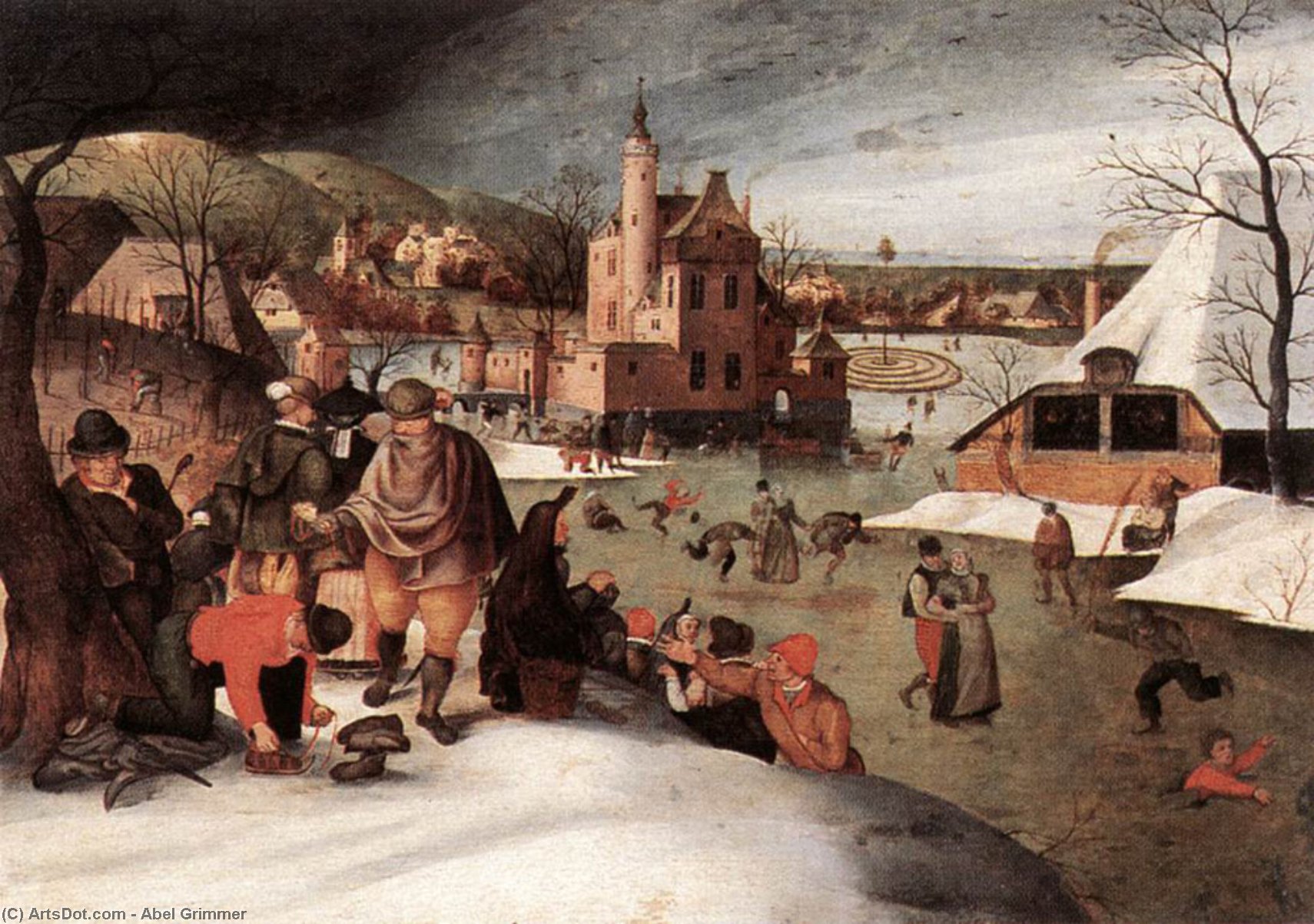
Winter

Discover Abel Grimmer’s ‘Winter’ (1607), a stunning Flemish genre painting of ice skating in Antwerp. Explore its detailed realism, atmospheric light & cultural context.

Abel Grimmer var son till landskapsmålaren Jacob Grimmer (c. 1526–1590) med vilken han tjänstgjorde sin utbildning och följde efter hans far genom att skapa enkla och effektiva målningar av säsongerna och Babeltornet.

Köp en högupplöst, förbättrad digital bild som är vida överlägsen förhandsvisningen online.

Varje fil är noggrant förberedd av våra interna specialister med hjälp av avancerade verktyg och professionell manuell retuschering. Vi säkerställer att varje bild har exceptionell skärpa, exakt färgåtergivning och fina detaljer.

Den slutgiltiga filen levereras via e-post inom 72 timmar, optimerad för omedelbar användning i professionella sammanhang, redaktionellt bruk och tryckmiljöer. Detta är samma kvalitet som används med förtroende av ledande designstudior, förlag och gallerier.

Digital bild

Ladda ner en högupplöst fil för personlig visning, utskrift och kreativa projekt.

Totalpris

$9.99

Ingår i varje beställning av digital bild

Professionell digital leverans, garanterad

När du väljer TopImpressionists.com får du inte bara en bild – du får ett professionellt förädlat digitalt konstverk, skapat med precision och med en garanterad tillfredsställelse. Här är allt som ingår i din beställning, automatiskt:

shipping_icon
Snabb leverans via e-post

Din högupplösta digitala bildfil skickas till dig via e-post inom 72 timmar efter beställning – redo för omedelbar användning.

canvas_icon
AI-förbättrad digital bild

Ditt konstverk optimeras professionellt med hjälp av avancerade AI-verktyg och manuell redigering, vilket garanterar maximal detaljrikedom, skärpa och färgnoggrannhet.

insurance_icon
Gratis livstidsåterutskick

Har du råkat radera eller tappa bort din fil? Ingen oro – vi skickar den kostnadsfritt till dig när som helst.

tax_icon
Inga importavgifter – någonsin

Njut av ditt konstverk omedelbart utan tull, importavgifter eller leveranskostnader – digitala nedladdningar är alltid skattefria.

color_icon
Garanterad färgåtergivning

Vi säkerställer att din digitala bild återger de ursprungliga färgerna så exakt som möjligt med hjälp av professionella verktyg och färghantering.

return_icon
60 dagars nöjdhetsgaranti

Om du inte är nöjd med din digitala bild kommer vi att revidera den eller återbetala 100% inom 60 dagar – utan frågor.

guarantee_icon
100% pengarna-tillbaka-garanti

Inte nöjd? Få full återbetalning inom 60 dagar efter att du har tagit emot din digitala fil – inga frågor åsett.

discount_icon
Rabatt vid storköp

Köp 3 bilder, spara 10% - Köp 5, spara 15% - Köp 10+, spara 20%. Perfekt för kreativa projekt, gallerier och byråer.

Kortfakta

  • Location: Koninklijk Museum voor Schone Kunsten Antwerp
  • Movement: Flemish Genre Painting
  • Year: 1607
  • Influences: Pieter Bruegel the Elder
  • Artistic style: Realistic
  • Dimensions: 33 x 47 cm
  • Medium: Oil on panel

Konstquiz

Det finns endast ett korrekt svar på varje fråga.

Fråga 1:
What is the artist’s name?
Fråga 2:
In what century was Winter created?
Fråga 3:
Where is the painting currently housed?
Fråga 4:
What medium was used to create Winter?
Fråga 5:
The painting depicts a scene of what activity?

Beskrivning av samlarobjektet

A Frozen Celebration: The Allure of Abel Grimmer's Winter

To gaze upon Abel Grimmer’s Winter is to step directly into the crystalline heart of a 17th-century Flemish town square. This oil on panel, dating from 1607, is far more than a mere depiction of cold weather; it is a vibrant tapestry woven from human resilience, community spirit, and the enduring joy found even in the deepest chill. The scene unfolds with an almost breathless energy, capturing figures engaged in the timeless ritual of ice skating across a frozen expanse. Grimmer masterfully transports us to a moment suspended between the stark beauty of winter and the warmth of shared human experience.

Mastery of Genre and Detail

The painting exemplifies the pinnacle of Flemish genre painting from the early 17th century. Notice, if you will, the meticulous attention paid to every element—from the texture of the snow underfoot to the folds of the passersby's heavy winter garments. The composition is wonderfully complex and crowded, yet it never feels chaotic. Instead, the numerous figures are arranged with a naturalistic grace that guides the eye across the foreground, midground, and into the distance where a grand castle anchors the horizon. Grimmer’s technique relies on an almost scientific observation of light and shadow; the subdued lighting casts deep, evocative shadows that lend profound depth to what might otherwise be a flat scene. The architecture surrounding the skaters, with its characteristic gabled roofs, speaks volumes about the daily life and enduring character of Flemish urban centers.

Symbolism of Endurance and Community

Beyond the surface depiction of leisure, Winter carries a rich symbolic weight. It is an ode to endurance—the ability of community life to flourish even when nature imposes its harshest conditions. The act of skating itself becomes a metaphor for navigating life's inevitable cold spells; it requires balance, coordination, and the support of others. The warmth emanating from the clustered groups, contrasted against the icy blue tones dominating the palette, suggests that human connection is the ultimate source of light and sustenance. It is a celebration of life’s persistent rhythm amidst seasonal dormancy.

A Touch of Dutch Golden Age Realism

While rooted in Flemish tradition, the painting shares an undeniable kinship with the detailed realism characteristic of the Dutch Golden Age masters. Grimmer employs layering and delicate brushwork to build up textures—the slick sheen of ice, the rough weave of wool, the powdery drift of snow. The overall effect is one of profound verisimilitude. For those who appreciate art that feels both historically significant and intimately immediate, this piece offers a perfect confluence of high artistry and relatable human drama. Owning or displaying a reproduction of Winter allows one to bring not just a painting, but an entire atmosphere—a feeling of festive, enduring warmth—into the modern home.


Konstnärsbiografi

Abel Grimmer (c. 1570–c. 1620): The Streamlined Landscape Painter

Abel Grimmer (family name variations: 'Grimer' and 'Grimmaert') (c. 1570–c. 1620) was a Flemish late Renaissance painter, mainly of landscapes and, to a lesser extent, of architectural paintings. His works were important in the development towards more naturalism in Flemish landscape painting. Grimmer’s artistic legacy resides not merely in his impressive output but also in his innovative approach—a method that prioritized efficiency and stylistic consistency—which secured him a prominent place within the Antwerp art market during his lifetime. Born and died in Antwerp, he honed his craft under the tutelage of his father, Jacob Grimmer (c. 1526–1590), who himself had established renown by imitating Pieter Bruegel the Elder’s miniature landscapes and distributing them at affordable prices. This familial influence profoundly shaped Grimmer's artistic sensibilities, fostering a dedication to meticulous observation and a masterful command of technique—a commitment that would ultimately define his distinctive style. Jacob Grimmer’s workshop served as the crucible for Abel’s formative years, immersing him in the traditions of Flemish landscape painting while simultaneously encouraging experimentation with new approaches. He learned to paint from his father, Jacob Grimmer (c. 1526–1590), who had established a name for himself by imitating Pieter Bruegel the Elder on small panel pictures and selling these on the market at low prices. This familial influence profoundly shaped Grimmer's artistic sensibilities, fostering a dedication to meticulous observation and a masterful command of technique—a commitment that would ultimately define his distinctive style. Grimmer married Catharina Lescornet in 1591 and swiftly ascended to mastership within the Antwerp Guild of Saint Luke—a pivotal moment signifying his recognition as a skilled artist and securing him access to lucrative commissions. He took over his father's workshop, continuing the family tradition of producing landscape paintings that adhered to established formulas while subtly elevating them through careful simplification and stylistic refinement. Grimmer’s artistic style is characterized by a striking convergence of influences—primarily Pieter Bruegel the Elder and Hans Bol—yet simultaneously distinguished by an unwavering commitment to streamlining technique. Unlike his predecessors who often employed elaborate compositions and nuanced color palettes, Grimmer embraced a minimalist aesthetic, prioritizing clarity and visual impact. This stylistic choice stemmed from a pragmatic understanding of the Antwerp marketplace, where affordability and accessibility were paramount considerations. Each pictorial area of his landscapes was meticulously rendered in a single hue—often muted shades of ochre or brown—with minimal modulation to achieve maximum luminosity and reduce varnishing’s effect on surface texture. This deliberate simplification wasn't merely a stylistic preference; it represented a fundamental shift towards a more economical production process, ensuring that Grimmer’s paintings remained competitive within the prevailing artistic landscape. He skillfully employed color harmonies reminiscent of Bruegel and Bol, capturing atmospheric light with remarkable accuracy—a hallmark of his oeuvre. Buildings were depicted as geometric shapes—a deliberate departure from earlier conventions—further enhancing the overall visual impact of his landscapes. Grimmer’s technique involved applying minimal varnishing, eliminating surface reflections and maximizing color vibrancy—a strategy that underscored his dedication to efficiency and artistic precision. Grimmer's oeuvre encompasses a diverse range of subjects—primarily landscapes depicting seasonal changes and architectural interiors—but several works stand out for their stylistic innovation and thematic resonance. Among these are the twelve “Months” series (1592), an exact copy of Hans Bol’s prints after designs by Pieter Bruegel the Elder, published by Hans van Luyck in 1585; ‘Spring’ and ‘Summer,’ which mirror two prints by Pieter van der Heyden based on Bruegel's compositions; and depictions of the Tower of Babel—a narrative inspired by Bruegel’s seminal paintings on this subject matter. These artworks exemplify Grimmer’s masterful adaptation of established artistic conventions while simultaneously conveying profound moral messages rooted in biblical allegory. The tower motif, reflecting anxieties about human pride and defiance against divine authority, mirrored the turbulent political climate of Antwerp during Grimmer's lifetime—a city embroiled in conflict with Protestant provinces. Despite criticisms leveled against his stylistic choices—often portraying him as overly reliant on the work of others—Grimmer’s legacy endures as a pivotal figure in the evolution of Flemish landscape painting. His streamlined technique—characterized by single-hue color palettes and geometric building representations—established a precedent for subsequent generations of artists, securing his place within Antwerp's artistic tradition. Furthermore, Grimmer’s unwavering commitment to capturing atmospheric light and faithfully reproducing architectural spaces foreshadowed developments in Dutch interior painting championed by Pieter Saenredam—demonstrating the breadth of his influence on the broader artistic landscape of the Low Countries. Abel Grimmer’s contribution to Flemish art is undeniable: he represents a crucial step toward naturalism, while simultaneously upholding an economical production process that ensured his paintings remained accessible and influential for centuries to come.
Abel Grimmer

Abel Grimmer

1570 - 1620 , Belgien

Kortfattad information

  • Artistic Movement Or Style: Late Renaissance
  • Artists Or Movements Influenced By This Artist: ['Dutch interior painting']
  • Artists Who Influenced This Artist:
    • Joachim Patinir
    • Pieter Bruegel the Elder
    • Hans Bol
  • Date Of Birth: c. 1570
  • Date Of Death: c. 1620
  • Full Name: Abel Grimmer
  • Nationality: Flemish
  • Notable Artworks:
    • The Tower of Babel
    • Winter
    • Autumn
  • Place Of Birth: Antwerp, Belgium
© TopImpressionists.com — Alla rättigheter förbehållna  ·  100% handmålad · Nöjdhetsgaranti · Fri frakt i hela världen
VISA MASTERCARD