

 Visa i rummet
 Skicka
 Dela
Dela
 Detaljer
 Studentguide för konstverk

 Ladda ner
 Liknande objekt
 Röntgen
 Bildspel
 Besökstatistik
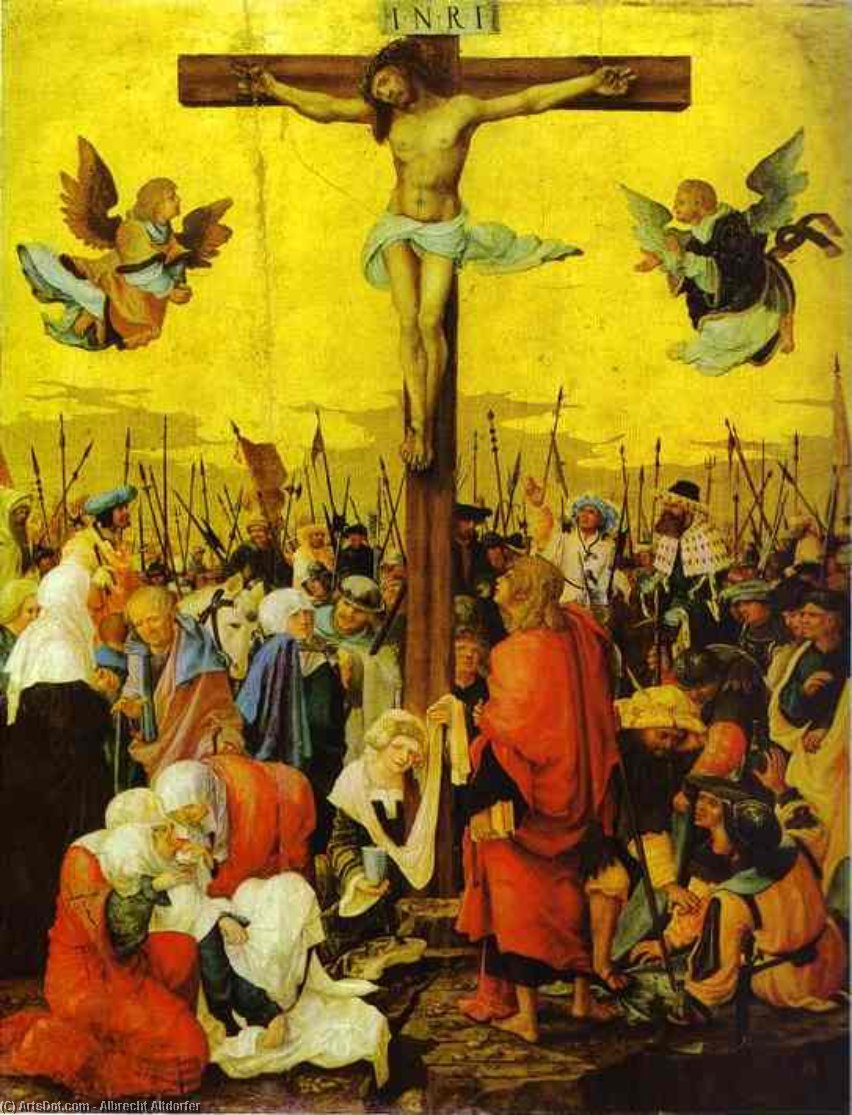
Crucifixion


Albrecht Altdorfer's "Crucifixion" (1526) is a dramatic, evocative depiction of Christ’s suffering, showcasing the artist's pioneering landscape style and masterful use of color within the Northern Renaissance.
 Läs mer
Albrecht Altdorfer (1480-1538): Tysk konstnär, landskapsmålare och gravör. En pionjär inom den tyska renässansen vars verk präglas av känslosamlandskap och dramatik.
Giclée / Konsttryck
Giclée- eller canvasprint av museumskvalitet med snabb produktion och flexibla ytbehandlingsalternativ. ( Köp handmålat konstverk Byt till digital bildförsäljning)




P118B Skr10

P118H Skr10

P118W Skr10

P438Z Skr10

P508JH Skr12

P508YH Skr12

P805H Skr10

P805Z Skr10

P919BZ Skr10

P919G Skr10

P919XJ Skr10

P959ZH Skr10

P968JZ Skr12

W106C Skr8

W218G Skr10

W218JH Skr8

W218Y Skr10

W307PJ Skr10

W316G Skr10

W316PJ Skr8

W316Y Skr10

W398PJ Skr8

W4111J Skr10

W500HY Skr15

W500JH Skr15

W692G Skr12

W849H Skr8

W940BG Skr15

W953PJ Skr8




Standardstorlek
anpassad
CM
INCH
Välj bland våra förinställda storlekar som motsvarar konstverkets ursprungliga proportioner.
Loading sizes...

bredd
höjd
Ange den bredd och höjd du behöver, för att passa din ram eller din vägg. Ett tryck kan endast beskäras, aldrig göras större än bilden, vilket innebär att ett format med en annan formform leder till att en del av bilden går förlorad. Vi skickar en digital mockup för godkännande innan vi trycker något. Bilden som visas på denna sida visar inte den faktiska beskärningen — det är endast mockuppen som gör det.
Leverans över hela världen () på 2 veckor istället för standard 4/5 veckor. (24 oktober)

Fri expressfrakt över hela världen

Högkvalitativ linnecanvas

Fullständig fraktförsäkring

Garantier för återbetalning av tullavgifter

Garantier för exakt färgåtergivning

100 dagars returrätt vid fabrikationsfel

100% pengarna tillbaka-garanti

Mängdrabatt erbjuds
 Glasalternativet är endast tillgängligt i storlekar under 110 cm.

Crucifixion
Giclée / Konsttryck
Reproduktionsstorlek
-


Totalpris
Skr 684
The Weight of Sorrow: Albrecht Altdorfer’s “Crucifixion”
Albrecht Altdorfer's "Crucifixion," painted in 1526, isn’t merely a depiction of a pivotal religious event; it’s a visceral experience. Emerging from the burgeoning German Renaissance, Altdorfer wasn’t simply replicating biblical narratives; he was forging a new visual language, one deeply rooted in the natural world yet imbued with profound spiritual intensity. This particular rendition transcends simple illustration, becoming a landscape saturated with grief and a haunting meditation on sacrifice. The painting immediately commands attention not through grand scale – it's remarkably intimate, measuring just 29 x 21 cm – but through its masterful manipulation of light, color, and composition to evoke an overwhelming sense of sorrow.
The scene unfolds against a dramatically rendered landscape—a brooding, almost primeval forest. The trees, rendered in thick, layered brushstrokes of deep greens, browns, and purples, seem to writhe with the weight of the event. This isn’t a picturesque vista; it's a wilderness imbued with an unsettling energy. Altdorfer deliberately eschews traditional depictions of serene backgrounds, instead presenting a landscape actively participating in the drama. The distant mountains, shrouded in mist and shadow, amplify the feeling of isolation and despair. Notice how the artist uses atmospheric perspective – lighter hues for objects further away – to create a sense of depth and distance, drawing the viewer’s eye into the heart of the scene.
A Pioneer of Landscape
Albrecht Altdorfer stands as a pivotal figure in art history, largely credited with establishing landscape painting as an independent artistic subject within Europe. Prior to his work, landscapes were typically relegated to mere backgrounds for religious or mythological scenes. However, Altdorfer recognized the power of the natural world to convey emotion and meaning. His meticulous observation of nature—evident in the detailed rendering of foliage, rocks, and atmospheric conditions—transformed the landscape from a passive backdrop into an active participant in the narrative. This shift was revolutionary, paving the way for later generations of landscape artists like Albert Bierstadt and Frederic Church.
His background as a town architect and council member further informs his artistic approach. Altdorfer possessed a keen eye for spatial relationships and a deep understanding of how to create a sense of harmony and balance within a composition. This skill is brilliantly demonstrated in “Crucifixion,” where the human figure—Jesus—is carefully positioned within the landscape, creating a dynamic interplay between the earthly realm and the divine.
Symbolism and Emotional Resonance
Beyond its technical brilliance, "Crucifixion" resonates deeply with viewers through its potent symbolism. The stark simplicity of Jesus’s pose – arms outstretched, head bowed – is profoundly moving. Altdorfer avoids any overtly dramatic or theatrical elements, opting instead for a quiet, understated portrayal of suffering. The figures surrounding the cross—angels and soldiers—are rendered in muted tones, emphasizing the central tragedy. Even the light itself seems to weep, casting long shadows across the landscape.
The choice of a dark, foreboding forest as the setting is particularly significant. Forests have historically been associated with death, mourning, and the unknown. In this context, it serves as a powerful metaphor for the spiritual darkness surrounding Jesus’s sacrifice. The painting isn't simply depicting an event; it’s exploring the profound emotional consequences of that event—the grief, despair, and sense of loss experienced by those who witnessed it.
A Timeless Masterpiece
“Crucifixion” is more than just a religious painting; it’s a testament to Altdorfer's artistic genius and his ability to capture the essence of human emotion. The meticulous detail, masterful use of color and light, and profound symbolism combine to create an unforgettable image that continues to resonate with viewers centuries after its creation. Reproductions, like this one, offer a remarkable opportunity to experience the power and beauty of this iconic work, bringing its haunting message into our own spaces.
Frågor och svar
Är "Crucifixion" av Albrecht Altdorfer fri från upphovsrätt?
"Crucifixion" av Albrecht Altdorfer är allmän egendom – upphovsrätten har löpt ut. Denna status avgör hur bilden av verket får återges.
Vilken är den upplevda ljusstyrkan i "Crucifixion" av Albrecht Altdorfer?
Sammantaget har "Crucifixion" registrerats som bright. Upplevd ljusstyrka beskriver hur ljust eller mörkt verket framstår.
Vilken luminans har "Crucifixion" av Albrecht Altdorfer?
"Crucifixion" av Albrecht Altdorfer har en luminans på Gentle Luminance. Luminans beskriver hur mycket ljus färgerna tycks reflektera.
Om konstnären
Albrecht Altdorfer: A Pioneer of German Renaissance Landscape
Albrecht Altdorfer, född omkring 1480 i Regensburg, är en central och revolutionerande figur inom den tyska konsthistorien. Han var inte bara en konstnär *under* sin tid; han formade dess konstnärliga riktning, särskilt genom sin banbrytande utveckling av landskapsmåleriet. Altdorfer kom från en familj med djupa rötter i konstnärstraditionen – hans far, Ulrich Altdorfer, var själv målare och miniatyrkonstnär – och snabbt skiljde sig från sina föregångare genom att bli en innovatör snarare än en enkel följarmålares. Regensburg, en fristadskonunglighet strategiskt placerad vid floden Danube, gav honom en levande kulturell bakgrund som formade hans konstnärliga sinne och skapade en stark koppling till naturen, vilket skulle bli ett centralt tema i hans verk. Utöver sin konstnärliga talang var Altdorfer också en framstående samhällsman, både stadsarkitekt och rådsmedlem – ett bevis på hans mångsidiga begåvning. Det var dock genom sin konst, särskilt hans tidiga gravyrer och skisser från omkring 1506, som *Stygmata of St. Francis* och *St. Jerome*, att han först avslöjade sin unika konstnärliga röst, en antydan till den emotionella intensitet och noggranna detaljrikedom som skulle prägla hans vuxna stil. Hans tidiga verk visar redan en fascination för det naturliga landskapet, vilket markerade ett steg bort från de traditionella religiösa motiven.The Danube School and a Revolutionary Vision
Altdorfer är framför allt känd som en ledande medlem av den Danubiska Skolan, en inflytelserik grupp av konstnärer som var aktiva i södra Tyskland under tidigt 1500-tal. Denna konstnärliga krets delade en gemensam fascination för att utforska landskapets uttrycksfulla potential, och lyft fram det från enbart bakgrund till ett centralt motiv i sig självt. Innan Altdorfer användes landskap primärt som miljöer i religiösa eller historiska berättelser; han vågade måla naturen *för sin egen del*, fylld av atmosfär och emotionell resonans. En transformativ resa längs Danubefloden och in i Alperna runt 1511 visade sig vara avgörande för hans konstnärliga utveckling. De dramatiska vyerna, de täta skogarna och de imponerande bergen tände en passion inom honom för att måla naturen med orubblig detaljrikedom och känsla. Han blev, i stort sett, den första moderna landskapsmålaren, inte bara att kopiera det han såg utan att förmedla en emotionell respons – en känsla av häpnad, mysterium och till och med andlig koppling. Detta var inte enbart topografisk noggrannhet; det handlade om att fånga *upplevelsen* av att vara i ett landskap. Hans verk, som *"The Large Spruce"*, illustrerar denna förändring, och erbjuder en fridfull och invecklad skildring av naturens skönhet. Skolan var inte bara en grupp konstnärer utan också en rörelse som utmanade etablerade normer och öppnade upp för nya sätt att se och representera världen.Masterpieces and Artistic Influences
Under hela sin karriär producerade Altdorfer ett mångfaldigt verk, inklusive målningar, gravyrer, skisser och arkitektoniska ritningar. Bland hans mest kända prestationer är *The Battle of Alexander at Issus* (1529), som han utförde på uppdrag av hertigen William IV av Bayern. Denna monumentala målning visar inte bara hans behärskning av komposition och detaljrikedom utan också hans innovativa användning av landskap för att förstärka den dramatiska spänningen i krigsberättelsen. De virvlande molnen, de skarpkantade bergen och det kaotiska mötet mellan soldater skapar en känsla av överväldigande energi och spektakel. Hans samarbete med kejsaren Maximilian I i Innsbruck från 1513 utvidgade ytterligare hans konstnärliga horisonter och gav möjligheter till stora projekt. Altdorfers stil var inte formad i isolation; han absorberade influenser från olika källor. Giorgiones poetiska lyrik, Lucas Cranachs uttrycksfulla figurer och Albrecht Dürers noggranna detaljrikedom lämnade alla sina avtryck på hans verk. Han syntetiserade dock dessa influenser till en unikt personlig vision, präglad av sin emotionella intensitet, dramatiska ljussättning och suggestiva landskap. Hans gravyrer, som *"Venus after the Bath"*, visar hans skicklighet i detta medium, med delikata linjer och invecklade detaljer.The Development of a Unique Style
Altdorfers konstnärliga utveckling kan spåras genom flera faser. I sina tidiga verk, präglade av influenser från den senmedeltida stilen, visar han en stark fascination för religiösa motiv och allegoriska scener. Men under hans resa nerför Danubefloden och in i Alperna förändrades hans syn på landskapet radikalt. Han började inte bara att skildra naturen som en bakgrund utan att betrakta den som ett självständigt konstobjekt, fyllt av liv och rörelse. Detta återspeglas tydligt i hans verk *Regensburg Landscape* (c. 1522-25), där han skapar en känsla av djup och atmosfär genom att använda ljus och skugga på ett innovativt sätt. Hans förmåga att fånga den flyktiga naturen, det ständigt föränderliga ljuset och de subtila nyanserna i landskapet var unik för sin tid. Han experimenterade med olika tekniker, inklusive *sfumato* (en smidig övergång mellan färger) och *chiaroscuro* (kontraster mellan ljus och mörker), för att skapa en illusion av djup och realism. Hans skisser och studier visar hans noggranna observationer och hans förmåga att fånga de finaste detaljerna i naturen.Legacy and Lasting Impact
Albrecht Altdorfers konstnärliga arv sträcker sig långt bortom de 55 panelmålningar, 120 skisser och många gravyrer han skapade under sin livstid. Han förändrade fundamentalt hur konstnärer angrep landskapsmåleriet, och banade vägen för framtida generationer att utforska dess uttrycksfulla möjligheter. Hans inflytande kan ses i verk av senare tyska romantiska målare som sökte på samma sätt att fånga den sublima skönheten och den emotionella kraften hos naturen. Idag representeras Altdorfers konst i stora museisamlingar världen över, inklusive Museum Ostdeutsche Galerie i Tyskland – där hans *Madonna (Beautiful Maria of Regensburg)* finns – och Kunstsammlungen und Museen Augsburg i Österrike. Hans innovativa anda, tekniska skicklighet och djupa koppling till naturen fortsätter att inspirera konstnärer och fängsla publiken århundraden efter hans död 1538. Han är en av de mest framstående figurerna i den tyska renässansen, en sann pionjär som vågade se landskap inte bara som en bakgrund utan som en kraftfull kraft som kan väcka djupa känslor och andlig mening. Hans verk är ett testamente till konstens bestående kraft att transformera vår uppfattning av världen omkring oss – ett arv som fortsätter att resonera hos betraktare idag.Exploring Altdorfer’s Diverse Works
Utöver hans ikoniska landskap och krigsberättelser omfamnade Altdorfers konstnärliga räckvidd religiösa motiv, mytologiska berättelser och till och med arkitektoniska ritningar. Hans skildringar av bibliska berättelser, som *"Abraham’s Sacrifice"*, är fyllda med dramatisk intensitet och emotionell djup, vilket skiljer dem från tidigare tolkningar. Han illustrerade inte bara Skriften; han utforskade den mänskliga tillstånd genom linsen av tron. Hans skildringar av heliga figurer, som *St. George and the Dragon*, visar en liknande förmåga att förmedla känslor och atmosfär. Gravyrerna, såsom *"Mu
Albrecht Altdorfer
1480 - 1538 , Tyskland
Snabbfakta
- Artistic Movement Or Style: Danubenskolan, Renässans
- Artists Or Movements Influenced By This Artist: ['Tyska Romantiker']
- Artists Who Influenced This Artist:
- Giorgione
- Cranach
- Dürer
- Date Of Birth: c. 1480
- Date Of Death: 1538
- Full Name: Albrecht Altdorfer
- Nationality: Tysk
- Notable Artworks:
- Alexander-slaget
- Stora tallen
- Sankt Göran och draken
- Place Of Birth: Regensburg, Tyskland
Relaterade artiklar

The Magic of Tonalism: Capturing Mood, Mist, and Atmospheric Emotion in Landscape Art
Discover the ethereal beauty of Tonalism. Explore how master artists use mist, soft light, and muted palettes to capture profound emotion and atmospheric mood in landscape painting. A deep dive into this quiet, introspective art movement for true connoisseurs.
Utforska konstverk sorterade efter tema, stil och egenskaper.


