

 Förhandsvisa
 Skicka
 Dela
Dela
 Visa detaljer
 Guide
Guide

 Ladda ner
 Liknande objekt
 Röntgen
 Bildspel
 Q&A
Q&A Statistik
DAVID WEMYSS, LORD ELCHO


Admire Allan Ramsay's masterful portrait of David Wemyss, Lord Elcho – a distinguished Scottish nobleman captured with striking realism and aristocratic grace. Explore the details of this captivating 18th-century masterpiece.
 Visa mer
Utforska Allan Ramsays (1713-1784) eleganta porträtt av skotskt samhälle och adel. Upptäck hans rokokostil, mästerliga teknik och ikoniska verk som drottning Charlotte. En nyckelkonstnär från 1700-talet.
Giclée / Konsttryck
Giclée- eller canvasprint av museumskvalitet med snabb produktion och flexibla ytbehandlingsalternativ. ( Beställ handmålad reproduktion Byt till digital bild)




P118B Skr10

P118H Skr10

P118W Skr10

P438Z Skr10

P508JH Skr12

P508YH Skr12

P805H Skr10

P805Z Skr10

P919BZ Skr10

P919G Skr10

P919XJ Skr10

P959ZH Skr10

P968JZ Skr12

W106C Skr8

W218G Skr10

W218JH Skr8

W218Y Skr10

W307PJ Skr10

W316G Skr10

W316PJ Skr8

W316Y Skr10

W398PJ Skr8

W4111J Skr10

W500HY Skr15

W500JH Skr15

W692G Skr12

W849H Skr8

W940BG Skr15

W953PJ Skr8




Standardstorlek
skräddarsydd
CM
INCH
Välj bland våra förinställda storlekar som motsvarar konstverkets ursprungliga proportioner.
Loading sizes...

bredd
höjd
Ange den bredd och höjd du behöver för att passa din ram eller vägg. Ett tryck kan endast beskäras, aldrig göras större än originalbilden, vilket innebär att ett format med en annan proportion leder till att en del av bilden går förlorad. Vi skickar en digital mockup för godkännande innan vi påbörjar tryckningen. Bilden som visas på denna sida visar inte den faktiska beskärningen — det är endast mockuppen som gör det.
Leverans över hela världen () på 2 veckor istället för standard 4/5 veckor. (2 november)

Fri expressfrakt över hela världen

Högkvalitativ linnecanvas

Fullständig fraktförsäkring

Garantier för återbetalning av tullavgifter

Garantier för exakt färgåtergivning

100 dagars returrätt (endast vid fel)

100% pengarna tillbaka-garanti

Mängdrabatt erbjuds
 Glasalternativet är endast tillgängligt i storlekar under 110 cm.

DAVID WEMYSS, LORD ELCHO
Giclée / Konsttryck
Storlek på reproduktion
-


Slutgiltigt pris
Skr 693
A Portrait of Nobility: Allan Ramsay’s David Wemyss, Lord Elcho
Allan Ramsay's “David Wemyss, Lord Elcho” is more than just a painted likeness; it’s a carefully constructed tableau of 18th-century Scottish aristocracy, imbued with the formality and restrained emotion characteristic of his era. Completed around 1775, this oil on canvas portrait captures David Wemyss, Lord Elcho, a prominent figure in Jacobite circles and a man defined by both privilege and turbulent history. The painting immediately draws the eye with its rich palette – deep reds and browns dominate, offset by creamy whites and subtle golds – creating an atmosphere of dignified opulence that speaks to the subject’s status and wealth.
Ramsay's skill lies not merely in replicating appearance but in conveying character. Lord Elcho is presented in a three-quarter pose, his gaze direct and unwavering, establishing an immediate connection with the viewer. His posture exudes confidence, yet there’s also a hint of melancholy in his expression, perhaps reflecting the political turmoil that defined his life. The artist masterfully employs soft lines to define the contours of the face and clothing, avoiding harsh outlines and instead creating a sense of gentle realism. Notice how the folds of his coat and cravat aren't simply rendered; they’re sculpted with subtle shading, adding depth and texture that bring the portrait to life.
The Context of Power and Rebellion
To fully appreciate “David Wemyss, Lord Elcho,” it’s crucial to understand its historical context. The late 18th century in Scotland was a period of intense political unrest, fueled by aspirations for restoring the Stuart monarchy. Lord Elcho, as a Jacobite supporter, played a significant role in this movement, raising his own troop of cavalry – the “Lifeguards” – which became renowned for their bravery and effectiveness during the 1745 Rising. The portrait itself is therefore inextricably linked to this era of rebellion and loyalty, serving as a visual testament to a man caught between duty and ambition.
Further research reveals that Lord Elcho’s life was marked by both success and tragedy. He initially rose through the ranks of the army, earning recognition for his military prowess. However, following the disastrous defeat at Culloden in 1746, he fled to Europe and faced imprisonment and exile. The painting, therefore, can be viewed as a poignant reminder of a life cut short by political upheaval – a man whose legacy is intertwined with both glory and loss.
Symbolism and Artistic Technique
Ramsay’s technique is rooted in the traditions of 18th-century portraiture, yet he infuses it with his own distinctive style. The lighting, diffused and soft, illuminates Lord Elcho's face and upper body while leaving the background shrouded in shadow, creating a dramatic focal point and emphasizing the subject’s presence. The use of color is particularly noteworthy; the rich reds and browns evoke notions of power, wealth, and nobility, while the lighter tones suggest refinement and elegance.
Beyond mere representation, Ramsay employs subtle symbolism to enhance the portrait's meaning. The elaborate attire – the richly colored coat, the ornate cravat, and the powdered wig – are all indicators of Lord Elcho’s social standing and status within Scottish society. The composition itself, with its balanced arrangement and direct gaze, reinforces his authority and confidence. It is a carefully considered image designed to project an aura of power and dignity.
A Timeless Masterpiece for the Home
“David Wemyss, Lord Elcho” remains a captivating work of art, offering a glimpse into a pivotal moment in Scottish history and showcasing the exceptional talent of Allan Ramsay. Reproductions of this portrait are highly sought after by collectors and interior designers alike, providing a touch of elegance and historical gravitas to any space. Its rich colors, masterful composition, and evocative subject matter make it a truly timeless masterpiece – a testament to the enduring power of art to capture both the outward appearance and inner character of its subjects.
Frågor och svar
Är "DAVID WEMYSS, LORD ELCHO" fri från upphovsrätt?
Upphovsrättslig status för "DAVID WEMYSS, LORD ELCHO" av Allan Ramsay: verket är allmän egendom – upphovsrätten har löpt ut. Detta avgör om reproduktioner av bilden får framställas fritt.
Vilket format har "DAVID WEMYSS, LORD ELCHO" av Allan Ramsay?
Formatet för "DAVID WEMYSS, LORD ELCHO" är Portrait. Detta är användbart när du planerar var en reproduktion ska placeras.
Hur förhåller sig "DAVID WEMYSS, LORD ELCHO" till resten av Allan Ramsays konstnärskap?
"DAVID WEMYSS, LORD ELCHO" delar med Allan Ramsays övriga verk sin 18th-century Portraiture-stil och de återkommande temana: rococo elegance, italian masters, jacobite era, scottish nobility, formal portraiture, social status, allan ramsay’s signature style, elite society.
Konstnärsbiografi
Allan Ramsay: En Epok av Elegans och Konstnärlighet
Född i Edinburgh, Skottland den 13 oktober 1713, framträdde Allan Ramsay som en framstående skotsk porträttmålare vars verk fångade tidens elegans och förfining. Hans konstnärliga resa började vid tjugo års ålder då han reste till London för studier under den svenske målaren Hans Hysing, följt av undervisning vid St. Martin's Lane Academy. Denna grundläggande utbildning gav honom en solid bas i teknik och komposition.
Italienska Influenser & Konstnärlig Utveckling
Ramsays konstnärliga utveckling tog en betydande vändning med hans resor till Rom och Neapel, där han spenderade tre år (1736-1738) under handledning av Francesco Solimena och Imperiali (Francesco Fernandi). Dessa italienska mästare påverkade djupt hans stil, främjade en större förståelse för klassiska principer och förbättrade hans förmåga att fånga likhet och karaktär. Han absorberade den rådande rokokoestetiken samtidigt som han utvecklade en uppskattning för nyklassiska ideal. Han studerade noggrant de italienska mästarnas användning av ljus och skugga, deras dramatiska kompositioner och förmågan att förmedla psykologisk djup i sina porträtt.
En Blomstrande Karriär & Viktiga Verk
Efter sin återkomst till Storbritannien 1738 etablerade Ramsay snabbt en framgångsrik karriär som porträttmålare. Hans förmåga att porträttera sina motiv med både precision och grace gav honom snart en ansedd klientel. Några av hans mest anmärkningsvärda verk inkluderar:
- Drottning Charlotte (1744-1818) med hennes två äldsta söner (Royal Collection, London): En kunglig skildring som visar drottningens modersliga närvaro.
- Mary Degg, Lady Robert Manners (Scottish National Gallery, Edinburgh): Ett elegant porträtt som demonstrerar Ramsays förmåga att fånga aristokratisk skönhet.
- Huvudet av Duncan Forbes of Culloden: Detta tidiga verk uppmärksammades av hertigen av Argyll och visades senare på Royal Bank of Scotland sedlar.
Kunglig Utnämning & Höjdpunkten av Karriären
En avgörande händelse i Ramsays karriär inträffade 1761 med hans utnämning till Hovmålare för George III. Denna prestigefulla position cementerade hans status bland konstnärseliten och säkerställde ett stadigt flöde av beställningar från kungafamiljen och det högre samhället. Han blev *den* porträttmålaren under den georgianska eran, känd för sin förmåga att fånga inte bara yttre likhet utan också personlighet och inre karaktär hos sina modeller.
Senare Liv & Arv
Ramsays senare liv präglades av ett skifte mot litterära strävanden, vilket speglar hans breda intellektuella intressen. Personliga tragedier – en oavsiktlig förskjutning av hans högra arm och bortgången av hans andra fru 1782 – påverkade dock hans hälsa och produktivitet. Han dog 1784.
Trots dessa utmaningar lämnade Ramsay ett bestående arv som en av Skottlands mest firade porträttmålare. Som Samuel Johnson noterat, “Jag älskar Ramsay. Du kommer inte att hitta en man i vars samtal det finns mer undervisning, mer information och mer elegans än i Ramsays.” Hans verk fortsätter att beundras för sin tekniska skicklighet, raffinerade estetik och insiktsfulla porträtt av 1700-talets samhälle. Hans förmåga att kombinera rokokoens lekfullhet med nyklassicismens värdighet gjorde honom unik i sin tid.
Historisk Betydelse
Allan Ramsays bidrag sträcker sig utöver hans konstnärliga talang. Han spelade en avgörande roll för att forma den visuella kulturen i Skottland under en period av betydande social och politisk förändring. Hans porträtt ger värdefulla insikter i livet, modet och värderingarna hos den skotska adeln och överklassen. Hans verk kan hittas på platser som Ayr Town Hall och Scottish National Portrait Gallery.

Allan Ramsay
1713 - 1784 , Storbritannien
Kortfakta
- Artistic Movement Or Style: Rokokokonst, Neoklassicism
- Artists Who Influenced This Artist:
- Hans Hysing
- Francesco Solimena
- Date Of Birth: 1713-10-13
- Date Of Death: 1784
- Full Name: Allan Ramsay
- Nationality: Skotsk
- Notable Artworks:
- Drottning Charlotte
- Mary Degg
- Duncan Forbes
- Place Of Birth (City And Country): Edinburgh, Storbritannien
Relaterade artiklar

Allen Ramsay: Portraiture, Patronage & Shaping Georgian Identity
Explore the life & work of Allen Ramsay, pivotal portraitist to George III. Discover his Rococo style, influence on Georgian society, and lasting legacy in British art history. Learn about his key works & patronage.

George Paul Chalmers: Rediscovering the Angus Rembrandt & Scottish Colourist Roots
Explore the captivating world of George Paul Chalmers (1833-1878), a pivotal Scottish painter. Discover his landscapes, portraits & connection to the Aesthetic Movement and Colourists. Learn about this 'Angus Rembrandt's' legacy with TopImpressionists.

Sir John Watson Gordon: A Study in Scottish Landscape Painting & Tonal Impressionism
Explore the captivating portraits of Sir John Watson Gordon, a leading Scottish master. Discover his evolution from neoclassical style to atmospheric Tonalism and influence on 19th-century British art. Learn about his iconic sitters & legacy.
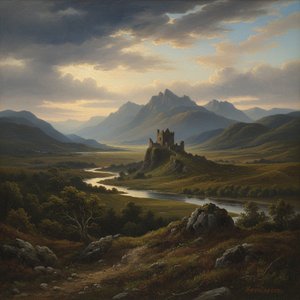
Alexander Nasmyth: Picturing Scotland's Romantic Landscape – Innovation & Identity
Explore the life & art of Alexander Nasmyth, a pivotal figure in Scottish Romantic landscape painting. Discover his iconic works, including portraits of Robert Burns, and learn about his lasting influence on national identity. Fine art reproductions available.

David Roberts: A Scottish Pioneer of Topographical Art & Orientalist Vision
Explore the captivating world of David Roberts, a pioneering Scottish painter renowned for his detailed Orientalist scenes & stunning Egyptian landscapes. Discover his legacy and find museum-quality reproductions at TopImpressionists.
Utforska konstverk sorterade efter tema, stil och egenskaper.


