


 Skicka
 Dela
Dela
 Detaljer
 Studentguide för konstverk

 Ladda ner
 Liknande objekt
 Bildspel
 Besökstatistik
Venus and Mars


Marvel at Antonio Canova's 'Venus and Mars,' a neoclassical sculpture celebrating peace & harmony. This iconic marble masterpiece, commissioned by the Prince Regent, embodies love and war’s union.
 Läs mer
Antonio Canova var enastående neoklassisk skulptör känd för sina eleganta marmorstatyer som Cupid & Psyche och de tre Gracerna. Hans verk återspeglar klassisk harmoni och har haft stor inverkan på konsthistorien.
Giclée / Konsttryck
Giclée- eller canvasprint av museumskvalitet med snabb produktion och flexibla ytbehandlingsalternativ. ( Köp handmålat konstverk Byt till digital bildförsäljning)




































Standardstorlek
anpassad
CM
INCH
Välj bland våra förinställda storlekar som motsvarar konstverkets ursprungliga proportioner.
Loading sizes...

bredd
höjd
Du kan ange egna mått för att passa en specifik ram eller yta. Om det valda måttet inte överensstämmer med originalbildens proportioner kommer vi antingen att beskära konstverket eller utöka bilden med en speglad eller enfärgad kant. En digital mockup skickas för ditt godkännande innan produktionen påbörjas.
Vänligen notera att förhandsvisningen på skärmen inte återspeglar den faktiska beskärningen eller utökningen. Endast mockuppen visar den slutgiltiga kompositionen korrekt.
Även om anpassade storlekar är möjliga, rekommenderar vi att du väljer ett mått från den fördefinierade listan för att bevara de ursprungliga proportionerna.
Leverans över hela världen () på 2 veckor istället för standard 4/5 veckor. (10 oktober)

Fri expressfrakt över hela världen

Högkvalitativ linnecanvas

Fullständig fraktförsäkring

Garantier för återbetalning av tullavgifter

Garantier för exakt färgåtergivning

100 dagars returrätt vid fabrikationsfel

100% pengarna tillbaka-garanti

Mängdrabatt erbjuds
 Glasalternativet är endast tillgängligt i storlekar under 110 cm.

Venus and Mars
Giclée / Konsttryck
Reproduktionsstorlek
-


Totalpris
Skr 669
A Moment of Divine Union: Antonio Canova’s “Venus and Mars”
Antonio Canova's "Venus and Mars," completed in 1822, is more than just a sculpture; it’s a carefully orchestrated tableau of opposing forces achieving an unexpected harmony. This magnificent marble work, currently residing within the Royal Collection at Buckingham Palace, offers a profound meditation on love, war, peace, and the enduring power of artistic creation. Commissioned by Prince Regent George IV during his visit to London, the sculpture represents a pivotal moment in Canova’s career – a bold departure from the rigid formality of Neoclassicism while firmly rooted in classical ideals.
The subject matter itself is strikingly original for its time. Rather than depicting Venus and Mars engaged in battle or mythological drama, as was common in earlier representations, Canova presents them in an intimate embrace. The goddess Venus, a figure synonymous with beauty, fertility, and love, is rendered with exquisite sensuality – her flesh soft and yielding, her limbs draped in delicate folds of fabric that hint at both vulnerability and power. Her gaze is directed towards Mars, the god of war, creating a dynamic tension within the composition. Mars, traditionally portrayed as a stern and imposing figure, stands powerfully upright, his musculature meticulously sculpted to convey strength and resolve. He holds his spear firmly in one hand, a symbol of his dominion over conflict, yet his posture suggests a willingness to yield to the allure of Venus’s affection.
The Neoclassical Masterstroke: Technique and Form
Canova's mastery of marble carving is immediately evident. The sheer scale of “Venus and Mars” – standing nearly two meters tall – commands attention, while the intricate detail of each muscle fiber, wrinkle, and drapery fold speaks to his unparalleled skill. The sculpture exemplifies the Neoclassical style, drawing inspiration from the idealized forms and balanced compositions of ancient Greek and Roman art. However, Canova transcends mere imitation; he infuses these classical elements with a profound sense of emotion and psychological depth. The smooth, polished surface of the marble creates an illusion of life, capturing the subtle nuances of human expression and movement.
The technique employed is particularly noteworthy. Canova utilized a subtractive method, carefully removing material from a larger block of Carrara marble to reveal the desired form. This process demanded immense patience and precision, allowing him to achieve an astonishing level of realism and anatomical accuracy. The subtle gradations in tone – achieved through meticulous polishing and shading – further enhance the sculpture’s three-dimensionality, creating a captivating interplay of light and shadow.
A Symbol of Reconciliation: Historical Context and Meaning
The creation of “Venus and Mars” coincided with the Congress of Vienna (1814–1815), an international conference that reshaped Europe after Napoleon’s defeat. The sculpture, therefore, can be interpreted as a potent symbol of reconciliation – a visual representation of the end of war and the dawn of a new era of peace. Venus, representing love and harmony, gently embraces Mars, signifying the triumph of diplomacy over conflict. This theme resonated deeply with Prince George IV, who commissioned the work to celebrate the restored stability of Europe.
Furthermore, Canova’s choice of depicting the figures in the nude was a deliberate artistic statement. In classical art, nudity served as a means of celebrating human beauty and virtue, stripping away artificial conventions to reveal the inherent dignity of the human form. By presenting Venus and Mars unclothed, Canova elevates their union to a realm of pure emotion and spiritual significance.
An Enduring Legacy: Emotional Impact and Artistic Significance
“Venus and Mars” continues to captivate viewers with its profound emotional resonance. The sculpture’s inherent tension – the interplay between love and war, beauty and strength – invites contemplation on the complexities of human nature. The figures' embrace is not merely a physical gesture; it represents a merging of opposing forces, suggesting that even the most seemingly irreconcilable elements can find harmony within themselves.
Beyond its historical and symbolic significance, “Venus and Mars” stands as a testament to Canova’s artistic genius. It remains one of his most celebrated works, admired for its technical brilliance, emotional depth, and enduring beauty. Reproductions of this iconic sculpture offer an opportunity to experience the power and grace of Canova's vision in any setting – a timeless reminder of the transformative potential of art.
Frågor och svar
Var kan jag ladda ner "Venus and Mars" av Antonio Canova?
En nedladdning finns tillgänglig för "Venus and Mars": verkets Ladda ner-sida erbjuder en högupplöst digital bildnedladdning.
Vem är upphovspersonen till "Venus and Mars" och inom vilken stilriktning?
"Venus and Mars" skapades av Antonio Canova i Neoclassical Sculpture-stil. Konstnären och stilen definierar verkets tradition.
När skapades "Venus and Mars"?
"Venus and Mars" av Antonio Canova skapades år 1816.
Vem har skapat "Venus and Mars"?
"Venus and Mars" tillskrivs Antonio Canova.
Hur välkänd är "Venus and Mars" av Antonio Canova?
"Venus and Mars" av Antonio Canova har en Iconic popularitetsnivå. Denna klassificering återspeglar hur väl känt verket är.
Hur gammal var Antonio Canova när "Venus and Mars" skapades år 1816?
Antonio Canova var 59 år gammal när hen skapade "Venus and Mars" år 1816. Åldern är beräknad utifrån konstnärens födelseår, 1757.
Är "Venus and Mars" av Antonio Canova fri från upphovsrätt?
Upphovsrättslig status för "Venus and Mars" av Antonio Canova: verket är allmän egendom – upphovsrätten har löpt ut. Detta avgör om reproduktioner av bilden får framställas fritt.
Om konstnären
Antonio Canova: Ett liv i marmor
- Född: Possagno, Italien (1757)
- Död: 1822
Antonio Canova står som en monumentall gestalt i den västerländska konsthistorien och betraktas allmänt som den främsta neoklassiska skulptören. Hans mästerskap i marmorhuggning och hans förmåga att besjäla klassiska former med djupgående känslor säkrade hans plats bland alla tiders största konstnärer. Canova föddes i Possagno, Italien, som son till stenhuggaren Pietro Canova, och hans tidiga liv formades av den konstnärliga miljö som omgav honom.
Tidigt liv och utbildning
- <Familjebakgrund: Hans fars yrke gav en första kontakt med stenhuggarkonsten, och hans farfar, Pasino Canुova, en skulptör specialiserad på altaren och lågrelief, spelade en avgörande roll i att odla hans talang.
- <Tidig konstnärlig utveckling: Redan före tio års ålder uppvisade Canova en anmärkningsvärd skicklighet genom att skapa små marmorskrin som visade hans medfödda förmåga. Han arbetade som lärling under Giuseppe Bernardi ('Torretto') och Giovanni Ferrari, vilket ytterligare förfinade hans färdigheter.
- <Studier vid akademin: Hans studier vid Accademia di Belle Arti di Venezia resulterade i ett flertal priser, vilket befäste hans rykte som en lovande ung konstnär. En verkstad inom ett kloster gav honom utrymme att utveckla sitt hantverk.
- <Tidiga uppdrag: Tidiga beställningar, såsom statyerna av Orfeus och Eurydike för senator Giovanni Falier (1775–1777), uppvisade en framväxande rokokostil som förebådade hans senare neoklassiska förfining.
Vägen till berömmelse och den neoklassiska stilen
- <Definitionen av neoklassicism: Canovas verk kännetecknas av eleganta former, idealiserade figurer och en återgång till de estetiska principerna från det antika Grekland och Rom. Han undvek skickligt barockkonstens melodrama, samtidigt som han motstod den kyla som ofta förknippades med tidigare försök till klassisk pånyttfödelse.
- <Huvudverk och erkännande: Skulpturer som Cupid och Psyke (ca 1787–1793), Den botfärdiga Maria Magdalena och Hercules och Lichas etablerade hans rykte över hela Europa. Hans arbete var högt eftertraktat av både kungligheter och adeln.
- <Främjande av sitt rykte: Canova främjade strategiskt sin karriär genom att publicera gravyrer av sina verk och skapa marmorversioner av gipsavgjutningar, vilket säkerställde en vidsträckt spridning av hans konst.
- <Internationellt erkännande: Uppdrag från hela Europa, inklusive en staty av Theseus och Minotaurus för Girolamo Zulian (den venetianska ambassadören i Rom), cementerade hans status som en av Europas mest hyllade konstnär.
Stora verk och arv
- <Betydande skulpturer: Utöver de redan nämnda inkluderar Canovas betydelsefulla verk Venus Italica, Musan Polyhymnia, De tre gracernas dans och hans gripande skildring av Eurydike.
- <Monumentala uppdrag: Han mottog prestigefyllda uppdrag för gravmonument, mest notabelt det påkostade Gravmonumentet över påve Clemens XIII i Peterskyrkan i Rom – ett bevis på hans skicklighet inom både skulptur och arkitektonisk design.
- <Gipsoteca Antonio Canova: Museet Gipsoteca Antonio Canova hyser den mest betydelsefulla samlingen av hans verk, vilket ger en ovärderlig inblick i hans kreativa process och konstnärliga evolution.
- <Inflytande på efterföljande generationer: Canovas inflytande sträckte sig långt bortom hans livstid; han formade den neoklassiska skulpturens bana och inspirerade generationer av konstnärer med sin tekniska mästerlighet och expressiva kraft.
Historisk betydelse
- <Neoklassicismens förkroppsligande: Antonio Canova blev synonym med den neoklassiska rörelsen och förkroppsligade dess ideal om ordning, klarhet och en återgång till antiken.
- <Hovskulptör och diplomat: Hans position som hovskulptör åt flera europeiska härskare gav honom betydande politiskt inflytande och gjorde det möjligt för honom att forma den konstnärliga smaken över hela kontinenten.
- <Teknisk innovation: Canovas oöverträffade skicklighet i att hugga marmor tänjde på gränserna för vad som ansågs vara möjligt och satte en ny standard för skulptural excellens.
- <Ett bestående konstnärligt arv: Hans skulpturer fortsätter att fängsla publiken världen över och befäster hans plats som en av de viktigaste och mest inflytelserika konstnärerna i historien.

Antonio Canova
1757 - 1822 , Italien
Snabbfakta
- Artistic Movement Or Style: Neoklassisk
- Artists Or Movements Influenced By This Artist: ['Senbarock']
- Artists Who Influenced This Artist: ['Barockskulptörer']
- Date Of Birth: 1757
- Date Of Death: 1822
- Full Name: Antonio Canova
- Nationality: Italiensk
- Notable Artworks:
- Cupid & Psyche
- Gracerna
- Hercules
- Place Of Birth: Possagno, Italien
Relaterade artiklar
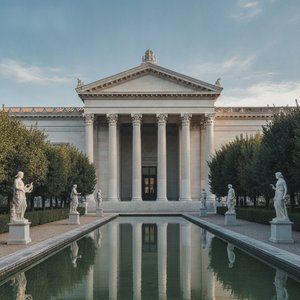
Neoclassicism Unveiled: Discovering the Timeless Elegance and Rational Order of Classical Art
Unveil the timeless elegance of Neoclassicism. Journey through an era defined by reason, order, and the revival of Greco-Roman ideals. Our expert exploration offers a sophisticated look at the transition from Rococo excess to classical precision for the true art enthusiast.

The Timeless Elegance of Academic Classicism: A Journey Through Order, Precision, and the Pursuit of Perfection
Explore the profound beauty of Academic Classicism. Discover how masters used order, precision, and classical ideals to achieve timeless perfection in art history, from Neoclassical portraits to the pursuit of ideal beauty.

The Eternal Beauty of Marble: A Guide to Sculpting Light, Stone, and the Soul of Art History
Explore the sublime artistry of marble sculpture. From Greek antiquity to the masters of light, discover how stone captures the eternal essence of human beauty and emotion through expert craftsmanship and historical mastery.
Utforska konstverk sorterade efter tema, stil och egenskaper.
