


 Visa i rummet
 Skicka
 Dela
Dela
 Detaljer
 Studentguide för konstverk

 Ladda ner
 Liknande objekt
 Röntgen
 Bildspel
 Besökstatistik
Model


Cristóbal Balenciaga’s ‘Model’ (1967) captures a striking tweed suit – elegant, geometric & timeless. Explore this iconic fashion photograph and discover the legacy of the 'Master Couturier'.
 Läs mer
Cristóbal Balenciaga: En revolutionerande spansk haute couture-designer känd för sin elegans och innovativa skulpturala design. Upptäck hans arv!
Konstverket som visas på denna sida skyddas av upphovsrättslagen, vilket innebär att vi inte lagligt kan skapa eller sälja en identisk reproduktion. Detta skydd upprätthålls genom internationella avtal såsom den Bernkonventionen och genom nationella lagar, inklusive de som fastställs av Amerikansk upphovsrättslag – Titel 17. Alla rättigheter förbehållna. Återgivning av konstverk är förbjuden utan skriftligt tillstånd från WahooArt.
Som ett respektfullt och lagligt alternativ erbjuder vi skräddarsydda, handmålade konstverk inspirerade av originalet. Våra skickliga och professionella konstnärer studerar noggrant originalets stil, stämning och konstnärliga essens för att skapa ett nytt, unikt verk som väcker samma känsla – samtidigt som det förblir en originell skapelse i egen rätt.
Denna metod följer fullt ut upphovsrättsliga regler eftersom den inte innebär kopiering eller duplicering av det skyddade konstverket. Istället är det en kreativ nytolkning – en ny målning som är influerad av originalet men inte identisk med det.
Handgjord oljereproduktion
Handmålad olja på duk i din valda storlek och ram, tillverkad efter beställning av våra konstnärer. ( Byt till tryckta exemplar Byt till digital bildförsäljning)




P118B Skr10

P118H Skr10

P118W Skr10

P438Z Skr10

P508JH Skr12

P508YH Skr12

P805H Skr10

P805Z Skr10

P919BZ Skr10

P919G Skr10

P919XJ Skr10

P959ZH Skr10

P968JZ Skr12

W106C Skr8

W218G Skr10

W218JH Skr8

W218Y Skr10

W307PJ Skr10

W316G Skr10

W316PJ Skr8

W316Y Skr10

W398PJ Skr8

W4111J Skr10

W500HY Skr15

W500JH Skr15

W692G Skr12

W849H Skr8

W940BG Skr15

W953PJ Skr8




Standardstorlek
anpassad
CM
INCH
Välj bland våra förinställda storlekar som motsvarar konstverkets ursprungliga proportioner.
Loading sizes...

bredd
höjd
Ange den bredd och höjd du behöver för att passa din ram eller din vägg. Eftersom detta är handmålat kan konstnären vid en annan form måla lite mer runt bilden eller beskära den något – du väljer själv. Vi skickar en digital mockup för godkännande innan målningen påbörjas. Bilden som visas på denna sida representerar inte det slutgiltiga resultatet — det är endast mockuppen som visar det.
Exempel på vad som kan anpassas: Byt ut ansiktet mot ett foto av kunden; Lägg till ett husdjur (t.ex. byt ut en katt mot en hund); Inkludera ett dolt meddelande i bakgrunden; Ändra bakgrundens landskap eller element.
Efter beställning kommer TopImpressionists.com team att mejla kunden för instruktioner och tillhandahålla en skissförhandsvisning
Efter beställning kommer TopImpressionists.com team att mejla kunden för instruktioner och tillhandahålla en skissförhandsvisning
Leverans över hela världen () på 3–4 veckor istället för standard 5 veckor. (25 oktober). Inga kompromisser med kvaliteten.

Fri expressfrakt över hela världen

Högkvalitativ linnecanvas

Fullständig fraktförsäkring

Garantier för återbetalning av tullavgifter

Garantier för exakt färgåtergivning

100 dagars returrätt vid fabrikationsfel

100% pengarna tillbaka-garanti

Mängdrabatt erbjuds
 Glasalternativet är endast tillgängligt i storlekar under 110 cm.

Model
Tryckteknik
Reproduktionsstorlek
-


Totalpris
Skr 2666
The Enigmatic Silhouette: Unpacking Cristóbal Balenciaga’s ‘Model’
Cristóbal Balenciaga’s 1966 photograph, “Model,” isn't merely a portrait; it’s a distilled essence of the designer’s revolutionary approach to fashion. The image captures a woman, her form enveloped in a striking tweed suit – a garment that immediately speaks of geometric precision and timeless elegance. Yet, beneath this surface simplicity lies a profound exploration of structure, proportion, and the very nature of representation. The photograph, often cited as one of Balenciaga’s most iconic works, transcends its status as a simple fashion image, offering a glimpse into the meticulous process and philosophical underpinnings of his design philosophy.
Balenciaga's genius wasn’t simply about creating beautiful clothes; it was about dissecting them, understanding their fundamental components, and rebuilding them with an almost architectural rigor. “Model” exemplifies this perfectly. The tweed itself is a deliberate choice – a robust, slightly stiff material that resists the drape of traditional fabrics, demanding a precise construction. Notice how the seams are barely visible, suggesting a layering technique designed to create volume without adding bulk. This restraint, this careful control over the fabric’s behavior, is characteristic of Balenciaga's work and reflects his deep understanding of materials – he considered himself more a craftsman than a designer in the conventional sense.
A Masterclass in Architectural Form
The suit’s silhouette isn’t simply flattering; it’s deliberately constructed to evoke a sense of solidity and strength. The fitted bodice, the subtly flared skirt – each element contributes to an overall impression of contained power. Balenciaga was deeply influenced by the art movements of his time, particularly Surrealism and Cubism, which encouraged him to deconstruct familiar forms and reassemble them in unexpected ways. This is evident in the suit’s sharp angles and its almost sculptural quality. The photograph itself becomes a study in form – a meditation on how shape can convey meaning and emotion.
The choice of David Bailey as the photographer further enhances the image's impact. Bailey, known for his stark, black-and-white portraits, captures the subject with an unflinching gaze, emphasizing her posture and the suit’s impeccable tailoring. The lighting is carefully controlled, highlighting the textures of the tweed and casting subtle shadows that accentuate the garment’s three-dimensional form. Bailey's skill lies in revealing the underlying structure of the image, mirroring Balenciaga’s own approach to design.
Echoes of a Lost Era: Context and Legacy
“Model” was created during a pivotal moment in fashion history – the mid-1960s. While Yves Saint Laurent was injecting youthful energy into Parisian couture with his Le Smoking tuxedo, Balenciaga remained steadfastly committed to his own vision of timeless elegance. His designs were often perceived as being ahead of their time, challenging conventional notions of beauty and femininity. The photograph serves as a reminder of this period of creative experimentation and the enduring influence of Balenciaga’s work.
The image also speaks to the broader cultural context of the era – a fascination with architecture, technology, and industrial design. Balenciaga's designs were often described as “architectural,” reflecting a growing interest in geometric forms and functional aesthetics. The photograph captures this spirit perfectly, suggesting that fashion could be both beautiful and intellectually stimulating.
A Timeless Icon: Reproduction and Inspiration
Today, “Model” remains one of the most recognizable images in the history of fashion photography. Its enduring appeal lies in its combination of technical skill, artistic vision, and emotional resonance. Reproductions of this photograph are highly sought after by collectors and interior designers alike, who appreciate its timeless elegance and its ability to evoke a sense of sophistication and refinement. When commissioning a hand-painted reproduction, it’s crucial to select an artist who understands Balenciaga's meticulous approach to detail and his commitment to capturing the essence of his designs.
Frågor och svar
Vad förklarar upphovsrättssituationen för "Model" av Cristóbal Balenciaga?
Upphovsrättsläget för "Model" - fortfarande skyddat av upphovsrätt - grundar sig på konstnärens dödsår 1972.
Vilket material har "Model" använts med, och i vilken stil är det utfört?
"Model" är utförd i Acrylic On Canvas, i Early Modernism-stil.
Stannade "Model" i sin konstnärs hemland?
Ja – konstverket förvaras i konstnärens hemland. Cristóbal Balenciaga föddes i Spanien, och museet som förvarar originalet av "Model" ligger i Spanien.
Om konstnären
Early Life and Artistic Roots
Cristóbal Balenciaga Eizaguirre, en enastående spansk modeskapare, föddes 1895 i den pittoreska fiskebyn Getaria på Baskernas norra kust. Hans barndom präglades av ett starkt band till havet och hans mors yrke som sömmerska – en verksamhet som från tidig ålder gav honom insikt i världens konstnärliga skönhet och den minutiösa precisionen som krävs för att skapa vackra ting. Getaria, med sin dramatiska kustlinje och starka kulturella arv, skulle komma att forma Balenciagas unika stil och hans tidiga visioner. Hans far var skeppsman och ordförande i byn, vilket gav honom en kontakt med samhällets ledare och en exponering för den lokala traditionen. Denna kombination av havet, familjen och lokala kulturen skulle senare bli en viktig inspirationskälla för hans designarv. Balenciagas tidiga intresse för mode väcktes genom hans mors arbete. Hon arbetade för en förmögen marchioness som summerade i Getaria och därifrån fick han chansen att studera hos den berömda sömmerskan Blanca Carrillo de Albornoz. Denna tidiga exponering för haute couture, tillsammans med hans mors praktiska kunskaper och hans egen nyfikenhet, lade grunden för hans framtida karriär. Han började som lärling i en lokal skräddare, där han snabbt visade ett exceptionellt talent för att förstå tygers egenskaper och deras potential.Parisian Breakthrough and Artistic Influences
År 1917 flyttade Balenciaga till Paris, den internationella modens hjärta, för att fortsätta sin utbildning. Han arbetade hos Jacques Doucet, en pionjär inom haute couture, där han lärde sig de mest avancerade teknikerna och utvecklade sin egen stil. Det var i Paris som hans unika vision började ta form – en kombination av traditionell skicklighet och en djup förståelse för form och proportioner. Han inspirerades starkt av den spanska renässansen, särskilt de dramatiska kostymerna som bar av drottning Isabella II och de eleganta klänningarna från 1700-talet. Balenciagas stil var inte bara en kopia av historiska stilar; han transformerade dem med sin egen unika tolkning. Han var också influerad av den avantgardistiska konsten, särskilt surrealismen och primitivismen. Verk som "Study to 'Song of Songs IV'" visar hans experimentella syn på mode och hans förmåga att skapa abstrakta och symboliska uttryck. Hans intresse för naturen, illustrerat i verk som "Tree Roots", speglar en djup respekt för den naturliga världen och dess komplexa former. Han var också fascinerad av surrealistiska idéer om drömvärldar och det undermedvetna, vilket manifesterades i hans avantgardistiska designarbeten.The Master of Couture and Revolutionary Silhouettes
Balenciagas genombrott kom under 1930-talet, då han öppnade sitt eget modehus i Paris. Han blev snabbt känd för sin tekniska skicklighet och sina innovativa silhuetter. Han var inte bara en designer; han var en mästare på tyg, som kunde forma och manipulera material till fantastiska former. Hans tidiga kollektioner präglades av eleganta linjer, dramatiska volymer och en stark känsla för proportioner. En av hans mest ikoniska innovationer var "sack dressen" från 1957 – en enkel, rakt fallande klänning utan midja som utmanade den traditionella kvinnliga figuren. Denna design, tillsammans med andra banbrytande plagg som "balloon hems" och "baby doll dresses", revolutionerade dammodet och påverkade generationer av designers. Han var känd för att inte följa trender, utan istället skapa dem själv.Legacy and Lasting Influence
Cristóbal Balenciaga dog 1972 i Xàbia, Spanien, men hans arv lever vidare. Han anses vara "The Master" av haute couture, en titel som bevisar hans exceptionella skicklighet och hans inflytande på modevärlden. Hans designarv fortsätter att inspirera designers idag, och hans verk visas fortfarande i museer runt om i världen. Hans fokus på precision, teknik och form har gjort honom till en av de mest respekterade och älskade designersen genom tiderna. Balenciagas arbete är ett bevis på att mode kan vara både konstnärligt och tekniskt, och att det kan vara en kraftfull uttrycksform för mänsklig kreativitet.
Cristóbal Balenciaga
1895 - 1972 , Spanien
Snabbfakta
- Artistic Movement Or Style: Avant-garde / Surrealism
- Artists Or Movements Influenced By This Artist: ['Velázquez']
- Artists Who Influenced This Artist:
- Chanel
- Dior
- Date Of Birth: 21 januari 1895
- Date Of Death: 23 mars 1972
- Full Name: Cristóbal Balenciaga Eizaguirre
- Nationality: Spansk
- Notable Artworks:
- Study 'Song of Songs IV'
- Trädrotter
- Akrobat
- Place Of Birth: Getaria, Spanien
Relaterade artiklar

Gianfranco Ferré: Deconstructing Haute Couture – A Legacy of Architectural Form
Explore the revolutionary world of Gianfranco Ferré, 'the architect of fashion.' Discover his architectural approach to haute couture, iconic Dior designs, and lasting influence on luxury style. A deep dive for collectors & enthusiasts.

Cristóbal Balenciaga: Deconstructing Haute Couture's Architectural Legacy
Explore the revolutionary world of Cristóbal Balenciaga, the 'couturier's couturier'. Discover his architectural designs, lasting influence on haute couture, and guide to collecting rare pieces. A connoisseur’s resource.

Draped Narratives: Fashion as Symbol & Subject in Historical Art
Explore the fascinating history of fashion as a symbol of power & status in art! Discover masterpieces from Gainsborough to Tissot and learn how clothing shaped societal narratives. Find museum-quality reproductions at TopImpressionists.
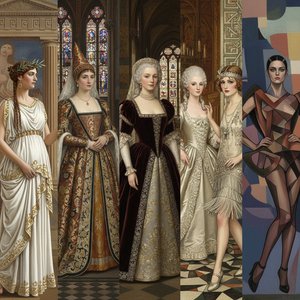
Style Through the Ages: Iconic Artworks That Defined the Evolution of Fashion Design
Explore the breathtaking intersection of fine art and high fashion. Discover how iconic masterpieces from Art Deco to Impressionism have shaped the world of luxury couture and timeless design in this curated visual journey.

The Lens of Luxury: A Visual Journey Through the Evolution and Artistry of Fashion Photography
Embark on a visual journey through the evolution of fashion photography. Discover how masters like Gianfranco Ferré blended geometry, surrealism, and texture to redefine high-fashion art for collectors and connoisseurs of luxury imagery.
Utforska konstverk sorterade efter tema, stil och egenskaper.

