
Visas: · Med ram:
 Förhandsvisa
 Skicka
 Dela
Dela
 Visa detaljer
 Guide
Guide

 Ladda ner
 Liknande objekt
 Röntgen
 Bildspel
 Frågor och svar
 Statistik
- 187.0 x 107.0 cm


Skr 2699
Handgjord oljereproduktion
Handmålad olja på duk i din valda storlek och ram, tillverkad efter beställning av våra konstnärer. ( Byt till tryck Byt till digital bild)
Storlek
·Standardstorlek
skräddarsydd
CM
INCH
Välj bland våra förinställda storlekar som motsvarar konstverkets ursprungliga proportioner.
Laddar storlekar...

bredd
höjd
Ange den bredd och höjd du behöver för att passa din ram eller din vägg. Eftersom detta är handmålat kan konstnären, vid ett annat format, måla lite mer runt bilden eller beskära den något – det är du som väljer. Vi skickar en digital mockup för godkännande innan målningen påbörjas. Bilden som visas på denna sida representerar inte det slutgiltiga resultatet — det är endast mockuppen som visar det.
 Läs mer
Slutför
·
Vit kant Skr1

Suddig kantfinish Skr1

Fortsatt motiv Skr1

P118B Skr10

P118H Skr10

P118W Skr10

P438Z Skr10

P508JH Skr12

P508YH Skr12

P805H Skr10

P805Z Skr10

P919BZ Skr10

P919G Skr10

P919XJ Skr10

P959ZH Skr10

P968JZ Skr12

W106C Skr8

W218G Skr10

W218JH Skr8

W218Y Skr10

W307PJ Skr10

W316G Skr10

W316PJ Skr8

W316Y Skr10

W398PJ Skr8

W4111J Skr10

W500HY Skr15

W500JH Skr15

W692G Skr12

W849H Skr8

W940BG Skr15

W953PJ Skr8

H24-GOLD Skr30

H24-SILVER Skr30

H36-GOLD Skr45

H36-SILVER Skr45
Skickas i ett skyddande rör, redo att ramas in av din egen inramare.
För mått över 105 cm levereras ramen som ett kit för en professionell ramverkare — läs detaljerna.
Tillval
valfrittVad ingår i tilläggen?
Exempel på vad som kan ändras: Byt ut ansiktet mot kundens eget foto; Lägg till ett husdjur (t.ex. byt ut en katt mot en hund); Inkludera ett dolt meddelande i bakgrunden; Ändra landskap eller element i bakgrunden.
Efter beställning kommer TopImpressionists.com team att skicka ett e-postmeddelande till kunden för instruktioner och tillhandahålla en förhandsvisning av utkastet
Efter beställning kommer TopImpressionists.com team att skicka ett e-postmeddelande till kunden för instruktioner och tillhandahålla en förhandsvisning av utkastet
Leverans över hela världen () på 3–4 veckor istället för standard 5 veckor. (10 november). Inga kompromisser med kvaliteten.
Skyddande fernissa
Namnskylt
Detaljer för graverad bronsplatta
This elegant plaque features the artist's name and the title of the artwork, finely engraved for a timeless presentation.
It is made from bronze with a refined, elegant finish. The text is precisely laser-engraved for a sharp and permanent result. Measuring 9x2 cm, the plaque is compact yet easy to read. It's built to be durable and scratch-resistant, offering a professional, museum-quality look. Mounting is simple thanks to the included adhesive backing.
Detaljer för transparent akrylplatta
The plaque includes essential engraved details such as the artist's name, the title of the artwork, the date it was created, the type of media used-like oil on canvas or watercolor-a brief description of the piece, and a QR code that links to the complete artwork information.
It is crafted from clear acrylic, offering a sleek, modern appearance. The text is UV-engraved in black to ensure strong visual contrast. With a size of 10x15 cm, it ensures optimal readability. It comes equipped with two metal hooks for secure wall mounting. The plaque is designed to be weather-resistant, making it suitable for various environments, and it includes interactive features that work seamlessly with smartphone scanning.
Detaljer för svart akrylplatta
This elegant plaque includes engraved information such as the artist's name, the title of the artwork, the date it was created, the type of media used (like oil on canvas or watercolor), a short description of the artwork, and a QR code for quick access to more information.
The plaque itself is made from refined black acrylic with a premium finish. The text is laser-engraved in white for high contrast and readability. Its size is 10x15 cm, designed to be easy to read. It comes with two metal hooks for professional mounting. The design is sleek and fits any interior style. It is also weather-resistant and durable, with built-in digital integration for mobile compatibility.
Glasalternativet är endast tillgängligt i storlekar under 110 cm.
 Glasalternativet är endast tillgängligt i storlekar under 110 cm.
- Fri expressfrakt över hela världen
- Högkvalitativ linnecanvas
- Fullständig fraktförsäkring
- Garantier för återbetalning av tullavgifter
- Garantier för exakt färgåtergivning
- 100 dagars returrätt (endast vid fel)
- 100% pengarna tillbaka-garanti
- Mängdrabatt erbjuds


Beskrivning av samlarobjekt
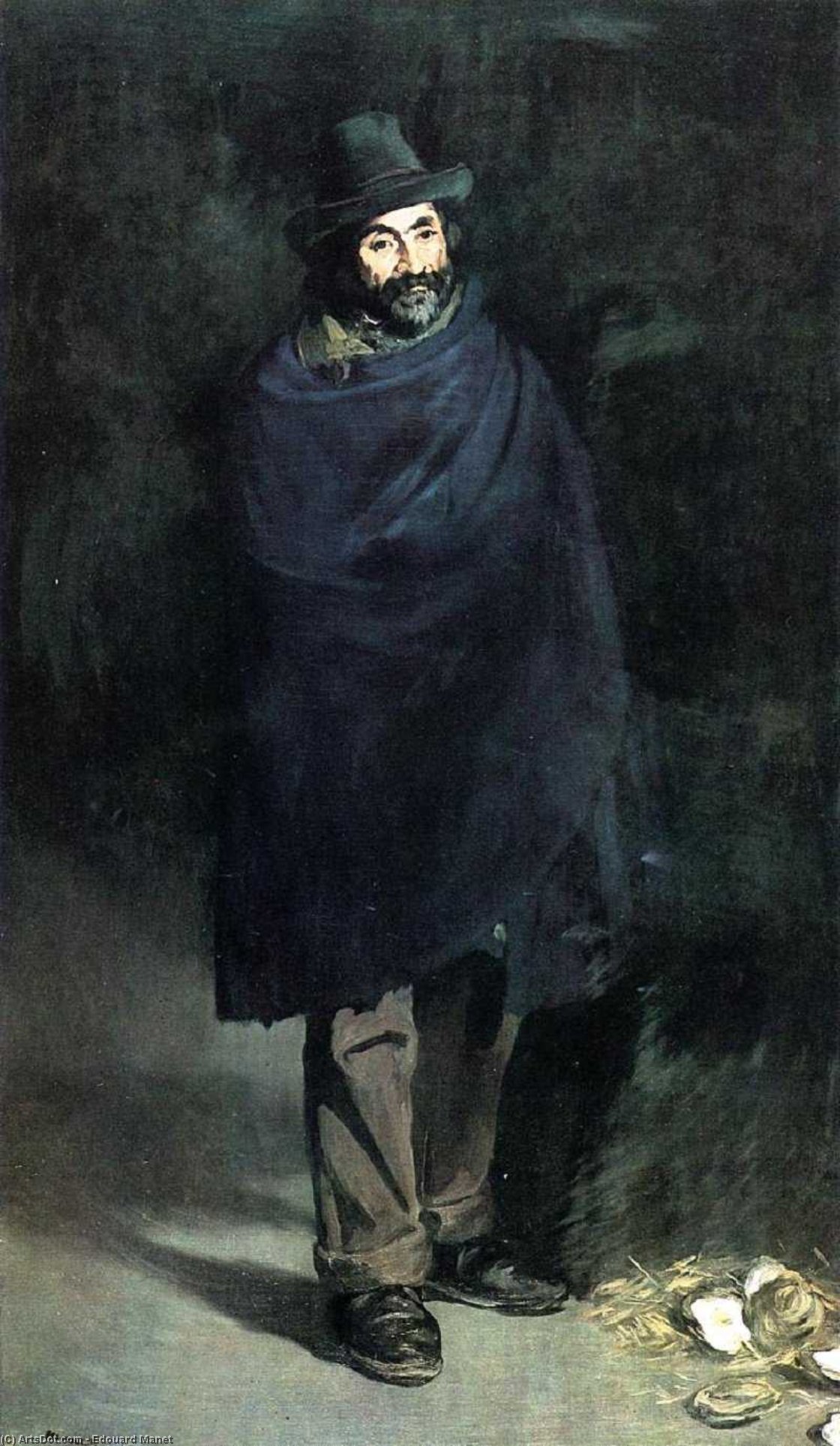
Édouard Manet's 'The Philosopher' (1867) captures a contemplative figure amidst nature, blending Realism and Impressionism. Explore the painting’s symbolism, artistic context, and legacy at The Art Institute of Chicago.
Konstnärens biografi
Manet förenade realism och impressionism med Olympia. Upptäck detta parisiska mästerverks revolutionerande verk.
Om målningen
The Philosopher: A Window into Manet’s Modern Soul
Édouard Manet's *The Philosopher*, painted in 1867, isn’t merely a portrait; it’s a carefully constructed tableau that encapsulates the burgeoning spirit of modern art. This oil-on-canvas work, measuring a substantial 187 x 107 cm, invites us into a quiet contemplation, a moment suspended between observation and thought. The subject, a man draped in a long coat and hat – a figure instantly recognizable as embodying intellectualism – stands on a Parisian street, his hands tucked casually into his pockets, radiating an aura of profound introspection. Yet, it’s not the individual that commands our attention entirely, but rather the subtle orchestration of elements surrounding him: the birds perched above, the clock subtly hinting at time's passage, and the carefully chosen background details. These aren’t merely decorative flourishes; they contribute to a layered narrative, inviting us to consider the nature of existence itself. The painting emerged from a pivotal moment in art history – a period of intense transition between Realism and Impressionism. Manet, already known for his provocative works like *Le Déjeuner sur l'herbe* and *Olympia*, was pushing boundaries with each new creation. He deliberately challenged academic conventions by depicting everyday life, often featuring ordinary people in unidealized ways. *The Philosopher* exemplifies this approach, eschewing the polished surfaces and heroic narratives favored by earlier generations of artists. Instead, Manet presents a scene stripped bare of sentimentality, focusing on the raw reality of urban existence. The muted palette – dominated by browns, grays, and ochres – reinforces this sense of understated observation. Notice how he employs loose brushstrokes, characteristic of his style, creating an almost hazy effect that softens the edges and contributes to the painting’s contemplative mood. Manet's stylistic choices are deeply rooted in both Realism and Impressionism. He retains a degree of realism in his depiction of the subject and setting, meticulously rendering the details of the man’s clothing and the streetscape. However, he also embraces the Impressionist emphasis on capturing fleeting moments of light and color. The dappled sunlight filtering through the background suggests movement and atmosphere, while the subtle shifts in tone create a sense of depth and spatial ambiguity. This blending of styles – realism tempered by impressionistic sensitivity – is what makes Manet such a revolutionary figure. He wasn’t simply painting what he saw; he was actively shaping how we perceive the world around us. The inclusion of birds, for instance, adds a layer of symbolic richness. Birds are often associated with freedom and intellect, further reinforcing the subject's philosophical nature. The historical context surrounding *The Philosopher* is crucial to understanding its significance. Manet’s work coincided with a period of rapid social and economic change in Paris – the rise of industrialization, urbanization, and a growing sense of alienation. His paintings reflected this turbulent atmosphere, capturing the anxieties and uncertainties of modern life. The painting's placement within the broader context of Manet's career reveals his deliberate attempt to challenge established artistic norms and pave the way for future generations of artists. *The Philosopher* stands as a testament to Manet’s innovative spirit and his profound impact on the development of modern art, ultimately finding its home in the prestigious Art Institute of Chicago, where it continues to captivate viewers with its quiet intensity and enduring relevance.Artistic Details & Symbolism
Let's delve deeper into the specific details that contribute to *The Philosopher’s* evocative power. The man himself is presented in a state of profound contemplation, his gaze directed towards an unseen horizon. His beard and mustache lend him an air of intellectual authority, solidifying his role as a philosopher. Note the careful rendering of his clothing – the long coat, the hat, the simple pocket watch – each element contributing to a sense of timelessness and dignity. The background is equally significant. The two birds perched above suggest a connection to nature, while the clock subtly reminds us of the relentless passage of time. These seemingly minor details are carefully orchestrated to create a harmonious whole, inviting viewers to engage in their own interpretations.Manet’s Legacy & Influence
Édouard Manet's influence on subsequent generations of artists is undeniable. His willingness to challenge conventions and depict modern life with unflinching honesty paved the way for Impressionism and beyond. Artists like Claude Monet, Pierre-Auguste Renoir, and Edgar Degas were deeply influenced by Manet’s techniques and his approach to subject matter. *The Philosopher*, in particular, demonstrates Manet's ability to capture a fleeting moment of human experience with remarkable sensitivity and insight. His work continues to inspire artists today, reminding us of the power of art to challenge our perceptions and expand our understanding of the world.Reproductions & Viewing Experience
TopImpressionists offers meticulously crafted hand-painted reproductions of *The Philosopher*, capturing the essence of Manet’s original masterpiece with unparalleled fidelity. Our skilled artisans employ traditional oil painting techniques, carefully recreating every brushstroke and nuance of color. These reproductions are not merely copies; they are works of art in their own right, imbued with the same spirit and emotion as the original. Whether you choose a large-scale statement piece for your home or a smaller, more intimate reproduction to adorn your office, our hand-painted versions will bring this iconic artwork into your space, allowing you to appreciate its beauty and complexity for years to come. Explore our collection today and experience *The Philosopher* in a whole new light.Frågor och svar
Vem är konstnären bakom "The philosopher"?
Konstnären bakom "The philosopher" är Édouard Manet. Verket är katalogiserat under Édouard Manets namn.
Vilken typ av konstverk är "The philosopher" av Édouard Manet?
"The philosopher" av Édouard Manet är klassificerat som Väggkonst. Kategorin beskriver vilken typ av konstverk originalet är.
Är "The philosopher" av Édouard Manet fri från upphovsrätt, och varför?
Upphovsrättsläget för "The philosopher" - allmän egendom – upphovsrätten har löpt ut - baseras på konstnärens dödsår 1883.
Snabbfakta och konstquiz
Om Édouard Manet

Édouard Manet
1832 - 1883, Frankrike
Konstnärsbiografi
Tidigt liv, familj och utbildning
Édouard Manet föddes i Paris den 23 januari 1832. Han växte upp i ett välbärgat hem som äldsta son till en man med en framstående position inom det franska justitiedepartementet. Hans far hade sett framför sig en helt annan livsväg för sin son, en karriär inom flottan eller juridiken. Den unge mannen försökte följa denna förväntade riktning, men efter att ha misslyckats med antagningsproven till flottakademin vid två tillfällen, omdirigerades hans fokus mot ateljén. Det var genom att slutligen presentera en portfölj med målningar för sin far, som ett bevis på sin hängivenhet till konsten, som han till slut fick den tillåtelse som krävdes för att påbörja sina formella studier.
Mellan åren 1850 och 1856 fick han sin skolning i Thomas Coutures ateljé. Även om han där lade grunden för den akademiska målningens tekniska fundament, vandrade hans blick ofta mot Louvren. Han tillbringade mycket av sin tid i gallerierna, stående framför de gamla mästarnas dukar för att studera och efterlikna deras metoder. Genom att studera hur de hanterade ljus och form, absorberade han det förflutnas läxor samtidigt som han förberedde sig för att finna sin egen, unika väg. Denna period av intensivt studerande gav honom den tekniska grund som senare skulle möjliggöra hans radikala brott med traditionen.
Teknik och konstnärlig stil
Dukens yta avslöjar ett medvetet avsteg från den polerade och osynliga finish som krävdes av Salongen. Istället för att jämna ut penseldragens spår, möts vi av en synlig och energisk applicering av pigment, känd som facture. Detta tillvägagångssätt prioriterar själva färgens fysiska verklighet. Genom att använda alla prima eller vått-i-vått-teknik läggs färgerna på medan de fortfarande är färska, vilket fångar en omedelbar kvalitet som undviker de traditionella akademiska metodernas långsamma, lager-på-lager-uppbyggnad. Denna metod tillåter en viss spontanitet i hur ljus och atmosfär registreras på duken.
Det finns en påtaglig platthet i hur formerna är konstruerade. Ett löst hanterande av penseln undviker den tunga modellering som används för att skapa djupa, tredimensionella illusioner. Istället känns det bildmässiga rummet ofta komprimerat. Denna effekt förstärks av användningen av starka, kontrasterande toner. Istället för att förlita sig på gradvisa färgskalor för att definiera form, använder verket ofta skarpa skiftningar i valör för att antyda stadens fragmenterade, moderna ljus. Detta avvisande av matematiskt perspektiv och sömlös blandning skapar en känsla av omedelbarhet, som om bilden sätts samman direkt framför betraktarens öga.
Skandalen med de moderna motiven
Mitten av 1860-talet förde med sig en serie konfrontationer med det offentliga ögat. År 1863 erbjöd Salon des Refusés en scen för de verk som de officiella juryerna hade avvisat. Bland dessa fanns Le Déjeuner sur l'herbe, en målning som omedelbart väckte upprördhet. Den förlitade sig inte på de vanliga mytologiska eller bibliska ursäkterna för att presentera nakenhet; istället placerade den en naken kvinna i en picknickmiljö tillsammans med två fullt klädda män. Detta vägran att tillhandahålla en historisk eller gudomlig kontext lämnade betraktaren med ingenting annat än det samtida livets råa närvaro.
Spänningen ökade ytterligare 1865 i samband med utställningen av Olympia. Detta verk betraktades som det mest chockerande stycket på Salongen. Det tog kompositionen från Tizians Venus av Urbino och skalade bort mytens skyddande lager, och ersatte en gudinna med en samtida prostituerad. Hon vände inte bort blicken eller bjöd in till beundrande anblick; hon stirrade tillbaka med en direkthet som många fann obehaglig. Kritikerna riktade sin vrede mot denna brist på idealisering och det osminkade i motivet.
Utöver valet av motiv mötte även sättet som färgen applicerades på hård kritik. Många observatörer angrep det synliga, energiska penseldraget och bristen på en polerad, sömlös finish. De såg fel i perspektivet och ett misslyckande att följa de traditionella reglerna för dekorum. Det som vissa kallade inkompetens, erkände andra som ett medvetet val för att visa färgens verklighet på duken, snarare än ett fönster in i en dröm.
Centrala verk och mästerverk
År 1861 skapade han The Spanish Singer, ett verk som belönades med en hedersomnämnelse på Salongen. Målningen föreställer en modell i andalusisk dräkt som håller en gitarr på ett sätt som antyder att ackorden pressas av en vänsterhänt musiker, trots att instrumentet är stämt för en högerhänt. Detta lilla, medvetna misstag vilar sida vid sida med ett stereotypiskt spanskt stilleben placerat vid modellens fötter.
Hans penseldrag berörde ofta det omedelbara och det politiska. År 1867 målade han The Execution of the Emperor Maximilian of Mexico. Senare, när hans hälsa började svikta under det sena 1870-talet, skiftade hans fokus mot mindre och mer intima motiv. Vid 1882 hade han färdigställt A Bar at the Folies-Bergère, en målning som fångar atmosfären på ett modernt kafé med en känsla av psykologisk tvetydighet. Mot slutet av sitt liv, omkring 1883, vände han sin uppmärksamhet mot stilleben, såsom Two roses on a tablecloth.
- The Spanish Singer (1861)
- The Execution of the Emperor Maximilian of Mexico (1867)
- A Bar at the Folies-Bergère (1882)
- Two roses on a tablecloth (ca 1883)
Cirkel, rivaler och influenser
Hans penseldrag bär på tyngden av de mästare han studerade i Louvren. Han blickade mot Caravaggios dramatiska ljusspel och Velázquez flytande, mörka toner för att finna en väg framåt. Från Goya lånade han en viss direkthet som kringgick behovet av polerade, akademiska ytfinishar. Detta var inte bara enkla studier; de var de verktyg han använde för att montera ner Salongens förväntningar. Han föredrog närvaron av en enskild, kraftfull färg framför en gradvis blandning av toner.
I Paris kaféer och intellektuella kretsar rörde han sig bland de människor som skulle komma att omdefiniera en hel era. Han delade rum och idéer med Claude Monet och Edgar Degas, män som också ständigt pressade gränserna för vad en målning kunde vara. Hans privatliv var på samma sätt sammanflätat med avantgardet; hans svägerska var konstnären Berthe Morisot. Även om han ofta sökte de officiella institutionernas godkännande, var hans sanna likasinnade de som verkade i skuggan av de etablerade akademierna.
Han fann en tidig och högljudd försvarare i en skribent som såg framtiden i hans kontroversiella dukar. Denna förespråkare publicerade glödande skildringar av hans arbete, vilket hjälpte till att forma hans plats i en konstvärld i förändring. Även när allmänheten reagerade med fientlighet mot hans moderna motiv, utgjorde detta stöd en nödvändig motvikt till de kritiker som fann hans stil ofärdig eller hans teman opassande. Han förblev en gestalt fångad mellan akademins gamla värld och stadens nya, rastlösa energi.
Snabbfakta om Édouard Manet
- Artistic Movement Or Style: Realism, Impressionism, Avant-garde
- Artists Or Movements Influenced By This Artist:
- Impressionism
- Avant-garde
- Claude Monet
- Berthe Morisot
- Edgar Degas
- Gauguin
- Artists Who Influenced This Artist:
- Caravaggio
- Diego Velázquez
- Francisco Goya
- Titian
- Raphael
- Frans Hals
- Peter Paul Rubens
- Date Of Birth: 1832
- Date Of Death: 1883
- Full Name: Édouard Manet
- Nationality: Fransk
- Notable Artworks:
- Olympia
- Le Déjeuner sur l'herbe
- A Bar at the Folies-Bergère
- Place Of Birth: Paris, Frankrike
Liknande konstverk


Utforska konstverk sorterade efter tema, stil och egenskaper.


Édouard Manet
The philosopher
() ·
Med ram: · Handmålad med olja på linne
Totalt