

Shown: · With its frame:
 Förhandsvisa
 Skicka
 Dela
Dela
 Visa detaljer
 Guide
Guide

 Ladda ner
 Liknande objekt
 Röntgen
 Bildspel
 Q&A
Q&A Statistik

Skr 2702
Handgjord oljereproduktion
Handmålad olja på duk i din valda storlek och ram, tillverkad efter beställning av våra konstnärer. ( Byt till tryck Byt till digital bild)
Detta konstverk är upphovsrättsligt skyddat
Konstverket som visas på denna sida skyddas av upphovsrättslagen, vilket innebär att vi inte lagligt kan skapa eller sälja en identisk reproduktion. Detta skydd upprätthålls genom internationella avtal såsom den Bernkonventionen och genom nationella lagar, inklusive de som fastställs av Amerikansk upphovsrättslag – Titel 17. Alla rättigheter förbehållna. Återgivning av konstverk är förbjuden utan skriftligt tillstånd från WahooArt.
Som ett respektfullt och lagligt alternativ erbjuder vi skräddarsydda, handmålade konstverk inspirerade av originalet. Våra skickliga och professionella konstnärer studerar noggrant originalets stil, stämning och konstnärliga essens för att skapa ett nytt, unikt verk som väcker samma känsla – samtidigt som det förblir en originell skapelse i egen rätt.
Denna metod följer fullt ut upphovsrättsliga regler eftersom den inte innebär kopiering eller duplicering av det skyddade konstverket. Istället är det en kreativ nytolkning – en ny målning som är influerad av originalet men inte identisk med det.
 Läs mer
Size
·Standardstorlek
skräddarsydd
CM
INCH
Välj bland våra förinställda storlekar som motsvarar konstverkets ursprungliga proportioner.
Loading sizes...

bredd
höjd
Ange den bredd och höjd du behöver för att passa din ram eller din vägg. Eftersom detta är handmålat kan konstnären, vid ett annat format, måla lite mer runt bilden eller beskära den något – det är du som väljer. Vi skickar en digital mockup för godkännande innan målningen påbörjas. Bilden som visas på denna sida representerar inte det slutgiltiga resultatet — det är endast mockuppen som visar det.
Finish
·
White Skr1

Blurside Skr1

Extended Skr1

P118B Skr10

P118H Skr10

P118W Skr10

P438Z Skr10

P508JH Skr12

P508YH Skr12

P805H Skr10

P805Z Skr10

P919BZ Skr10

P919G Skr10

P919XJ Skr10

P959ZH Skr10

P968JZ Skr12

W106C Skr8

W218G Skr10

W218JH Skr8

W218Y Skr10

W307PJ Skr10

W316G Skr10

W316PJ Skr8

W316Y Skr10

W398PJ Skr8

W4111J Skr10

W500HY Skr15

W500JH Skr15

W692G Skr12

W849H Skr8

W940BG Skr15

W953PJ Skr8

H24-GOLD Skr30

H24-SILVER Skr30

H36-GOLD Skr45

H36-SILVER Skr45
Shipped in a protective tube, ready for your own framer.
Above 105 cm the frame is shipped as a kit for a professional framer — read the details.
Extras
optionalWhat do the extras include?
Examples of what can be changed: Replace face with customer photo; Add pet (e.g., replace cat with dog); Include hidden message in background; Change background landscape or elements.
After order, TopImpressionists.com team will email client for instructions and provide a mockup preview
After order, TopImpressionists.com team will email client for instructions and provide a mockup preview
Leverans över hela världen () på 3–4 veckor istället för standard 5 veckor. (2 november). Inga kompromisser med kvaliteten.
Skyddande fernissa
Namnskylt
Detaljer för graverad bronsplatta
This elegant plaque features the artist's name and the title of the artwork, finely engraved for a timeless presentation.
It is made from bronze with a refined, elegant finish. The text is precisely laser-engraved for a sharp and permanent result. Measuring 9x2 cm, the plaque is compact yet easy to read. It's built to be durable and scratch-resistant, offering a professional, museum-quality look. Mounting is simple thanks to the included adhesive backing.
Detaljer för transparent akrylplatta
The plaque includes essential engraved details such as the artist's name, the title of the artwork, the date it was created, the type of media used-like oil on canvas or watercolor-a brief description of the piece, and a QR code that links to the complete artwork information.
It is crafted from clear acrylic, offering a sleek, modern appearance. The text is UV-engraved in black to ensure strong visual contrast. With a size of 10x15 cm, it ensures optimal readability. It comes equipped with two metal hooks for secure wall mounting. The plaque is designed to be weather-resistant, making it suitable for various environments, and it includes interactive features that work seamlessly with smartphone scanning.
Detaljer för svart akrylplatta
This elegant plaque includes engraved information such as the artist's name, the title of the artwork, the date it was created, the type of media used (like oil on canvas or watercolor), a short description of the artwork, and a QR code for quick access to more information.
The plaque itself is made from refined black acrylic with a premium finish. The text is laser-engraved in white for high contrast and readability. Its size is 10x15 cm, designed to be easy to read. It comes with two metal hooks for professional mounting. The design is sleek and fits any interior style. It is also weather-resistant and durable, with built-in digital integration for mobile compatibility.
Glasalternativet är endast tillgängligt i storlekar under 110 cm.
 Glasalternativet är endast tillgängligt i storlekar under 110 cm.
- Fri expressfrakt över hela världen
- Högkvalitativ linnecanvas
- Fullständig fraktförsäkring
- Garantier för återbetalning av tullavgifter
- Garantier för exakt färgåtergivning
- 100 dagars returrätt (endast vid fel)
- 100% pengarna tillbaka-garanti
- Mängdrabatt erbjuds


Beskrivning av samlarobjekt
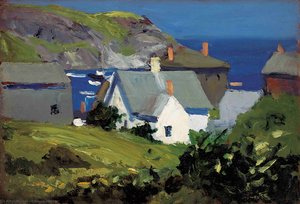
Edward Hopper’s ‘Freight Car at Truro,’ a masterful Social Realism painting from 1931 captures the poignant solitude of rural America. Its stark lighting and minimalist composition evoke a profound sense of quiet contemplation, inviting viewers to explore this iconic piece.
Konstnärens biografi
Edward Hopper: En mästare på amerikansk realism som fångar ensamhet och stadsliv med suggestiva ljus och skuggor. Upptäck hans ikoniska målningar som Nighthawks & Monhegan Houses.
About the painting
A Symphony of Solitude: The Quiet Power of Freight Car at Truro
In the vast, sweeping landscape of American art, few images capture the heavy, cinematic silence of a moment quite like Edward Hopper’s Freight Car at Trurol. Painted in 1931, this masterpiece serves as more than just a depiction of a railway car resting on its tracks; it is a distilled essence of the American experience during the Great Depression. As the viewer's eye meets the stark, vibrant red of the train car, they are immediately transported to a rural New England setting, where the afternoon light feels diffused and heavy with memory. There is a profound stillness here, a sense that the world has paused to catch its breath, leaving us to contemplate the beauty found in isolation.
Hopper, a master of Social Realism, eschewed the idealized, romanticized landscapes of his predecessors. Instead, he turned his gaze toward the unvarnished truth of everyday life, imbuing even the most mundane subjects with deep psychological resonance. In this work, the composition is deceptively simple: a solitary freight car set against a backdrop of distant, rolling hills. Yet, within this simplicity lies a complex emotional architecture. The warmth radiating from the reds and oranges of the train creates a striking visual tension against the cool, receding blues and greens of the countryside, amplifying the sense of a singular object—and perhaps a singular soul—standing apart from the world.
Technique and the Architecture of Light
The emotional impact of this painting is inseparable from Hopper’s meticulous technical execution. He employed a sophisticated layering technique, using thin washes of oil paint to build up tonal gradations that capture the subtle, fleeting nuances of light and shadow. This painstaking approach allows the light to appear as if it is not merely hitting the surface of the canvas, but emerging from within it. The way the light grazes the metallic edges of the car and settles into the shadows of the tracks creates a tactile realism that draws the collector closer to the scene.
For the interior designer or art enthusiast, this painting offers a unique versatility. Its balanced color palette—anchored by bold primary tones but softened by earthy, natural hues—allows it to serve as a commanding focal point in a variety of settings. Whether placed in a modern, minimalist gallery space or a more traditional, cozy study, the work brings with it an atmosphere of quiet contemplation and sophisticated gravity. It does not demand attention through noise, but rather through a steady, enduring presence.
Historical Resonance and Emotional Depth
To look upon Freight Car at Truro is to witness the visual language of an era marked by economic hardship and social anxiety. Created during a period of profound displacement in American society, the painting speaks to the pervasive feeling of disconnection that characterized the early 1930s. Hopper deliberately avoids a clear narrative; there are no figures engaged in conversation, no obvious movement toward a destination. This ambiguity is intentional, inviting each viewer to project their own stories of longing and solitude onto the canvas.
The painting functions as a mirror for the human condition, exploring themes of loneliness not as a tragedy, but as a fundamental state of being. It captures that specific, electric tension found in the pauses between life's major events. For those seeking to bring a piece of art history into their homes, this reproduction offers more than just aesthetic beauty; it offers a window into the soul of 20th-century America, providing a permanent sense of peace and profound reflection within any living space.
Frågor och svar
Vilken atmosfär förmedlar "Freight Car at Truro"?
"Freight Car at Truro" av Edward Hopper beskrivs ha en Calm stämning. Denna klassificering kan hjälpa till att matcha verket med en miljö.
Vilket rum rekommenderas för "Freight Car at Truro" av Edward Hopper, med tanke på dess färger?
Med sin Neutrals-palett rekommenderas "Freight Car at Truro" av Edward Hopper för ett Living Room. Färgerna är en del av anledningen till detta förslag.
Vilken fas av Edward Hoppers konstnärliga utveckling representerar "Freight Car at Truro"?
"Freight Car at Truro" tillhör Edward Hoppers Mature Period i konstnärskarriären. Denna klassificering relaterar verket till konstnärens utveckling.
Quick facts and art quiz
About Edward Hopper

Edward Hopper
1931 - 1967, USA
Konstnärsbiografi
A Solitude Observed: The Life and Art of Edward Hopper
Edward Hopper, ett namn som oåtskilligt förknippas med tystnad och den subtila melankoli som präglade amerikansk livsåskådning under 2000-talet, var inte bara en målare av scener; han var en poet av ljus och skugga, en skildrare av modern ensamhet. Född i Nyack, New York, år 1882, till medelklassföräldrar med holländska rötter, gav Hoppers tidiga år honom en stabil uppfostran som nynnade hans konstnärliga ambitioner. Redan från barndomens noggrant datummärkta och signerade skisser blev det tydligt att skarpt observerande och en inneboende talang för teckning var centrala för hans väsen. Trots att han tidigt uppmuntrades till kommersiell illustration – ett pragmatiskt råd från hans föräldrar – lånade Hoppers ambitioner sig till fin konst, vilket ledde honom till New York School of Art där han studerade under William Merritt Chase och Robert Henri. Dessa formativa år gav inte bara teknisk skicklighet utan också en uppskattning av realism och ett engagemang för att representera världen som han såg den – oupphyrd och ärlig. Ralph Waldos Emersons texter resonerade djupt med Hopper, vilket förstärkte hans känsla för individualism och skarp observation – kvaliteter som skulle bli kännetecken för hans konstnärliga vision. Tidiga resor till Paris exponerade honom för impressionism, men Hopper avvek snabbt från dess flyktiga penseldrag, och skapade en väg unikt för sig själv.Finding His Voice: Realism and the American Scene
Hoppers konstnärliga resa var inte omedelbar eller enkel. Han brottades med att upptäcka sin distinkta röst, experimenterade med olika stilar innan han etablerade realismen som skulle definiera hans karriär. Detta var inte bara en kopia av verkligheten; det var en destillation av dess väsen, borttagande onödiga detaljer för att avslöja underliggande emotionella sanningar. Hans målningar började fokusera på vardagliga scener – hus, dinerer, kontor, hotellrum – fyllda med en känsla av stillhet och ofta, ensamhet. Han besatt en extraordinär förmåga att fånga de psykologiska staterna hos sina motiv, antydande berättelser utan att explicit uttala dem. Den exakta återgivningen av ljus och skugga blev avgörande – inte bara som beskrivande element utan som emotionella ledtrådar, vilket skapade atmosfärer som var både fängslande och obehagliga. *House by the Railroad* (1925), ett tidigt mästerverk, exemplifierar detta tillvägagångssätt – en synes enkel komposition som utstrålar en djupgående känsla av isolering och mysterium. Hoppers grafik, ofta förbisedd, löpte parallellt med hans målning, delade liknande teman och stilistiska kvaliteter, vilket visade hans behärskning över olika medier. Han var inte intresserad av stora historiska berättelser eller allegoriska symbolik; han fokuserade på det vardagliga, lyfte det fram genom noggrann observation och emotionell resonans.Iconic Visions: Nighthawks and Beyond
Medan Hoppers karriär utvecklades gradvis, lyfte vissa verk honom till allmänhetens erkännande. *Nighthawks* (1942), odiskutabelt hans mest kända målning, blev en ikon för amerikansk kultur omedelbart. Den sena nattens dinerscen, badad i skarpt fluorescerande ljus, fångar perfekt den urbana alienation och anonymitet som präglade det moderna livet. Figurerna inom är förlorade i sina egna tankar, disconnectade från varandra trots närheten – en gripande kommentar om den mänskliga tillstånd. *Gas* (1940), med sin slående skildring av en vägside-mack, visar Hoppers fascination för det amerikanska landskapet, både landsbygd och stad, ofta betonar dess karga och tomma utseende. Andra framstående verk som *Automat*, *Office in a Small City* och *Summertime* erbjuder alla unika insikter i de komplexa aspekterna av amerikansk samhälle under 2000-talet. Dessa målningar var inte bara representationer av platser; de var utforskningar av stämning, psykologi och de subtila dramorna som utspelade sig inom vanliga miljöer. Hans fru, *Josephine Nivison Hopper*, spelade en viktig roll inte bara som hans livslånga följeslagare utan också som en frekvent modell, vilket bidrog betydande till karaktäriseringen av hans kvinnliga figurer.Themes and Legacy: A Lasting Influence
Flera återkommande teman genomsyrar Hoppers verk. Urban ensamhet är kanske det mest framträdande – känslan av ensamhet som upplevs av individer mittemot mängder. Han utforskade det amerikanska landskapet, både landsbygd och stad, ofta betonade dess karga och tomma utseende. Hans verk granskar psykologisk realism, undersöker sina motiv inre liv med en känslighet som överträffar bara representation. Det finns också en underström av nostalgi för en enklare tid, i kontrast till ett erkännande av de komplexa och ångestfyllda aspekterna av det moderna livet. Hoppers inflytande på efterföljande konstnärer är obestridligt. Hans unika stil har inspirerat otaliga målare, inklusive Pierre Sanford Ross, och fortsätter att resonera med samtida konstnärer som söker att fånga essensen av den mänskliga upplevelsen. Hans målningar har blivit ikoniska representationer av amerikansk kultur, ofta används för att symbolisera de ångestfyllda och aspirationala aspekterna av 2000-talet – och framåt. Hoppers konst fortsätter att fånga publikens intresse eftersom den talar till universella teman om ensamhet, isolering och sökandet efter mening i en snabbt föränderlig värld.- Hans arv ligger inte bara i skönheten i hans målningar utan också i deras bestående förmåga att väcka tankar, framkalla känslor och påminna oss om den tysta ensamhet som ofta definierar våra liv.
- Hoppers verk fortsätter att fånga publikens intresse eftersom det talar till universella teman om ensamhet, isolering och sökandet efter mening i en snabbt föränderlig värld.
- Hans målningar har blivit ikoniska representationer av amerikansk kultur, ofta används för att symbolisera de ångestfyllda och aspirationala aspekterna av 2000-talet – och framåt.
- Hoppers estetik har djupt påverkat filmskapare (som Alfred Hitchcock) och författare, inspirerat otaliga verk som utforskar liknande teman om alienation och psykologisk spänning.
Quick facts about Edward Hopper
- Artistic Movement Or Style: Realism
- Artists Or Movements Influenced By This Artist: ['Ross']
- Artists Who Influenced This Artist:
- Chase
- Henri
- Date Of Birth: 22 juli 1882
- Date Of Death: 15 maj 1967
- Full Name: Edward Hopper
- Nationality: Amerikansk
- Notable Artworks:
- Nighthawks
- House by the Railroad
- Gas
- Place Of Birth: Nyack, USA
Liknande konstverk


Utforska konstverk sorterade efter tema, stil och egenskaper.




Edward Hopper
Freight Car at Truro
() ·
With its frame: · Hand-painted in oil on linen
Total