


 Visa i rummet
 Skicka
 Dela
Dela
 Detaljer
 Studentguide för konstverk

 Ladda ner
 Liknande objekt
 Röntgen
 Bildspel
 Besökstatistik
Mountain Magic, Himalayas
 Impressionism
 31.0 x 41.0 cm
Discover 'Mountain Magic, Himalayas' by Eliot Clark – an evocative Impressionist landscape capturing the sublime beauty of the mountains. Oil on canvas, 1883-1980.
Eliot Clark (1883-1980) was an American Impressionist painter known for evocative landscapes, particularly scenes of the Himalayas & India. Son of Tonalist Walter Clark, he captured nature's beauty with subtle color and a spiritual depth. Explore his
 Läs mer
Konstverket som visas på denna sida skyddas av upphovsrättslagen, vilket innebär att vi inte lagligt kan skapa eller sälja en identisk reproduktion. Detta skydd upprätthålls genom internationella avtal såsom den Bernkonventionen och genom nationella lagar, inklusive de som fastställs av Amerikansk upphovsrättslag – Titel 17. Alla rättigheter förbehållna. Återgivning av konstverk är förbjuden utan skriftligt tillstånd från WahooArt.
Som ett respektfullt och lagligt alternativ erbjuder vi skräddarsydda, handmålade konstverk inspirerade av originalet. Våra skickliga och professionella konstnärer studerar noggrant originalets stil, stämning och konstnärliga essens för att skapa ett nytt, unikt verk som väcker samma känsla – samtidigt som det förblir en originell skapelse i egen rätt.
Denna metod följer fullt ut upphovsrättsliga regler eftersom den inte innebär kopiering eller duplicering av det skyddade konstverket. Istället är det en kreativ nytolkning – en ny målning som är influerad av originalet men inte identisk med det.
Handgjord oljereproduktion
Handmålad olja på duk i din valda storlek och ram, tillverkad efter beställning av våra konstnärer. ( Byt till tryckta exemplar Byt till digital bildförsäljning)




































Standardstorlek
anpassad
CM
INCH
Välj bland våra förinställda storlekar som motsvarar konstverkets ursprungliga proportioner.
Loading sizes...

bredd
höjd
Ange den bredd och höjd du behöver för att passa din ram eller din vägg. Eftersom detta är handmålat kan konstnären vid en annan form måla lite mer runt bilden eller beskära den något – du väljer själv. Vi skickar en digital mockup för godkännande innan målningen påbörjas. Bilden som visas på denna sida representerar inte det slutgiltiga resultatet — det är endast mockuppen som visar det.
Exempel på vad som kan anpassas: Byt ut ansiktet mot ett foto av kunden; Lägg till ett husdjur (t.ex. byt ut en katt mot en hund); Inkludera ett dolt meddelande i bakgrunden; Ändra bakgrundens landskap eller element.
Efter beställning kommer TopImpressionists.com team att mejla kunden för instruktioner och tillhandahålla en skissförhandsvisning
Efter beställning kommer TopImpressionists.com team att mejla kunden för instruktioner och tillhandahålla en skissförhandsvisning
Leverans över hela världen () på 3–4 veckor istället för standard 5 veckor. (21 oktober). Inga kompromisser med kvaliteten.

Fri expressfrakt över hela världen

Högkvalitativ linnecanvas

Fullständig fraktförsäkring

Garantier för återbetalning av tullavgifter

Garantier för exakt färgåtergivning

100 dagars returrätt vid fabrikationsfel

100% pengarna tillbaka-garanti

Mängdrabatt erbjuds
 Glasalternativet är endast tillgängligt i storlekar under 110 cm.

Mountain Magic, Himalayas
Tryckteknik
Reproduktionsstorlek
-


Totalpris
Skr 2645
Liknande konstverk


Om konstnären
Eliot Clark: A Spiritual Landscape Painter
Eliot Clark (1883-1980) wasn’t a name immediately recognized in the bustling galleries of his time, yet within the quiet depths of American Impressionism, he carved out a distinctive and profoundly moving space. Born in New York City amidst the vibrant cultural currents of the Gilded Age, Clark's artistic journey was shaped by a complex interplay of familial influences – notably his Tonalist father, Walter Clark – and a deep-seated yearning to capture the essence of nature’s grandeur, particularly the stark beauty of the Himalayas and the spiritual resonance of India. His work isn’t merely depictions of landscapes; they are imbued with a contemplative spirit, inviting viewers into a realm where earthly beauty intertwines with something far more profound.
Clark's early life was marked by both privilege and isolation. Raised in a prominent Boston Brahmin family, he spent his formative years navigating the social complexities of New York City before relocating to Washington, D.C., at the age of eleven. This move profoundly impacted him, fostering a deep connection to the American landscape – particularly the rolling hills of Virginia and the rugged beauty of the Appalachian Mountains. His father, Walter Clark, a Tonalist painter known for his muted palettes and atmospheric effects, instilled in young Eliot a reverence for nature’s subtle nuances. However, it was a brief stint with his uncle, a prominent figure in the burgeoning field of anthropology, that truly ignited Clark's fascination with Eastern cultures, particularly the Himalayas and India. This exposure to ancient spiritual traditions would become a recurring theme in his work, informing his color choices, compositional arrangements, and overall sense of atmosphere.
Clark’s artistic development unfolded gradually over several decades. Initially influenced by the Tonalist movement, characterized by its emphasis on tonal harmony and atmospheric effects, he steadily evolved toward a more Impressionistic style, embracing brighter colors, looser brushwork, and a greater focus on capturing fleeting moments of light and color. His early works in Virginia – landscapes of rolling hills, misty valleys, and sun-drenched fields – demonstrate this transition with remarkable clarity. However, it was his extended sojourns to India and the Himalayas in the 1920s and 30s that fundamentally reshaped his artistic vision. These experiences profoundly impacted his palette, introducing him to vibrant hues of saffron, turquoise, and ochre, which he skillfully integrated into his landscapes, creating a sense of otherworldly beauty. The scale of these vistas – towering peaks, vast plains, and seemingly endless skies – demanded a new approach to composition, often employing dramatic perspectives and expansive views to convey the immensity of nature’s power.
The Himalayas and India: A Spiritual Lens
Clark's travels to the Himalayas and India weren't simply expeditions for artistic inspiration; they were deeply spiritual journeys. He sought not just to document these exotic landscapes but to understand their underlying essence, believing that they held profound symbolic significance. His paintings of the Himalayas are particularly striking in this regard. Rather than literal representations, they convey a sense of awe and reverence, capturing the majesty of the mountains while simultaneously hinting at the spiritual realm. The use of color is crucial here – deep blues and purples evoke the vastness of the sky, while warm yellows and oranges suggest the warmth of the sun and the inner light of enlightenment.
Similarly, his depictions of Indian scenes—often featuring temples, bustling marketplaces, and serene riverbanks—are imbued with a sense of timelessness and spiritual depth. He wasn’t interested in portraying the superficial details of these cultures but rather in capturing their underlying spirit – a blend of ancient traditions, vibrant colors, and profound philosophical insights. The influence of Buddhist and Hindu iconography is subtly present in his compositions, often manifesting as stylized figures, intricate patterns, and symbolic motifs. Clark's approach to color was particularly influenced by the Indian tradition of using pigments derived from natural sources, resulting in a rich, earthy palette that perfectly complemented the landscapes he depicted.
Technique and Style
Clark’s technique evolved over his long career, reflecting his growing confidence and artistic maturity. Initially, his brushwork was relatively tight and controlled, characteristic of the Tonalist style. However, as he embraced Impressionism, his brushstrokes became looser and more expressive, allowing for a greater sense of spontaneity and immediacy. He favored layering colors to create depth and luminosity, often applying thin glazes over dry underpaintings to achieve a remarkable sense of transparency and atmospheric perspective. His use of light was particularly masterful – he skillfully captured the shifting qualities of sunlight, creating a dynamic interplay of highlights and shadows that brought his landscapes to life.
A key element of Clark’s style is his ability to evoke a sense of atmosphere—a feeling of stillness, contemplation, and connection to nature. He achieved this through careful attention to detail – the subtle variations in color, the delicate textures of foliage, and the evocative patterns of light and shadow. His paintings are not simply representations of landscapes; they are invitations to immerse oneself in their beauty and contemplate their profound meaning. He often worked *en plein air*, directly from nature, which allowed him to capture the fleeting effects of light and atmosphere with remarkable accuracy.
Legacy and Significance
Eliot Clark’s work represents a significant contribution to American Impressionism. While he shared many stylistic affinities with other Impressionist painters—such as Monet and Renoir—he developed a unique voice, characterized by his spiritual sensibility and his distinctive use of color. His paintings of the Himalayas and India are particularly noteworthy for their ability to transport viewers to distant lands and evoke a sense of wonder and awe. Clark’s legacy extends beyond his individual works; he helped to elevate the status of landscape painting as a vehicle for expressing profound philosophical and spiritual ideas.
Today, Eliot Clark's paintings are exhibited in museums and private collections around the world. His work continues to resonate with viewers who appreciate its beauty, its spirituality, and its enduring connection to nature. He remains an important figure in American art history, a testament to the power of observation, imagination, and artistic vision.

Eliot Clark
1883 - 1980
Snabbfakta
- Full Name: Eliot Clark
- Nationality: American
- Date Of Birth: 1883
- Date Of Death: 1980
- Place Of Birth: New York City, USA
- Notable Artworks:
- Cape Blomaden, Nova Scotia
- Benares Scenes
- Virginia Landscapes
- Artistic Movement Or Style: Impressionism
- Artists Who Influenced This Artist: ['Walter Clark']
- Artists Or Movements Influenced By This Artist: ['Tonalism']
Relaterade artiklar
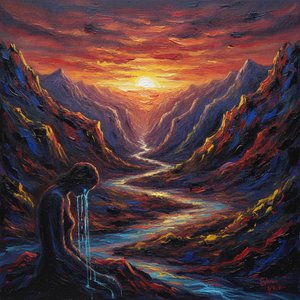
Capturing Emotion: A Journey Through the Soul of Expressionist Landscapes
Explore the profound emotional depth of Expressionist landscapes. Discover how Post-Impressionist masters moved beyond light to capture the soul through vibrant color and form. A curated journey for true art lovers seeking the beauty of expressive mastery.

Beyond the Light: Capturing Raw Emotion and Subjective Vision in Post-Impressionist Landscapes
Explore the profound emotional depth of Post-Impressionist landscapes. Discover how masters like Van Gogh moved beyond light to capture raw human feeling through vibrant color and expressive texture in this expert art history retrospective.