


 Förhandsvisa
 Skicka
 Dela
Dela
 Visa detaljer
 Guide
Guide

 Ladda ner
 Liknande objekt
 Röntgen
 Bildspel
 Q&A
Q&A Statistik
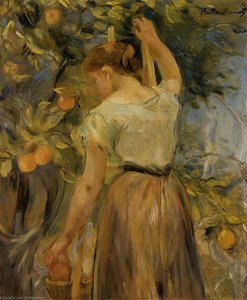
Tree
 27.0 x 22.0 cm
Discover Elizabeth Muntz's evocative landscapes & studies of nature (1894-1977). Explore her detailed depictions of trees, boats, and harbors through TopImpressionists.
 Visa mer
Konstverket som visas på denna sida skyddas av upphovsrättslagen, vilket innebär att vi inte lagligt kan skapa eller sälja en identisk reproduktion. Detta skydd upprätthålls genom internationella avtal såsom den Bernkonventionen och genom nationella lagar, inklusive de som fastställs av Amerikansk upphovsrättslag – Titel 17. Alla rättigheter förbehållna. Återgivning av konstverk är förbjuden utan skriftligt tillstånd från WahooArt.
Som ett respektfullt och lagligt alternativ erbjuder vi skräddarsydda, handmålade konstverk inspirerade av originalet. Våra skickliga och professionella konstnärer studerar noggrant originalets stil, stämning och konstnärliga essens för att skapa ett nytt, unikt verk som väcker samma känsla – samtidigt som det förblir en originell skapelse i egen rätt.
Denna metod följer fullt ut upphovsrättsliga regler eftersom den inte innebär kopiering eller duplicering av det skyddade konstverket. Istället är det en kreativ nytolkning – en ny målning som är influerad av originalet men inte identisk med det.
Handgjord oljereproduktion
Handmålad olja på duk i din valda storlek och ram, tillverkad efter beställning av våra konstnärer. ( Byt till tryck Byt till digital bild)




































Standardstorlek
skräddarsydd
CM
INCH
Välj bland våra förinställda storlekar som motsvarar konstverkets ursprungliga proportioner.
Loading sizes...

bredd
höjd
Ange den bredd och höjd du behöver för att passa din ram eller din vägg. Eftersom detta är handmålat kan konstnären, vid ett annat format, måla lite mer runt bilden eller beskära den något – det är du som väljer. Vi skickar en digital mockup för godkännande innan målningen påbörjas. Bilden som visas på denna sida representerar inte det slutgiltiga resultatet — det är endast mockuppen som visar det.
Exempel på vad som kan anpassas: Byt ut ansiktet mot ett foto av kunden; Lägg till ett husdjur (t.ex. byt ut en katt mot en hund); Inkludera ett dolt meddelande i bakgrunden; Ändra bakgrundens landskap eller element.
Efter beställning kommer TopImpressionists.com team att mejla kunden för instruktioner och tillhandahålla en skissförhandsvisning
Efter beställning kommer TopImpressionists.com team att mejla kunden för instruktioner och tillhandahålla en skissförhandsvisning
Leverans över hela världen () på 3–4 veckor istället för standard 5 veckor. (28 oktober). Inga kompromisser med kvaliteten.

Fri expressfrakt över hela världen

Högkvalitativ linnecanvas

Fullständig fraktförsäkring

Garantier för återbetalning av tullavgifter

Garantier för exakt färgåtergivning

100 dagars returrätt (endast vid fel)

100% pengarna tillbaka-garanti

Mängdrabatt erbjuds
 Glasalternativet är endast tillgängligt i storlekar under 110 cm.

Tree
Reproduktionsmetod
Storlek på reproduktion
-


Slutgiltigt pris
Skr 2688
Liknande konstverk


Konstnärsbiografi
Elizabeth Muntz: A Dorset Visionary of Trees and Light
Born in Toronto, Canada, in 1894, Elizabeth Muntz’s artistic journey was one shaped by a confluence of European influences and a deep connection to the natural world. Her early life provided a foundation rooted in Canadian heritage, yet it was her relocation to Paris at a young age that truly ignited her creative spirit. Studying under Antoine Bourdelle at the Académie de la Grande Chaumière, Muntz absorbed the principles of classical sculpture while simultaneously embracing the burgeoning Impressionist movement – a synthesis that would profoundly inform her later work. This formative period instilled in her a meticulous attention to form and an appreciation for capturing fleeting moments of light and atmosphere, qualities she would carry with her throughout her career.
Returning to England in the mid-1920s, Muntz established herself as a significant figure within the British art scene. She quickly joined influential groups like The Artist-Craftsmen Group and the London Group, demonstrating a willingness to engage with contemporary artistic dialogues. Her relocation to Dorset, specifically to Apple Tree Cottage in East Chaldon, proved to be a pivotal moment. This idyllic setting, nestled amidst rolling hills and ancient woodlands, became the primary source of inspiration for her art – particularly her celebrated depictions of trees and landscapes. Her close relationship with her aunt, Laura Muntz Lyall, another accomplished Canadian painter, undoubtedly contributed to her artistic sensibilities, fostering an appreciation for capturing the beauty of the natural world through a sensitive and observant lens.
The Language of Trees: Style and Technique
Muntz’s art is characterized by a remarkable sensitivity to detail and a masterful command of technique. While she initially trained in sculpture, her paintings demonstrate a profound understanding of color, texture, and composition. Her landscapes are not merely representations of scenery; they are imbued with a palpable sense of atmosphere – the dappled sunlight filtering through leaves, the subtle shifts in tone as clouds drift across the sky, the quiet stillness of a coastal harbor. She frequently employed a loose, expressive brushstroke, prioritizing capturing the *feeling* of a place over precise realism. Her use of color was particularly noteworthy; she favored warm, earthy tones – ochres, siennas, and umbers – to evoke the richness and depth of the Dorset countryside.
A key element of Muntz’s artistic practice was her meticulous study of trees. She produced numerous detailed studies of individual specimens, capturing their unique forms, textures, and patterns of light and shadow. These studies weren't simply botanical illustrations; they were explorations of the tree as a living entity – a symbol of resilience, growth, and connection to the earth. Her work often reveals an almost meditative quality, suggesting a deep reverence for the natural world.
A Dorset Legacy: Exhibitions and Recognition
Throughout her career, Muntz exhibited widely in both Britain and abroad, gaining recognition from prominent art critics and collectors. She was a regular participant in London Group exhibitions, showcasing her paintings alongside works by other leading artists of the period. Her work also appeared at The Modern Group of Artist-Craftsmen Second Exhibition and with the Seven and Five Society at the Beaux Arts Gallery. In 1932, she held a solo exhibition featuring drawings and sculptures at Cooling Galleries in London. Later in her career, Muntz’s paintings were exhibited at the Royal Academy, Goupil Gallery, and the Society of Women Artists, demonstrating her continued relevance within the British art world.
Notably, Muntz was awarded the title of Freeman of the Ancient Order of Purbeck Marblers and Stonecutters in 1960 – a testament to her connection with the local community and her appreciation for Dorset’s rich artistic heritage. Her legacy extends beyond her individual artworks; she also played a role in nurturing young artists, offering instruction at Bryanston School. A memorial stone carved by Muntz honoring Llewelyn Powys stands on the Dorset Cliffs, serving as a lasting reminder of her contribution to the region's cultural landscape.
The Enduring Vision
Elizabeth Muntz’s art continues to resonate with viewers today due to its profound sense of place and its intimate portrayal of the natural world. Her paintings offer a glimpse into a bygone era, yet they retain a timeless quality – a testament to her skill as an artist and her deep connection to the Dorset countryside. Her work is held in several British collections, including those at Dorset Museum & Art Gallery, ensuring that her vision will continue to inspire and captivate audiences for generations to come.

Elizabeth Muntz
1894 - 1977
Kortfakta
- Full Name: Elizabeth Muntz
- Nationality: Canadian
- Date Of Birth: 1894
- Date Of Death: 1977
- Place Of Birth: Toronto, Canada
- Notable Artworks:
- Study of Fence & Trees
- Queen Elizabeth II Law Courts
- Artistic Movement Or Style: Impressionism
- Artists Who Influenced This Artist:
- Antoine Bourdelle
- Frank Dobson
- Artists Or Movements Influenced By This Artist:
- Maillolesque tradition
- London Group