Förhandsvisa
 Skicka
 Dela
Dela
 Visa detaljer
 Guide
Guide

 Ladda ner
 Liknande objekt
 Röntgen
 Bildspel
 Frågor och svar
 Statistik
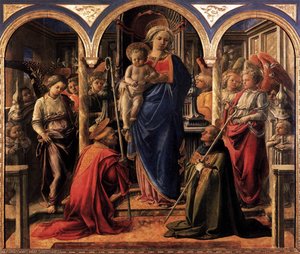
Triptych


Experience the vibrant Early Renaissance depth of Lippi's Triptych, featuring Madonna and Child scenes with meticulous detail; discover this masterpiece today.
 Visa mer
Filippo Lippi (1406-1469): En revolutionär florentinsk målare med vackra Madonnor, realism och innovativa kompositioner. Inspirerade Botticelli & formade Quattrocento-konsten.
Giclée / Konsttryck
Giclée- eller canvasprint av museumskvalitet med snabb produktion och flexibla ytbehandlingsalternativ. ( Beställ handmålad reproduktion Byt till digital bild)




P118B Skr10

P118H Skr10

P118W Skr10

P438Z Skr10

P508JH Skr12

P508YH Skr12

P805H Skr10

P805Z Skr10

P919BZ Skr10

P919G Skr10

P919XJ Skr10

P959ZH Skr10

P968JZ Skr12

W106C Skr8

W218G Skr10

W218JH Skr8

W218Y Skr10

W307PJ Skr10

W316G Skr10

W316PJ Skr8

W316Y Skr10

W398PJ Skr8

W4111J Skr10

W500HY Skr15

W500JH Skr15

W692G Skr12

W849H Skr8

W940BG Skr15

W953PJ Skr8




Standardstorlek
skräddarsydd
CM
INCH
Välj bland våra förinställda storlekar som motsvarar konstverkets ursprungliga proportioner.
Loading sizes...

bredd
höjd
Ange den bredd och höjd du behöver för att passa din ram eller vägg. Ett tryck kan endast beskäras, aldrig göras större än originalbilden, vilket innebär att ett format med en annan proportion leder till att en del av bilden går förlorad. Vi skickar en digital mockup för godkännande innan vi påbörjar tryckningen. Bilden som visas på denna sida visar inte den faktiska beskärningen — det är endast mockuppen som gör det.
Leverans över hela världen () på 2 veckor istället för standard 4/5 veckor. (6 november)

Fri expressfrakt över hela världen

Högkvalitativ linnecanvas

Fullständig fraktförsäkring

Garantier för återbetalning av tullavgifter

Garantier för exakt färgåtergivning

100 dagars returrätt (endast vid fel)

100% pengarna tillbaka-garanti

Mängdrabatt erbjuds
 Glasalternativet är endast tillgängligt i storlekar under 110 cm.

Triptych
Giclée / Konsttryck
Storlek på reproduktion
-


Slutgiltigt pris
Skr 699
A Vision in Tempera: Exploring Fra Filippo Lippi's Triptych
To stand before a work like this Triptych by Fra Filippo Lippi is to step directly into the luminous heart of the Early Renaissance. Dating from 1437, this piece transcends mere decoration; it is a profound meditation on faith, humanity, and divine mystery, rendered with an exquisite delicacy that speaks volumes of its creator's genius. The very structure—the three distinct yet harmoniously connected panels—invites the viewer into a narrative journey, guiding the eye from one sacred moment to the next.
Lippi, a master whose life was as complex as his art, captured the burgeoning spirit of humanism within deeply religious iconography. His ability to imbue monumental subjects with such palpable tenderness is what makes this triptych so enduringly captivating. The meticulous application of tempera paint allows for a jewel-like vibrancy in the colors, while the underlying structure speaks to an emerging mastery of perspective, giving weight and believable depth to every figure.
Composition and Sacred Narrative
The genius of the composition lies in its tripartite division, each panel serving as a self-contained yet related devotional scene. In the central focus, we encounter the Madonna and Child, a timeless tableau where Mary’s serene blue cloak speaks of purity, cradling the vibrant life symbolized by the infant Jesus robed in red. Flanking this core mystery are supporting figures—on the left, perhaps a bishop or cardinal holding scripture, grounding the scene in scholarly tradition; and on the right, another saintly figure contemplating sacred texts.
The architectural elements visible in the background, reminiscent of grand Gothic cathedrals, serve not only as setting but as symbolic anchors to the enduring Church. These scenes are richly framed by elaborate gold borders, which do more than simply adorn; they elevate the depicted moments to an almost ethereal plane of opulence and sanctity.
Technique and Material Brilliance
The choice of tempera medium is crucial to appreciating this artwork's technical brilliance. This egg-based paint allowed Lippi unparalleled control, enabling him to achieve those breathtakingly fine details—the folds in the drapery, the delicate rendering of halos, the subtle expressions on the faces.
When considering a reproduction of such a piece for your home or collection, understanding this technique is key. The luminosity achieved by tempera is unlike oil paint; it possesses a matte, jewel-toned richness that speaks to centuries of careful craftsmanship. It is a testament to the artist's hand, where every brushstroke feels deliberate and imbued with purpose.
Symbolism and Emotional Resonance
Beyond the narrative, the triptych pulses with deep symbolism. The interplay between the rich blues, the passionate reds, and the solemn greens creates a visual vocabulary of divinity, humanity, and sacrifice. It is an artwork that does not merely depict holiness; it evokes the *feeling* of reverence. For the modern collector or designer, this piece offers more than just aesthetic beauty; it offers a focal point for contemplation—a quiet corner imbued with historical weight and spiritual depth.
To bring such a masterpiece into your space is to invite a dialogue between Renaissance artistry and contemporary life. It suggests an appreciation for enduring narratives, meticulous skill, and the profound beauty found at the intersection of art and faith.
Frågor och svar
Kan jag undersöka "Triptych" mer i detalj?
Röntgenanalys-sidan för "Triptych" av Filippo Lippi är en interaktiv visare som låter dig bläddra genom elva optiska lager av konstverkets bild, inklusive en vy i röntgenstil.
Vilken period av Filippo Lippis karriär tillhör "Triptych"?
"Triptych" tillhör Filippo Lippis Early Renaissance i konstnärskarriären. Denna klassificering relaterar verket till konstnärens utveckling.
Vilken färgton dominerar i "Triptych"?
Den dominerande nyansen i "Triptych" av Filippo Lippi är Golden Yellow Range. Nyansen utgör den underliggande tonen i färgpaletten.
Konstnärsbiografi
Filippo Lippi: En Skildring av en Kontroversiell Konstnär
Filippo di Tommaso Lippi, känd som Fra Filippo Lippi, var en gestalt både präglad av konstnärlig geni och en livshistoria fylld med skandal och oväntade val. Han föddes i Florens 1406 till en slaktarfamilj och hans tidiga år präglades av förlust; han förlorade sina föräldrar redan vid två års ålder och placerades i omhu hos sin moster, Mona Lapaccia. Detta ledde slutligen till att han, vid åtta års ålder, togs in i karmelitorden – en väg som inte bara formade hans konstnärliga utveckling utan också definierade komplexiteten i hans karaktär. Det var inom dessa klosterväggar som den unga Filippo började sin utbildning och, framför allt, upptäckte sin passion för måleri. Denna miljöns inflytande är tydligt synlig i mycket av hans verk – en delikat balans mellan andlig devotion och en alltmer mänsklig känsla.Från Religiösa Löften till Konstnärliga Innovationer
Lippis inträde i karmelitorden 1420 var inte bara ett resultat av omständigheter utan verkade tända en passionerad konstnärlig drivkraft inom honom. Han tog sina löften vid sexton års ålder och prästes i cirka 1425, kvarstod vid prioratet tills 1432. Det är under denna period som konsthistorikern Giorgio Vasari berättar hur Lippi blev förtrollad av Masaccios banbrytande fresker i Brancacci-kapellet – en möte som visade sig vara avgörande. Masaccios naturalism och innovativa användning av ljus är tydligt synliga i Lippis tidiga verk, såsom *Tarquinia Madonna*, där en nyfunnen realism börjar framträda. Men Lippi var inte bara en imitator; han utvecklade snabbt sin egen distinkta stil, karakteriserad av lyrisk graciöshet, delikat färgskala och en subtil emotionell djup som skiljde honom från sina samtida. Han började infusa religiösa scener med en känsla av intimitet och mänsklig koppling, och rörde sig bort från den mer strama formelltiteten i tidigare andaktligt konstverk.En Mästare av Komposition och Kontrovers
Lippis konstnärliga karriär blomstrade i Florens, där han lockade beställningar från framstående familjer som Medici. Verk såsom *Annunciation och Sju Helgon* visar hans förmåga att skapa komplexa kompositioner fyllda med symbolisk mening och elegant detalj. *Jungfru Marias Kroning*, färdigställd 1441 för nunnorna i Sant'Ambrogio, är särskilt värdefull – den innehåller en halvlängdsfigur som många tror representerar Lippi själv – ett modigt uttalande om konstnärlig identitet inom en religiös kontext. Men hans liv var långt ifrån lugnt. Han hamnade ofta i ekonomiska svårigheter, juridiska tvister och anklagelser om förfalskning. Kanske den mest sensationella episoden involverade hans bortförande av Lucrezia Buti, en nunna från Prato, med vilken han till slut gifte sig efter år av skandal och kontrovers. Detta agerande, även om det var chockerande för sin tid, talar till Lippis rebelliska anda och hans vilja att trotsa samhällets normer i jakten på personlig lycka.Inflytande och Arv
Trots turbulensen i sitt liv lämnade Filippo Lippi ett bestående intryck på renässanskonsten. Han var en mycket efterfrågad målare, och hans verkstad blev en grogrund för framtida mästare. Bland hans mest framstående elever fanns Sandro Botticelli och Francesco di Pesello (Pesellino), båda av vilka skulle uppnå betydande erkännande i sina egna rättigheter. Lippis inflytande kan ses i den lyriska skönheten och den emotionella uttrycksfullheten som kännetecknar mycket av florentinsk konst under det sena Quattrocento. Han brodde gapet mellan den tidiga renässansens naturalism hos Masaccio och den mer raffinerade estetiken i den högre renässansen, och banade vägen för en ny generation konstnärer att utforska möjligheterna till mänsklig form och känsla. Hans förmåga att blanda religiös pilgrimsfärd med världslig realism, tillsammans med sina innovativa kompositioner och utsökta teknik, säkrade hans plats som en av de mest betydelsefulla och fängslande figurerna i den italienska renässansen. Han dog i Spoleto 1469 och lämnade efter sig ett arv som fortsätter att inspirera beundran och vördnad århundraden senare. Hans konst är ett testamente till människans kreativa kraft och den bestående attraktionen av skönhet.En Skildring av en Kontroversiell Konstnär
Lippis liv var inte bara präglat av konstnärlig briljans, utan också av en rad kontroverser som kastade ett långt skugga över hans rykte. Han var känd för sin passionerade och ibland impulsiva natur, vilket ledde till juridiska tvister och anklagelser om utrosk. En särskilt omtalad händelse var hans bortförande av Lucrezia Buti, en nunna från Prato, med vilken han slutligen gifte sig efter år av skandal och kontrovers. Detta agerande, även om det var chockerande för sin tid, talar till Lippis rebelliska anda och hans vilja att trotsa samhällets normer i jakten på personlig lycka. Trots dessa turbulenta perioder fortsatte Lippi att vara en respekterad konstnär och lämna ett bestående intryck på renässanskonsten. Hans verk är ett bevis på människans kreativa kraft och den bestående attraktionen av skönhet.
Filippo Lippi
1406 - 1469 , Italien
Kortfakta
- Artistic Movement Or Style: Tidig Renässans
- Artists Or Movements Influenced By This Artist: ['Botticelli']
- Artists Who Influenced This Artist: ['Masaccio']
- Date Of Birth: 1406
- Date Of Death: 1469
- Full Name: Filippo di Tommaso Lippi
- Nationality: Italiensk
- Notable Artworks:
- Annunciation
- Maria och barnet
- Place Of Birth: Florensen, Italien
Relaterade artiklar

Divine Love: A Curated Guide to the Most Iconic Madonna and Child Masterpieces in Art History
Embark on a sophisticated journey through art history with our curated guide to the most iconic Madonna and Child masterpieces. Discover the profound beauty, theological depth, and enduring legacy of these sacred Renaissance treasures.

Filippino Lippi: Renaissance Innovation Bridging Faith & Humanism
Explore the captivating world of Filippino Lippi, a Renaissance master bridging faith & humanism through innovative art. Discover his key works, influences, and lasting legacy with TopImpressionists.

Fra Angelicos 25 Mästerverk: Upptäck Renässansens Andliga Skönhet | TopImpressionists
Utforska Fra Angelicos 25 mest ikoniska mästerverk – en resa genom renässansens andliga skönhet. Upptäck historien bakom varje fresk och panelmålning. Köp museumkvalitativa konsttryck på TopImpressionists.com.

Raphaels 25 Mästerverk: Konsthistoriens Höjdpunkter för Ditt Hem
Utforska Raphaels 25 mest ikoniska mästerverk – en resa genom renässanskonstens guldålder. Lär känna historien, tekniken och skönheten bakom varje tavla. Hitta konsttryck & inspiration för ditt hem på TopImpressionists.com.

Filippo Lippi: Bridging Renaissance Devotion & Artistic Innovation
Explore the life & revolutionary art of Filippo Lippi, a pivotal Renaissance painter. Discover his masterpieces, influence on Botticelli, and investment potential. Expert analysis at TopImpressionists.
Utforska konstverk sorterade efter tema, stil och egenskaper.