


 Visa i rummet
 Skicka
 Dela
Dela
 Detaljer
 Studentguide för konstverk

 Ladda ner
 Liknande objekt
 Röntgen
 Bildspel
 Besökstatistik
The Annunciation
 Tempera On Panel
- Renaissance
 1450
1450- Renaissance
 120.0 x 92.0 cm
A serene Renaissance courtyard comes to life in Fra Carnevale's The Annunciation, where vibrant architectural perspective meets divine grace, inviting you to explore this exquisite masterpiece of the Quattrocento.
 Läs mer
Fra Carnevale (c. 1420-1484) var en gåtfull italiensk Quattrocento målare från Urbino, känd för sin arkitektoniska bakgrund och perspektiv. Påverkats av Lippi & Piero della Francesca, hade han ett stort inflytande över Bramante & Raphael.
Handgjord oljereproduktion
Handmålad olja på duk i din valda storlek och ram, tillverkad efter beställning av våra konstnärer. ( Byt till tryckta exemplar Byt till digital bildförsäljning)




P118B Skr10

P118H Skr10

P118W Skr10

P438Z Skr10

P508JH Skr12

P508YH Skr12

P805H Skr10

P805Z Skr10

P919BZ Skr10

P919G Skr10

P919XJ Skr10

P959ZH Skr10

P968JZ Skr12

W106C Skr8

W218G Skr10

W218JH Skr8

W218Y Skr10

W307PJ Skr10

W316G Skr10

W316PJ Skr8

W316Y Skr10

W398PJ Skr8

W4111J Skr10

W500HY Skr15

W500JH Skr15

W692G Skr12

W849H Skr8

W940BG Skr15

W953PJ Skr8




Standardstorlek
anpassad
CM
INCH
Välj bland våra förinställda storlekar som motsvarar konstverkets ursprungliga proportioner.
Loading sizes...

bredd
höjd
Ange den bredd och höjd du behöver för att passa din ram eller din vägg. Eftersom detta är handmålat kan konstnären vid en annan form måla lite mer runt bilden eller beskära den något – du väljer själv. Vi skickar en digital mockup för godkännande innan målningen påbörjas. Bilden som visas på denna sida representerar inte det slutgiltiga resultatet — det är endast mockuppen som visar det.
Exempel på vad som kan anpassas: Byt ut ansiktet mot ett foto av kunden; Lägg till ett husdjur (t.ex. byt ut en katt mot en hund); Inkludera ett dolt meddelande i bakgrunden; Ändra bakgrundens landskap eller element.
Efter beställning kommer TopImpressionists.com team att mejla kunden för instruktioner och tillhandahålla en skissförhandsvisning
Efter beställning kommer TopImpressionists.com team att mejla kunden för instruktioner och tillhandahålla en skissförhandsvisning
Leverans över hela världen () på 3–4 veckor istället för standard 5 veckor. (23 oktober). Inga kompromisser med kvaliteten.

Fri expressfrakt över hela världen

Högkvalitativ linnecanvas

Fullständig fraktförsäkring

Garantier för återbetalning av tullavgifter

Garantier för exakt färgåtergivning

100 dagars returrätt vid fabrikationsfel

100% pengarna tillbaka-garanti

Mängdrabatt erbjuds
 Glasalternativet är endast tillgängligt i storlekar under 110 cm.

The Annunciation
Tryckteknik
Reproduktionsstorlek
-


Totalpris
Skr 2668
A Celestial Encounter in Stone and Light
In the quietude of a tiled Renaissance courtyard, a profound moment of divine intersection unfolds within Fra Carnevale’s The Annunciation. This masterpiece, dating to approximately 1450, captures the precise second where the earthly and the heavenly collide. The scene is set amidst an architectural marvel of arches and columns, where the meticulous use of perspective draws the eye through a series of receding portals toward a distant, misty forest. At the heart of this sacred geometry, the Angel Gabriel kneels in reverence, his wings a breathtaking tapestry of aquamarine blue and fawn brown, accented by delicate gold filigree. Opposite him stands Mary, her presence marked by a serene dignity, draped in a lapis-blue robe that anchors the composition with its deep, regal hue. The atmosphere is one of breathless stillness, as if the very air is suspended in anticipation of the divine word.
The technical brilliance of Carnevale is most evident in his command over light and texture. Every element, from the marble-patterned floor tiles in shades of rust, charcoal, and sky blue to the soft, fog-gray walls of the surrounding structures, contributes to a sense of tangible reality. The artist employs a sophisticated palette that balances the vibrant scarlet of the angel’s cloak with the delicate pinks and whites of the roses held in a stone-white urn. This interplay of color is not merely decorative; it serves to guide the viewer's gaze through the complex spatial arrangement. The descent of a white dove, accompanied by golden beams of light piercing through scattered clouds, acts as a visual crescendo, symbolizing the Holy Spirit and illuminating the face of Mary with a celestial glow.
Symbolism and the Renaissance Soul
Beyond its breathtaking aesthetic, The Annunciation is a profound meditation on purity and destiny. The white lily held by the angel, with its budding blooms, serves as an enduring emblem of Mary’s virginity and the unfolding promise of salvation. Even the surrounding flora—the pink and white roses nestled in the central urn—whisper of grace and the beauty of the divine presence within the natural world. Carnevale, an artist deeply influenced by the architectural precision of his era, uses the structured courtyard to represent the order of the cosmos, while the wilder, hilly forest visible through the distant archway hints at the mysteries of the unknown. This juxtaposition between the controlled, man-made space and the untamed landscape mirrors the theological tension between the known scripture and the unfolding miracle.
For the discerning collector or interior designer, this painting offers more than just a window into the Quattrocento; it provides a focal point of profound emotional resonance. The work’s ability to evoke peace, contemplation, and awe makes it an extraordinary addition to any curated space. Whether placed in a sunlit gallery or a sophisticated study, a high-quality reproduction of this piece brings with it the weight of history and the luminous beauty of the Italian Renaissance. It is a painting that does not merely decorate a room but transforms its very atmosphere, inviting all who behold it to pause and reflect on the quiet miracles that exist within the folds of time.
Frågor och svar
Hur kan "The Annunciation" av Fra Carnevale användas i heminredningen?
"The Annunciation" rekommenderas för Mood, och det föreslagna utrymmet är ett Living Room.
Vilka är måtten på originalet av "The Annunciation" av Fra Carnevale?
De registrerade måtten för "The Annunciation" av Fra Carnevale är 120 x 92 cm. Reproduktioner kan beställas i andra storlekar med bibehållna proportioner.
Vad är luminansen i "The Annunciation" av Fra Carnevale?
Färgerna i "The Annunciation" uppvisar en Gentle Luminance luminans.
Om konstnären
Urbinos renässansens gåtfulle arkitekt
I Quattrocentons skuggiga korridorer få gestalter besitter den fängslande lockelsen hos Fra Carnevale. Ett namn som viskas med både vördnad och mystik, Bartolomeo di Giovanni Corradino – känd i historien genom sin klosterstitel – förblir en av de mest svårfångade mästarna inom den italienska renässansen. Han föddes i Urbino omkring 1420, och hans liv var en delikat väv spunnen av trådar av andlig hängivenhet och djup konstnärlig innovation. Som medlem i Dominikanerorden intog Carnevale en unik plats där klostrets kontemplativa tystnad mötte humanismens framväxande intellektuella stringens. Trots att endast nio verk idag med säkerhet kan tillskrivas hans hand, fungerar varje bevarat stycke som ett fönster mot ett sinne som strävade efter att harmonisera det gudomliga med den fysiska världens matematiska precision.
Carnevales konstnärliga bana formades av sin tids stora konstnärliga smältdeglar. Hans formativa år i Urbino, under ledning av Jacopo Veneto, ingöt i honom en tidig fascination för perspektiv, en färdighet som skulle bli kännetecknet för hans mogna stil. Det var dock hans resa till Florens omkring 1445 som verkligen tuggade hans kreativa gnista. I den livliga florentinska atmosfären studerade han under den inflytelserika Antonio Alberti och trädde in i den prestigefyllda verkstaden hos Filippo Lippi. Denna lärlingsperiod var förvandlande; från Lippi ärvde Carnevale en mästerlig kontroll över färgen och ett delikat tillvägagångssätt vid kompositionen, där han lärde sig att blåsa liv i gestalter genom subtila tonala skiftningar och emotionellt djup.
En mästarklass i rymd och sakralt berättande
Det som skiljer Fra Carnevales arbete från hans samtida är hans oöverträffade förmåga att integrera komplexa arkitektoniska miljöer med sakrala berättelser. Han målade inte bara bakgrunder; han konstruerade världar. Hans dukar uppvisar ofta imponerande, klassiskt inspirerade strukturer som speglar sin tids humanistiska ideal, och ekar av storheten i hertigdömet Urbinos palats samt Leon Battista Albertis teoretiska avhandlingar. I verk som Jungfru Marias födelse ser man ett hisnande äktenskap mellan medeltida detaljrikedom och renässansens rumslogik. Det arkitektoniska djupet i dessa paneler tyder på en djup förståelse för geometri, vilket skapar en scen där det mirakulösa känns förankrat i en påtaglig, mätbar verklighet.
Hans tekniska repertoar var lika mångsidig som hans influenser, och sträckte sig från temperafärgens lysande klarhet till oljemåleriets rika texturer. I verk som Sankt Petrus använde han ljus och skapade en känsla av högtidlighet och gudomlig närvaro genom skuggspel, medan hans Allegorisk scen uppvisar ett djärvt bruk av nakna figurer i klassiska miljöer, vilket speglar epokens fascination för återupptäckta grekisk-romerska ideal. Denna förmåga att navigera mellan de fromma kraven i hans dominikanska kallelse och de sofistikerade estetiska anspråken hos beskyddare som Federico Montefeltro gjorde det möjligt för honom att skapa konst som var både hängiven och intellektuellt stimulerande.
Arv och historisk resonans
Trots att bristen på hans bevarade samlade verk ofta har lett forskare till att debattera äktheten hos vissa verk, kan Fra Carnevales historiska betydelse inte överskattas. Han fungerade som en livsviktig bro mellan 1400-talets tidiga experiment och högrenässansens perfektion, uppnådd av mästare som Bramante och Rafael. Hans besatthet av arkitektoniskt perspektiv och integreringen av klassiska motiv utgjorde en grundläggande ritning för nästa generation av italienska konstnärer. Att studera Carnevale är att bevittna det exakta ögonblicket då medeltidens andliga intensitet började smälta samman med renässansens strukturerade, människocentrerade vision.
Idag lever arvet efter denna gåtfulle munk vidare genom de sällsynta, dyrbara fragment av hans vision som återstår. Han står som ett testamente till kraften hos den "arkitektoniska målaren", en konstnär som såg det gudomliga inte bara i helgonens ansikten, utan i själva proportionerna av det rum de befolkade. Hans liv, även om det är höljt i stor historisk osäkerhet, fortsätter att inge vördnad och påminner oss om att även de mest svårfångade gestalter kan lämna ett outplånligt avtryck på konsthistoriens själ.

Fra Carnevale
1420 - 1484 , Italien
Snabbfakta
- Artistic Movement Or Style: Quattrocento
- Artists Or Movements Influenced By This Artist: ['Filippo Lippi']
- Artists Who Influenced This Artist:
- Antonio Alberti
- Dominico Veneziano
- Date Of Birth: c. 1420
- Date Of Death: 1484
- Full Name: Bartolomeo di Giovanni Corradini
- Nationality: Italian
- Notable Artworks:
- The Annunciation
- Portrait of a Man
- Place Of Birth: Urbino, Italy
Relaterade artiklar

Fra Angelicos 25 Mästerverk: Upptäck Renässansens Andliga Skönhet | TopImpressionists
Utforska Fra Angelicos 25 mest ikoniska mästerverk – en resa genom renässansens andliga skönhet. Upptäck historien bakom varje fresk och panelmålning. Köp museumkvalitativa konsttryck på TopImpressionists.com.

Divine Messengers: A Curated Guide to the Iconography of Angel Gabriel in Art History
Explore the profound beauty of Angel Gabriel in art history. From Renaissance masterpieces to Baroque splendor, our expert guide delves into the sacred iconography and timeless techniques of these divine messengers for the discerning art enthusiast.
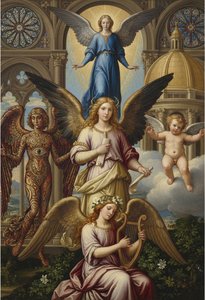
Divine Beauty: A Curated Guide to the Celestial Majesty of Angelic Figures in Art History
Explore the profound beauty of angelic figures in art history. From Renaissance masterpieces to celestial symbolism, our expert guide offers a sophisticated journey through the divine imagery of the Old Masters for discerning collectors and art enthusiasts.

Celestial Messengers: A Comprehensive Exploration of Angelic Representation in Art History
Explore the captivating history of angels in art! Discover symbolism, iconic Renaissance masterpieces & renowned artists. Expert insights for art lovers & collectors at TopImpressionists.

Celestial Messengers: Angels in Painting – A Historical & Artistic Exploration
Explore the captivating history of angels in painting! Discover symbolism, iconic Renaissance & Byzantine masterpieces, and renowned artists. Expert insights for art lovers & collectors at TopImpressionists.
Utforska konstverk sorterade efter tema, stil och egenskaper.


