

 Visa i rummet
 Skicka
 Dela
Dela
 Detaljer
 Studentguide för konstverk

 Ladda ner
 Liknande objekt
 Röntgen
 Bildspel
 Besökstatistik
The Mill
 Painting
- Rococo Style
 1751
1751- Early Modern
 66.0 x 84.0 cm
 Louvren
Experience the serene Rococo elegance of Boucher's Mill, a pastoral vision capturing 18th-century grace; discover this masterpiece today.
 Läs mer
Upptäck François Boucher (1703-1770), mästaren bakom rokokon! Följ med på en resa genom hans sinnrika målningar – mytologiska scener, porträtt & idylliska landskap som definierar 1800-talets franska konst.
Handgjord oljereproduktion
Handmålad olja på duk i din valda storlek och ram, tillverkad efter beställning av våra konstnärer. ( Byt till tryckta exemplar Byt till digital bildförsäljning)




P118B Skr10

P118H Skr10

P118W Skr10

P438Z Skr10

P508JH Skr12

P508YH Skr12

P805H Skr10

P805Z Skr10

P919BZ Skr10

P919G Skr10

P919XJ Skr10

P959ZH Skr10

P968JZ Skr12

W106C Skr8

W218G Skr10

W218JH Skr8

W218Y Skr10

W307PJ Skr10

W316G Skr10

W316PJ Skr8

W316Y Skr10

W398PJ Skr8

W4111J Skr10

W500HY Skr15

W500JH Skr15

W692G Skr12

W849H Skr8

W940BG Skr15

W953PJ Skr8




Standardstorlek
anpassad
CM
INCH
Välj bland våra förinställda storlekar som motsvarar konstverkets ursprungliga proportioner.
Loading sizes...

bredd
höjd
Du kan ange egna mått för att passa en specifik ram eller yta. Om den valda storleken inte matchar originalbildens proportioner kommer vi antingen att beskära konstverket eller utöka målningen med ytterligare handmålade element. En digital skiss skickas till dig för godkännande innan produktionen påbörjas.
Observera att förhandsvisningen på skärmen inte återspeglar den faktiska beskärningen eller utökningen. Endast skissen visar den slutgiltiga kompositionen korrekt.
Även om anpassade storlekar är möjliga, rekommenderar vi att du väljer en dimension från den fördefinierade listan för att bevara originalproportionerna.
Exempel på vad som kan anpassas: Byt ut ansiktet mot ett foto av kunden; Lägg till ett husdjur (t.ex. byt ut en katt mot en hund); Inkludera ett dolt meddelande i bakgrunden; Ändra bakgrundens landskap eller element.
Efter beställning kommer TopImpressionists.com team att mejla kunden för instruktioner och tillhandahålla en skissförhandsvisning
Efter beställning kommer TopImpressionists.com team att mejla kunden för instruktioner och tillhandahålla en skissförhandsvisning
Leverans över hela världen () på 3–4 veckor istället för standard 5 veckor. (13 oktober). Inga kompromisser med kvaliteten.

Fri expressfrakt över hela världen

Högkvalitativ linnecanvas

Fullständig fraktförsäkring

Garantier för återbetalning av tullavgifter

Garantier för exakt färgåtergivning

100 dagars returrätt vid fabrikationsfel

100% pengarna tillbaka-garanti

Mängdrabatt erbjuds
 Glasalternativet är endast tillgängligt i storlekar under 110 cm.

The Mill
Tryckteknik
Reproduktionsstorlek
-


Totalpris
Skr 2625
A Tranquil Vision of Rococo Pastoral
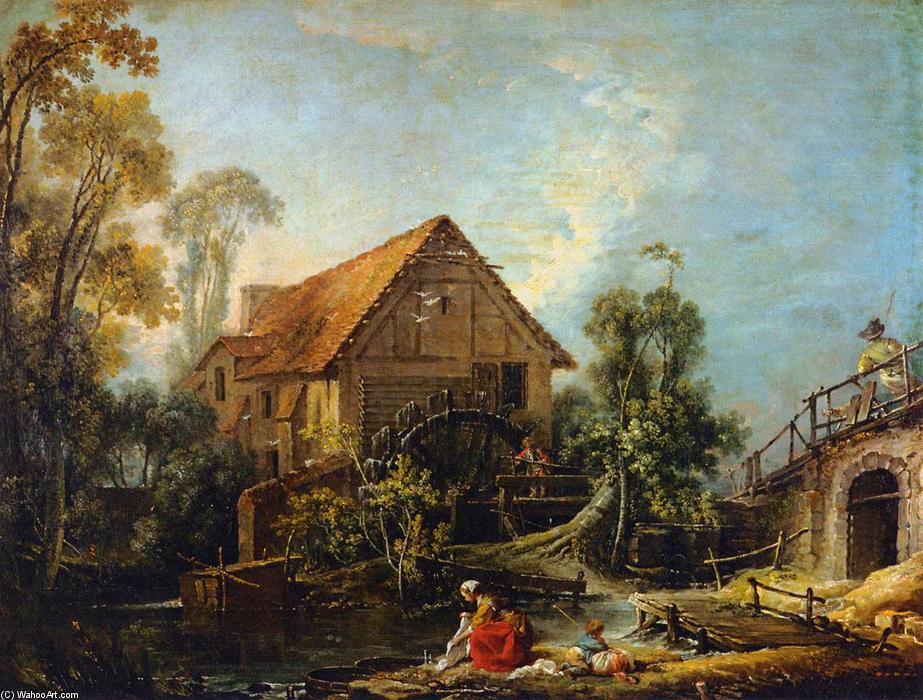
François Boucher’s “The Mill,” painted in 1751 during the zenith of Rococo art, offers a glimpse into a refined aesthetic that prioritized elegance and sensual beauty. More than just a depiction of rural life, it embodies the spirit of its time—a reaction against the grandeur of Baroque formalism and a celebration of harmonious natural landscapes infused with aristocratic leisure.
- Subject Matter: The painting portrays a picturesque mill nestled amongst lush greenery and flowing water. This idyllic setting was favored by Rococo artists as it conveyed serenity and idealized notions of pastoral existence, reflecting the tastes of the French court.
- Style & Technique: Boucher’s masterful brushwork exemplifies the hallmark characteristics of Rococo—delicate pastel hues, soft textures, and a meticulous attention to detail. The artist skillfully employs glazing techniques to achieve luminous effects, capturing the diffused light filtering through the trees and illuminating the mill’s façade.
- Historical Context: Created during Louis XV's reign, “The Mill” reflects the prevailing artistic sensibilities of the period. Rococo flourished as a counterpoint to Baroque grandeur, favoring ornamentation and playful asymmetry—elements deliberately absent from earlier styles. Boucher’s work aligns perfectly with this cultural shift towards refined pleasure and aristocratic indulgence.
Symbolism & Artistic Interpretation
Beyond its visual beauty, “The Mill” carries symbolic weight. The mill itself represents industriousness and practicality—a grounding element amidst the ethereal atmosphere of the scene. However, Boucher elevates this commonplace subject through idealized representation, emphasizing harmony between humanity and nature. The figures in the foreground – women observing the mill’s operation – symbolize feminine grace and contemplation, furthering the painting's overarching theme of tranquil beauty.
- Color Palette: Boucher utilizes a restrained yet luminous color palette dominated by muted greens, blues, and creams—colors that evoke feelings of calmness and freshness.
- Composition: The balanced composition guides the viewer’s eye across the canvas, creating a sense of visual equilibrium. The placement of figures and trees contributes to the overall harmony of the scene.
Emotional Impact & Legacy
"The Mill" transcends mere representation; it aspires to evoke emotion—a feeling of peaceful contemplation and appreciation for the beauty of the natural world. Boucher’s ability to capture this intangible quality cemented his reputation as one of the foremost artists of his era, influencing subsequent generations of painters and establishing a lasting legacy within the history of Rococo art.
A high-quality reproduction of “The Mill” allows you to experience the artistry and tranquility of François Boucher’s masterpiece in your own home. Explore our collection at TopImpressionists.com for stunning prints and canvases that bring this iconic artwork to life!
Frågor och svar
Kan jag beställa en oljereproduktion av "The Mill"?
"The Mill" finns tillgänglig som en handmålad oljereproduktion på linneväv. Beställningen kan göras på denna sida, med valmöjlighet mellan olika storlekar.
Vilken form och vilka mått har "The Mill" av François Boucher?
Formatet för "The Mill" är Landscape och originalet mäter 66 x 84 cm. Båda är användbara vid planering av en reproduktion.
Kan "The Mill" av François Boucher, som finns i samlingen på Louvren, reproduceras lagligt?
Upphovsrättsläget för "The Mill" av François Boucher är tydligt: verket är allmän egendom – upphovsrätten har löpt ut. Dess närvaro på Louvren ändrar inte den statusen.
Hur gammal var François Boucher när "The Mill" skapades år 1751?
François Boucher skapade "The Mill" vid 48 års ålder. Konstnären föddes 1703 och verket är daterat 1751.
Vem rekommenderas "The Mill" av François Boucher som present till?
"The Mill" föreslås som en gåva till Anniversary.
Vilken typ av verk är "The Mill"?
I katalogen är "The Mill" av François Boucher registrerad som wall art. Kategorin hjälper till att hitta liknande verk.
Är "The Mill" av François Boucher ett välkänt konstverk?
"The Mill" klassificeras som Iconic.
Upplevs färgerna i "The Mill" som starka eller mjuka?
Färgintensiteten i "The Mill" är Balanced. Intensitet beskriver hur starka färgerna upplevs.
Om konstnären
François Boucher: En Rococo-mästare i Frankrikes Själ
François Boucher (1703–1770) är en av de mest framstående och älskade konstnärerna från 1800-talets tidiga delar, en skicklig hantverkare inom den blomstrande rokokostilen. Hans verk uttrycker den elegans, sensualiteten och lekfullheten som präglade denna inflytelserika stil – en värld av drömmande palats, mytologiska berättelser och ett överflöd av skönhet.
En Början i Paris: Familjens Påverkan
François Boucher föddes den 29 september 1703 i Paris, Frankrike. Hans konstnärliga resa började under sin fars ledning, Jean Boucher, en mångsidig konsthandlare och målare. Redan som ung visade François ett stort intresse för skapande och fick tidigt lära sig grunderna i färg, form och komposition. Han var inte bara en talangfull individ utan också en del av en familj med konstnärliga rötter – en bakgrund som skulle forma hans utveckling.
Från Lemoyne till Prix de Rome
Vid sjutton års ålder fångade François Lemoynes målning uppmärksamhet hos den unga Boucher. Detta ledde till ett kort men avgörande lärlingskap under Lemoynes pennan, där han snabbt absorberade den senare stilens lätthet och ljushet – en rokokokänsla som skulle bli hans signum. Efter bara tre månader fortsatte Boucher sin utbildning hos gravören Jean-François Cars, vilket gav honom värdefull erfarenhet inom grafisk konst. Året 1720 nådde han ett monumentalt mål: han vann prestigefyllda Grand Prix de Rome, en tävling som öppnade dörrarna till den romerska akademin – en plats där han kunde studera klassiska mästare och utveckla sin egen stil.
Rom och Inspirationen
Bouchers tid i Italien var en transformativ period. Han studerade de antika monumenten, freskerna och målningarna som präglade den romerska kulturen. Han fascinerades av Titian, Tintoretto, Veronese och Tiepolo – konstnärer vars tekniker och kompositioner skulle påverka hans eget arbete djupt. Denna italienska inspiration ledde till en nyfinningsperiod där Boucher började experimentera med ljus, färg och form, vilket resulterade i ett mer dynamiskt och expressivt måleri.
Rococo-Hovkonstnär: Pompadours Favorit
Återvände Boucher till Frankrike 1731 och antogs omedelbart i den kungliga konstakademien. Hans debutmålning, *Rinaldo och Armida* (1734), blev en omedelbar succé och etablerade honom som en av sin tids mest framstående rokokokonstnärer. Han fick snabbt uppdrag att skapa dekorativa målningar för palats och herrgårdar, samt porträtt av adliga familjer. Hans mest inflytelserika kund var Madame de Pompadour, drottningens älskarinna, som blev hans främsta mecenat och gav honom möjlighet att utveckla sin konstnärliga vision.
Teman och Teknik
Bouchers verk spänner över en rad olika teman: mytologi, porträtt, genrebilder och landskap. Han var en mästare på att återge klassiska berättelser med en känsla för elegans och sensualitet. Hans *Breakfast* (1739) är ett exempel på hans förmåga att fånga vardagliga scener med en drömsk kvalitet. Likaså är hans porträtt av Madame de Pompadour, som visar henne i enlighet med rokokostilen – vacker, avslappnad och omgiven av symboliska detaljer. Boucher var också en skicklig landskapsmålare, vars idylliska scener utstrålar en känsla för harmoni och frid.
Ett Arv: Påverkan och Kritik
François Bouchers inflytande sträckte sig långt bortom hans egen tid. Han designade kostymer och rekvisita till teaterproduktioner, skapade tapeter för Beauvais-verkstäderna och samarbetade med Gobelins-fabriken. Hans anställning som *Premier Peintre du Roi* (Kunglig hovmålare) år 1765 cementerade hans status som den ledande konstnären i Frankrike. Trots att senare kritiker ifrågasatte rokokostilens ytlighet, är Bouchers bidrag till konsten obestridligt. Han inspirerade generationer av konstnärer och har lämnat ett bestående intryck på den franska konsthistorien.
Sammanfattning
François Boucher var en produkt av sin tid – en skicklig hantverkare som fångade den rokokos anda med elegans, sensualitet och lekfullhet. Hans verk är ett levande bevis på Frankrikes kulturella blomstring under 1700-talet och hans konst fortsätter att förtrolla och inspirera oss än idag.

François Boucher
1703 - 1770 , Frankrike
Snabbfakta
- Artistic Movement Or Style: Rococo
- Artists Or Movements Influenced By This Artist: ['Jean-Honoré Fragonard']
- Artists Who Influenced This Artist:
- François Lemoyne
- Jean-François Cars
- Date Of Birth: 29 september 1703
- Date Of Death: 30 maj 1770
- Full Name: François Boucher
- Nationality: Fransk
- Notable Artworks:
- Rinaldo och Armida
- Frukostmåltiden
- Venus triumf
- Place Of Birth: Paris, Frankrike
Relaterade artiklar

Idyllic Visions: Exploring the Pastoral Scene in Art History – From Arcadia to Modern Interpretations
Explore the captivating history of pastoral art from classical Arcadia to modern masterpieces. Discover key artists like Millet & Cole at TopImpressionists. Find serene landscape paintings for your home.

François Boucher: Rococo Master of Myth, Sensuality, and the French Court
Explore the captivating world of François Boucher, master of Rococo painting! Discover his iconic works, aristocratic patronage, and lasting influence on French art history. Learn more at TopImpressionists.

Katsushika Hokusais 25 Mästerverk: Ukiyo-e Konst & Heminredning | TopImpressionists
Utforska Katsushika Hokusais 25 mest ikoniska ukiyo-e konstverk. Lär känna historien bakom 'The Great Wave' och andra mästerverk från japansk konst. Köp högkvalitativa reproduktioner & inred med tidlös skönhet på TopImpressionists.com.

Romantiska landskap: Topp 10 mästerverk som definierade en epok – TopImpressionists.se
Utforska de 10 mest ikoniska mästerverken inom romantisk landskapsmålning! Lär känna Caspar David Friedrich, Turner & andra. Hitta inspiration och köp museumkvalitativa konsttryck på TopImpressionists.com.

Rokokons mästerverk: Topp 10 konstverk som definierade epoken | TopImpressionists.com
Upptäck rokokons 10 mest ikoniska mästerverk! Lär känna Boucher, Watteau & andra stora konstnärer. Vackra målningar fyllda av pastellfärger och elegans. Hitta din favorit – utforska hela kollektionen online på TopImpressionists.com.
Utforska konstverk sorterade efter tema, stil och egenskaper.

