

 Förhandsvisa
 Skicka
 Dela
Dela
 Visa detaljer
 Guide
Guide

 Ladda ner
 Liknande objekt
 Röntgen
 Bildspel
 Frågor och svar
 Statistik
Rest on the Flight into Egypt

- 45.0 x 45.0 cm


Gerard Davids mästerverk "Rest on the Flight into Egypt" från 1510 föreställer jungfru Maria och barn Jesus vid vila under deras flykt till Egypten – ett ikoniskt verk inom tidig renässanskonst.
 Visa mer
Gerard David (c. 1460-1523) var en framstående flamländsk konstnär känd för sin ljusa färgpalett och detaljerade religiösa scener samt banbrytande landskapsteckningar. Hans verk präglar tidig nordlig renässans.
Giclée / Konsttryck
Giclée- eller canvasprint av museumskvalitet med snabb produktion och flexibla ytbehandlingsalternativ. ( Beställ handmålad reproduktion Byt till digital bild)




P118B Skr10

P118H Skr10

P118W Skr10

P438Z Skr10

P508JH Skr12

P508YH Skr12

P805H Skr10

P805Z Skr10

P919BZ Skr10

P919G Skr10

P919XJ Skr10

P959ZH Skr10

P968JZ Skr12

W106C Skr8

W218G Skr10

W218JH Skr8

W218Y Skr10

W307PJ Skr10

W316G Skr10

W316PJ Skr8

W316Y Skr10

W398PJ Skr8

W4111J Skr10

W500HY Skr15

W500JH Skr15

W692G Skr12

W849H Skr8

W940BG Skr15

W953PJ Skr8




Standardstorlek
skräddarsydd
CM
INCH
Välj bland våra förinställda storlekar som motsvarar konstverkets ursprungliga proportioner.
Loading sizes...

bredd
höjd
Ange den bredd och höjd du behöver för att passa din ram eller vägg. Ett tryck kan endast beskäras, aldrig göras större än originalbilden, vilket innebär att ett format med en annan proportion leder till att en del av bilden går förlorad. Vi skickar en digital mockup för godkännande innan vi påbörjar tryckningen. Bilden som visas på denna sida visar inte den faktiska beskärningen — det är endast mockuppen som gör det.
Leverans över hela världen () på 2 veckor istället för standard 4/5 veckor. (4 november)

Fri expressfrakt över hela världen

Högkvalitativ linnecanvas

Fullständig fraktförsäkring

Garantier för återbetalning av tullavgifter

Garantier för exakt färgåtergivning

100 dagars returrätt (endast vid fel)

100% pengarna tillbaka-garanti

Mängdrabatt erbjuds
 Glasalternativet är endast tillgängligt i storlekar under 110 cm.

Rest on the Flight into Egypt
Giclée / Konsttryck
Storlek på reproduktion
-


Slutgiltigt pris
Skr 703
Gerard David och ”Nattvarden” – En Symfonisk Dans av Färg och Ljus
Gerard David är en konstnär vars namn fortfarande väcker nyfikenhet kring ett mystiskt liv, vilket berättas genom fragment av arkivdokument och den koncisa vittnesbörd från hans verk. Han föddes omkring 1460 i Oudewater, Nederländerna, och hans berättelse är sammanställd från spräckliga dokument och konstverkets självkänsla – ett självständigt konstnärskap som skiljer sig från sina samtida där biografiska detaljer ofta förblir tyst. Vad som är känt antyder en mycket framgångsrik karriär, sannolikt genom att han styrde verkstäder både i Antwerpen och Brügge – centra för konstnärlig innovation under Renässansen. Hans rykte minskade något på 1600-talet tills han återupptäcktes av konsthistoriker på 1800-talet som erkände hans unika bidrag till den nordliga Renässansen. Han blev fri mästare i Brügges handelskamrar år 1484, vilket markerade en viktig milstolpe för hans konstnärliga utveckling och ett bevis på hans förmåga att skapa harmoniska kompositioner som var viktiga för hans samtida. Detta verk är ett exempel på hur David lyfte fram komplexiteten i religiösa berättelser genom användningen av teknik och stil, vilket gjorde honom till en betydande figur inom sin tid.- Om Konstnären: Gerard David föddes omkring 1460 i Oudewater och var verksam främst i Antwerpen och Brügge där han styrde verkstäder och utvecklade sina konstnärliga färdigheter. Hans liv är relativt sparsamt dokumenterat, vilket låter hans målningar tala för sig själv om biografiska detaljer förblir begränsade. Han var en av de mest framgångsrika konstnärerna i sin tid och hans verk är värda att studeras närmare för deras tekniska skicklighet och estetiska kvalitet.
- Verket: ”Nattvarden” är ett målning från omkring 1510 av den flämiske målstern Gerard David som idag finns på Brügges Stadsmuseum och är ett av de mest ikoniska exemplen på nordlig Renässanskonst. Verkets storlek är imponerande – cirka 45 x 45 cm – vilket ger konstnären möjlighet att skapa komplexa kompositioner och använda detaljerade tekniker för att förmedla atmosfär och känsla.
- Teknik: David använde sig av teknikerna olja på trä, vilket var vanligt förekommande vid denna tidpunkt och möjliggjorde användningen av djupa färger och skuggor för att skapa en realistisk effekt. Hans målning är ett exempel på hur konstnärer försökte återskapa verkligheten genom noggrann observation och teknisk precision.
- Historisk Kontext: Verkets skapelseplats var Brügge, som vid denna tidpunkt var ett centrum för handel och kultur och där konstnärliga influenser från Italien var betydande. David arbetade inom ramen för en bred konstnärlig tradition som utvecklades i mitten av 1400-talet och där religiösa motiv var särskilt populära.
- Symbolism: Målningen är rik på symboliska element, vilket återspeglar den religiösa världsbilden vid denna tidpunkt. Figuren av Maria och barn Jesus placeras i ett naturligt landskap som förmedlar både enkelhet och djup. Detta verk är ett exempel på hur konstnärer använde sig av bilder för att kommunicera religiösa idéer och värderingar till sina publiker.
- Stadsmuseet Brügge: https://www.brugesmuseum.be/en/artists/gerard-david/
- National Gallery of Art: https://www.nga.gov/artworks/50-rest-flight-egypt/
Frågor och svar
Finns det ett bildspel för "Rest on the Flight into Egypt" av Gerard David?
Se diaporamat för "Rest on the Flight into Egypt" på konstverkets sida Bildspel.
Vilken storlek bör jag välja för tryck av "Rest on the Flight into Egypt" till mitt rum?
För ett Vardagsrummet är den rekommenderade tryckstorleken för "Rest on the Flight into Egypt" av Gerard David Storlek.
Vilken konstnär och vilken stil ligger bakom "Rest on the Flight into Egypt"?
Gerard David skapade "Rest on the Flight into Egypt" inom Northern Renaissance-rörelsen.
Konstnärsbiografi
A Master of Flemish Light: The Enigmatic World of Gerard David
Gerard David, a name that resonates with the brilliance of early Netherlandish painting, remains an artist shrouded in intriguing mystery. Born around 1460 in Oudewater, Netherlands, his life story is pieced together from fragmented archival records and the eloquent testimony of his art. Unlike some contemporaries whose lives are richly documented, David’s personal narrative is sparse, allowing his paintings to speak volumes where biographical details fall silent. What is known suggests a remarkably successful career, likely managing workshops in both Antwerp and Bruges – centers of artistic innovation during the Renaissance. His reputation experienced an ebb in the 17th century, only to be gloriously resurrected by 19th-century art historians who recognized his unique contributions to the Northern Renaissance. He was inducted as a free master into the Corporation of Imagemakers and Saddlers in Bruges in 1484, marking a pivotal moment in his ascent. His later involvement with the Antwerp guild in 1515 further solidifies his standing within the artistic community.Formative Influences and Artistic Development
David’s artistic journey began under influences that shaped the very foundation of his style. Early works reveal a clear debt to painters like Jacob Janszoon, Dieric Bouts, and Geertgen tot Sint Jans – masters who instilled in him a meticulous attention to detail and a sensitivity to religious narrative. It is believed he spent time in Haarlem absorbing these lessons before relocating to Bruges, a vibrant hub of artistic exchange attracting talent from across Europe. Here, David encountered the masterpieces of Jan van Eyck, Rogier van der Weyden, and Hans Memling, absorbing their techniques while forging his own distinct path. He didn’t merely imitate; he synthesized these influences into something uniquely his own – a style characterized by luminous color, serene compositions, and an increasingly sophisticated understanding of landscape. His early paintings demonstrate this evolution, moving from the doll-like figures reminiscent of Haarlem traditions towards more sculptural forms grounded in their environment. This transition is visible in works like *Christ Nailed to the Cross*, where the influence of Bouts’ spatial construction blends with David’s emerging coloristic sensibility.Innovation in Landscape and Religious Narrative
Gerard David’s artistic signature lies in his innovative approach to both landscape and religious subject matter. He wasn't simply depicting backgrounds; he was creating immersive environments that enhanced the emotional resonance of his scenes. His landscapes are not merely decorative, but integral components of the narrative, often imbued with symbolic meaning. This fascination with natural settings – dense forests, rolling hills, expansive skies – set him apart from many of his contemporaries and foreshadowed the development of landscape painting as an independent genre. Consider *View in a Forest*, outer wing of a triptych; it’s not simply a backdrop but a world unto itself, rendered with meticulous detail and atmospheric perspective. Within his religious works, David demonstrated a remarkable ability to convey both profound spirituality and human emotion. Paintings like *The Marriage of St. Catherine* exemplify this skill. The scene is rendered with exquisite detail, yet it's the subtle expressions on the figures’ faces – their piety, contemplation, or gentle joy – that truly captivate the viewer. He possessed a gift for imbuing his sacred subjects with a sense of quiet dignity and relatable humanity. The *Triptych of the Madonna Enthroned and Saints* in Genoa showcases this mastery, presenting a harmonious composition filled with vibrant color and delicate detail. His *Virgin Among the Virgins*, donated to the Carmelite nuns of Sion at Bruges, is another testament to his skill, featuring a self-portrait within the painting itself – a rare and intimate gesture from an artist of his time.Major Achievements and Notable Works
David’s career spanned several decades, during which he produced a remarkable body of work that reflects his evolving style and artistic vision. His most celebrated achievements include:- The Judgment of Cambyses (two panels): This monumental altarpiece, housed in the Groeningemuseum in Bruges, showcases David’s mastery of color, composition, and dramatic storytelling.
- The Triptych of the Madonna Enthroned and Saints: A complex and richly decorated triptych that exemplifies David's skill in creating layered narratives and integrating multiple figures within a single space.
- The Virgin Among Virgins: A highly personal work, featuring a self-portrait alongside depictions of the Virgin Mary and other saints, offering a rare glimpse into the artist’s own life and beliefs.
- The Annunciation: A serene and elegant depiction of the angel Gabriel announcing to Mary that she will conceive Jesus, demonstrating David's refined style and attention to detail.
Legacy and Enduring Influence
Though his fame waned for a period after his death in 1523, Gerard David’s influence on subsequent generations of artists is undeniable. His innovative use of color, his masterful handling of light and shadow, and his pioneering approach to landscape all left an indelible mark on the development of Flemish painting. He paved the way for artists who would further explore the expressive potential of natural settings, such as Jacob Patinir and Jacob van Ruisdael.- A Bridge Between Traditions: David successfully bridged the gap between the late medieval tradition and the emerging Renaissance style.
- Influence on Landscape Painting: His detailed and atmospheric landscapes foreshadowed the development of landscape as a distinct genre.
- Masterful Colorist: He was renowned for his vibrant palette and skillful use of color to create emotional impact.
Exploring Further
- TopImpressionists.com: Discover an extensive collection of Gerard David’s paintings, including *The Adoration of the Magi*.
- View in a Forest: Explore this stunning Northern Renaissance landscape painting.
- The Early Netherlandish Art Movement: Delve deeper into the artistic context of David’s work.

Gerard David
1450 - 1523 , Nederländerna
Kortfakta
- Artistic Movement Or Style: Tidig flamsk målning
- Artists Or Movements Influenced By This Artist:
- Jan van Eyck
- Rogier van der Weyden
- Artists Who Influenced This Artist:
- Jacob Janszoon
- Dieric Bouts
- Geertgen tot Sint Jans
- Date Of Birth: c. 1460
- Date Of Death: 1523
- Full Name: Gerard David
- Nationality: Nederländsk
- Notable Artworks:
- Bröllop av Katarina
- Madonnatriptyk
- Jungfruframvänt
- Place Of Birth: Oudewater, Nederl.
Relaterade artiklar

Gerard David: Bridging Late Medieval Tradition with Early Renaissance Humanism
Explore the captivating world of Gerard David, a pivotal figure bridging late medieval artistry with the Early Renaissance. Discover his innovative techniques, religious masterpieces, and enduring legacy – a must-read for discerning art collectors.

Illuminating Realism: A Comprehensive Exploration of the Early Netherlandish Renaissance Movement
Explore the captivating world of Early Netherlandish painting! Discover Jan van Eyck & other Flemish masters, their revolutionary techniques, hidden symbolism, and lasting legacy. A comprehensive guide for art enthusiasts.

Illuminating Realism: Early Netherlandish Painting (15th-16th Centuries)
Explore the captivating world of Early Netherlandish painting! Discover Jan van Eyck, Hans Memling & more. Uncover symbolism, techniques & the legacy of these Flemish masters. A comprehensive guide for art enthusiasts.

De 10 Mästerverk som Definierade Tidig Nederländsk Målning | Konst & Inredning
Utforska de 10 mästerverk som definierade tidig nederländsk målning! Lär känna Jan van Eyck, Rogier van der Weyden och andra flamländska mästare. Upptäck symbolik, teknik & färgpaletter. Köp reproduktioner av högsta kvalitet på TopImpressionists.com.
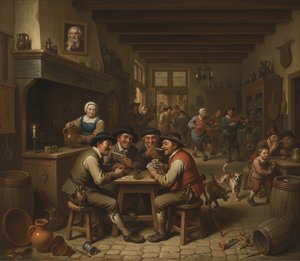
David Teniers II: Master of Flemish Genre & Social Commentary
Explore the captivating world of David Teniers II, a leading Flemish Baroque painter renowned for his lively genre scenes & insightful social commentary. Discover his masterpieces and legacy with TopImpressionists.
Utforska konstverk sorterade efter tema, stil och egenskaper.


