

Shown: · With its frame:
 Förhandsvisa
 Skicka
 Dela
Dela
 Visa detaljer
 Guide
Guide

 Ladda ner
 Liknande objekt
 Röntgen
 Bildspel
 Q&A
Q&A Statistik
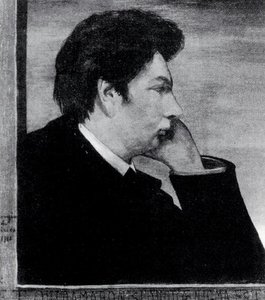
Self-portrait 7


Skr 2688
Handgjord oljereproduktion
Handmålad olja på duk i din valda storlek och ram, tillverkad efter beställning av våra konstnärer. ( Byt till tryck Byt till digital bild)
Detta konstverk är upphovsrättsligt skyddat
Konstverket som visas på denna sida skyddas av upphovsrättslagen, vilket innebär att vi inte lagligt kan skapa eller sälja en identisk reproduktion. Detta skydd upprätthålls genom internationella avtal såsom den Bernkonventionen och genom nationella lagar, inklusive de som fastställs av Amerikansk upphovsrättslag – Titel 17. Alla rättigheter förbehållna. Återgivning av konstverk är förbjuden utan skriftligt tillstånd från WahooArt.
Som ett respektfullt och lagligt alternativ erbjuder vi skräddarsydda, handmålade konstverk inspirerade av originalet. Våra skickliga och professionella konstnärer studerar noggrant originalets stil, stämning och konstnärliga essens för att skapa ett nytt, unikt verk som väcker samma känsla – samtidigt som det förblir en originell skapelse i egen rätt.
Denna metod följer fullt ut upphovsrättsliga regler eftersom den inte innebär kopiering eller duplicering av det skyddade konstverket. Istället är det en kreativ nytolkning – en ny målning som är influerad av originalet men inte identisk med det.
 Läs mer
Size
·Standardstorlek
skräddarsydd
CM
INCH
Välj bland våra förinställda storlekar som motsvarar konstverkets ursprungliga proportioner.
Loading sizes...

bredd
höjd
Ange den bredd och höjd du behöver för att passa din ram eller din vägg. Eftersom detta är handmålat kan konstnären, vid ett annat format, måla lite mer runt bilden eller beskära den något – det är du som väljer. Vi skickar en digital mockup för godkännande innan målningen påbörjas. Bilden som visas på denna sida representerar inte det slutgiltiga resultatet — det är endast mockuppen som visar det.
Finish
·
White Skr1

Blurside Skr1

Extended Skr1

P118B Skr10

P118H Skr10

P118W Skr10

P438Z Skr10

P508JH Skr12

P508YH Skr12

P805H Skr10

P805Z Skr10

P919BZ Skr10

P919G Skr10

P919XJ Skr10

P959ZH Skr10

P968JZ Skr12

W106C Skr8

W218G Skr10

W218JH Skr8

W218Y Skr10

W307PJ Skr10

W316G Skr10

W316PJ Skr8

W316Y Skr10

W398PJ Skr8

W4111J Skr10

W500HY Skr15

W500JH Skr15

W692G Skr12

W849H Skr8

W940BG Skr15

W953PJ Skr8

H24-GOLD Skr30

H24-SILVER Skr30

H36-GOLD Skr45

H36-SILVER Skr45
Shipped in a protective tube, ready for your own framer.
Above 105 cm the frame is shipped as a kit for a professional framer — read the details.
Extras
optionalWhat do the extras include?
Examples of what can be changed: Replace face with customer photo; Add pet (e.g., replace cat with dog); Include hidden message in background; Change background landscape or elements.
After order, TopImpressionists.com team will email client for instructions and provide a mockup preview
After order, TopImpressionists.com team will email client for instructions and provide a mockup preview
Leverans över hela världen () på 3–4 veckor istället för standard 5 veckor. (29 oktober). Inga kompromisser med kvaliteten.
Skyddande fernissa
Namnskylt
Detaljer för graverad bronsplatta
This elegant plaque features the artist's name and the title of the artwork, finely engraved for a timeless presentation.
It is made from bronze with a refined, elegant finish. The text is precisely laser-engraved for a sharp and permanent result. Measuring 9x2 cm, the plaque is compact yet easy to read. It's built to be durable and scratch-resistant, offering a professional, museum-quality look. Mounting is simple thanks to the included adhesive backing.
Detaljer för transparent akrylplatta
The plaque includes essential engraved details such as the artist's name, the title of the artwork, the date it was created, the type of media used-like oil on canvas or watercolor-a brief description of the piece, and a QR code that links to the complete artwork information.
It is crafted from clear acrylic, offering a sleek, modern appearance. The text is UV-engraved in black to ensure strong visual contrast. With a size of 10x15 cm, it ensures optimal readability. It comes equipped with two metal hooks for secure wall mounting. The plaque is designed to be weather-resistant, making it suitable for various environments, and it includes interactive features that work seamlessly with smartphone scanning.
Detaljer för svart akrylplatta
This elegant plaque includes engraved information such as the artist's name, the title of the artwork, the date it was created, the type of media used (like oil on canvas or watercolor), a short description of the artwork, and a QR code for quick access to more information.
The plaque itself is made from refined black acrylic with a premium finish. The text is laser-engraved in white for high contrast and readability. Its size is 10x15 cm, designed to be easy to read. It comes with two metal hooks for professional mounting. The design is sleek and fits any interior style. It is also weather-resistant and durable, with built-in digital integration for mobile compatibility.
Glasalternativet är endast tillgängligt i storlekar under 110 cm.
 Glasalternativet är endast tillgängligt i storlekar under 110 cm.
- Fri expressfrakt över hela världen
- Högkvalitativ linnecanvas
- Fullständig fraktförsäkring
- Garantier för återbetalning av tullavgifter
- Garantier för exakt färgåtergivning
- 100 dagars returrätt (endast vid fel)
- 100% pengarna tillbaka-garanti
- Mängdrabatt erbjuds


Beskrivning av samlarobjekt
A haunting self-portrait by Giorgio de Chirico (1922). Explore the artist's melancholic style, surreal imagery, and philosophical depth in this iconic masterpiece.
Konstnärens biografi
Upptäck Giorgio de Chiricos drömlika värld! En pionjär inom metafysisk konst med surrealistiska städer, filosofiska teman och ikoniska statyetter. Inspirerade surrealister.
About the painting
A Dreamscape in Gray: De Chirico’s “Self-Portrait 7”
Giorgio de Chirico's "Self-Portrait 7," painted around 1922, isn’t merely a depiction of an artist; it’s a distilled essence of the anxieties and intellectual currents swirling through Europe at the dawn of the 20th century. This haunting monochrome study, housed within the Toledo Museum of Art, invites us into a realm where reality fractures, memory bleeds into dream, and the self becomes both subject and object—a captivating paradox that defines much of de Chirico’s oeuvre. The painting immediately arrests with its stark simplicity: a figure rendered in muted grays, positioned slightly off-center against a subtly receding backdrop, his hand partially obscuring his mouth as if holding back a profound thought or perhaps a secret sorrow.
The work belongs firmly within de Chirico’s “Metaphysical” period, a movement he pioneered alongside his brother, Andrea Savinio. This style rejected the superficiality of contemporary art and sought to capture not just appearances but the underlying anxieties and irrationalities of human experience. Influenced by philosophers like Arthur Schopenhauer and Friedrich Nietzsche, de Chirico aimed to depict a world where logic dissolves, and the familiar becomes unsettlingly strange. The painting’s palette—a carefully orchestrated symphony of grays—is crucial to this effect. It's not simply black and white; it’s a spectrum of tones that evokes both melancholy and a sense of timelessness, mirroring the artist’s own preoccupation with mortality and the passage of time.
Deconstructing Form: Technique and Composition
Technically, “Self-Portrait 7” is characterized by a meticulous layering of oil paint—a technique de Chirico revisited after abandoning his earlier, more vibrant style. He employed subtle gradations of tone to create an illusion of depth and texture, suggesting the rough surface of clothing and the smooth planes of the face. The composition itself is deceptively simple, yet profoundly effective. The figure’s placement off-center creates a dynamic tension, drawing the eye across the canvas and inviting contemplation. Notice how the background recedes sharply, almost dissolving into an indeterminate space—a technique that reinforces the painting's sense of unease and disorientation.
The use of line is equally deliberate. The strong outlines defining the face and body are softened by the surrounding tones, creating a sense of ambiguity. There’s a deliberate lack of detail; de Chirico wasn’t interested in photographic realism but rather in capturing the *feeling* of a scene—the emotional weight of a moment. The inclusion of the bust of Eudipides, subtly referenced in the painting's title and further explored in another work by the artist, adds an additional layer of symbolic complexity, hinting at themes of fate, suffering, and the burden of knowledge.
Symbolism and Emotional Resonance
The obscured mouth is perhaps the most potent symbol within the portrait. It suggests restraint, introspection, or even a suppressed emotion—a refusal to fully articulate the anxieties that plague the artist’s mind. The overall mood is undeniably melancholic, yet there's also an undercurrent of quiet dignity and resilience. De Chirico wasn’t simply depicting sadness; he was exploring the complex relationship between the self and the world, revealing a profound sense of isolation within a rapidly changing society.
The painting’s setting—a vaguely architectural space—further contributes to its unsettling atmosphere. It's reminiscent of Roman arcades, which de Chirico frequently depicted in his work, but here they feel strangely deserted and devoid of life. This reinforces the sense of alienation and loneliness that permeates the portrait. The subtle inclusion of a tangerine adds an unexpected element of warmth and color—a fleeting reminder of beauty amidst the prevailing gloom.
A Legacy of Dreamlike Visions
“Self-Portrait 7” stands as a quintessential example of de Chirico’s unique artistic vision. It's a painting that defies easy interpretation, inviting viewers to engage with its mysteries and grapple with its emotional complexities. It’s not merely a portrait; it’s a window into the artist’s psyche—a glimpse behind the curtain of his creative process. De Chirico’s work continues to resonate today because it taps into universal anxieties about identity, mortality, and the nature of reality. Reproductions of this powerful image offer a chance to bring this dreamlike vision into your own space, prompting reflection and sparking conversation.
Frågor och svar
Vilken konstnärlig inriktning tillhör "Self-portrait 7" av Giorgio de Chirico?
"Self-portrait 7" är ett verk inom Metaphysical Art. Denna stilriktning anger den konstnärliga tradition som verket tillhör.
Är "Self-portrait 7" av Giorgio de Chirico ett ljust eller mörkt konstverk?
De registrerade värdena för "Self-portrait 7" av Giorgio de Chirico är: deep_shadow i ljusstyrka och Soft Shadow i luminans.
Var rekommenderas det att visa "Self-portrait 7" i Portrait-formatet?
Formatet Portrait för "Self-portrait 7" av Giorgio de Chirico rekommenderas för ett Living Room. Format och rymd samverkar för att vägleda placeringen av en reproduktion.
Quick facts and art quiz
About Giorgio de Chirico

Giorgio de Chirico
1888 - 1978, Grekland
Konstnärsbiografi
A Dreamscape of the Mind: The Life and Art of Giorgio de Chirico
Giorgio de Chirico, född 10 juli 1888 i Volos, Grekland, till italienska föräldrar – en genueska mor och en sicilianskt far – varf en konstnärs resa som var djupt rotad i både klassisk arv och en växande känsla av modern alienation. Hans tidiga utbildning vid Ateneum i Aten lade ett fundament i traditionella tekniker, men det var hans efterföljande studier i München som verkligen tände hans kreativa anda. Där, mitt i den intellektuella virvelvinden av före-krigstiden i Europa, mötte han verk av Arnold Böcklin och Max Klinger, konstnärer vars symboliska landskap och kusliga bilder resonerade djupt med sin egen utvecklande estetik. Lika inflytelserika var de filosofiska strömningarna på den tiden – skrifterna av Friedrich Nietzsche, Arthur Schopenhauer och Otto Weininger – som utforskade teman om existentialism, det irrationella i människans begär och subjektiviteten i verkligheten. Dessa idéer skulle bli centrala för de Chiricos banbrytande konstnärliga vision.The Birth of Metaphysical Painting
Runt 1909 började en unik stil att uppstå ur de Chiricos utforskningar – en stil som han själv benämnde “metapfysisk” konst. Detta var inte bara ett stilistiskt genombrott; det var ett djupt försök att fånga den dolda verkligheten under ytan av vardagslivet, att avslöja den kusliga poesin som gömde sig inom bekanta rum. Ett avgörande ögonblick inträffade under ett besök i Florens och en upplevelse på Piazza Santa Croce, vilket utlöste hans ikoniska ‘Metaphysical Town Square’ serie. Dessa målningar kännetecknades av deras kusliga stillhet, långa dramatiska skuggor, orlogna perspektiv och närvaron av klassisk arkitektur i kontrast till obehagliga element som likgiltiga statyer och hotfulla monument. Effekten är djupt oroande, och väcker en känsla av nostalgi, isolering och nästan ohanterlig längtan efter något förlorat eller otillgängligt. De Chirico grundade Scuola Metafisica, vilket hade en djupgående inverkan på Surrealismen, även om han senare distanserade sig från dess tolkningar av sitt verk. Hans målningar var inte avsedda att vara illustrationer av drömmar, utan snarare ett försök att skildra en verklighet bortom det synliga – ett rike där tid och rum är flytande och gränserna mellan medvetande och undermedvetande suddas ut. Verk som *The Vexations of the Thinker*, *The Enigma of an Autumn Afternoon* och *The Song of Love* exemplifierar denna kusliga estetik, och bjuder betraktaren in att reflektera över existensens mysterier och den mänskliga perceptions bräcklighet.Influences and Artistic Lineage
De Chiricos verk står som en viktig bro mellan det sena 1800-talets Symboliströrelse och Surrealismens framväxt i början av 1900-talet. Han var direkt influerad av konstnärer som Arnold Böcklin och Max Klinger, vars suggestiva bilder resonerade med hans egen fascination för mytologi och det undermedvetna. Filosofer som Nietzsche och Schopenhauer gav honom en ram för att utforska teman om existentiell ångest, alienation och sökandet efter mening i en verkningsamt meningslös värld. Men de Chiricos inflytande sträckte sig bortom Surrealismen. Konstnärer som René Magritte och Salvador Dalí blev djupt inspirerade av hans metafysiska målningar, och antog hans tekniker för juxtaposition, orlogna perspektiv och symboliska bilder för att skapa sina egna drömlika världar. Hans verk har också påverkat senare rörelser såsom Magic Realism, som sökte skildra vardaglig verklighet med en ökad känsla av mystik och psykologisk djup.A Shift in Style and a Lasting Legacy
Efter första världskriget, runt 1919, tog de Chiricos konstnärliga väg en oväntad vändning. Han förkastade sin tidigare metafysiska approach och omfamnade istället en mer traditionell neoklassisk eller neo-barock stil. Denna förändring möttes med betydande kontroverser; många kritiker ångrade den uppenbara nedgången i kvalitet och anklagade honom för att ha övergett det innovativa anda som definierat hans tidiga verk. Trots kritik stod de Chirico fast vid sina konstnärliga val, återbesökte teman från sitt förflutna men skildrade dem med en annan estetisk känsla. Han fortsatte att måla och utställ under hela sitt liv, utforskade olika stilar och ämnen samtidigt som han bibehöll ett konsekvent åtagande för hantverksskicklighet och teknisk förmåga. Trots kritik kan hans inflytande på efterföljande generationer konstnärer inte överskattas. Hans innovativa användning av utrymme, perspektiv och symbolik utmanade konventionella konstnärliga normer och banade väg för nya former av expression.Key Influences & Artistic Lineage
- Influenced By: Arnold Böcklin, Max Klinger, Friedrich Nietzsche, Arthur Schopenhauer.
- Influenced: Surrealism, particularly artists like René Magritte and Salvador Dalí. His work also impacted later movements such as Magic Realism.
Kortfakta
- Artistic Movement Or Style: Metafysisk konst
- Artists Or Movements Influenced By This Artist:
- Surrealism
- Magritte
- Artists Who Influenced This Artist:
- Böcklin
- Klinger
- Nietzsche
- Date Of Birth: 10 juli 1888
- Date Of Death: 1978
- Full Name: Giorgio de Chirico
- Nationality: Italiensk
- Notable Artworks:
- Enigma av en
- höst eftermiddag
- Ljudet av kärlek
- Place Of Birth: Volos, Grekland
Utforska konstverk sorterade efter tema, stil och egenskaper.


Self-portrait 7
·