Visa i rummet
 Skicka
 Dela
Dela
 Detaljer
 Studentguide för konstverk

 Ladda ner
 Liknande objekt
 Röntgen
 Bildspel
 Besökstatistik
Ceres
 Acrylic On Canvas
- WallArt
- Early Venetian Renaissance
 1510
1510 745.0 x 545.0 cm
Giorgione's 'Ceres' captures a moment of serene contemplation amidst Venetian life. This portrait depicts a woman gazing into the distance, accompanied by figures engaged in various activities and a bird perched on a branch – a testament to Giorgione’s masterful blend of observation and artistic expression.
 Läs mer
Upptäck Giorgione (1477/8-1510), en nyckel High Renaissance veneziansk målare! Utforska hans poetiska verk och hans mästerliga användning av färg och atmosfär – som 'Tempest' & 'Pastoral Concert'.
Handgjord oljereproduktion
Handmålad olja på duk i din valda storlek och ram, tillverkad efter beställning av våra konstnärer. ( Byt till tryckta exemplar Byt till digital bildförsäljning)




P118B $10

P118H $10

P118W $10

P438Z $10

P508JH $12

P508YH $12

P805H $10

P805Z $10

P919BZ $10

P919G $10

P919XJ $10

P959ZH $10

P968JZ $12

W106C $8

W218G $10

W218JH $8

W218Y $10

W307PJ $10

W316G $10

W316PJ $8

W316Y $10

W398PJ $8

W4111J $10

W500HY $15

W500JH $15

W692G $12

W849H $8

W940BG $15

W953PJ $8




Standardstorlek
anpassad
CM
INCH
Välj bland våra förinställda storlekar som motsvarar konstverkets ursprungliga proportioner.
Loading sizes...

bredd
höjd
Du kan ange egna mått för att passa en specifik ram eller yta. Om den valda storleken inte matchar originalbildens proportioner kommer vi antingen att beskära konstverket eller utöka målningen med ytterligare handmålade element. En digital skiss skickas till dig för godkännande innan produktionen påbörjas.
Observera att förhandsvisningen på skärmen inte återspeglar den faktiska beskärningen eller utökningen. Endast skissen visar den slutgiltiga kompositionen korrekt.
Även om anpassade storlekar är möjliga, rekommenderar vi att du väljer en dimension från den fördefinierade listan för att bevara originalproportionerna.
Exempel på vad som kan anpassas: Byt ut ansiktet mot ett foto av kunden; Lägg till ett husdjur (t.ex. byt ut en katt mot en hund); Inkludera ett dolt meddelande i bakgrunden; Ändra bakgrundens landskap eller element.
Efter beställning kommer TopImpressionists.com team att mejla kunden för instruktioner och tillhandahålla en skissförhandsvisning
Efter beställning kommer TopImpressionists.com team att mejla kunden för instruktioner och tillhandahålla en skissförhandsvisning
Leverans över hela världen () på 3–4 veckor istället för standard 5 veckor. (26 september). Inga kompromisser med kvaliteten.

Fri expressfrakt över hela världen

Högkvalitativ linnecanvas

Fullständig fraktförsäkring

Garantier för återbetalning av tullavgifter

Garantier för exakt färgåtergivning

100 dagars returrätt vid fabrikationsfel

100% pengarna tillbaka-garanti

Mängdrabatt erbjuds
 Glasalternativet är endast tillgängligt i storlekar under 110 cm.

Ceres
Tryckteknik
Reproduktionsstorlek
-


Totalpris
$ 269
Giorgione’s ‘The Tempest’: A Venetian Masterpiece of Atmosphere and Mystery
Giorgio Barbarelli da Castelfranco, known universally as Giorgione (1477 – 1510), remains one of the most perplexing enigmas within the canon of Early Venetian Renaissance painting. Unlike many artists of his era whose biographies offer detailed accounts of their lives and careers, Giorgione’s story is fragmented—a tapestry woven from sparse historical records primarily gleaned from Giorgio Vasari’s biographical sketches. Born in Castelfranco Veneto, a town nestled on the outskirts of Venice, Giorgione’s artistic journey began under the tutelage of Giovanni Bellini, absorbing the established stylistic conventions before embarking upon an independent exploration that would ultimately redefine Venetian art.
‘The Tempest,’ housed in the Gallerie Venezia Palazzo Ducale, exemplifies Giorgione's unparalleled mastery of atmospheric illusionism and psychological subtlety. Painted circa 1506-1508, this monumental canvas depicts a shadowy interior scene—a room dominated by a woman seated on a stone bench beneath a tempestuous sky glimpsed through arched windows. The painting’s brilliance lies not merely in its technical virtuosity but also in its profound emotional resonance.
Technique and Innovation: Giorgione's Pioneering Approach
Giorgione revolutionized Venetian painting with his groundbreaking use of sfumato—a technique perfected by Bellini and subsequently embraced by Leonardo da Vinci—that achieved an unprecedented level of tonal gradation. Layers upon layers of translucent glaze meticulously blended to create soft, hazy contours that dissolved boundaries between light and dark. This masterful manipulation of color and texture wasn’t simply decorative; it served as a conduit for conveying mood and emotion with remarkable precision.
- Color Palette: Giorgione favored muted hues—ochres, siennas, blues—creating an ethereal palette that prioritized tonal harmony over vibrant chromatic contrasts.
- Glazing Technique: The application of thin layers of translucent glaze allowed for gradual color transformations and enhanced the painting’s luminous quality.
- Compositional Ambiguity: Giorgione deliberately avoided conventional perspectival conventions, opting instead for a flattened space that fostered psychological depth and uncertainty.
Historical Context and Venetian Artistic Identity
‘The Tempest’ emerged during a period of artistic ferment in Venice—a city grappling with the legacy of Dante Alighieri's ‘Divine Comedy’ and increasingly attuned to humanist ideals. Giorgione’s painting reflects this intellectual climate, prioritizing contemplation and psychological exploration over literal representation. It stands as a testament to Venetian artists’ commitment to capturing not just what was seen but also what was felt—a pursuit that distinguished Venice from other European capitals.
Symbolism and Emotional Impact: Decoding the Tempest
The tempestuous sky serves as a powerful symbol of inner turmoil—representing both external forces and psychological anxieties. The woman’s enigmatic gaze invites viewers to contemplate her thoughts and emotions, prompting questions about identity, desire, and fate. Giorgione's deliberate ambiguity ensures that ‘The Tempest’ remains perpetually open to interpretation, captivating audiences across centuries with its haunting beauty and enduring mystery.
A Legacy of Atmospheric Illusionism
Giorgione’s influence extends far beyond the confines of Venetian painting. His pioneering sfumato technique profoundly impacted subsequent generations of artists—including Leonardo da Vinci and Raphael—solidifying his place as a cornerstone of Western art history. ‘The Tempest,’ therefore, isn't merely a stunning visual experience; it is an embodiment of Giorgione’s artistic vision—a testament to the transformative power of atmosphere, emotion, and psychological insight.
Om konstnären
Ett venetianskt mysterium: Giorgiones liv och arv
Giorgio Barbarelli da Castelfranco, av världen känd som Giorgione, förblir en av de mest svårfångade och fängslande gestalterna inom renässansens konst. Han föddes i den lilla staden Castelfranco Veneto nära Venedig omkring 1477 eller 1478 – det exakta året är omdiskuterat – och hans tragiskt korta liv, som fick ett slut omkring ngår 1510 vid trettiotvå eller trettiotre års ålder, döljer en konstnärlig påverkan som fortsätter att eka genom århundradena. Till skillnad från många av hans samtida, vars liv är väl dokumenterade, är Giorgiones historia höljd i dunkel, sammanvävd av knappa historiska uppteckningar och de ofta romantiserade skildringarna av Giorgio Vasari. Det vi vet tyder på en man djupt nedsänkt i Venedigs levande kultur, en stad som främjade både konstnärlig innovation och en sensuell uppskattning för det vackra. Han var sannolikt lärling under Giovanni Bellini, en ledande venetiansk målare, och absorberade de etablerade traditionerna innan han banade sin egen unika väg. Tidiga beställningar inkluderade porträtt av framstående personer som dogen Agostino Barbarigo, vilket demonstrerade en omedelbar talang för att fånga både likhet och status. Det var dock genom sitt avsteg från konventionella motiv och sin revolutionerande inställning till måleriet som Giorgione verkligen utmärkte sig.Poetiska visioner: Stil och innovation
Giorgiones konstnärliga stil markerade ett betydande brott med den rådande florentinska betoningen på linjärt perspektiv och exakt teckning. Han förespråkade färg, atmosfär och en evokativ stämningsfullhet som kom att bli kännetecken för den venetianska skolan. Hans teknik innebar att mjuka upp konturer, använda subtila tonövergångar – sfumato – för att skapa atmosfäriska effekter, och att prioritera en övergripande harmoni framför minutiös detaljrikedom. Detta tillvägagångssätt var inte bara ett tekniskt val; det speglade en fundamentalt annorlunda konstnärlig sensualitet. Giorgione strävade inte efter att replikera verkligheten, utan efter att fånga dess essens, dess flyktiga känslor och dess poetiska resonans. Hans målningar innehåller ofta gåtfulla motiv och tvetydiga berättelser som bjuder in betraktaren till en värld av kontemplation snarare än att erbjaka tydliga historier. Stormen (The Tempest), kanske hans mest kända verk, exemplifierar detta perfekt. Scenen – en soldat och en ammande moder mitt i ett stormigt landskap – har förbryllat konsthistoriker i århundraden, och dess betydelse förblir lockande oåtkomlig. På samma sätt presenterar Pastoral Concert (Fête champêtre) en idyllisk sammankomst av musiker i en pastoral miljö, hyllad inte för något specifikt narrativ utan för sin harmoniska komposition och lyriska kvalitet. Dessa verk var inte tänkta att vara pussel som skulle lösas; de var menade att frammana känslor, stämningar och en känsla av förundran.Mästerverk och bestående inflytande
Trots att hans produktion begränsades av hans förtidiga död, lämnade Giorgione efter sig en liten men djupt inflytelserik samling verk. Den sovande Venus, som sannolikt färdigställdes med hjälp av Tizian efter Giorgiones bortgång, är en ikonisk skildring av gudinnan och visar hans mästerskap i färg och form. Den tillbakalutade posen och de mjuka hudtonerna förkroppsligar den venetianska uppskattningen för sensualitet och skönhet. Andra betydelsefulla verk inkluderar Judit, ett tidigt exempel på hans framväxande stil, samt porträtt som avslöjar en skarp förmåga att fånga sina motivs karaktär och väsen. Giorgiones inflytande sträckte sig långt bortom hans egna målningar. Han var en mentor till Tizian, som skulle bli en av de mest hyllade konstnärerna under högrenässansen och föra vidare Giorgiones innovationer inom färg och atmosfäriskt måleri. Betoningen på färg och atmosfär påverkade den venetianska målningens utveckling djupt, skilde den från den florentinska traditionen och etablerade Venedig som ett betydande centrum för konstnärlig innovation.Ett bestående arv: Giorgiones historiska betydelse
Trots sin korta karriär intar Giorgione en avgörande position i konsthistorien. Han överbryggade gapet mellan tidigare venetianska traditioner och innovationerna hos Tizian och andra senare mästare, vilket fundamentalt förändrade den italienska målningens kurs. Hans betoning på poetisk stämning, atmosfäriska effekter och tvetydiga berättelser banade väg för nya konstnärliga utforskningar och inspirerade generationer av konstnärer. Själva mysteriet kring hans liv och verk har bidragit till hans bestående mystik och lockelse. Han förblir en symbol för konstnärlig frihet, innovation och antydningens kraft – en målare som vågade prioritera känsla framför form, atmosfär framför noggrannhet och poesi framför berättelse.Viktiga verk av Giorgione
- Stormen (ca 1506-1508)
- Pastoral Concert (Fête champêtre) (ca 1509)
- Den sovande Venus (ca 1510)
- Judit (1504)
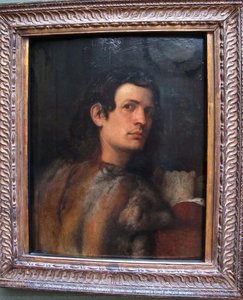
- Porträtt av en venetiansk herre

Giorgione
1477 - 1510 , Italien
Snabbfakta
- Artistic Movement Or Style: High Renaissance, Venetian skola
- Artists Or Movements Influenced By This Artist: ['Titian']
- Artists Who Influenced This Artist:
- Giovanni Bellini
- Mantegna
- Date Of Birth: c.1477/78
- Date Of Death: före november 7, 1510
- Full Name: Giorgio Barbarelli da Castelfranco
- Nationality: Italien
- Notable Artworks:
- Il Tramonto
- Tempest
- Judith
- Laura
- Place Of Birth: Castelfranco Veneto, Italien
Relaterade artiklar

Golden Light & Rich Color: The Timeless Magic of Venetian Renaissance Art
Explore the luminous beauty of Venetian Renaissance art. Discover how masters like Titian used colorito and golden light to redefine painting through texture, emotion, and atmospheric brilliance in a masterclass of historical artistry.
Utforska konstverk sorterade efter tema, stil och egenskaper.