A Pivotal Moment in Art History: Giotto’s *Road to Calvary*
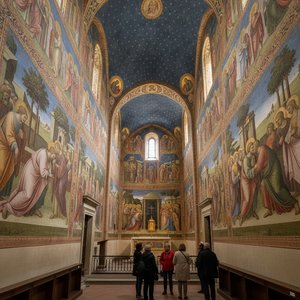
Giotto di Bondone's *Scrovegni - [34] - Road to Calvary* is not merely a depiction of Christ’s agonizing journey; it represents a seismic shift in the history of Western painting. Completed between 1303 and 1305 as part of the breathtaking fresco cycle within the Scrovegni Chapel in Padua, Italy, this work embodies Giotto's revolutionary approach to storytelling, human emotion, and naturalism – qualities that would lay the foundation for the Renaissance.
Historical Context & Commission
The Scrovegni Chapel was commissioned by Enrico Scrovegni, a wealthy Paduan banker, as an act of piety—a means of atonement for his family’s usury practices. This context is crucial; the chapel wasn't simply decorative but served a deeply spiritual purpose. Giotto, already gaining renown for his innovative style, was chosen to adorn its walls with scenes from the lives of Christ and Mary. *Road to Calvary* occupies a powerful position within this narrative sequence, illustrating a pivotal moment of suffering and sacrifice.
A Dramatic Composition & Innovative Style
Unlike the stylized, flattened depictions prevalent in Byzantine art, Giotto imbues his figures with volume, weight, and palpable emotion. *Road to Calvary* is characterized by its dynamic composition – a surging crowd pressing forward, converging on Christ bearing the cross. The scene isn’t static; it's filled with movement and psychological tension. Giotto masterfully uses foreshortening and grouping to create depth and direct the viewer’s eye. Notice how he differentiates each figure—the jeering onlookers, the sorrowful Mary and her attendants, the stern Roman soldiers – giving them individual expressions and gestures. This focus on humanizing biblical figures was groundbreaking for its time.
Technique & Materials: The Art of Fresco
Giotto employed the *fresco* technique—painting with pigments mixed in water onto wet plaster. This demanding method required speed and precision, as the artist had to complete each section before the plaster dried. The resulting images are remarkably durable, retaining their vibrancy even after centuries. The colors, derived from natural minerals and earth pigments, possess a subtle luminosity that enhances the emotional impact of the scene.
Symbolism & Emotional Resonance
Every element within *Road to Calvary* carries symbolic weight. The cross itself represents sacrifice and redemption. Christ’s bowed head and strained posture convey his immense suffering. The expressions of grief on Mary's face, and those surrounding her, evoke empathy and compassion in the viewer. Even the architecture—the buildings lining the road—contributes to the sense of claustrophobia and impending doom.
Giotto doesn’t simply show us what happened; he invites us to feel it.
Legacy & Influence
*Road to Calvary*, and the Scrovegni Chapel as a whole, had an immeasurable impact on subsequent generations of artists. Giotto's emphasis on naturalism, emotional realism, and spatial depth paved the way for masters like Masaccio, Michelangelo, and Raphael. He is rightfully considered one of the most important figures in Western art history—a true innovator who bridged the gap between the medieval world and the Renaissance.
Bringing Masterpiece Home
- A Timeless Investment: Own a meticulously hand-painted oil reproduction of Giotto’s *Road to Calvary*, capturing the essence of this iconic work.
- Exceptional Quality: Our skilled artists painstakingly recreate every detail, ensuring a faithful representation of the original masterpiece.
- Interior Design Inspiration: This powerful and emotionally resonant artwork will become a focal point in any space, adding depth, sophistication, and historical significance to your home or office.
Experience the beauty and power of Giotto’s vision with a stunning reproduction that honors his enduring legacy.



 Beställ tryck
 Skicka
 Dela
Dela
 Visa detaljer

 Ladda ner
 Liknande objekt
 Bildspel

 Visa mer






































 Glasalternativet är endast tillgängligt i storlekar under 110 cm.