

 Förhandsvisa
 Skicka
 Dela
Dela
 Visa detaljer
 Guide
Guide

 Ladda ner
 Liknande objekt
 Röntgen
 Bildspel
 Frågor och svar
 Statistik
Donna che si lava

- 115.0 x 63.0 cm


A vibrant 1954 portrait by Giuseppe Ajmone captures a woman in a colorful bathroom setting with expressive pink and yellow tones, offering a unique opportunity to bring this mid-century Italian masterpiece into your home.
 Visa mer
Upptäck Giuseppe Ajmones stämningsfulla målningar: landskap och semiabstrakta figurer influerade av Bonnard & Picasso. Utforska hans italienska arv på TopImpressionists.
Konstverket som visas på denna sida skyddas av upphovsrättslagen, vilket innebär att vi inte lagligt kan skapa eller sälja en identisk reproduktion. Detta skydd upprätthålls genom internationella avtal såsom den Bernkonventionen och genom nationella lagar, inklusive de som fastställs av Amerikansk upphovsrättslag – Titel 17. Alla rättigheter förbehållna. Återgivning av konstverk är förbjuden utan skriftligt tillstånd från WahooArt.
Denna metod följer fullt ut upphovsrättsliga regler eftersom den inte innebär kopiering eller duplicering av det skyddade konstverket. Istället är det en kreativ nytolkning – en ny målning som är influerad av originalet men inte identisk med det.
Giclée / Konsttryck
Giclée- eller canvasprint av museumskvalitet med snabb produktion och flexibla ytbehandlingsalternativ. ( Beställ handmålad reproduktion Byt till digital bild)




P118B Skr10

P118H Skr10

P118W Skr10

P438Z Skr10

P508JH Skr12

P508YH Skr12

P805H Skr10

P805Z Skr10

P919BZ Skr10

P919G Skr10

P919XJ Skr10

P959ZH Skr10

P968JZ Skr12

W106C Skr8

W218G Skr10

W218JH Skr8

W218Y Skr10

W307PJ Skr10

W316G Skr10

W316PJ Skr8

W316Y Skr10

W398PJ Skr8

W4111J Skr10

W500HY Skr15

W500JH Skr15

W692G Skr12

W849H Skr8

W940BG Skr15

W953PJ Skr8




Standardstorlek
skräddarsydd
CM
INCH
Välj bland våra förinställda storlekar som motsvarar konstverkets ursprungliga proportioner.
Loading sizes...

bredd
höjd
Ange den bredd och höjd du behöver för att passa din ram eller vägg. Ett tryck kan endast beskäras, aldrig göras större än originalbilden, vilket innebär att ett format med en annan proportion leder till att en del av bilden går förlorad. Vi skickar en digital mockup för godkännande innan vi påbörjar tryckningen. Bilden som visas på denna sida visar inte den faktiska beskärningen — det är endast mockuppen som gör det.
Leverans över hela världen () på 2 veckor istället för standard 4/5 veckor. (6 november)

Fri expressfrakt över hela världen

Högkvalitativ linnecanvas

Fullständig fraktförsäkring

Garantier för återbetalning av tullavgifter

Garantier för exakt färgåtergivning

100 dagars returrätt (endast vid fel)

100% pengarna tillbaka-garanti

Mängdrabatt erbjuds
 Glasalternativet är endast tillgängligt i storlekar under 110 cm.

Donna che si lava
Giclée / Konsttryck
Storlek på reproduktion
-


Slutgiltigt pris
Skr 699
An Intimate Encounter with Light and Form
In the quiet, private moments of domestic life, there exists a profound beauty that often escapes the hurried gaze of the world. Giuseppe Ajmone, a master of capturing these ephemeral instances, invites us into such a moment with his 1954 masterpiece, Donna che si lava (Woman Washing). The painting presents us with a figure seen from behind, her back turned to the viewer as she engages in a ritual of cleansing. This perspective creates an immediate sense of voyeuristic intimacy, yet it remains deeply respectful, drawing the observer into a private sanctuary rather than intruding upon it. The composition is a delicate dance of light and shadow, where the warmth of pinks and yellows breathes life into the skin, transforming a mundane bathroom setting into a stage of vibrant, chromatic expression.
The technique employed by Ajmone reflects his deep connection to the post-war Italian tradition, blending elements of semi-abstraction with a palpable sense of reality. Influenced by the luminous palettes of Pierre Bonnard and the structural boldness of Picasso, Ajmone utilizes color not merely as a descriptive tool but as an emotional language. The way the light dances across the woman's form suggests a fluid, almost rhythmic movement, where the boundaries between the subject and her environment begin to soften. Scattered throughout the scene, objects such as a delicate cup, a bottle, and various bowls are rendered with a painterly touch that emphasizes texture and light over rigid detail, contributing to a dynamic composition that feels both grounded and dreamlike.
A Legacy of Italian Modernism
To understand the depth of Donna che lava, one must look toward the rich historical tapestry of Ajmone’s career. Emerging from the prestigious Brera Academy under the tutelage of masters like Achille Funi and Carlo Carrà, Ajmone was a central figure in the mid-century Italian art scene. His participation in landmark exhibitions, such as the Manifesto del Realismo and the prestigious Venice Biennale, places this work within a period of intense artistic exploration following World War II. This era was defined by a search for a new visual language—one that could reconcile the weight of tradition with the burgeoning freedom of modern abstraction. In this painting, we see that reconciliation perfectly realized; it is a work that honors the human figure while embracing the expressive potential of color and light.
For the discerning collector or interior designer, this piece offers more than just visual appeal; it provides an emotional anchor for a sophisticated space. The warmth of the palette makes it an ideal centerpiece for rooms designed to evoke tranquility and refinement. Whether placed in a sun-drenched morning room or a moody, contemporary study, the painting’s ability to command attention through subtle nuance ensures it remains a conversation piece for years to come. Owning a reproduction of such a significant work allows one to bring a fragment of Italian modernism into the home, fostering an environment of cultured contemplation and timeless elegance.
Frågor och svar
Vilken teknik och storlek har originalet till "Donna che si lava" av Giuseppe Ajmone?
"Donna che si lava" är utförd i Oil On Canvas och mäter 115 x 63 cm i sin ursprungliga form.
Hur gammal var Giuseppe Ajmone när "Donna che si lava" skapades?
Giuseppe Ajmone skapade "Donna che si lava" vid 31 års ålder. Konstnären föddes 1923 och verket är daterat 1954.
Vilket material har "Donna che si lava" använts med, och i vilken stil är det utfört?
I "Donna che si lava" möter Oil On Canvas-tekniken Contemporary Realism-rörelsen.
Liknande konstverk


Konstnärsbiografi
tidigt liv och utbildning
giuseppe ajmone, en hyllad italiensk målare, föddes i carpignano sesia, italien, år 1923. År 1941 flyttade han till milano för att studera vid brera-akademin under vägledning av mästare som achille funi och carlo carrà.konstnärlig karriär
ajmones konstnärliga bana präglades av hans deltagande i en rad betydelsefulla utställningar, däribland manifesto del realismo (även känt som oltre guernica) år 1946. Han tilldelades ett pris vid den första nationella måleriexpositionen i bellagio, och år 1950 deltog han i den 25:e internationella utställningen vid biennalen i Venedig, vilket följdes av prestigefyllda premio senatore borletti för unga italienska målare år 1951.internationella utställningar och samarbeten
ajmones verk har visats upp över hela världen, bland annat vid:- biennalen i san paolo del brasile (1951 och 1959)
- biennalen i tokyo (1959)
- pittsburgh international museum of art (1955 och 1958)
- köpenhamn, dortmund, nürnberg och buenos aires
noterbara verk och stil
ajmones målningar fokuserade ofta på landskap och semi-abstrakta figurer. Hans stil var djupt influerad av framstående konstnärer som bonnard, picasso, braque och nicolas de staël. Trots dessa influenser kännetecknades ajmones arbete främst av sin subtilitet, melankoli och intimitet.senare liv och arv
ajmone slog sig ner i romagnano sesia (novara) år 1982, där han levde fram till sin bortgång år 2005. Hans arv lever vidare och hyllas genom olika utställningar och bevarandet av hans konstnärskap. se giuseppe ajmones konstverk på TopImpressionists:- giuseppe ajmone | 10 konstverk
- giuseppe ajmone: nudo alla finestra (museo del novecento, milano, italien)

Giuseppe Ajmone
1923 - 2005 , Italien
Relaterade artiklar

Angelo Chiacchio: A Mid-Century American Illustration Master & the Rise of Commercial Art
Explore the captivating world of Angelo Chiacchio, a master of mid-century American illustration. Discover his evolution, signature style, and lasting impact on commercial art & design. Learn about his legacy at the Museum of American Illustration.
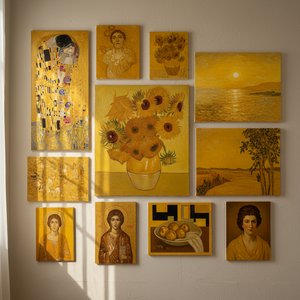
Topp 10 berömda målningar dominerade av ockragula toner – Konst & Inredning
Utforska 10 berömda målningar dominerade av ockragula toner! Från Van Gogh till Monet – upptäck historien, tekniken och skönheten i dessa tidlösa konstverk. Köp museumkvalitativa reproduktioner & inredningsidéer på TopImpressionists.com.
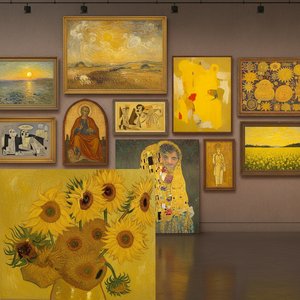
Topp 10 berömda målningar dominerade av 'kromgul': Konsthistoria för ditt hem
Utforska 10 ikoniska målningar dominerade av 'kromgul' – från Van Goghs solrosor till Monets ljusspel. Lär känna konsthistorien och hitta inspiration för ditt hem med TopImpressionists.coms exklusiva reproduktioner. Upptäck mästerverken online!

The Golden Hue: Exploring Symbolism & Emotion in Yellow Art
Explore the rich symbolism & emotional power of yellow in art history! From Van Gogh to Kandinsky, discover how artists used this vibrant hue. Expert analysis & high-quality reproductions at TopImpressionists.

De 10 mest berömda målningarna i ljusrosa toner – konsthistoria & heminredning
Upptäck de 10 mest älskade målningarna i ljusrosa toner! Från Monet till Renoir – utforska konsthistoriens romantik, impressionismen och pastellfärger. Köp reproduktioner av högsta kvalitet på TopImpressionists.com och förvandla ditt hem med tidlösa mästerverk.