


 Visa i rummet
 Skicka
 Dela
Dela
 Detaljer
 Studentguide för konstverk

 Ladda ner
 Liknande objekt
 Röntgen
 Bildspel
 Besökstatistik
The Wave


Experience the raw power of nature through Gustave Courbet's dramatic Realist seascape The Wave where crashing ocean swells meet jagged rocks in a visceral display of strength that invites you to bring this masterpiece home.
 Läs mer
Gustave Courbet (1819-1877): Konstnär som banade väg för realism och skapade mästerverk som 'En begravning i Ornans'. Upptäck hans revolutionära inflytande på 1800-talets konst!
Giclée / Konsttryck
Giclée- eller canvasprint av museumskvalitet med snabb produktion och flexibla ytbehandlingsalternativ. ( Köp handmålat konstverk Byt till digital bildförsäljning)




P118B Skr10

P118H Skr10

P118W Skr10

P438Z Skr10

P508JH Skr12

P508YH Skr12

P805H Skr10

P805Z Skr10

P919BZ Skr10

P919G Skr10

P919XJ Skr10

P959ZH Skr10

P968JZ Skr12

W106C Skr8

W218G Skr10

W218JH Skr8

W218Y Skr10

W307PJ Skr10

W316G Skr10

W316PJ Skr8

W316Y Skr10

W398PJ Skr8

W4111J Skr10

W500HY Skr15

W500JH Skr15

W692G Skr12

W849H Skr8

W940BG Skr15

W953PJ Skr8




Standardstorlek
anpassad
CM
INCH
Välj bland våra förinställda storlekar som motsvarar konstverkets ursprungliga proportioner.
Loading sizes...

bredd
höjd
Ange den bredd och höjd du behöver, för att passa din ram eller din vägg. Ett tryck kan endast beskäras, aldrig göras större än bilden, vilket innebär att ett format med en annan formform leder till att en del av bilden går förlorad. Vi skickar en digital mockup för godkännande innan vi trycker något. Bilden som visas på denna sida visar inte den faktiska beskärningen — det är endast mockuppen som gör det.
Leverans över hela världen () på 2 veckor istället för standard 4/5 veckor. (21 oktober)

Fri expressfrakt över hela världen

Högkvalitativ linnecanvas

Fullständig fraktförsäkring

Garantier för återbetalning av tullavgifter

Garantier för exakt färgåtergivning

100 dagars returrätt vid fabrikationsfel

100% pengarna tillbaka-garanti

Mängdrabatt erbjuds
 Glasalternativet är endast tillgängligt i storlekar under 110 cm.

The Wave
Giclée / Konsttryck
Reproduktionsstorlek
-


Totalpris
Skr 678
The Visceral Majesty of the Untamed Sea
In the heart of Gustave Courbet’s The Wave, one does not merely observe a seascape; one experiences a collision of elemental forces. Completed in 1869, this masterpiece captures the precise moment when the ocean’s immense weight meets the unyielding resistance of jagged stone. The water, rendered in deep, brooding shades of indigo and emerald, surges forward with a terrifying beauty that commands immediate attention. There is no attempt to soften the blow or romanticize the spray; instead, Courbet presents an unflinching gaze at the sea's raw, kinetic energy. For the discerning collector, this painting offers more than just a visual subject—it provides a window into the sublime, evoking a profound sense of awe and a visceral respect for the untamable power of the natural world.A Manifesto of Realism and Texture
Beyond its dramatic subject, The Wave serves as a bold declaration of artistic independence. During an era when the Parisian art establishment favored polished, idealized landscapes, Courbet chose a path of radical honesty. His technique is far from the smooth, invisible brushwork of the Academy; rather, it is characterized by a thick, expressive application of paint that mirrors the very turbulence he depicts. By utilizing a palette dominated by dark, saturated tones and heavy textures, he captures the salt-sprayed atmosphere and the churning foam with remarkable tactile depth. This commitment to Realism—the refusal to embellish or sentimentalize—allows the viewer to feel the weight of the tide. It is this very authenticity that makes a high-quality reproduction a transformative element in any interior, bringing a sense of grounded, historical gravity to a modern space.The Eternal Dance of Resilience and Change
The symbolism embedded within this tempestuous scene resonates far beyond the shoreline. The crashing wave acts as a potent metaphor for the relentless flux of life and the overwhelming forces of nature that dwarf human endeavor. Yet, amidst the chaos of the surging tide, the dark, anchored rocks provide a striking counterpoint of permanence and resilience. This tension between the ephemeral and the enduring creates a narrative depth that continues to captivate art lovers and designers alike. To hang such a work is to invite a conversation about strength, endurance, and the beautiful chaos of existence into one's home. It is a piece that does not merely decorate a wall; it anchors a room with its historical significance and its enduring emotional resonance.Frågor och svar
Är "The Wave" av Gustave Courbet ett porträtt, landskap eller en kvadratisk komposition?
"The Wave" av Gustave Courbet har ett Landscape-format. Formatet beskriver kompositionens proportioner.
Vilken kontrastnivå uppvisar "The Wave" av Gustave Courbet?
"The Wave" av Gustave Courbet uppvisar en Gentle kontrast mellan sina ljusa och mörka partier.
Hur starka är färgerna i "The Wave"?
Färgen i "The Wave" har en mättnad på Muted och en intensitet på Monochromatic.
Liknande konstverk


Om konstnären
A Rebel’s Brush: The Life and Legacy of Gustave Courbet
Jean Désiré Gustave Courbet, born in Ornans, France, on June 10, 1819, stands as a monumental figure in the history of art – a defiant iconoclast who irrevocably altered the trajectory of nineteenth-century painting. More than simply capturing visual impressions; his artistic journey embodies a profound engagement with social realities and an unwavering conviction that art should reflect the world without embellishment. His formative years were marked by a familial upbringing that fostered artistic ambition, nurtured by his mother’s encouragement – a crucial element in shaping him into the revolutionary artist he would become. Formal training commenced at the École des Beaux-Arts in Paris in 1839, yet Courbet swiftly recognized the limitations of academic dogma and Romantic idealism, rejecting them as antithetical to his artistic vision. While acknowledging debts to artists like Eugène Delacroix and Théodore Géricault – figures who championed dramatic emotion and historical narrative – Courbet forged a singular path, prioritizing observation and truthful representation above all else.The Birth of Realism: Challenging Artistic Conventions
Courbet’s artistic trajectory was defined by an uncompromising rejection of prevailing aesthetic standards. He eschewed mythological tales and heroic portrayals; his gaze remained firmly fixed on the everyday lives of ordinary individuals – particularly laborers and rural communities – a deliberate decision that would propel him to the forefront of Realism. This commitment wasn't merely stylistic; it represented a radical assertion about the inherent dignity and importance of subjects often dismissed by artistic circles of the time. Early canvases explored landscapes and portraits, yet he soon transitioned towards depicting scenes of working-class existence on an unprecedented scale – typically reserved for monumental historical paintings. Critics initially scorned his approach, accustomed to idealized depictions that smoothed over social disparities. Yet Courbet persisted in his conviction that art should bear witness to reality, unflinchingly confronting uncomfortable truths. The masterpiece *The Stone Breakers*, completed in 1849 but tragically destroyed during World War II, exemplifies this ethos – a stark portrayal of two laborers engaged in arduous toil, their faces obscured by exhaustion and grime. This painting served as a powerful rebuke to the prevailing artistic preoccupation with grandeur and beauty, insisting instead on portraying the human condition with uncompromising honesty.Influences and Artistic Development
Courbet’s artistic sensibilities were undeniably shaped by encounters with earlier masters, notably Caravaggio for his masterful use of chiaroscuro – dramatic contrasts between light and dark – which conveyed emotional intensity and psychological depth. However, Courbet transcended mere imitation, forging a distinctive style characterized by thick impasto brushstrokes that emphasized the materiality of pigment and canvas. He deliberately rejected academic conventions, prioritizing direct observation over imaginative embellishment—a stance that resonated deeply with fellow artists who sought to liberate painting from restrictive formulas. His unwavering dedication to portraying the world as he perceived it fueled his artistic evolution, culminating in groundbreaking works like *A Burial at Ornans* (1850), which provoked considerable controversy due to its monumental scale and unflinching realism. This canvas challenged prevailing notions of acceptable subject matter for art, demonstrating that beauty could reside in the commonplace—a conviction that profoundly impacted subsequent generations of artists.Major Achievements and Legacy
Courbet’s artistic accomplishments extended beyond stylistic innovation; he actively engaged with pressing social issues of his era, advocating for artistic freedom and challenging institutional hierarchies. His participation in the Salon des Refusés in 1863 – an audacious defiance of official censorship—solidified his reputation as a rebellious artist committed to upholding artistic integrity. He continued to explore diverse themes throughout his career, from landscapes imbued with subtle tonal nuances to portraits capturing psychological complexity. Courbet’s influence on Impressionism and Post-Impressionism is undeniable; he liberated painters from the constraints of academic tradition, encouraging them to experiment with new techniques and perspectives—a legacy that continues to inspire artists today. Gustave Courbet died in Paris on December 31, 1877, leaving behind a vast oeuvre that stands as a testament to his unwavering conviction that art should serve as a conduit for truth and social awareness – an enduring contribution to the history of modern art.
Gustave Courbet
1819 - 1877 , Frankrike
Snabbfakta
- Artistic Movement Or Style: Realism
- Artists Or Movements Influenced By This Artist:
- Impressionism
- Post-Impressionism
- Artists Who Influenced This Artist:
- Delacroix
- Géricault
- Caravaggio
- Date Of Birth: 10 juni 1819
- Date Of Death: 31 december 1877
- Full Name: Gustave Courbet
- Nationality: Französisk
- Notable Artworks:
- Slottet Chillon
- Porträtt av en ung flicka från Salins
- A Burial at Ornans
- Place Of Birth: Orléans, Frankrike
Relaterade artiklar

Katsushika Hokusais 25 Mästerverk: Ukiyo-e Konst & Heminredning | TopImpressionists
Utforska Katsushika Hokusais 25 mest ikoniska ukiyo-e konstverk. Lär känna historien bakom 'The Great Wave' och andra mästerverk från japansk konst. Köp högkvalitativa reproduktioner & inred med tidlös skönhet på TopImpressionists.com.
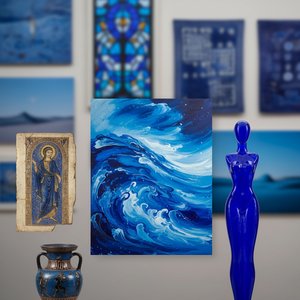
The Allure of Azure: Exploring the Symbolic & Aesthetic Depths of Blue in Art History
Explore the rich history of blue in art! Discover its symbolism, from ancient pigments to modern masterpieces by Kandinsky & Seurat. Uncover the psychological impact and cultural meanings behind this captivating hue.

The Allure of the Horizon: A Comprehensive Exploration of Seascape Art Through History & Emotion
Explore the captivating world of seascape art! Discover its history, key artists & movements – from Dutch Masters to Impressionism. Expert insights for collectors and enthusiasts at TopImpressionists.

Serene Blue Backgrounds: Discover Soulful Art to Transform Your Space with Timeless Elegance
Transform your home with soulful blue art. From serene Monet impressions to modern textured sculptures, discover curated masterpieces designed to inspire calm. Explore expert art consultations and bespoke hand-painted reproductions to create your personal sanctuary.

De 10 mest ikoniska målningarna i nyansen 'Skifferblått' – Konst & Inredning
Utforska de 10 mest ikoniska målningarna dominerade av nyansen 'skifferblått'. Lär känna Monet, Van Gogh & andra mästare. Hitta inspiration för din inredning och köp museumkvalitativa konsttryck på TopImpressionists.com – din källa till tidlös skönhet.
Utforska konstverk sorterade efter tema, stil och egenskaper.


