


 Visa i rummet
 Skicka
 Dela
Dela
 Detaljer
 Studentguide för konstverk

 Ladda ner
 Liknande objekt
 Röntgen
 Bildspel
 Besökstatistik
Holy Trinity


A celestial vision of the Holy Trinity unfolds through God, Jesus, and the Holy Spirit amidst angelic hosts in this 1620 Flemish Baroque masterpiece by Hendrik van Balen I, inviting you to bring divine grace into your home.
 Läs mer
Hendrick van Balen I (1575-1632) var en flamländsk barockmålare känd för sina fängslande mytologiska och allegoriska scener, samt som en inflytelserik lärare till Anthony van Dyck.
Giclée / Konsttryck
Giclée- eller canvasprint av museumskvalitet med snabb produktion och flexibla ytbehandlingsalternativ. ( Köp handmålat konstverk Byt till digital bildförsäljning)




P118B Skr10

P118H Skr10

P118W Skr10

P438Z Skr10

P508JH Skr12

P508YH Skr12

P805H Skr10

P805Z Skr10

P919BZ Skr10

P919G Skr10

P919XJ Skr10

P959ZH Skr10

P968JZ Skr12

W106C Skr8

W218G Skr10

W218JH Skr8

W218Y Skr10

W307PJ Skr10

W316G Skr10

W316PJ Skr8

W316Y Skr10

W398PJ Skr8

W4111J Skr10

W500HY Skr15

W500JH Skr15

W692G Skr12

W849H Skr8

W940BG Skr15

W953PJ Skr8




Standardstorlek
anpassad
CM
INCH
Välj bland våra förinställda storlekar som motsvarar konstverkets ursprungliga proportioner.
Loading sizes...

bredd
höjd
Ange den bredd och höjd du behöver, för att passa din ram eller din vägg. Ett tryck kan endast beskäras, aldrig göras större än bilden, vilket innebär att ett format med en annan formform leder till att en del av bilden går förlorad. Vi skickar en digital mockup för godkännande innan vi trycker något. Bilden som visas på denna sida visar inte den faktiska beskärningen — det är endast mockuppen som gör det.
Leverans över hela världen () på 2 veckor istället för standard 4/5 veckor. (23 oktober)

Fri expressfrakt över hela världen

Högkvalitativ linnecanvas

Fullständig fraktförsäkring

Garantier för återbetalning av tullavgifter

Garantier för exakt färgåtergivning

100 dagars returrätt vid fabrikationsfel

100% pengarna tillbaka-garanti

Mängdrabatt erbjuds
 Glasalternativet är endast tillgängligt i storlekar under 110 cm.

Holy Trinity
Giclée / Konsttryck
Reproduktionsstorlek
-


Totalpris
Skr 684
A Celestial Vision in Baroque Splendor
In the vast, swirling expanse of the seventeenth-century Flemish sky, few images command the soul with as much reverence as Hendrik van Balen I’s Holy Trinity. Painted around 1620, this masterpiece serves as a profound window into the spiritual heights of the Baroque era. The composition unfolds within a breathtaking celestial realm, where the boundaries between the earthly and the divine dissolve amidst billowing, luminous clouds. At the heart of this cosmic drama sits the Holy Trinity: God the Father, Jesus Christ, and the Holy Spirit, arranged in a triad of divine unity. The scene is not merely a religious depiction but a choreographed movement of light and grace, where the figures emerge from the heavens to offer a glimpse of eternal peace to the viewer below.
The artistry of van Balen I shines through his meticulous command of detail and his ability to weave complex allegorical layers into a single, cohesive vision. As a master who influenced even the great Anthony van Dyck, van Balen brings a sophisticated elegance to the piece. Surrounding the central figures is a host of celestial attendants—angels whose presence adds both movement and weight to the composition. Some angels are depicted with the solemnity of guardians, wielding swords and shields, while others drift with a weightless grace. A solitary bird soars above the assembly, acting as a subtle yet powerful symbol of the Holy Spirit’s descent, bridging the gap between the high heavens and the natural world visible in the distant, verdant trees.
Symbolism and the Mastery of Light
Every element within this painting is imbued with deep theological significance, designed to guide the observer toward contemplation. The arrangement of the Father, Son, and Spirit creates a triangular stability that reflects the concept of divine perfection. The interplay of light and shadow—a hallmark of the Baroque style—serves to sculpt the figures out of the ether, giving them a tangible, almost sculptural presence despite their heavenly nature. This technique, known as chiaroscuro, directs the eye toward the central mystery of the Trinity, ensuring that the viewer’s gaze is constantly drawn back to the source of light and life.
For the discerning collector or interior designer, this artwork offers more than just historical value; it provides a profound emotional anchor for any space. The painting’s palette, rich with the soft tones of a breaking dawn and the deep, earthy greens of the background landscape, creates an atmosphere of serene majesty. Whether placed in a grand library, a formal dining hall, or a quiet sanctuary, a high-quality reproduction of this work brings a sense of timelessness and spiritual depth. It is a piece that invites long periods of study, rewarding the viewer with new discoveries of texture, light, and meaning with every glance, making it an incomparable centerpiece for those who appreciate the intersection of fine art and profound devotion.
Frågor och svar
Vilken är den färgmässiga identiteten hos "Holy Trinity" av Hendrick van Balen I?
"Holy Trinity" av Hendrick van Balen I använder en Earthy-palett, där Espresso (#402c20) är den dominerande färgen.
Under vilket år och inom vilken stil skapades "Holy Trinity"?
"Holy Trinity" skapades år 1620 inom Baroque-rörelsen.
Var kan man se "Holy Trinity" av Hendrick van Balen I utställd idag?
Du kan se originalet av "Holy Trinity" på Sint-Jacobskerk, Antwerpen, Belgien.
Om konstnären
En Mäster i Myten och Miniaturen: Hendrick van Balens Värld
Hendrick van Balen I, ett namn som kanske inte omedelbart väcker samma resonans som hans samtida Rubens eller Van Dyck, intar likväl en avgörande position inom det livfulla konstlandskapet i 1600-talets Antwerpen. Född omkring 1575 i en välbärgad köpmannafamilj, gynnades van Balen av en uppväxt som främjade både intellektuell nyfikenhet och konstnärlig fallenhet. Denna lyckliga kombination gav honom möjlighet att bedriva rigorös utbildning, inledningsvis under Adam van Noort – en målare genomsyrad av manieristisk tradition – och möjligen även med Maerten de Vos. Dessa tidiga influenser lade grunden för en karriär präglad av minutiös detaljrikedom, elegant komposition och en förkärlek för mytologiska och allegoriska motiv. Familjens ekonomiska stabilitet gav honom möjligheter utöver ren teknisk skicklighet; han odlade språkliga förmågor som senare skulle visa sig värdefulla under hans resor och samarbeten. Van Balen var inte enbart en hantverkare utan en humanistisk lärd, fördjupad i de klassiska berättelser som bränsle till stor del av barockkonsten.Från Altartavlor till Intima Visioner
Van Balens konstnärliga resa började med storskaliga religiösa verk, altartavlor som speglade den kraftfulla romanska stil han ärvt från sin lärare Adam van Noort. Dessa tidiga alster demonstrerar en solid förståelse för anatomi och dramatisk komposition, men det var inom de mindre kabinettbildernas område som han verkligen fann sitt uttryck. Runt 1595 företog han en konstnärlig pilgrimsfärd till Italien – en resa som inte är definitivt dokumenterad men bevisad av hans efterföljande medlemskap i Romarnas Gille vid sin återkomst till Antwerpen. Denna vistelse exponerade honom för den spirande barockstilen och verk av artister som Annibale Carracci och Palma Giovane, vilket påverkade en övergång mot mer raffinerade färgpaletter och graciösa figuranordningar. Han blev mästare inom Antwerpen Guild of Saint Luke 1592-93, steg i graderna för att bli dekan vid flera tillfällen – ett bevis på hans ställning inom konstnärssamfundet. Hans verkstad blomstrade och blev en knutpunkt för blivande målare, framför allt Anthony van Dyck, som fick avgörande tidig utbildning under van Balens handledning.En Samarbetsanda och Garlandmåleriet
Van Balen var inte en konstnär som arbetade i isolering. Samarbetet var centralt för hans praktik, särskilt med Jan Brueghel den äldre, en mästare inom stillebenmålning. Tillsammans banade de vägen för garlandmåleriet – en unikt flamländsk innovation som kombinerade fromma eller mytologiska bilder omgivna av frodiga blomsterarrangemang. Dessa verk var inte bara dekorativa; de var genomsyrade av symbolisk mening, vilket återspeglade den religiösa glöden och konstnärliga sofistikeringen vid Habsburgs hov. Beställningen från Kardinal Federico Borromeo för ett garlandmåleri runt 1607-1608 står som en milstolpe inom denna genre – ett bevis på deras kombinerade skicklighet och innovativa anda. Brueghels minutiösa återgivning av blommor och frukter gav en livfull ram för van Balens graciösa figurer, vilket skapade en harmonisk syntes av naturalism och idealism. Utöver Brueghel samarbetade han ofta med andra artister som Joos de Momper, Abraham Govaerts och Frans Snyders, vilket demonstrerade hans anpassningsförmåga och vilja att omfamna olika konstnärliga perspektiv.Arv och Bestående Inflytande
Hendrick van Balen I:s inflytande sträckte sig långt bortom hans verkstads väggar. Hans betoning på förfinad teknik, elegant komposition och mytologiska motiv resonerade med en generation flamländska konstnärer. Anthony van Dyck, kanske hans mest kände elev, absorberade mycket från sin mästares tillvägagångssätt för figurmålning och kompositionsprinciper. Van Balens kabinettbilder – ofta utförda på kopparplattor – blev eftertraktade av samlare, prisade för sin intima skala och utsökta detaljrikedom. Även om han kanske inte uppnådde samma utbredda berömmelse som Rubens eller Van Dyck, spelade van Balen en viktig roll i att revitalisera flamländsk målning i början av 1600-talet. Han överbryggade klyftan mellan manierismen och barocken och smidde en distinkt stil som blandade klassiska ideal med flamländsk realism. Hans arv lever kvar genom hans bevarade verk – vittnesbörd om en mästerhantverkare som gav myter och allegorier liv med oöverträffad grace och konstnärlighet. Hans bidrag ligger inte i storslagna uttalanden utan i den tysta perfektionen av miniatyrvärldar.
Hendrick van Balen I
1575 - 1632 , Belgien
Snabbfakta
- Artistic Movement Or Style: Barock
- Artists Or Movements Influenced By This Artist:
- Anthony van Dyck
- Frans Snyders
- Artists Who Influenced This Artist:
- Adam van Noort
- Maerten de Vos
- Date Of Birth: ca 1575
- Date Of Death: 1632
- Full Name: Hendrick van Balen I
- Nationality: Flamländsk
- Notable Artworks:
- Moses Striking the Rock
- A Bacchic Procession
- Place Of Birth: Antwerpen, Belgien
Relaterade artiklar
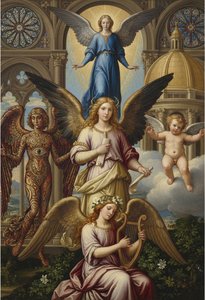
Divine Beauty: A Curated Guide to the Celestial Majesty of Angelic Figures in Art History
Explore the profound beauty of angelic figures in art history. From Renaissance masterpieces to celestial symbolism, our expert guide offers a sophisticated journey through the divine imagery of the Old Masters for discerning collectors and art enthusiasts.

Celestial Messengers: Angels in Painting – A Historical & Artistic Exploration
Explore the captivating history of angels in painting! Discover symbolism, iconic Renaissance & Byzantine masterpieces, and renowned artists. Expert insights for art lovers & collectors at TopImpressionists.

Mastering Drama and Light: A Definitive Guide to the Flemish Baroque Art Movement
Explore the dramatic brilliance of the Flemish Baroque movement. Discover how masters like Peter Paul Rubens utilized chiaroscuro and dynamic composition to redefine art history through light, shadow, and unparalleled emotion.

Barockens dramatik: Att föra prakt och känsla in i samtida interiörer
Upptäck barockens dramatik och lyx! Lär dig hur du integrerar denna klassiska stil i ditt hem med våra experttips och inspirerande exempel. Skapa en palatskänsla idag!

Celestial Messengers: A Comprehensive Exploration of Angelic Representation in Art History
Explore the captivating history of angels in art! Discover symbolism, iconic Renaissance masterpieces & renowned artists. Expert insights for art lovers & collectors at TopImpressionists.