

Visas: · Med ram:
 Förhandsvisa
 Skicka
 Dela
Dela
 Visa detaljer
 Guide
Guide

 Ladda ner
 Liknande objekt
 Röntgen
 Bildspel
 Frågor och svar
 Statistik
- 125.0 x 85.0 cm


Skr 2937
Handgjord oljereproduktion
Handmålad olja på duk i din valda storlek och ram, tillverkad efter beställning av våra konstnärer. ( Byt till tryck Byt till digital bild)
Storlek
·Standardstorlek
skräddarsydd
CM
INCH
Välj bland våra förinställda storlekar som motsvarar konstverkets ursprungliga proportioner.
Laddar storlekar...

bredd
höjd
Ange den bredd och höjd du behöver för att passa din ram eller din vägg. Eftersom detta är handmålat kan konstnären, vid ett annat format, måla lite mer runt bilden eller beskära den något – det är du som väljer. Vi skickar en digital mockup för godkännande innan målningen påbörjas. Bilden som visas på denna sida representerar inte det slutgiltiga resultatet — det är endast mockuppen som visar det.
 Läs mer
Slutför
·
Vit kant Skr1

Suddig kantfinish Skr1

Fortsatt motiv Skr1

P118B Skr10

P118H Skr10

P118W Skr10

P438Z Skr10

P508JH Skr12

P508YH Skr12

P805H Skr10

P805Z Skr10

P919BZ Skr10

P919G Skr10

P919XJ Skr10

P959ZH Skr10

P968JZ Skr12

W106C Skr8

W218G Skr10

W218JH Skr8

W218Y Skr10

W307PJ Skr10

W316G Skr10

W316PJ Skr8

W316Y Skr10

W398PJ Skr8

W4111J Skr10

W500HY Skr15

W500JH Skr15

W692G Skr12

W849H Skr8

W940BG Skr15

W953PJ Skr8

H24-GOLD Skr30

H24-SILVER Skr30

H36-GOLD Skr45

H36-SILVER Skr45
Skickas i ett skyddande rör, redo att ramas in av din egen inramare.
För mått över 105 cm levereras ramen som ett kit för en professionell ramverkare — läs detaljerna.
Tillval
valfrittVad ingår i tilläggen?
Exempel på vad som kan ändras: Byt ut ansiktet mot kundens eget foto; Lägg till ett husdjur (t.ex. byt ut en katt mot en hund); Inkludera ett dolt meddelande i bakgrunden; Ändra landskap eller element i bakgrunden.
Efter beställning kommer TopImpressionists.com team att skicka ett e-postmeddelande till kunden för instruktioner och tillhandahålla en förhandsvisning av utkastet
Efter beställning kommer TopImpressionists.com team att skicka ett e-postmeddelande till kunden för instruktioner och tillhandahålla en förhandsvisning av utkastet
Leverans över hela världen () på 3–4 veckor istället för standard 5 veckor. (7 november). Inga kompromisser med kvaliteten.
Skyddande fernissa
Namnskylt
Detaljer för graverad bronsplatta
This elegant plaque features the artist's name and the title of the artwork, finely engraved for a timeless presentation.
It is made from bronze with a refined, elegant finish. The text is precisely laser-engraved for a sharp and permanent result. Measuring 9x2 cm, the plaque is compact yet easy to read. It's built to be durable and scratch-resistant, offering a professional, museum-quality look. Mounting is simple thanks to the included adhesive backing.
Detaljer för transparent akrylplatta
The plaque includes essential engraved details such as the artist's name, the title of the artwork, the date it was created, the type of media used-like oil on canvas or watercolor-a brief description of the piece, and a QR code that links to the complete artwork information.
It is crafted from clear acrylic, offering a sleek, modern appearance. The text is UV-engraved in black to ensure strong visual contrast. With a size of 10x15 cm, it ensures optimal readability. It comes equipped with two metal hooks for secure wall mounting. The plaque is designed to be weather-resistant, making it suitable for various environments, and it includes interactive features that work seamlessly with smartphone scanning.
Detaljer för svart akrylplatta
This elegant plaque includes engraved information such as the artist's name, the title of the artwork, the date it was created, the type of media used (like oil on canvas or watercolor), a short description of the artwork, and a QR code for quick access to more information.
The plaque itself is made from refined black acrylic with a premium finish. The text is laser-engraved in white for high contrast and readability. Its size is 10x15 cm, designed to be easy to read. It comes with two metal hooks for professional mounting. The design is sleek and fits any interior style. It is also weather-resistant and durable, with built-in digital integration for mobile compatibility.
Glasalternativet är endast tillgängligt i storlekar under 110 cm.
 Glasalternativet är endast tillgängligt i storlekar under 110 cm.
- Fri expressfrakt över hela världen
- Högkvalitativ linnecanvas
- Fullständig fraktförsäkring
- Garantier för återbetalning av tullavgifter
- Garantier för exakt färgåtergivning
- 100 dagars returrätt (endast vid fel)
- 100% pengarna tillbaka-garanti
- Mängdrabatt erbjuds


Beskrivning av samlarobjekt
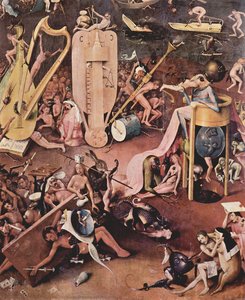
Hieronymus Bosch's "Two Witches" depicts two enigmatic figures amidst a dark, symbolic scene—a haunting exploration of morality and the supernatural from the Renaissance master.
Konstnärens biografi
Hieronymus Bosch (1450-1516): En mystisk nederländsk konstnär vars surrealistiska och symbolrika målningar utforskar moral, religion och människans mörkaste djup – en tidlös inspirationskälla.
Om målningen
A Glimpse into a Twisted World: The Enigmatic "Two Witches"
Hieronymus Bosch's “Two Witches,” painted circa 1480-1490, isn’t merely a depiction of two figures; it’s an immersion into a meticulously crafted nightmare. Born in ’s-Hertogenbosch, Netherlands, during a period rife with religious anxieties and burgeoning folklore, Bosch developed a singular artistic vision—one that fused the unsettling realities of his time with fantastical imagery and profound psychological depth. This particular work, often considered a preparatory study for a larger altarpiece, offers a concentrated dose of his signature style: a world brimming with symbolic excess, moral warnings, and a pervasive sense of impending doom. The painting’s power lies not in its narrative clarity—it deliberately avoids straightforward storytelling—but rather in the unsettling atmosphere it generates through carefully orchestrated details and an almost unbearable tension between the two central figures.
The composition itself is deceptively simple. Two women, draped in long, flowing robes of indeterminate color, occupy a starkly minimalist background. Their faces are obscured by elaborate head coverings—a deliberate choice that heightens their anonymity and emphasizes their role as archetypal figures rather than individuals. One holds a book or manuscript, its contents tantalizingly out of view, while the other carries a staff topped with what appears to be an animal skull – a potent symbol of death and decay. The positioning of the figures, slightly off-center, creates a dynamic imbalance, drawing the viewer’s eye into the heart of this unsettling tableau. Bosch masterfully uses negative space to amplify the sense of isolation and foreboding, suggesting that these women exist within a larger, unseen drama.
The Language of Line and Shadow: Technique and Style
Bosch's technique is instantly recognizable—a testament to his painstaking attention to detail. The work is executed entirely in pen and ink on paper, utilizing a remarkably precise hand that renders the figures’ forms with astonishing accuracy. He employs hatching and cross-hatching to create subtle gradations of tone, suggesting depth and volume without resorting to traditional shading techniques. This meticulous approach lends a remarkable sense of realism to the fantastical elements within the scene—the intricate folds of the robes, the unsettling details of the skull, even the suggestion of texture in the women’s garments. The monochromatic palette – shades of gray – further enhances the painting's somber mood and focuses attention on the interplay of line and shadow.
The influence of Bosch’s artistic training is evident in his mastery of perspective, though it’s deliberately flattened, creating a sense of claustrophobia. He doesn’t attempt to create an illusion of depth; instead, he uses overlapping lines and carefully positioned elements to suggest spatial relationships within the scene. The figures are presented as if trapped within a confined space—a visual metaphor for the psychological constraints imposed by sin and temptation. Bosch's style is deeply rooted in the Northern Renaissance tradition, yet it transcends conventional artistic boundaries, forging a uniquely personal and profoundly unsettling vision.
Decoding the Symbols: A Journey into Morality and Madness
“Two Witches” is saturated with symbolism, inviting endless interpretation. The book held by one figure likely represents knowledge—but perhaps also dangerous or forbidden knowledge. The skull atop the staff is a clear reference to mortality and the transience of earthly pleasures. The women themselves can be seen as allegorical figures representing temptation, sin, and the perils of indulging in worldly desires. Bosch’s work frequently served as moralistic warnings, depicting the consequences of straying from religious piety. The overall atmosphere evokes a sense of impending judgment—a reminder that even seemingly innocuous actions can lead to devastating outcomes.
Furthermore, the painting resonates with themes of madness and delusion. Bosch's art often explores the boundaries between reality and fantasy, sanity and insanity. The unsettling expressions on the women’s faces, combined with the bizarre setting, suggest a descent into psychological turmoil—a reflection of the anxieties and uncertainties that plagued Renaissance society. The scene feels like a carefully constructed dreamscape, populated by figures caught in a perpetual state of unease.
A Timeless Masterpiece: Reproduction and Legacy
“Two Witches” remains one of Hieronymus Bosch’s most compelling works, captivating viewers with its unsettling beauty and profound psychological depth. Reproductions offer an accessible way to experience the power of this extraordinary painting, allowing us to contemplate its complex symbolism and appreciate Bosch's unparalleled artistic vision. Whether displayed in a grand salon or a smaller study, a high-quality reproduction of “Two Witches” serves as a constant reminder of the enduring fascination with darkness, morality, and the mysteries of the human psyche.
Frågor och svar
Är "Two Witches" av Hieronymus Bosch en målning, en teckning eller ett tryck?
"Two Witches" av Hieronymus Bosch är klassificerat som WallArt. Kategorin beskriver vilken typ av konstverk originalet är.
Vilka färger dominerar "Two Witches" av Hieronymus Bosch?
"Two Witches" av Hieronymus Bosch använder en Neutrals-palett, där Putty (#dedede) är den dominerande färgen.
Vilket nationellt ursprung ligger bakom Northern Renaissance i "Two Witches"?
Det Northern Renaissance-inspirerade verket "Two Witches" skapades av en konstnär född i Nederländerna.
Snabbfakta och konstquiz
Om Hieronymus Bosch

Hieronymus Bosch
1450 - 1516, Nederländerna
Konstnärsbiografi
Hieronymus Bosch: En Mystisk Konstnärs Värld
Hieronymus Bosch, ursprungligen Jheronimus van Aken, född omkring 1450 i den livliga staden ’s-Hertogenbosch i Nederländerna – då en del av Brabant – är en av konsthistoriens mest fascinerande och gåtfulla figurer. Hans värld var genomsyrad av senmedeltida religiös passion, folktro och en växande känsla av samhällelig oro, allt vilket djupt påverkade hans unikt obehagliga konstnärliga vision. Från en familj med en lång tradition inom måleriet – hans farfar, Jan van Aken, och fadern, Anthonius van Aken, var båda konstnärer – fick Bosch sannolikt sin tidigaste utbildning inom familjens verkstad, där han absorberade tekniker och konventioner från nederländska målningar. Ändå började han redan i sina tidiga år att avvika från etablerade normer, vilket antydde den extraordinära fantasi som skulle definiera hans karriär. Biografiska detaljer är frustrerande bristfälliga; register är fragmenterade, vilket lämnar mycket öppet för spekulation och tolkning, vilket bidrar till mystiken kring både mannen och hans verk. Han gifte sig med Aleyt Goyaerts van den Meerveen någon gång före 1481, en union som gav honom viss ekonomisk trygghet genom hennes familjs innehav, men lite annat är känt om deras privata liv.Fantastiska Visioner och Symboliska Djup
Boschs konstnärliga stil är omedelbart igenkännlig – en fängslande blandning av minutiös detaljrikedom och vågade fantasifulla bilder. Han arbetade huvudsakligen med olja på ekpaneler, vilket visade enastående behärskning av mediet, och skapade ljusa färger och invecklade texturer. Även om hans tidiga verk visar inflytande från traditionell nederländska målningar – särskilt i sin realism och uppmärksamhet på detaljer – rörde han sig snabbt bortom enkel imitation, utvecklande en djupt originell vision. Hans målningar är inte bara representationer av verkligheten; de är allegoriska landskap bebodda av bisarra varelser, hybrider och obehagliga scener som verkar stulna från drömmar – eller mardrömmar. Religiösa teman genomsyrar mycket av hans arbete, men de är sällan raka beskrivningar av bibliska berättelser. Istället använder Bosch symbolik för att utforska komplexa moraliska och teologiska koncept, ofta med fokus på syndens faror, jordiska nöjes flyktighet och den oundvikliga gudomliga domstolen. Hans varelser – groteska demoner, fantastiska djur och märkligt mänskliga figurer – är inte bara dekorativa element; de är förebilder för vice, lockelse och andlig korruption. Den blandning av heligt och profant, vackert och groteskt skapar en unikt obehaglig effekt som fortsätter att fängsla betraktare århundraden senare.Huvudverk och Symbolik
Bosch var en pionjär inom konstens representation av abstrakta koncept, vilket syns tydligt i hans triptyker. The Garden of Earthly Delights (c. 1490-1510) är ett exempel på detta, och anses vara en av de mest gåtfulla och debatterade verken i konsthistorien. När det öppnas presenteras en panoramautsikt över paradiset, jordelivet och helvetet – en komplex allegorisk representation av mänsklighetens föllande från nåd. Den vänstra panelen visar Eden, fyllt av fantastiska varelser och frodig vegetation; den centrala panelen skildrar en värld uppslukad av sinnliga nöjer och okontrollerade begär; och den högra panelen erbjuder en skrämmande glimt in i helvetets fördömelse. The Last Judgement Triptych (c. 1480-1490) är ett annat kraftfullt exempel på hans förmåga att måla både himmelsk lycka och infernalisk förödelse, medan *The Ascent of the Blessed* (c. 1480-1490) visar hans skicklighet i att skapa eteriska och drömlika scener. Även mindre verk som *Epiphany* (c. 1495) visar upp hans innovativa användning av olja på trä och komplex symbolik, vilket avslöjar en tanke som ständigt brottas med djupa frågor om tro, moral och den mänskliga tillstånd.Inflytande och Bestående Inverkan
Att identifiera Boschs direkta influenser är en utmaning, givet originaliteten i hans vision. Studenter pekar på kopplingar till medeltida folktro, religiösa texter – särskilt de som betonar apokalyptiska teman – och den rådande samhälleliga ångesten under tiden, inklusive rädslor för kätteri och social oro. Men det är tydligt att han syntetiserade dessa element till något helt nytt och unikt för sig själv. Hans inflytande på efterföljande konstnärer är obestridligt. Pieter Bruegel den Äldre följde direkt i hans fotspår, adopterade liknande teman och kompositionstekniker, medan senare rörelser, såsom Surrealismen, också drog inspiration från Boschs drömlika bilder och utforskning av det undermedvetna. Konstnärer som Salvador Dalí och Max Ernst erkände öppet sin tacksamhet till hans obehagliga visioner. Även idag fortsätter Boschs verk att fascinera och provocera debatt, vilket säkerställer hans plats som en mästare inom nederländska målningar och en visionär konstnär vars inflytande sträcker sig långt bortom sin egen tid. Hans målningar ger värdefulla insikter i den religiösa, sociala och psykologiska klimaten under det sena 1400-talet och tidiga 1500-talet, utmanar konventionella normer och banar väg för nya former av konstnärligt uttryck. Han dog 1516, lämnande efter sig ett verk som fortsätter att hemsöka och inspirera, vilket säkerställer hans bestående arv som en av konsthistoriens mest unika och oförglömda röster.Ytterligare information
- Boschs liv och verk i detalj: Hieronymus Bosch - Liv och Verk
- Wikipedia-sida om Hieronymus Bosch: Hieronymus Bosch på Wikipedia
Snabbfakta om Hieronymus Bosch
- Artistic Movement Or Style: Surrealism, Symbolism
- Artists Or Movements Influenced By This Artist: ['Bruegel äldre']
- Date Of Birth: c. 1450
- Date Of Death: 1516
- Full Name: Hieronymus Bosch
- Nationality: Nederländsk
- Notable Artworks:
- Garden Eden
- Sista domen
- Stigande helgn
- Place Of Birth: Den Bosch, Nederl.
Utforska konstverk sorterade efter tema, stil och egenskaper.




Hieronymus Bosch
Two Witches
() ·
Med ram: · Handmålad med olja på linne
Totalt