


 Visa i rummet
 Skicka
 Dela
Dela
 Detaljer
 Studentguide för konstverk

 Ladda ner
 Liknande objekt
 Röntgen
 Bildspel
 Besökstatistik
Alexandre le Grand devant le tombeau d'Achille


Hubert Robert's 'Alexander the Great before Achilles’ Tomb' captures a poignant scene of historical reflection amidst Roman ruins, blending Neoclassical and Romantic elements with evocative lighting and textures.
 Läs mer
Hubert Robert (1733-1808): En fransk konstnär känd för sina vackra ruinmålningar och fantasifulla landskap. Fångade tidens skönhet & melankoli i sin konst!
Giclée / Konsttryck
Giclée- eller canvasprint av museumskvalitet med snabb produktion och flexibla ytbehandlingsalternativ. ( Köp handmålat konstverk Byt till digital bildförsäljning)




P118B Skr10

P118H Skr10

P118W Skr10

P438Z Skr10

P508JH Skr12

P508YH Skr12

P805H Skr10

P805Z Skr10

P919BZ Skr10

P919G Skr10

P919XJ Skr10

P959ZH Skr10

P968JZ Skr12

W106C Skr8

W218G Skr10

W218JH Skr8

W218Y Skr10

W307PJ Skr10

W316G Skr10

W316PJ Skr8

W316Y Skr10

W398PJ Skr8

W4111J Skr10

W500HY Skr15

W500JH Skr15

W692G Skr12

W849H Skr8

W940BG Skr15

W953PJ Skr8




Standardstorlek
anpassad
CM
INCH
Välj bland våra förinställda storlekar som motsvarar konstverkets ursprungliga proportioner.
Loading sizes...

bredd
höjd
Ange den bredd och höjd du behöver, för att passa din ram eller din vägg. Ett tryck kan endast beskäras, aldrig göras större än bilden, vilket innebär att ett format med en annan formform leder till att en del av bilden går förlorad. Vi skickar en digital mockup för godkännande innan vi trycker något. Bilden som visas på denna sida visar inte den faktiska beskärningen — det är endast mockuppen som gör det.
Leverans över hela världen () på 2 veckor istället för standard 4/5 veckor. (23 oktober)

Fri expressfrakt över hela världen

Högkvalitativ linnecanvas

Fullständig fraktförsäkring

Garantier för återbetalning av tullavgifter

Garantier för exakt färgåtergivning

100 dagars returrätt vid fabrikationsfel

100% pengarna tillbaka-garanti

Mängdrabatt erbjuds
 Glasalternativet är endast tillgängligt i storlekar under 110 cm.

Alexandre le Grand devant le tombeau d'Achille
Giclée / Konsttryck
Reproduktionsstorlek
-


Totalpris
Skr 684
A Dramatic Encounter: Hubert Robert’s Meditation on Power and Decay
Hubert Robert’s “Alexandre le Grand devant le tombeau d’Achille” (c. 1754-1757) is not merely a depiction of a historical scene; it's a carefully constructed tableau brimming with symbolic weight, rendered in the evocative style characteristic of the late 18th century. The painting transports us to a ruined Roman landscape – a deliberate choice by Robert that immediately establishes a dialogue between grandeur and transience. Here, Alexander the Great stands before what is clearly identified as Achilles’ tomb, not in triumphant victory, but in a posture of contemplative solemnity. This isn't the heroic Alexander of classical sculpture; he appears almost weary, his gaze fixed on the fragmented remains of the past, suggesting a profound awareness of mortality and the fleeting nature of even the most formidable power.
Robert masterfully employs a flattened perspective, prioritizing atmosphere and emotional resonance over strict adherence to linear realism. The composition is deliberately complex, layering figures – soldiers, onlookers, and Alexander himself – within a carefully orchestrated architectural setting. The strong vertical lines of the columns contrast sharply with the horizontal fragmentation of the fallen structures, creating a visual tension that mirrors the painting’s thematic concerns. Notice how Robert uses diffused lighting, reminiscent of an overcast day, to soften the edges and imbue the scene with a melancholic quality. The earthy color palette – dominated by ochres, browns, and muted blues – further reinforces this sense of age and decay, while subtle touches of red in the drapery draw the eye and add a touch of dramatic intensity.
Neoclassical Roots, Romantic Longing
While firmly rooted in the Neoclassical tradition—a style emphasizing clarity, order, and rational composition—Robert’s work also reveals a strong influence from the burgeoning Romantic movement. The ruins themselves are not simply historical artifacts; they represent a powerful symbol of time's relentless passage and the inevitable decline of all things. The scene evokes a sense of nostalgia for a lost golden age, a yearning for beauty amidst decay – a hallmark of Romanticism’s fascination with emotion and the sublime. Robert wasn’t just documenting ruins; he was crafting visions, blending observation with imagination to create scenes that resonated with both a longing for the past and an anticipation of the future.
The choice of Achilles' tomb is particularly significant. Achilles, the epitome of heroic strength and martial prowess, represents an ideal of masculine virtue—a concept increasingly challenged by the Enlightenment’s emphasis on reason and individual liberty. Alexander, standing before his demise, implicitly acknowledges this shift in values. The juxtaposition of the powerful conqueror with the fallen hero suggests a subtle critique of unchecked ambition and the ultimate futility of earthly glory. Robert's skill lies not just in depicting the scene accurately but in imbuing it with layers of meaning that invite contemplation.
Technique and Materials: A Layered Masterpiece
“Alexandre le Grand devant le tombeau d’Achille” is a testament to Robert's meticulous technique. Likely executed in oil on canvas, the painting demonstrates a sophisticated understanding of color blending and layering—a hallmark of the Rococo and Neoclassical periods. The visible brushstrokes contribute to the sense of texture and immediacy, while subtle glazing techniques create depth and luminosity. The rough, aged surfaces of the ruins are contrasted with smoother areas of skin tones, further emphasizing the painting’s thematic concerns about time and decay. Robert's use of pigments mixed with oil—a standard practice at the time—allowed him to achieve a remarkable range of tonal values and subtle color variations.
The painting’s composition suggests a deliberate effort to capture not just a visual likeness but also an emotional atmosphere. Robert’s careful attention to detail, combined with his masterful use of light and shadow, creates a scene that is both visually stunning and profoundly moving. It's a work that invites the viewer to contemplate the enduring legacy of heroes, the inevitability of decay, and the complex relationship between power and mortality.
Frågor och svar
Hur beskrivs färgpaletten i "Alexandre le Grand devant le tombeau d'Achille" av Hubert Robert?
Färgpaletten i "Alexandre le Grand devant le tombeau d'Achille" av Hubert Robert beskrivs som Earthy. Det är en kompakt beskrivning av verkets färger.
Hur kan jag förhandsgranska en reproduktion av "Alexandre le Grand devant le tombeau d'Achille" av Hubert Robert?
Sidan Förhandsvisning för "Alexandre le Grand devant le tombeau d'Achille" låter dig förhandsgranska konstverket innan du beställer.
Kan jag se "Alexandre le Grand devant le tombeau d'Achille" av Hubert Robert på min egen vägg innan jag köper den?
"Alexandre le Grand devant le tombeau d'Achille" av Hubert Robert kan förhandsvisas på din egen vägg via konstverkets AR-förhandsvisning-sida med hjälp av förstärkt verklighet (AR) på en kompatibel enhet.
Om konstnären
Hubert Robert: A Painter of Ruins and Visions
Hubert Robert, en namn synonymt med suggestiva landskap och den romantiska locken av ruiner, upptar en unik position i 1800-talets franska konst. Född i Paris 1733, utspelade hans liv sig mot en bakgrund av förskjutna konstnärliga stilar och monumentala historiska omvälvningar – från Rococos lekfulla elegans till Neoklassicismens gryning, och slutligen genom de stormiga åren under den franska revolutionen. Han var inte bara dokumenterare av förfall; han skapade visioner, blandade observation med fantasi för att skapa scener som resonerade med både en nostalgisk längtan efter det förflutna och en förväntan på framtiden. Hans resa började inom den strukturerade världen av konstnärlig utbildning, initialt under skulptören Michel-Ange Slodtz, som erkände Roberts talang men klokt vägledde honom mot målarverket, kände hans sanna kall låg i att fånga ljus, atmosfär och den subtila poesin hos formen.Roman Reveries: Shaping an Artistic Identity
Den avgörande punkten i Roberts konstnärliga utveckling inträffade med hans förlängda vistelse i Rom 1754. I sällskap av Étienne-François de Choiseul, fördjupade han sig i en värld genomsyrad av historia och arkitektonisk prakt. I hela elva år blev staden den antika som sin utomhusstudio, dess sammanrasade tempel, majestätiska valv och övervuxna trädgårdar brände hans fantasi. Detta var inte bara att kopiera det han såg; det handlade om att tolka det, omarbeta det och infusa det med en känsla av melankolisk skönhet. Han arbetade tillsammans med Giovanni Paolo Panini, vars inflytande är synligt i Roberts tidiga *capriccio*-kompositioner – dessa fantasifulla vyer som placerade klassiska ruiner bredvid samtida liv. Men Robert rörde sig snabbt bortom imitationen, utvecklade sin egen distinkta stil präglad av noggrann detalj, atmosfärisk perspektiv och en djup känsla för ljusets lek och skuggans dans. Han målade inte bara ruiner; han målade tiden själv, fångade den plågsamma skönheten i flyktighet och den bestående kraften hos minnet. Hans skissböcker från denna period är ovärderliga register över hans observationer, fyllda med noggranna studier av romerska landmärken som Villa d’Este och Caprarola, vilket visar en skarp blick för arkitektonisk nyans och landskapskomposition.Parisian Acclaim and Royal Patronage
Roberts återkomst till Paris 1765 markerade en vändpunkt i hans karriär. Han fick snabbt erkännande inom den konstnärliga etablissemanget, säkrade inträde i Académie Royale de Peinture et de Sculpture med “The Port of Rome, Ornamented with Different Monuments of Architecture, Ancient and Modern.” Hans efterföljande utställningar på Salon fick omfattande beröm, fångade publikens uppmärksamhet med sina suggestiva representationer av ruiner och pittoreska landskap. Denis Diderot, en framstående figur i Upplysningen, hyllade entusiastiskt Roberts målade prakt, erkände hans förmåga att transportera tittarna till en annan tid och plats. Detta ledde till kunglig beskydd, med uppdrag för dekorativa projekt och befordran till “Designer of the King’s Gardens” och senare, “Keeper of the King’s Pictures.” Han blev en eftertraktad konstnär, inte bara för sina dukmålningar utan också för sina innovativa utformningar av trädgårdar och palats interiörer. Hans verk resonerade med den rådande smaken för *capriccio*-måleri – ett genre som lockade samlare fascinerade av historia, arkeologi och det pittoreska – men Robert infogade en unik känsla, lyfte den bortom rent dekorativ konst.Revolution, Resilience, and Lasting Legacy
Den franska revolutionen presenterade en osedvanlig utmaning för Robert. Medan många konstnärer kämpade med att navigera i det turbulenta politiska klimatet, fann han sig själv fångad i strömmen av förändringar. Han blev till och med fängslad under Terrorns tid, en skrämmande upplevelse som ändå inspirerade en serie teckningar som dokumenterade hans tid i fängelset. Trots detta fortsatte han att måla flitigt under denna period, vilket visade ett outtröttligt engagemang för sin konst. Efter Revolutionen utsågs Robert till kurator för det nyetablerade Muséum Central des Arts – den framtida Louvren – ett testamente till hans expertis och dedikation till att bevara kulturellt arv. Han spelade en viktig roll i att organisera och katalogisera museets samling, säkerställa att Frankrikes konstskatter skyddades för kommande generationer. Hubert Robert dog i Paris 1808, lämnade efter sig ett otroligt verk som fortsätter att inspirera beundran och uppskattning. Hans arv ligger inte bara i hans tekniska behärksamhet utan också i hans unika förmåga att blanda historisk noggrannhet med fantasifull vision. Han banade väg för en genre av måleri som firade både skönheten i förfall och den bestående kraften hos mänsklig kreativitet, vilket etablerade honom som en nyckelperson som broderar samman Rococo- och Neoklassicismens perioder och förutspår aspekter av Romantik med sin fascination för historia och fantasi.- Key Influences: Giovanni Paolo Panini, Piranesi, the architectural landscape of Rome.
- Major Themes: Ruins, landscapes, *capriccio* paintings, historical memory, the passage of time.
- Artistic Style: Meticulous detail, atmospheric perspective, evocative lighting, blending observation with imagination.

Hubert Robert
1733 - 1808 , Frankrike
Snabbfakta
- Artistic Movement Or Style: Romantisk, Neoklassisk
- Artists Or Movements Influenced By This Artist: ['Romantism']
- Artists Who Influenced This Artist:
- Giovanni Panini
- Piranesi
- Date Of Birth: 22 maj 1733
- Date Of Death: 15 apr 1808
- Full Name: Hubert Robert
- Nationality: Fransk
- Notable Artworks:
- Porten i Rom
- Galateans flykt
- Louvrens galleria
- Place Of Birth: Paris, Frankrike
Relaterade artiklar

David Roberts: A Scottish Pioneer of Topographical Art & Orientalist Vision
Explore the captivating world of David Roberts, a pioneering Scottish painter renowned for his detailed Orientalist scenes & stunning Egyptian landscapes. Discover his legacy and find museum-quality reproductions at TopImpressionists.
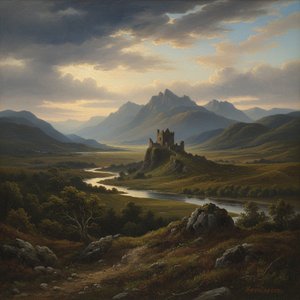
Alexander Nasmyth: Picturing Scotland's Romantic Landscape – Innovation & Identity
Explore the life & art of Alexander Nasmyth, a pivotal figure in Scottish Romantic landscape painting. Discover his iconic works, including portraits of Robert Burns, and learn about his lasting influence on national identity. Fine art reproductions available.

Robert Havell Sr.: Botanical Precision & the Rise of Colour Plate Publishing
Explore the life & work of Robert Havell Sr., a pioneer of botanical illustration and key collaborator with Audubon. Discover his stunning aquatint engravings, artistic techniques, and lasting impact on 19th-century art.

Katsushika Hokusais 25 Mästerverk: Ukiyo-e Konst & Heminredning | TopImpressionists
Utforska Katsushika Hokusais 25 mest ikoniska ukiyo-e konstverk. Lär känna historien bakom 'The Great Wave' och andra mästerverk från japansk konst. Köp högkvalitativa reproduktioner & inred med tidlös skönhet på TopImpressionists.com.

Hubert Robert: Picturing Ruins, Preserving Memory – A Study of Romantic Antiquarianism & Artistic Innovation
Explore the captivating world of Hubert Robert, master of Romantic landscape painting & 'capriccio' ruins. Discover his historical context, artistic innovations, and collecting insights with TopImpressionists.
Utforska konstverk sorterade efter tema, stil och egenskaper.


