


 Visa i rummet
 Skicka
 Dela
Dela
 Detaljer
 Studentguide för konstverk

 Ladda ner
 Liknande objekt
 Röntgen
 Bildspel
 Besökstatistik
Spring Breeze
 Oil On Canvas
- WallArt
- Post-Impressionist Painting
 1905
1905- 19th Century
 79.0 x 79.0 cm
Experience 'Spring Breeze' by Igor Grabar, a captivating Post-Impressionist painting of a serene bedroom scene with divisionist technique and a cozy piano. Discover this beautiful artwork and bring its timeless charm into your space.
 Läs mer
Igor Grabar (1871-1960) var en pionjär inom rysk postimpressionism, känd för sina snölandskap och rollen att modernisera Tretyakovgalleriet. Utforska hans arv!
Konstverket som visas på denna sida skyddas av upphovsrättslagen, vilket innebär att vi inte lagligt kan skapa eller sälja en identisk reproduktion. Detta skydd upprätthålls genom internationella avtal såsom den Bernkonventionen och genom nationella lagar, inklusive de som fastställs av Amerikansk upphovsrättslag – Titel 17. Alla rättigheter förbehållna. Återgivning av konstverk är förbjuden utan skriftligt tillstånd från WahooArt.
Som ett respektfullt och lagligt alternativ erbjuder vi skräddarsydda, handmålade konstverk inspirerade av originalet. Våra skickliga och professionella konstnärer studerar noggrant originalets stil, stämning och konstnärliga essens för att skapa ett nytt, unikt verk som väcker samma känsla – samtidigt som det förblir en originell skapelse i egen rätt.
Denna metod följer fullt ut upphovsrättsliga regler eftersom den inte innebär kopiering eller duplicering av det skyddade konstverket. Istället är det en kreativ nytolkning – en ny målning som är influerad av originalet men inte identisk med det.
Handgjord oljereproduktion
Handmålad olja på duk i din valda storlek och ram, tillverkad efter beställning av våra konstnärer. ( Byt till tryckta exemplar Byt till digital bildförsäljning)




P118B Skr10

P118H Skr10

P118W Skr10

P438Z Skr10

P508JH Skr12

P508YH Skr12

P805H Skr10

P805Z Skr10

P919BZ Skr10

P919G Skr10

P919XJ Skr10

P959ZH Skr10

P968JZ Skr12

W106C Skr8

W218G Skr10

W218JH Skr8

W218Y Skr10

W307PJ Skr10

W316G Skr10

W316PJ Skr8

W316Y Skr10

W398PJ Skr8

W4111J Skr10

W500HY Skr15

W500JH Skr15

W692G Skr12

W849H Skr8

W940BG Skr15

W953PJ Skr8




Standardstorlek
anpassad
CM
INCH
Välj bland våra förinställda storlekar som motsvarar konstverkets ursprungliga proportioner.
Loading sizes...

bredd
höjd
Ange den bredd och höjd du behöver för att passa din ram eller din vägg. Eftersom detta är handmålat kan konstnären vid en annan form måla lite mer runt bilden eller beskära den något – du väljer själv. Vi skickar en digital mockup för godkännande innan målningen påbörjas. Bilden som visas på denna sida representerar inte det slutgiltiga resultatet — det är endast mockuppen som visar det.
Exempel på vad som kan anpassas: Byt ut ansiktet mot ett foto av kunden; Lägg till ett husdjur (t.ex. byt ut en katt mot en hund); Inkludera ett dolt meddelande i bakgrunden; Ändra bakgrundens landskap eller element.
Efter beställning kommer TopImpressionists.com team att mejla kunden för instruktioner och tillhandahålla en skissförhandsvisning
Efter beställning kommer TopImpressionists.com team att mejla kunden för instruktioner och tillhandahålla en skissförhandsvisning
Leverans över hela världen () på 3–4 veckor istället för standard 5 veckor. (21 oktober). Inga kompromisser med kvaliteten.

Fri expressfrakt över hela världen

Högkvalitativ linnecanvas

Fullständig fraktförsäkring

Garantier för återbetalning av tullavgifter

Garantier för exakt färgåtergivning

100 dagars returrätt vid fabrikationsfel

100% pengarna tillbaka-garanti

Mängdrabatt erbjuds
 Glasalternativet är endast tillgängligt i storlekar under 110 cm.

Spring Breeze
Tryckteknik
Reproduktionsstorlek
-


Totalpris
Skr 2645
Igor Emmanuilovich Grabar’s ‘Spring Breeze’: A Window into Post-Impressionist Serenity
“Spring Breeze,” painted in 1905 by the Russian Post-Impressionist artist Igor Emmanuilovich Grabar, is more than just a depiction of a bedroom; it's an immersive experience of light, color, and quiet contemplation. Created during a pivotal period in Grabar’s career – his peak artistic output between 1903 and 1907 – the painting exemplifies his distinctive approach to divisionist technique, a method that sought to capture fleeting moments through meticulously placed dots of pure color, creating an almost shimmering effect. Measuring 79 x 79 cm on canvas, this intimate scene invites viewers into a world of warmth and tranquility, reflecting Grabar’s profound interest in capturing the subtle nuances of domestic life.
A Symphony of Color and Light – The Divisionist Technique
Grabar's mastery lies in his skillful deployment of the divisionist technique. Rather than blending colors on the canvas, he applied small, distinct brushstrokes—often described as bordering on pointillism—to build up the image. This approach isn’t simply a stylistic choice; it’s a deliberate attempt to mimic the way light itself is perceived – fragmented and shimmering. Observe how the sunlight streaming through the two windows is rendered not with smooth gradations, but with a mosaic of yellows, oranges, and whites, creating an ethereal glow that bathes the room in warmth. The careful arrangement of these color fragments generates a remarkable sense of depth and texture, drawing the eye across the canvas.
Historical Context: Post-Impressionism and the Russian Avant-Garde
‘Spring Breeze’ emerged from the broader context of Post-Impressionism, a movement that arose as a reaction against the Impressionists' focus on objective observation of light. While Impressionists sought to capture fleeting moments, Post-Impressionists aimed for something more – a deeper emotional and symbolic resonance within their work. Grabar, influenced by artists like Ilya Repin and Anton Azbe, pushed this movement further with his unique divisionist style. His work aligns with the broader Russian avant-garde of the early 20th century, exploring themes of domesticity and spirituality through a highly personal artistic lens.
Symbolism Within the Still Life – A Room of Quiet Reflection
Beyond its technical brilliance, ‘Spring Breeze’ is rich in subtle symbolism. The piano, positioned prominently in the corner, suggests both musical contemplation and perhaps a yearning for creative expression. The carefully arranged vases, each placed with intention, contribute to the overall sense of order and serenity. The potted plant adds a touch of nature, connecting the interior space with the outside world. The composition as a whole evokes a feeling of peaceful solitude – a sanctuary from the bustle of daily life. It’s a scene designed not just to be observed, but to be felt.
Technical Specifications
- Title: Spring Breeze
- Artist: Igor Emmanuilovich Grabar
- Date: 1905
- Medium: Oil on Canvas
- Size: 79 x 79 cm
This exceptional reproduction captures the essence of Grabar’s ‘Spring Breeze,’ offering a stunning addition to any art collection or interior design scheme. Its evocative beauty and masterful technique make it a timeless piece, reflecting the enduring appeal of Post-Impressionist artistry.
Frågor och svar
Vilken är den färgmässiga identiteten hos "Spring Breeze" av Igor Emmanuilovich Grabar?
Färgidentiteten i "Spring Breeze" av Igor Emmanuilovich Grabar: en Earthy-palett, dominerad av Driftwood (#d2aa65).
Är "Spring Breeze" en bra presentidé?
"Spring Breeze" föreslås som en gåva till Anniversary.
Hur harmoniska är färgerna i "Spring Breeze" av Igor Emmanuilovich Grabar?
Färgerna i "Spring Breeze" av Igor Emmanuilovich Grabar uppvisar en Strong Color Unity harmoni. Harmoni beskriver hur färgerna förhåller sig till varandra.
Liknande konstverk


Om konstnären
Early Life and Education
Igor Emmanuilovich Grabar (1871–1960) was a Russian Post-Impressionist painter, publisher, restorer and historian of art. Grabar, descendant of a wealthy Rusyn family, was trained as a painter by Ilya Repin in Saint Petersburg and by Anton Àžbe in Munich. He reached his peak in painting between 1903–1907 and was notable for a peculiar divisionist painting technique bordering on pointillism and his rendition of snow. His family’s strong inclination towards Russian culture stemmed from his father, Emmanuil Hrabar, an ethnic Rusyn lawyer and politician who maintained ties with the Russian embassy. Grabar's formative years unfolded in Yegoryevsk, where he attended high school, sparking his fascination with visual arts through exposure to magazine publications following the assassination of Tsar Alexander II. He subsequently enrolled in Mikhail Katkov’s boarding school in Moscow, fostering connections with fellow students from the Moscow School of Painting, Sculpture and Architecture—a crucible for artistic experimentation and intellectual discourse.Artistic Career and Notable Works
Grabar honed his craft under Ilya Repin's tutelage in Saint Petersburg and Anton Àžbe’s guidance in Munich, immersing himself in diverse stylistic approaches. His artistic zenith transpired between 1903 and 1907, characterized by a distinctive divisionist technique—a method that embraced pointillism—and an unparalleled sensitivity to capturing the ethereal beauty of snowfall. Among his seminal achievements were landscapes imbued with profound symbolic resonance, such as “Landscape with a Haystack,” which eloquently conveyed the grandeur of nature’s panorama. Furthermore, “The Embroideress” stood as a testament to realism's enduring appeal during Russia’s late nineteenth century, meticulously depicting everyday life and human experience. "Going to Work," similarly, captured the spirit of the Russian populace—a poignant portrayal reflecting social realities.Museum and Art Restoration
Grabar ascended to prominence in 1913 when he was appointed director of the Tretyakov Gallery in Moscow—a pivotal moment that propelled him into the vanguard of cultural reform. Recognizing the imperative for broadening artistic horizons, he championed the inclusion of modern art within the gallery’s collection and spearheaded its inaugural comprehensive catalogue publication in 1917—establishing a benchmark for scholarly engagement with Russian visual culture. His professorship at Moscow State University (1921) solidified his role as an intellectual architect, shaping generations of artists and fostering critical dialogue concerning artistic interpretation. Notable Museums Featuring Grabar’s Work: The Tretyakov Gallery in Moscow houses an unparalleled assemblage of Russian fine art—a legacy meticulously curated under Grabar's stewardship. Similarly, Novokuznetsk Art Museum showcases a rich tapestry of Russian and European artworks—reflecting Grabar’s commitment to disseminating artistic excellence. And Museo Kharkov Museum of Art (Ukraine) presents a vast collection of opere d’arte from the fourteenth century—a testament to Grabar’s dedication to preserving cultural heritage.Legacy and Later Life
Grabar remained steadfast at the helm of Soviet art institutions until his passing in 1960, shaping artistic discourse and fostering intellectual exchange throughout his illustrious career. He championed the repatriation of looted artwork from Germany following World War II—a courageous stance reflecting his conviction that artistic treasures deserved rightful recognition. His influence extended beyond institutional leadership; he advised Joseph Stalin on architectural preservation—demonstrating his profound understanding of Russia’s cultural heritage. Igor Grabar's enduring contribution to Russian art history continues to inspire artists and scholars alike, cementing his place as a visionary figure who championed innovation while honoring tradition.
Igor Emmanuilovich Grabar
1871 - 1960 , Ungern
Snabbfakta
- Artistic Movement Or Style: Post-Impressionism
- Artists Who Influenced This Artist:
- Ilya Repin
- Anton Àžbe
- Date Of Birth: March 25, 1871
- Date Of Death: May 16, 1960
- Full Name: Igor Emmanuilovich Grabar
- Nationality: Russian
- Notable Artworks:
- Landscape with a haystack
- The Embroideress
- Going to work
- Place Of Birth: Budapest, Hungary
Relaterade artiklar

The Soul of Impressionism: Why Oil on Canvas Captures Eternal Light and Timeless Emotion
Discover the enchanting alchemy of Impressionism. Explore how the mastery of oil on canvas, through glazing and impasto, captures eternal light and emotion. Perfect for lovers of Monet and Van Gogh seeking the profound depth of hand-painted fine art.

The Timeless Beauty of Oil on Panel: Capturing Light and Texture through the Impressionist Lens
Discover the exquisite depth of oil on panel. Explore how Impressionist masters captured light and texture through tactile brushwork, and learn how to bring these museum-quality, hand-painted masterpieces into your home with expert curation.

The Magic of Lithography: Capturing Light and Texture in Every Impressionist Print
Discover the enchanting world of lithography through an Impressionist lens. Explore how this timeless technique captures the luminous light and delicate textures of masters like Monet and Renoir, offering a profound way to bring art history into your home with elegance and soul.
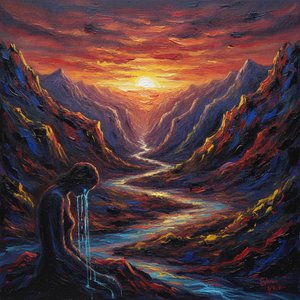
Capturing Emotion: A Journey Through the Soul of Expressionist Landscapes
Explore the profound emotional depth of Expressionist landscapes. Discover how Post-Impressionist masters moved beyond light to capture the soul through vibrant color and form. A curated journey for true art lovers seeking the beauty of expressive mastery.

Beyond the Light: Discovering the Soul and Emotional Depth of Post-Impressionism
Embark on a cultural journey through Post-Impressionism. Discover the profound emotional depth of masters like Van Gogh and Cézanne, exploring how they moved beyond light to capture the very soul of human experience through vibrant color and symbolic form.