

 Förhandsvisa
 Skicka
 Dela
Dela
 Visa detaljer
 Guide
Guide

 Ladda ner
 Liknande objekt
 Röntgen
 Bildspel
 Frågor och svar
 Statistik
Beech Trees


A serene watercolor sketch of beech trees by J.M.W. Turner, capturing the essence of nature with delicate lines and subtle tones. A timeless study of tranquility.
 Visa mer
J.M.W. Turner var en banbrytande brittisk landskapsmålare känd för sina dramatiska och ljusrika verk som influerade impressionismen. Upptäck hans mästerverk och den romantiska konstens tid!
Giclée / Konsttryck
Giclée- eller canvasprint av museumskvalitet med snabb produktion och flexibla ytbehandlingsalternativ. ( Beställ handmålad reproduktion Byt till digital bild)




P118B Skr10

P118H Skr10

P118W Skr10

P438Z Skr10

P508JH Skr12

P508YH Skr12

P805H Skr10

P805Z Skr10

P919BZ Skr10

P919G Skr10

P919XJ Skr10

P959ZH Skr10

P968JZ Skr12

W106C Skr8

W218G Skr10

W218JH Skr8

W218Y Skr10

W307PJ Skr10

W316G Skr10

W316PJ Skr8

W316Y Skr10

W398PJ Skr8

W4111J Skr10

W500HY Skr15

W500JH Skr15

W692G Skr12

W849H Skr8

W940BG Skr15

W953PJ Skr8




Standardstorlek
skräddarsydd
CM
INCH
Välj bland våra förinställda storlekar som motsvarar konstverkets ursprungliga proportioner.
Loading sizes...

bredd
höjd
Ange den bredd och höjd du behöver för att passa din ram eller vägg. Ett tryck kan endast beskäras, aldrig göras större än originalbilden, vilket innebär att ett format med en annan proportion leder till att en del av bilden går förlorad. Vi skickar en digital mockup för godkännande innan vi påbörjar tryckningen. Bilden som visas på denna sida visar inte den faktiska beskärningen — det är endast mockuppen som gör det.
Leverans över hela världen () på 2 veckor istället för standard 4/5 veckor. (9 november)

Fri expressfrakt över hela världen

Högkvalitativ linnecanvas

Fullständig fraktförsäkring

Garantier för återbetalning av tullavgifter

Garantier för exakt färgåtergivning

100 dagars returrätt (endast vid fel)

100% pengarna tillbaka-garanti

Mängdrabatt erbjuds
 Glasalternativet är endast tillgängligt i storlekar under 110 cm.

Beech Trees
Giclée / Konsttryck
Storlek på reproduktion
-


Slutgiltigt pris
Skr 700
A Moment Captured: The Essence of Beech Trees
Joseph Mallord William Turner’s “Beech Trees,” painted around 1797, isn't merely a depiction of trees; it’s an immersion into a fleeting moment of quietude. This remarkable work, rendered in delicate graphite and watercolor on paper, offers a profound glimpse into the Romantic sensibility – a fascination with nature’s power to evoke emotion and inspire contemplation. It’s a piece that whispers rather than shouts, inviting the viewer to lose themselves within its muted palette and intricate details.
The scene unfolds in what appears to be a park-like setting, perhaps a carefully cultivated corner of the English countryside. Turner doesn't strive for photographic realism; instead, he captures the *feeling* of being amongst these majestic beech trees – their imposing stature, the dappled light filtering through their branches, and the subtle shift in tone as shadows lengthen. The composition is deliberately understated, focusing on the interplay of form and texture rather than grand vistas or dramatic landscapes. The presence of a body of water in the background subtly anchors the scene, suggesting an endless expanse beyond the immediate focus.
Decoding the Language of Line and Tone
Turner’s technique is masterful in its restraint. The work is dominated by meticulously rendered lines – hatching and cross-hatching techniques employed with astonishing precision to build up tone and texture. These aren't bold, assertive strokes; they are subtle gradations of gray, white, and black that create a remarkable sense of volume and depth. The artist’s hand is visible in the delicate layering of washes, revealing the process of building up the image gradually, layer by layer. The bark of the trees is rendered with an almost tactile quality – you can practically feel the rough texture beneath your fingertips.
Crucially, Turner eschews bright colors, embracing a monochromatic palette that amplifies the emotional impact of the piece. This deliberate choice forces the viewer to focus on the nuances of light and shadow, creating a mood of serene contemplation. The diffused lighting suggests an overcast day, lending the scene a timeless quality – as if it could exist outside of any specific moment in time.
A Romantic Vision: Symbolism and Context
“Beech Trees” is deeply rooted in the artistic currents of the late 18th and early 19th centuries, particularly the burgeoning Romantic movement. Romantic artists sought to capture the sublime – that feeling of awe and wonder inspired by nature’s grandeur. Beech trees themselves held symbolic significance during this period; they were often associated with strength, resilience, and longevity—qualities highly valued in a society grappling with rapid change.
The work's date, 1797, places it within a pivotal moment of artistic and intellectual ferment. Turner’s early training at the Royal Academy instilled in him a rigorous approach to observation and representation, yet he quickly developed his own distinctive style—one that prioritized emotional expression over strict adherence to academic conventions. The piece reflects this tension between tradition and innovation, demonstrating Turner's ability to synthesize classical techniques with a deeply personal vision.
A Legacy of Light: Reproduction and Appreciation
Reproductions of “Beech Trees” offer a remarkable opportunity to experience the beauty and tranquility of Turner’s original work. The subtle nuances of tone, texture, and light—so painstakingly rendered by hand—are faithfully captured in high-quality reproductions. This piece is not just a depiction of trees; it's an invitation to slow down, breathe deeply, and connect with the natural world. It speaks to our enduring fascination with nature’s power to inspire awe and reflection – a timeless testament to the genius of J.M.W. Turner.
Frågor och svar
Hur kan jag se "Beech Trees" av J.M.W. Turner som ett bildspel?
Ett bildspel finns tillgängligt på sidan Bildspel för "Beech Trees" av J.M.W. Turner.
Hur harmonierar färgerna i "Beech Trees" med varandra?
Färgerna i "Beech Trees" av J.M.W. Turner uppvisar en Unified Palette harmoni. Harmoni beskriver hur färgerna förhåller sig till varandra.
Är "Beech Trees" av J.M.W. Turner ett porträtt, landskap eller en kvadratisk komposition?
"Beech Trees" av J.M.W. Turner har ett Portrait-format. Formatet beskriver kompositionens proportioner.


Konstnärsbiografi
En Visionär Född i London
Joseph Mallord William Turner, känd världen över som J.M.W. Turner, var mer än bara en målare; han var en visionär vars konst omdefinierade landskapsmåleriet och banade väg för modern abstraktion. Född i Maiden Lane, Covent Garden, London, 1775, hade hans barndom en enkel början – son till en barber och vargmakare. Trots detta blomstrade redan som tonåring en otrolig talang inom honom. Redan vid fjorton års ålder antogs han på Royal Academy, där han visade sin första verk, bara ett år senare. Denna tidiga lovande förmåga var inte bara teknisk skicklighet; den antydde en inbyggd förståelse för ljus, färg och atmosfär – egenskaper som skulle bli kännetecknande för hans exceptionella karriär. Han kompletterade sin konstnärliga utbildning med praktisk erfarenhet som arkitekttecknare, vilket skärpte hans perspektiv och kompositionsförmåga – färdigheter som visade sig vara ovärderliga vid både detaljerade topografiska vybilder och storslagna, känslomässiga landskap. Turners tidiga liv präglades av en dedikation till sitt hantverk, drivet av naturlig talang och en obeveklig strävan efter konstnärlig excellens.
Romantisk Tempest: Stil och Inflytanden
Turner uppstod under höjdpunkten av den romantiska eran, men han var inte bara en följare av dess konventioner. Han absorberade inflytande från olika källor – de nederländska mästarna som Claude Lorrain och Aelbert Cuyp för deras ljusa landskap, och konstnärer som Richard Wilson för hans poetiska syn på naturen. Dock imiterade Turner inte bara; han syntesade dessa influenser till något helt nytt. Hans verk kännetecknas av ett uttrycksfullt användande av färg, ofta med djupt kontrasterande och livfulla nyanser för att förmedla emotioner och atmosfär. Han fascinerades av naturens kraft och dramatik – turbulenta havslandskap, eldiga solnedgångar och virvlande stormar blev återkommande motiv i hans målningar. Han var inte intresserad av bara att representera det han såg; han sökte fånga *känslan* av en plats, den sublima beundran som naturen väckte. Denna strävan ledde honom till att experimentera med alltmer lösa penseldrag, upplösta former i lager av färg och ljus – tekniker som skulle förutse impressionismen decennier senare. Från 1840 fick hans verk betydande erkännande tack vare John Ruskins främjande, som lyfte landskapsmåleriet till en ny nivå av kritisk berömmelse.
En Produktiv Arv: Omfattningen av Turners Produktion
Turners enorma konstnärliga produktion är anmärkningsvärd. Han skapade över 550 oljemålningar, nästan 2 000 akvareller och en otrolig mängd verk på papper. Denna produktivitet var inte bara en fråga om kvantitet; den återspeglade hans utmattlösa utforskning av olika ämnen, tekniker och stilar. Hans målningar spänner över från detaljerade topografiska vyer av brittiska landskap till dramatiska historiska scener och suggestiva maritima målningar. Han var lika skicklig på att fånga pastoralitetens lugn som stormarnas förödelse. Verk som “Fort Vimieux” exemplifierar hans förmåga att förmedla atmosfäriska effekter – de virvlande molnen, de rasande vågorna och det intensiva ljuset bidrar alla till en känsla av drama och sublim skönhet. På liknande sätt visar “Scene in the Campagna” hans förmåga att fånga solnedgångens värme och ro med känsliga penseldrag och livfulla färger. Utöver måleri var Turner också en skicklig tryckkonstnär, vilket ytterligare spred sin konstnärliga vision genom gravyrer och litografier.
En Eccentrisk Man i en Stor Konstnärs Kropp
Turners personliga liv var lika komplext och gåtfullt som hans konst. Han förblev intensivt privat och avskild, undvek ofta sociala sammankomster och föredrog sin studios ensamhet eller den öppna vägen. Han fick två döttrar, Evelina och Georgiana, med Sarah Danby, hustru till en annan konstnär, men upprätthöll ett avlägset förhållande med dem. Hans senare år präglades av ökande excentricitet och försämring i hälsa. Efter sin fars död 1829 drabbades han djupt av det och efter detta blev han alltmer melankolisk och tillbakadragen, levde i fattigdom och försummade sitt utseende. Han antog smeknamnet “Mr. Booth” för att undvika igenkännande och seglade till och med sin båt in i Themsen under en folkräkning för att förbli spårlös. Trots sina excentriciteter, eller kanske tack vare dem, är Turner fortfarande en av Storbritanniens mest älskade konstnärer. Hans sista år spenderades i Chelsea där han dog den 19 december 1851, vid 76 års ålder. Som ett passande hyllning till hans bestående arv begravdes han i St Pauls Katedral, tillsammans med andra brittiska ljuspunkter – ett testamente om hans djupa inverkan på konst och kultur.

J.M.W. Turner
1775 - 1851 , Storbritannien
Kortfakta
- Artistic Movement Or Style: Romantism
- Artists Or Movements Influenced By This Artist: ['Impressionism']
- Artists Who Influenced This Artist:
- Cozens
- Wilson
- Date Of Birth: 23 april 1775
- Date Of Death: 19 december 1851
- Full Name: Joseph Mallord William Turner
- Nationality: Brittisk
- Notable Artworks:
- Fort Vimieux
- Scene i Campagna
- Place Of Birth: London, Storbritannien
Relaterade artiklar
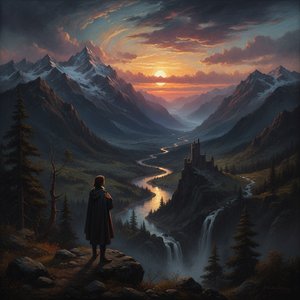
Capturing the Soul: The Emotional Majesty and Sublime Power of Romantic Landscape Painting
Explore the profound emotional depth of Romantic landscape painting. Discover how masters like Turner and Friedrich captured the sublime power of nature through intuition and imagination in this expert art history retrospective.