


 Visa i rummet
 Skicka
 Dela
Dela
 Detaljer
 Studentguide för konstverk

 Ladda ner
 Liknande objekt
 Röntgen
 Bildspel
 Besökstatistik
Beach, Portnoo
 Abstract Expressionism
 70.0 x 50.0 cm
 Northern Ireland Civil Service
Abstract landscape painting by Jack Crabtree – ‘Beach, Portnoo’. Explore muted tones, atmospheric perspective & expressive brushwork in this evocative coastal scene.
Explore the unique art of Jack Crabtree! TopImpressionists visionary known for evocative imagery & captivating narratives. Discover his evolving style & artistic journey.
 Läs mer
Konstverket som visas på denna sida skyddas av upphovsrättslagen, vilket innebär att vi inte lagligt kan skapa eller sälja en identisk reproduktion. Detta skydd upprätthålls genom internationella avtal såsom den Bernkonventionen och genom nationella lagar, inklusive de som fastställs av Amerikansk upphovsrättslag – Titel 17. Alla rättigheter förbehållna. Återgivning av konstverk är förbjuden utan skriftligt tillstånd från WahooArt.
Som ett respektfullt och lagligt alternativ erbjuder vi skräddarsydda, handmålade konstverk inspirerade av originalet. Våra skickliga och professionella konstnärer studerar noggrant originalets stil, stämning och konstnärliga essens för att skapa ett nytt, unikt verk som väcker samma känsla – samtidigt som det förblir en originell skapelse i egen rätt.
Denna metod följer fullt ut upphovsrättsliga regler eftersom den inte innebär kopiering eller duplicering av det skyddade konstverket. Istället är det en kreativ nytolkning – en ny målning som är influerad av originalet men inte identisk med det.
Handgjord oljereproduktion
Handmålad olja på duk i din valda storlek och ram, tillverkad efter beställning av våra konstnärer. ( Byt till tryckta exemplar Byt till digital bildförsäljning)




































Standardstorlek
anpassad
CM
INCH
Välj bland våra förinställda storlekar som motsvarar konstverkets ursprungliga proportioner.
Loading sizes...

bredd
höjd
Ange den bredd och höjd du behöver för att passa din ram eller din vägg. Eftersom detta är handmålat kan konstnären vid en annan form måla lite mer runt bilden eller beskära den något – du väljer själv. Vi skickar en digital mockup för godkännande innan målningen påbörjas. Bilden som visas på denna sida representerar inte det slutgiltiga resultatet — det är endast mockuppen som visar det.
Exempel på vad som kan anpassas: Byt ut ansiktet mot ett foto av kunden; Lägg till ett husdjur (t.ex. byt ut en katt mot en hund); Inkludera ett dolt meddelande i bakgrunden; Ändra bakgrundens landskap eller element.
Efter beställning kommer TopImpressionists.com team att mejla kunden för instruktioner och tillhandahålla en skissförhandsvisning
Efter beställning kommer TopImpressionists.com team att mejla kunden för instruktioner och tillhandahålla en skissförhandsvisning
Leverans över hela världen () på 3–4 veckor istället för standard 5 veckor. (19 oktober). Inga kompromisser med kvaliteten.

Fri expressfrakt över hela världen

Högkvalitativ linnecanvas

Fullständig fraktförsäkring

Garantier för återbetalning av tullavgifter

Garantier för exakt färgåtergivning

100 dagars returrätt vid fabrikationsfel

100% pengarna tillbaka-garanti

Mängdrabatt erbjuds
 Glasalternativet är endast tillgängligt i storlekar under 110 cm.

Beach, Portnoo
Tryckteknik
Reproduktionsstorlek
-


Totalpris
Skr 2646
Liknande konstverk


Om konstnären
Jack Crabtree: A Chronicle of Welsh Industry and Human Spirit
Born in Rochdale, Lancashire, in 1938, Jack Crabtree’s artistic journey began amidst the industrial heartland of northern England. His early education at Rochdale College of Art, Saint Martin's School of Art, and the Royal Academy Schools laid a foundation for his distinctive style – one that seamlessly blends social realism with a deeply personal observation of the world around him. However, it was his relocation to South Wales in the mid-1960s that irrevocably shaped both his subject matter and artistic approach, leading him to become a pivotal figure in documenting the region’s rich but often overlooked history.
Crabtree's initial years in Wales were marked by a period of intense observation and experimentation. He worked as a lecturer at various art colleges, including Salford and Newport, honing his skills while simultaneously immersing himself in the landscape and communities he would later depict with such poignant detail. This immersion proved crucial; it wasn’t merely an academic exercise but a genuine engagement with the lives and struggles of the people who inhabited the coalfields. His early work began to explore themes of rural life and the changing social fabric of Britain, foreshadowing the powerful narratives that would define his later career.
The Coalfield Chronicles: A Commission That Defined His Legacy
In 1974, Crabtree received a commission from the National Coal Board – an undertaking that fundamentally altered the trajectory of his artistic practice. Charged with documenting the lives and conditions of Welsh miners, he embarked on a project that would consume years of his life and ultimately become the cornerstone of his legacy. This wasn’t simply a photographic record; Crabtree sought to capture the *experience* of mining – the physical hardship, the social bonds, the sense of community forged in the face of relentless toil.
The resulting body of work—paintings, drawings, and graphic prints—is profoundly moving in its honesty and empathy. He eschewed romanticized depictions, instead presenting a starkly realistic portrayal of the miners’ lives, capturing their weathered faces, calloused hands, and the quiet dignity with which they faced an arduous existence. As Margaret Richards noted in *Tribune* in 1978, Crabtree's style was “a social realist who works in a natural style that is neither didactic nor over-emphatic.” He didn’t preach; he simply showed – revealing the beauty and the grimness intertwined within this vital industry. The Gregynog Arts Fellowship further solidified his commitment to this project, providing him with the time and resources to delve deeper into the subject matter.
Style and Technique: A Quiet Intensity
Crabtree’s artistic style is characterized by a remarkable restraint and precision. His figures are rendered with meticulous detail, capturing every line and shadow, while his landscapes possess a subtle yet powerful sense of atmosphere. He employed a muted palette—primarily browns, grays, and ochres—that perfectly complemented the somber subject matter of his work. His use of line is particularly noteworthy; it’s both spare and expressive, conveying a sense of quiet intensity that reflects the emotional weight of his subjects.
Influences on Crabtree's style are diverse, ranging from the social realism of George Grosz to the evocative landscapes of British Romantic painters. However, he ultimately developed a unique voice—one that is distinctly Welsh and deeply rooted in the region’s industrial heritage. His work isn’t overtly political; instead, it offers a nuanced and compassionate portrait of a community grappling with profound challenges.
Recognition and Enduring Significance
Throughout his career, Crabtree's work has been exhibited extensively both in Wales and internationally, earning him critical acclaim and securing his place as one of the most important contemporary artists working today. His paintings are held in numerous public collections, including the Ulster Museum, the National Trust, and the Arts Council of Northern Ireland, testament to their enduring value and significance.
Beyond his artistic achievements, Crabtree’s work serves as a vital historical record—a poignant reminder of South Wales' industrial past and the lives of those who shaped its identity. His legacy extends beyond the canvas; he is remembered not only for his art but also for his commitment to documenting and preserving the stories of a community that has often been marginalized.

Jack Crabtree
1938 -
Snabbfakta
- Artistic Movement Or Style: Figurative painting
- Artists Or Movements Influenced By This Artist: ['56 Group Wales']
- Artists Who Influenced This Artist: ['George Grosz']
- Date Of Birth: 1938
- Full Name: Jack Crabtree
- Nationality: British
- Notable Artworks:
- The Tail Race
- Patterson's Spade Mill
- Place Of Birth: Rochdale, Lancashire, England
Relaterade artiklar
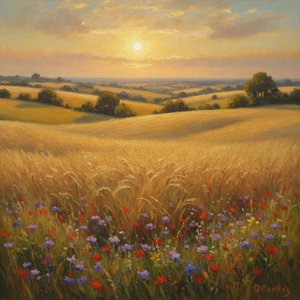
Golden Fields & Sun-Drenched Meadows: Capturing the Soul of Impressionist Landscapes
Immerse yourself in the luminous world of Impressionist landscapes. Discover how masters like Monet and Gauguin captured ephemeral light through plein air painting, and learn to bring the soul of sun-drenched meadows into your home with exquisite, hand-painted oil reproductions.

The Soul of Color: A Journey into the Emotional Resonance of Lyrical Abstraction
Embark on a cultural journey through Lyrical Abstraction. Explore how masters like Kandinsky used color and motion to translate emotion into visual poetry. Discover the profound beauty of abstract expressionism and learn to curate emotional resonance in your own art collection.

Capturing the Soul: The Most Emotionally Moving Impressionist and Post-Impressionist Masterpieces
Discover the profound emotional depth of Impressionist and Post-Impressionist masterpieces. Explore how legends like Monet, Van Gogh, and Gauguin captured light and soul through evocative landscapes and vibrant brushwork for a timeless connection to art history.

Beyond the Light: Capturing Raw Emotion and Subjective Vision in Post-Impressionist Landscapes
Explore the profound emotional depth of Post-Impressionist landscapes. Discover how masters like Van Gogh moved beyond light to capture raw human feeling through vibrant color and expressive texture in this expert art history retrospective.

The Beauty of Impermanence: Capturing Decay through Impressionist Eyes
Explore the profound beauty of impermanence through Impressionist and Post-Impressionist eyes. Discover how masters like Monet and Van Gogh captured fleeting light and the poetic essence of nature's transitions in our deep dive into art history and emotional landscapes.