

 Förhandsvisa
 Skicka
 Dela
Dela
 Visa detaljer
 Guide
Guide

 Ladda ner
 Liknande objekt
 Röntgen
 Bildspel
 Q&A
Q&A Statistik
The Slum

- 91.0 x 71.0 cm


James Ferrier Pryde's "The Slum" (1916) captures a poignant Edinburgh alleyway scene, reflecting urban poverty and social commentary through atmospheric brushstrokes. Explore this evocative work of art.
 Visa mer
James Pryde (1866-1941): Skotsk målare och Beggarstaffs-samarbetspartner. Känd för sina atmosfäriska arkitekturpaneler och teatrala designverk som banade väg för modern grafik under tidigt 1900-tal.
Giclée / Konsttryck
Giclée- eller canvasprint av museumskvalitet med snabb produktion och flexibla ytbehandlingsalternativ. ( Beställ handmålad reproduktion Byt till digital bild)




P118B Skr10

P118H Skr10

P118W Skr10

P438Z Skr10

P508JH Skr12

P508YH Skr12

P805H Skr10

P805Z Skr10

P919BZ Skr10

P919G Skr10

P919XJ Skr10

P959ZH Skr10

P968JZ Skr12

W106C Skr8

W218G Skr10

W218JH Skr8

W218Y Skr10

W307PJ Skr10

W316G Skr10

W316PJ Skr8

W316Y Skr10

W398PJ Skr8

W4111J Skr10

W500HY Skr15

W500JH Skr15

W692G Skr12

W849H Skr8

W940BG Skr15

W953PJ Skr8




Standardstorlek
skräddarsydd
CM
INCH
Välj bland våra förinställda storlekar som motsvarar konstverkets ursprungliga proportioner.
Loading sizes...

bredd
höjd
Ange den bredd och höjd du behöver för att passa din ram eller vägg. Ett tryck kan endast beskäras, aldrig göras större än originalbilden, vilket innebär att ett format med en annan proportion leder till att en del av bilden går förlorad. Vi skickar en digital mockup för godkännande innan vi påbörjar tryckningen. Bilden som visas på denna sida visar inte den faktiska beskärningen — det är endast mockuppen som gör det.
Leverans över hela världen () på 2 veckor istället för standard 4/5 veckor. (31 oktober)

Fri expressfrakt över hela världen

Högkvalitativ linnecanvas

Fullständig fraktförsäkring

Garantier för återbetalning av tullavgifter

Garantier för exakt färgåtergivning

100 dagars returrätt (endast vid fel)

100% pengarna tillbaka-garanti

Mängdrabatt erbjuds
 Glasalternativet är endast tillgängligt i storlekar under 110 cm.

The Slum
Giclée / Konsttryck
Storlek på reproduktion
-


Slutgiltigt pris
Skr 693
A Glimpse into Urban Decay: The Haunting Beauty of “The Slum”
James Ferrier Pryde’s “The Slum,” painted in 1916, isn't merely a depiction of a neglected corner of Edinburgh; it’s a profound meditation on poverty, social injustice, and the encroaching shadows of modernity. Born amidst the artistic ferment of Glasgow’s School of Art, Pryde developed a distinctive style—a masterful blend of atmospheric realism and subtle symbolism—that resonated deeply with the anxieties of his time. This painting, now housed in the Ashmolean Museum, offers a stark yet strangely beautiful portrayal of a working-class neighborhood grappling with hardship and neglect.
The scene unfolds within a narrow alleyway, dominated by a towering tenement building that seems to lean precariously towards the viewer. Pryde’s masterful use of light and shadow immediately establishes an unsettling mood. The muted palette—a symphony of grays, browns, and ochres—evokes a sense of dampness, decay, and oppressive gloom. Rain streaks down the walls, reflecting the weak light from unseen windows, while deep shadows conceal the lives within. The composition is deliberately claustrophobic, drawing the eye into the heart of the slum and emphasizing its suffocating atmosphere.
Technique and Artistic Influences
Pryde’s technique is characterized by a loose, expressive brushstroke—a hallmark of his work with the Beggarstaffs poster company. He eschews meticulous detail in favor of capturing the essence of the scene, prioritizing mood and atmosphere over photographic realism. The painting's texture is rich and layered, achieved through multiple thin applications of oil paint, creating a palpable sense of depth and physicality. There’s an undeniable influence from Whistler’s atmospheric style, particularly in Pryde’s ability to evoke emotion through color and light—a skill honed during his brief but formative time studying in Paris.
Furthermore, the painting subtly references classical architecture, most notably the Roman ruins of Pompeii. The building's form echoes the grandeur of ancient structures, suggesting a lost sense of order and beauty amidst the squalor. This juxtaposition—the crumbling tenements against the backdrop of classical imagery—serves as a poignant commentary on the decline of society and the erosion of values.
Symbolism and Social Commentary
“The Slum” is far more than a simple depiction of urban poverty; it’s a powerful social statement. Pryde wasn't simply documenting a physical space; he was exploring the human cost of industrialization and social inequality. The figures visible on the balcony—a small group of men, seemingly detached from the misery below—represent the indifference of the upper classes to the plight of their less fortunate neighbors. Their presence underscores the painting’s central theme: the isolation and marginalization experienced by those living in poverty.
The title itself is deliberately provocative, suggesting a deliberate confrontation with uncomfortable truths. Pryde's choice of "Slum" as the name for this work reflects his own artistic philosophy—a commitment to portraying the realities of life, even when they are unpleasant or challenging. It’s a stark reminder that beauty can be found in unexpected places, and that art has the power to expose injustice and provoke empathy.
A Timeless Masterpiece
“The Slum” remains a profoundly moving work of art—a testament to Pryde's artistic vision and his unwavering commitment to social justice. Its haunting atmosphere, evocative symbolism, and masterful technique continue to resonate with viewers today, prompting reflection on the enduring challenges of poverty, inequality, and the human condition. Reproductions of this powerful painting offer a unique opportunity to bring this poignant scene into your home or office, serving as a constant reminder of the importance of compassion and social responsibility.
Frågor och svar
Hur gammal var James Ferrier Pryde när hen skapade "The Slum"?
När "The Slum" skapades år 1916, var James Ferrier Pryde – född 1866 – 50 år gammal.
Är "The Slum" av James Ferrier Pryde ett välkänt konstverk?
"The Slum" klassificeras som Recognized.
Är "The Slum" av James Ferrier Pryde fri från upphovsrätt, och varför?
Upphovsrättsläget för "The Slum" - allmän egendom – upphovsrätten har löpt ut - baseras på konstnärens dödsår 1941.
Konstnärsbiografi
James Ferrier Pryde: En Atmosfärisk Konstnärs Arv
James Ferrier Pryde, född i Edinburgh 1866 och död i London 1941, var en skicklig konstnär vars verk präglades av en djupgående känsla för atmosfär och ett unikt sätt att tolka arkitektur. Hans resa genom livet som målare, grafisk designer och teaterscenograf är en fascinerande berättelse om en konstnär som utmanade konventioner och skapade en bestående inverkan på den tidiga 20:e århundradets visuella kultur. Pryde växte upp i en familj med starka konstnärliga rötter – hans farfar var Robert Scott Lauder, en framstående målare, och hans morfar James Eckford Lauder var också en känd konstsamlare och konsthandlare. Denna kulturella bakgrund bidrog till att forma Prydes intresse för konst tidigt i livet. Hans formella utbildning började vid Royal Scottish Academy mellan 1885 och 1888, där han lärde sig grunderna i målarskap och utvecklade en teknik som skulle bli hans signatur. Han sökte inspiration från ledande figurer inom Glasgow School, särskilt James Guthrie och Edward Arthur Walton, vars impressionistiska och naturalistiska stilar påverkade hans tidiga utforskningar av färg och form. En kort vistelse i Paris, där han studerade under William-Adolphe Bouguereau vid Académie Julian, visade sig vara mindre formativ – Pryde kände sig instängd i den franska konstmiljön och återvände till Skottland med en klarare bild av sin egen konstnärliga väg.The Beggarstaffs och en Revolution i Design
Prydes mest betydelsefulla samarbete inleddes 1893 med bildandet av “The Beggarstaffs”, ett partnerskap med William Nicholson. Denna unika förening revolutionerade posterdesignen genom att utmana de rådande konventionerna och introducera en ny estetik präglad av minimalism, dramatiska kompositioner och teaterskt sinne. Innan The Beggarstaffs var affischer ofta röriga och illustrativa; Pryde och Nicholson förenklade dem radikalt, med fokus på starka bilder och ett teatralskt uttryck. Deras affischer var inte bara reklam – de var uttalanden, som höjde statusen för affischkonst från en kommersiell nödvändighet till ett konstnärligt uttryck. De avvek medvetet från etablerade normer och skapade verk som var både visuellt slående och intellektuellt stimulerande. Partnerskapet upplöstes 1899, men dess inverkan fortsatte att kännas i decennier framöver, och inspirerade generationer av grafiska designers. Deras innovativa approach sträckte sig bortom affischer; de skapade också distinkta skylttexter och andra grafiska verk, alla präglade av en unik blandning av konstnärlig vision och kommersiell praktik.Atmosfäriska Visioner: En Målerisk Språk
Även om Pryde är mest känd för sina bidrag till grafisk design, var hans verkliga passion måleri. Han utvecklade en personlig stil centrerad kring atmosfäriska arkitektoniska scener – inte enkla representationer av byggnader, utan suggestiva utforskningar av stämning och emotioner, ofta fyllda med en känsla av drama och förebåddhet. Hans målningar präglas ofta av breda penseldrag och dramatiskt ljussättande, vilket skapar en nästan palpabel atmosfär som drar betraktaren in i scenen. Han var starkt influerad av Giovanni Battista Piranesi’s etsningsverk, vilket syns i hans monumentala kompositioner och fascination för arkitektoniska ruiner. Hans målning handlade inte om exakt representation; han sökte att fånga *känslan* av en plats, dess historia och dess inneboende melankoli. Många av hans verk känns som fragment av drömmar – vackra men subtilt oroande.En Multifacetterad Konstnär: Scenkonst och Erkännande
Prydes konstnärliga strävanden begränsades inte till måleri och design. Han ägnade en kort period sin tid åt att vara skådespelare mellan 1894 och 1899, en period som utan tvekan påverkade hans teaterskt sinne och förståelse för rumsliga dynamiker. Denna incursion i scenkonsten ledde honom också i kontakt med inflytelserika figurer som Edward Gordon Craig, som erkände Prydes exceptionella talang som målare trots att han ifrågasatte hans förmåga som skådespelare. Han engagerade sig aktivt i konstnärliga sällskap och blev associerad med International Society of Sculptors, Painters and Gravers 1901 och senare vicepresident 1921. År 1930 använde han sin visuella konst för att designa scener för Paul Robeson’s produktion av *Othello* på Savoy Theatre, vilket visade en mångsidighet som sträckte sig bortom duken.En Bestående Arv
James Ferrier Pryde dog 24 februari 1941 i London. Även om han inte identifierade sig med något specifikt konstnärligt rörelse, är hans unika stil och bidrag till tidig 20:e århundradets konst alltmer erkända. En minnesutställning hölls 1949, som arrangerades i Edinburgh, Brighton och London, och hjälpte till att återuppväcka intresset för hans verk. Även om utställningar av hans målningar är relativt sällsynta, behåller hans konstverk en plats i offentliga samlingar, vilket säkerställer att hans atmosfäriska visioner fortsätter att fängsla publiken. Pryde’s arv ligger inte bara i skönheten i hans individuella verk utan också i den djupgående inverkan The Beggarstaffs innovativa grafiska design haft, som fortfarande inspirerar konstnärer och designers idag. Han är en fascinerande figur – en målare som vågade utforska den emotionella kraften hos arkitektur och en designer som hjälpte till att omdefiniera själva språket för visuell kommunikation.
James Ferrier Pryde
1866 - 1941 , Storbritannien
Kortfakta
- Artistic Movement Or Style: Grafisk design, Atmosfärisk konst
- Artists Or Movements Influenced By This Artist:
- Piranesi
- Bouguereau
- Artists Who Influenced This Artist:
- William Nicholson
- Glasgow skolan
- Date Of Birth: 30 mars 1866
- Date Of Death: 24 feb 1941
- Full Name: James Ferrier Pryde
- Nationality: Skotsk
- Notable Artworks:
- Ruiner med figur
- Den hemsökta huset
- Place Of Birth: Edinburgh, Storbritannien
Relaterade artiklar
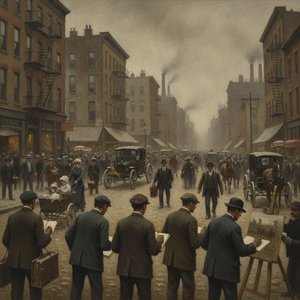
The Ashcan School: Capturing the Raw, Unfiltered Soul of Urban Life through American Realism
Discover the raw beauty of the Ashcan School. Explore how masters like Bellows and Henri captured the gritty, vibrant soul of early 20th-century New York through profound American Realism and evocative urban landscapes.
Utforska konstverk sorterade efter tema, stil och egenskaper.


