

 Visa i rummet
 Skicka
 Dela
Dela
 Detaljer
 Studentguide för konstverk

 Ladda ner
 Liknande objekt
 Röntgen
 Bildspel
 Besökstatistik
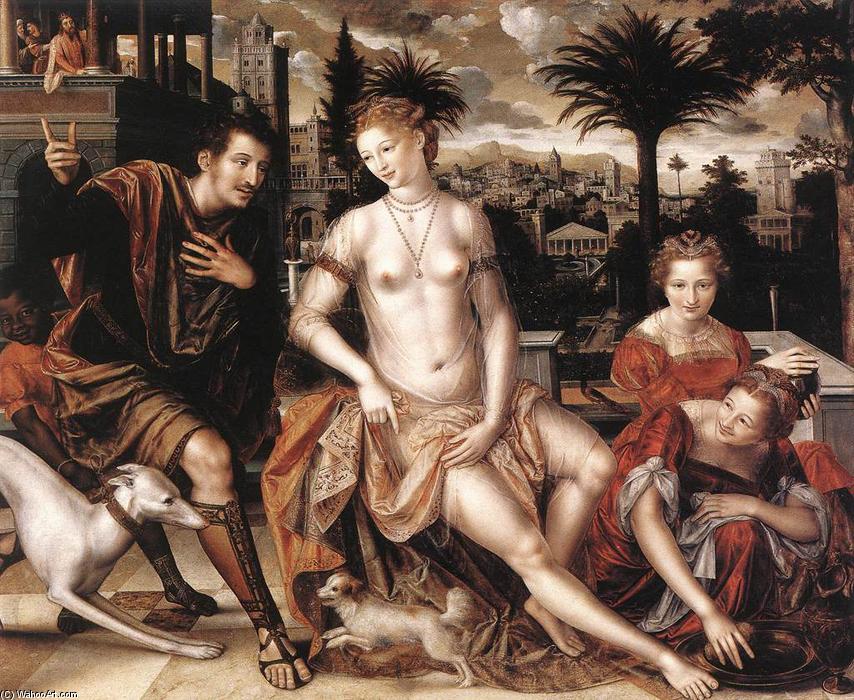
David and Bathsheba
 Oil On Canvas
- WallArt
- Baroque Renaissance Fusion
 1562
1562- Renaissance
 162.0 x 197.0 cm
 Louvren
Experience the dramatic chiaroscuro of Jan Massys's 1562 David and Bathsheba, a Renaissance masterpiece capturing an intimate biblical moment you will want to own.
 Läs mer
Lär känna Jan Massys, en central gestalt inom den flamländska renässansen, känd för sin förmåga att förena religiös hängivenhet med skarp social satir och detaljrikedom.
Handgjord oljereproduktion
Handmålad olja på duk i din valda storlek och ram, tillverkad efter beställning av våra konstnärer. ( Byt till tryckta exemplar Byt till digital bildförsäljning)




P118B Skr10

P118H Skr10

P118W Skr10

P438Z Skr10

P508JH Skr12

P508YH Skr12

P805H Skr10

P805Z Skr10

P919BZ Skr10

P919G Skr10

P919XJ Skr10

P959ZH Skr10

P968JZ Skr12

W106C Skr8

W218G Skr10

W218JH Skr8

W218Y Skr10

W307PJ Skr10

W316G Skr10

W316PJ Skr8

W316Y Skr10

W398PJ Skr8

W4111J Skr10

W500HY Skr15

W500JH Skr15

W692G Skr12

W849H Skr8

W940BG Skr15

W953PJ Skr8




Standardstorlek
anpassad
CM
INCH
Välj bland våra förinställda storlekar som motsvarar konstverkets ursprungliga proportioner.
Loading sizes...

bredd
höjd
Ange den bredd och höjd du behöver för att passa din ram eller din vägg. Eftersom detta är handmålat kan konstnären vid en annan form måla lite mer runt bilden eller beskära den något – du väljer själv. Vi skickar en digital mockup för godkännande innan målningen påbörjas. Bilden som visas på denna sida representerar inte det slutgiltiga resultatet — det är endast mockuppen som visar det.
Exempel på vad som kan anpassas: Byt ut ansiktet mot ett foto av kunden; Lägg till ett husdjur (t.ex. byt ut en katt mot en hund); Inkludera ett dolt meddelande i bakgrunden; Ändra bakgrundens landskap eller element.
Efter beställning kommer TopImpressionists.com team att mejla kunden för instruktioner och tillhandahålla en skissförhandsvisning
Efter beställning kommer TopImpressionists.com team att mejla kunden för instruktioner och tillhandahålla en skissförhandsvisning
Leverans över hela världen () på 3–4 veckor istället för standard 5 veckor. (18 oktober). Inga kompromisser med kvaliteten.

Fri expressfrakt över hela världen

Högkvalitativ linnecanvas

Fullständig fraktförsäkring

Garantier för återbetalning av tullavgifter

Garantier för exakt färgåtergivning

100 dagars returrätt vid fabrikationsfel

100% pengarna tillbaka-garanti

Mängdrabatt erbjuds
 Glasalternativet är endast tillgängligt i storlekar under 110 cm.

David and Bathsheba
Tryckteknik
Reproduktionsstorlek
-


Totalpris
Skr 2645
A Moment Frozen in Time: The Allure of Jan Massys’s David and Bathsheba
In the heart of Renaissance Antwerp, a period defined by both profound religious devotion and burgeoning worldly curiosity, Jan Massys captured a scene of unparalleled emotional and narrative tension. His 1562 masterpiece, David and Bathsheba, is far more than a mere biblical illustration; it is a window into the human psyche, capturing the exact moment where desire meets consequence. The painting recounts the clandestine encounter between King David and the Moabite woman, Bathsheba, a narrative of illicit passion that has captivated viewers for centuries. As we gaze upon this monumental canvas, we are drawn into an intimate tableau where every gesture and glance speaks of a secret shared between the figures and the observer.
The composition is masterfully orchestrated to guide the eye through a landscape of moral ambiguity. David, positioned with a commanding yet contemplative presence, gestures toward something unseen—perhaps a divine warning or a silent acknowledgment of the gravity of his transgression. Opposite him, Bathsheba lies in a state of palpable vulnerability, her upward gaze creating a powerful diagonal line of tension that connects the two protagonists. This intimacy is not solitary; Massys surrounds the central pair with supporting figures, including a servant attending to Bathsheba’s needs, which serves to remind us of the societal eyes and the inevitable repercussions that follow such private indiscretions. Even the small, quiet presence of a dog nestled near the edge of the scene adds a layer of symbolic depth, perhaps representing the lost innocence or the concept of fidelity amidst a moment of profound betrayal.
Mastery of Light and Texture in the Flemish Tradition
To behold this work is to witness the pinnacle of Renaissance oil technique. Massys utilized the medium of oil on canvas to achieve a level of realism that feels almost tactile. Through the meticulous application of paint, he renders the heavy, intricate folds of David’s robes with such precision that one can almost sense the weight of the fabric. This technical prowess extends to the delicate rendering of Bathsheba’s skin, where subtle glazing effects create a luminous, soft quality that contrasts beautifully with the more structured elements of the background.
Central to the painting's emotional impact is Massys’s use of chiaroscuro. By employing dramatic contrasts between deep shadows and brilliant highlights, the artist sculpts the figures out of the darkness, lending them a three-dimensional presence that commands the room. This manipulation of light does more than just define form; it heightens the atmospheric intensity, casting a somber, reflective mood over the entire scene. For the collector or the interior designer, such a piece offers a profound sense of drama and historical weight, making it an ideal centerpiece for spaces that value sophisticated storytelling and the timeless elegance of the Flemish masters.
Frågor och svar
Vilken färgpalett används i "David and Bathsheba" av Jan Massys?
Färgpaletten i "David and Bathsheba" av Jan Massys beskrivs som Earthy. Det är en kompakt beskrivning av verkets färger.
Förvaras "David and Bathsheba" av Jan Massys i konstnärens hemland?
Nej – konstverket förvaras utomlands. Jan Massys föddes i Belgien, och originalet av "David and Bathsheba" finns på ett museum i France.
Vad handlar "David and Bathsheba" om?
Motiven i "David and Bathsheba" är biblical narrative, royal intrigue, sensuality, allegory, human emotion, renaissance painting, religious iconography.
Om konstnären
En flamländsk mästare som banade en ny väg
Jan Massys, även känd som Jan Massijs, står som en central gestalt i det blomstrande konstlandskapet i 1500-talets Flandern. Han föddes omkring 1466 i Leuven, Belgien, och hans liv och verk representerar en fascinerande skärningspunkt mellan tradition och innovation, religiös hängivenhet och skarpsynt social kommentar. Medan legender ursprungligen målade upp bilden av en smed som blev konstnär – en berättelse om ett ödmjukt ursprung drivet av passion – avslöjar historiska dokument en familj med väl etablerade resurser, vilket tyder på att Massys hängivenhet till måleriet sprang ur konstnärlig fallenhet snarare än ekonomisk nödvändighet. Karel van Mander föreslår att sjukdom drev honom bort från städets arbete, vilket ledde honom till att dekorera tryck för karnevalsfiranden, en tidig utlopp för hans växande kreativitet. Han fick sannolikt sin grundläggande utbildning i Leuven innan han flyttade till Antwerpen omkring 1491, där han snabbt steg i graderna inom Sankt Lukasgillet och etablerade sig som mästarmålare, vilket lade grunden för det som senare skulle bli känt som Antwerpens skola. Det tros även att Joachim Patinir, berömd för sina stämningsfulla landskap, studerade under Massys handledning, vilket bidrog till de atmosfäriska bakgrunderna i vissa av hans verk – ett bevis på den samarbetande anda som rådde inom konstnärens verkstad.Ekon av tradition och en framväxande röst
Massys konstnärliga stil är djupt rotad i den flamländska traditionen, där han medvetet återupplivade den noggranna detaljrikedomen och den uttrycksfulla kraften hos mästare som Jan van Eyck och Rogier van der Weyden. Han kombinerade mästerligt skarpa konturer med nyanserad modellering, vilket uppnådde en anmärkningsvärd klarhet och djup i sina kompositioner. Hans målningar kännetecknas av en glödande rikedom som härrör från transparenta pigment, vilket ger en eterisk kvalitet till både religiösa scener och världsliga porträtt. Massys nöjde sig dock inte med att bara replikera det förflutna; han genomsyrade det med en utpräglat personlig vision. Han besatt en exceptionell förmåga att fånga uppriktig känsla och minutiöst detaljerade återgivningar, med särskilt fokus på texturer – smyckenas glans, klädedräkternas intrikata kanter och den subtila ornamentiken som lyfte hans verk bortom ren representation. Detta noggranna tillvägagångssätt sträckte sig även till hans utforskande av ljus och skugga, där han skapade dämpade men fängslande effekter som drog betraktaren in i varje scenes hjärta. Han var inte rädd för att ta sig an komplexa teman och vävde sömlöst samman religiösa berättelser med insiktsfulla observationer av mänsklig natur och samhälleliga dynamiker.Satir, spiritualitet och bestående intryck
Massys samlade verk är anmärkningsvärt mångsidigt och omfattar allt från djupt vördnadsfulla religiösa altartavlor till djärva satiriska porträtt som utmanade konventionella normer. Bland hans mest hyllade verk finns Den fula hertiginnan (1513), en numera ikonisk bild som väckte debatt med sin orubbliga skildring av åldrande och samhällets skönhetsideal; Porträtt av en äldre man (1513), som fortsätter denna linje av social kommentar, samt Penningväxlaren och hans hustru (1514), en gripande skildring av girighet och vällust inom köpmannaklassen. Dessa satiriska verk var banbrytande för sin tid och erbjöd en relativt ovanlig form av kritik genom porträttkonsten – ett bevis på Massys mod och konstnärliga vision. Utöver dessa slående porträtt skapade han otaliga religiösa altartavlor och triptykpaneler, inklusive betydande beställningar för S:t Peters kyrka i Leuven, vilket demonstrerade hans mångsidighet och skicklighet i storskaliga andaktsverk. Även verk som Venus från Cythera (1561) avslöjar en fascination för klassiska teman och kan potentiellt spegla en medvetenhet om de konstnärliga framsteg som skedde i Italien.Ett arv smitt i Antwerpen
Jan Massys inflytande sträckte sig långt bortom hans egen livstid och befäste hans position som en grundare av den ansedda Antwerpens skola, tillsammans med sin son Quinten Massys och sin bror Cornelis Massys. Han syntetiserade skickligt influenser från tidigare flamländska mästare – Dirk Bouts, Hans Memling, Rogier van der Weyden och Jan van Eyck – samtidigt som han inkorporerade element från Italien och andra regioner i de låga länderna. Denna fusion skapade en unik konstnärlig identitet som definierade Antwerpens skola för kommande generationer. Hans betoning på individuell karaktärisering och realistisk skildring av mänskliga känslor resonerade med efterföljande konstnärer och inspirerade dem att utforska nya uttrycksvägar. Senare i livet mötte Massys motgångar, inklusive landsförvisning från Antwerpen på grund av sin religiösa övertygelse, vilket ledde till att han sökte skydd i Italien och Frankrike innan han slutligen återvände hem. Trots dessa utmaningar fortsatte han att ta emot beställningar, vilket vittnar om hans bestående rykte och konstnärliga förmåga fram till sin död 1575. Hans arv förblir säkrat – ett testamente till en målare som inte bara bemästrade sina föregångares tekniker utan också vågade utmana konventionerna och erbjuda en unikt insiktsfull vision av världen omkring honom.Utforska Jan Massys värld idag
- Jan Massys verkstad: Upptäck denna fängslande målning från 1500-talet, som visar en social sammankomst med detaljerade figurer och en rik atmosfär.
- <Den heliga familjen: Utforska denna storslagna oljemålning från den tidiga renässansen och beundra dess realistiska figurer, påkostade detaljer, symbolik och teknik.
- <Quinten Massys: Fördjupa dig i arbetet av Jans son, en nyckelfigur inom flamländsk renässanskonst känd för sina religiösa målningar och satiriska verk.

Jan Massys
1466 - 1530 , Belgien
Snabbfakta
- Artistic Movement Or Style: Renässansen
- Artists Or Movements Influenced By This Artist: ['Antwerpskolan']
- Artists Who Influenced This Artist:
- Dirk Bouts
- Jan van Eyck
- Rogier van der Weyden
- Date Of Birth: ca 1466
- Date Of Death: 1530
- Full Name: Jan Massys
- Nationality: Flandern
- Notable Artworks:
- Den fula hertiginnan
- Växelväxlaren och hans hustru
- Venus från Cythera
- Place Of Birth: Leuven, Belgien
Relaterade artiklar

Drama and Light: Discover the Captivating Grandeur of Baroque Art
Immerse yourself in the dramatic splendor of Baroque art. Explore the profound impact of light, shadow, and the Counter-Reformation through an expert historical lens, celebrating the masters who defined an era of unparalleled grandeur and emotional intensity.
Utforska konstverk sorterade efter tema, stil och egenskaper.
