

 Skicka
 Dela
Dela
 Visa detaljer
 Guide
Guide

 Ladda ner
 Liknande objekt
 Bildspel
 Statistik
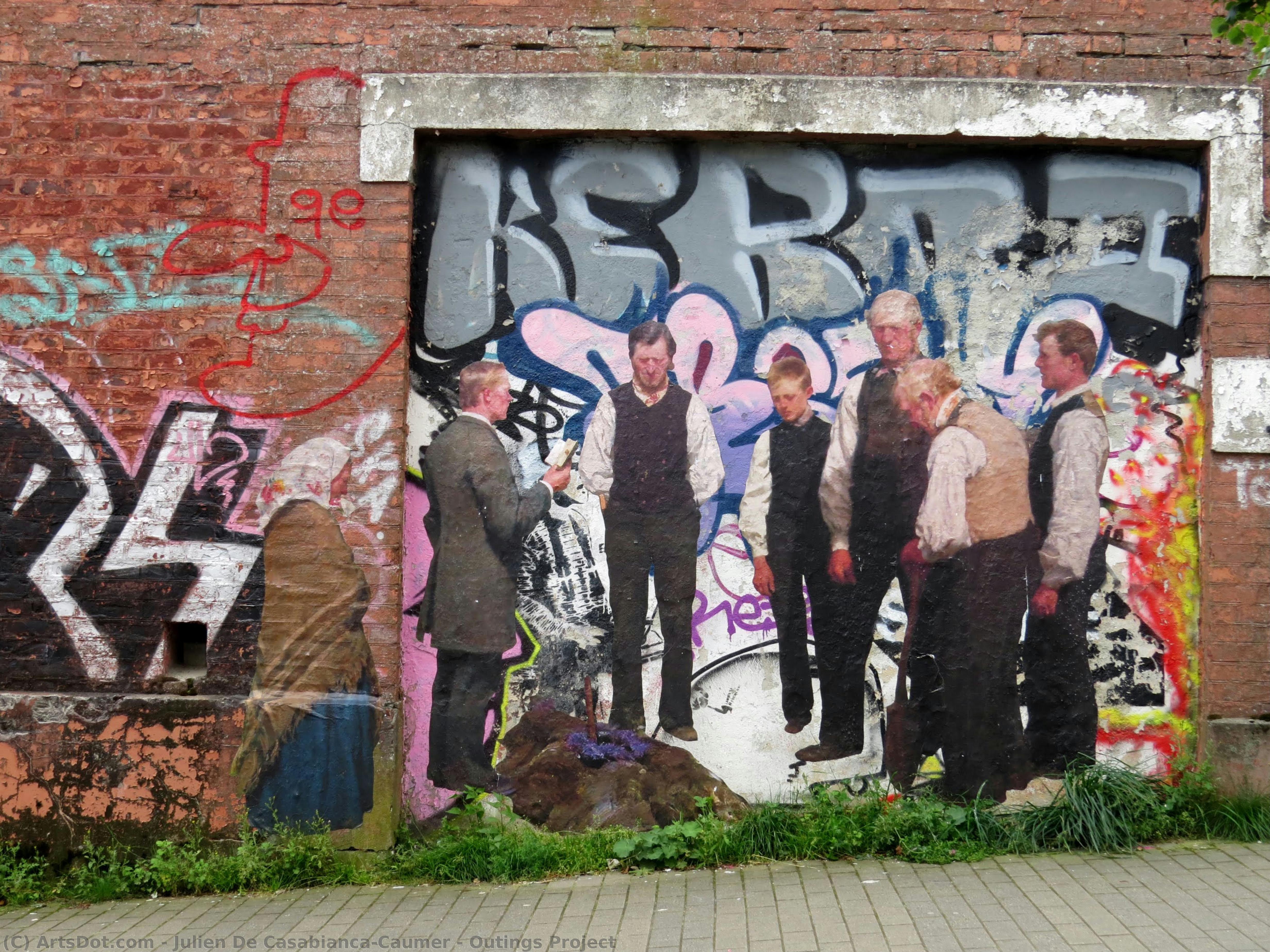
Outings Project


A striking fusion of classical imagery and urban street art defines this Outings Project piece by Julien de Casabianca-Caumer that brings museum masterpieces to the city streets for you to explore and collect.
 Visa mer
A visionary French street artist and filmmaker known for The Outings Project which liberates museum masterpieces onto city walls, inviting you to rediscover classical art through a modern urban lens.
Få en utskriftsfärdig fil som vida överträffar webbförhandsvisningen. Varje digital bild vi säljer kommer från en högupplöst master i vår bilddatabas – vanligtvis mellan 5 000 och 15 000 pixlar bred – så att du med trygghet kan göra stora utskrifter, beskära tätt eller återge fina detaljer.
Ingen fil lämnar vår studio utan att ha bearbetats. En digital expert kontrollerar färgerna mot originalmålningen och korrigerar dem vid behov, för att sedan förbättra skärpa och detaljrikedom med professionella retuscheringsverktyg — alltid med full respekt för konstnärens penseldrag och stil. Resultatet är en bild som ser ut som målningen, inte som en filtrerad skanning.
Du godkänner innan arbetet slutförs: vår expert skickar bilden via e-post inom 72 timmar för din granskning. Inte nöjd? Be om förbättringar eller korrigeringar, eller begär återbetalning om kvaliteten inte lever upp till förväntningarna.
Detta är den kvalitet som förlag, designstudior, gallerier och tryckerier litar på.
Digital bild
Ladda ner en högupplöst fil för personlig visning, utskrift och kreativa projekt. ( Byt till tryck Beställ handmålad reproduktion)
Ingår i varje beställning av digital bild
Professionell digital leverans, garanterad
När du väljer TopImpressionists.com får du inte bara en bild – du får ett professionellt förädlat digitalt konstverk, skapat med precision och med en garanterad tillfredsställelse. Här är allt som ingår i din beställning, automatiskt:

Snabb leverans via e-post
Din högupplösta digitala bild skickas till dig via e-post inom 72 timmar efter beställning – redo för omedelbar användning.

AI-förbättrad digital fil
Ditt konstverk optimeras professionellt med hjälp av avancerade AI-verktyg och manuell redigering, vilket garanterar maximal detaljrikedom, skärpa och färgnoggrannhet.

Fri livstidsåterleverans
Har du råkat radera eller tappa bort din fil? Ingen oro – vi skickar den kostnadsfritt till dig när som helst.

Inga importavgifter – någonsin
Njut av ditt konstverk omedelbart utan tull, importavgifter eller leveranskostnader – digitala nedladdningar är alltid skattefria.

Garanterad färgåtergivning
Vi säkerställer att din digitala bild återger de ursprungliga färgerna så exakt som möjligt med hjälp av professionella verktyg och färghantering.

100 dagars nöjdhetsgaranti
Om du inte är nöjd med din digitala bild kommer vi att revidera den eller återbetala 100% inom 100 dagar – utan frågor.

100% pengarna-tillbaka-garanti
Inte nöjd? Få full återbetalning inom 100 dagar efter att du mottagit din digitala fil – utan frågor.

Rabatt vid storköp
Köp 3 bilder, spara 10% – Köp 5, spara 15% – Köp 10+, spara 20%. Perfekt för kreativa projekt, gallerier och byråer.
Julien de Casabianca is a French visual artist and filmmaker. The artist initiated The Outings Project in 2014, where he transports paintings from museum walls into the street by photographing works at local museums and creating paste-ups on city walls. De Casabianca found his inspiration from the project when he visited the Louvre Museum and saw a painting by Jean-Auguste-Dominique Ingres placed in a corner, seemingly forgotten. Wanting to liberate the artwork, he came up with the idea of taking the image to the street. Since then, numerous museums worldwide have invited him to engage with their collections and merge the perceptions of classical and street art. By bringing well-known works traditionally only seen in a museum context to the street, The Outings Projects brings these canonical works to a new audience of city dwellers and passersby.
Frågor och svar
Vilket format har "Outings Project"?
"Outings Project" av Julien De Casabianca-Caumer har ett Landscape-format. Formatet beskriver kompositionens proportioner.
Är "Outings Project" fri från upphovsrätt?
När det gäller upphovsrätt är "Outings Project" fortfarande skyddat av upphovsrätt.
Finns "Outings Project" tillgänglig som ett konsttryck?
Ett tryck av "Outings Project" av Julien De Casabianca-Caumer kan beställas direkt på dess Konsttryck i hög kvalitet-sida: ett konsttryck på bomullscanvas eller arkivbeständigt canvaspapper.
Konstnärsbiografi
The Liberation of the Canvas
Julien de Casabianca-Caumer is a French visual artist, filmmaker, photographer, and street artist whose work seeks to dissolve the boundaries between the hallowed halls of classical museums and the vibrant, unpredictable pulse of the urban landscape. His artistic journey is marked by a profound desire to liberate masterpieces from their often static and isolated museum environments. This creative impulse was ignited during a visit to the Louvre Museum, where he observed a painting by Jean-Auguste-Dominique Ingres tucked away in a corner, seemingly forgotten by the passing crowds. This moment of realization—that great art can become invisible when confined to traditional settings—became the catalyst for his most significant contribution to contemporary visual culture.
In 2014, he initiated The Outings Project, a transformative endeavor that breathes new life into canonical works. Through this project, de Casabianca-Caumer photographs paintings from local museums and meticulously transforms them into large-scale paste-ups on city walls. By transplanting these figures from their gilded frames onto the concrete textures of the street, he merges the perceptions of classical art with the raw energy of street art. His work invites a new audience of city dwellers and passersby to engage with historical icons in an unexpected, democratic context, effectively bringing the museum to the people.
A Multidisciplinary Evolution
Before his emergence as a prominent figure in the street art scene, de Casabianca-Caumer navigated a different professional path, serving as a journalist during the 1990s under the name Julien Caumer. This background in investigative journalism, which included work for publications such as L'Express, likely contributed to his keen eye for narrative and his ability to uncover and recontextualize stories within the art world. His transition from documenting reality through text to reshaping it through visual collage represents a seamless evolution of storytelling.
His technical approach is characterized by the creation of monumental collages featuring characters extracted from museum paintings. This process of extraction and re-placement allows him to manipulate the scale and impact of historical figures, turning them into urban landmarks. His photographic work, which stems directly from these large-scale street interventions, has been recognized globally, leading to exhibitions in diverse locations such as:
- Musée d'Art et d'Histoire de Genève, Switzerland
- Cummer Museum of Art & Botanical Garden, USA
- Musée d'Ixelles, Belgium
- Musée de Langres, France
- Galerie Nationale, Ljubljana, Slovenia
Global Engagements and Artistic Legacy
The reach of de Casabianca-Caumer’s work extends far beyond the streets of Paris, as numerous prestigious institutions worldwide have invited him to engage with their collections. His ability to bridge the gap between different eras and mediums has made him a sought-after collaborator for museums looking to revitalize their historical treasures. He has been an invited artist at several notable institutions, including the Musée Carnavalet in Paris, the Mauritshuis Museum in The Hague, and the Palais Beaux-Arts de Lille.
His recent activities demonstrate a continued commitment to international dialogue and artistic residency, with projects spanning from Mexico to Poland. Whether through lectures at universities or large-scale mural festivals, his work remains focused on the intersection of the classical and the contemporary. By stripping away the elitist barriers of the museum wall, Julien de Casabianca-Caumer ensures that the beauty and historical significance of the masters remain a living, breathing part of the modern human experience.

Julien De Casabianca-Caumer
1970 - , France
Kort om konstnären
- Artistic Movement Or Style: Visual artist, street artist, and filmmaker
- Full Name: Julien de Casabianca-Caumer
- Nationality: French
- Notable Artworks: ['The Outings Project']
- Place Of Birth: Paris, France
- Date Of Birth: 1970