

 Förhandsvisa
 Skicka
 Dela
Dela
 Visa detaljer
 Guide
Guide

 Ladda ner
 Liknande objekt
 Röntgen
 Bildspel
 Frågor och svar
 Statistik
A la gloire de Rubens


Explore 'A la gloire de Rubens' by Louis Beroud – a vibrant Baroque masterpiece inspired by Rubens! Capturing opulent revelry & sensual energy, this oil painting offers a glimpse into 19th-century Parisian art.
 Visa mer
Upptäck Louis Beroud (1852-1930), en fransk målare känd för sina detaljerade skildringar av parisiska interiörer och landmärken, inklusive Louvren och Opéra Garnier.
Giclée / Konsttryck
Giclée- eller canvasprint av museumskvalitet med snabb produktion och flexibla ytbehandlingsalternativ. ( Beställ handmålad reproduktion Byt till digital bild)




P118B Skr10

P118H Skr10

P118W Skr10

P438Z Skr10

P508JH Skr12

P508YH Skr12

P805H Skr10

P805Z Skr10

P919BZ Skr10

P919G Skr10

P919XJ Skr10

P959ZH Skr10

P968JZ Skr12

W106C Skr8

W218G Skr10

W218JH Skr8

W218Y Skr10

W307PJ Skr10

W316G Skr10

W316PJ Skr8

W316Y Skr10

W398PJ Skr8

W4111J Skr10

W500HY Skr15

W500JH Skr15

W692G Skr12

W849H Skr8

W940BG Skr15

W953PJ Skr8




Standardstorlek
skräddarsydd
CM
INCH
Välj bland våra förinställda storlekar som motsvarar konstverkets ursprungliga proportioner.
Loading sizes...

bredd
höjd
Ange den bredd och höjd du behöver för att passa din ram eller vägg. Ett tryck kan endast beskäras, aldrig göras större än originalbilden, vilket innebär att ett format med en annan proportion leder till att en del av bilden går förlorad. Vi skickar en digital mockup för godkännande innan vi påbörjar tryckningen. Bilden som visas på denna sida visar inte den faktiska beskärningen — det är endast mockuppen som gör det.
Leverans över hela världen () på 2 veckor istället för standard 4/5 veckor. (6 november)

Fri expressfrakt över hela världen

Högkvalitativ linnecanvas

Fullständig fraktförsäkring

Garantier för återbetalning av tullavgifter

Garantier för exakt färgåtergivning

100 dagars returrätt (endast vid fel)

100% pengarna tillbaka-garanti

Mängdrabatt erbjuds
 Glasalternativet är endast tillgängligt i storlekar under 110 cm.

A la gloire de Rubens
Giclée / Konsttryck
Storlek på reproduktion
-


Slutgiltigt pris
Skr 699
À la gloire de Rubens – A Celebration of Baroque Grandeur
Louis Béroud’s “À la gloire de Rubens” is more than just a depiction of a painting; it's an embodiment of the artistic spirit of its time—the fervent embrace of academic tradition alongside a keen observation of modern life that characterized Parisian art in the early 20th century. Painted in 1905, this monumental canvas captures the atmosphere of the Louvre Museum during a period marked by significant cultural renewal and intellectual curiosity. The artwork’s subject matter is deceptively simple: a young woman diligently sketching “The Coronation” by Peter Paul Rubens from his celebrated Marie de Medici cycle—a masterpiece that embodies the Baroque ideal of dramatic grandeur and emotional intensity.- Composition & Style: Béroud adheres to the stylistic conventions of the École de Beaux-Arts, prioritizing clarity of form and meticulous detail. The scene unfolds within a richly ornamented interior space reminiscent of Rubens’s own studio, emphasizing architectural perspective and creating a sense of spatial depth. However, unlike Rubens's canvases which aim for idealized beauty, Béroud presents a realistic portrayal of artistic practice—a testament to the artist’s commitment to capturing the essence of his subject matter.
- Technique: Employing oil paint on canvas with visible brushstrokes, Béroud utilizes impasto – thick application of pigment – particularly noticeable in areas depicting drapery and skin tones. This technique lends texture and luminosity to the painting, mirroring the dramatic chiaroscuro employed by Rubens himself. The artist’s careful attention to light and shadow contributes significantly to the overall theatrical quality of the composition.
- Historical Context: Béroud's work emerged during a period of artistic debate following Impressionism’s dominance. Artists like Béroud sought to reaffirm classical principles while acknowledging the influence of contemporary life—a dynamic tension that reflects broader cultural shifts occurring in France at the time. The painting’s inclusion within the Louvre’s collection underscores its significance as an exemplar of academic art and a celebration of Rubens's legacy.
- Symbolism: The central figure, sketching “The Coronation,” symbolizes the dedication to artistic craft and the pursuit of excellence—values deeply ingrained in the Beaux-Arts tradition. The inclusion of Rubens’s monumental painting serves as a visual reminder of the Baroque aesthetic’s ambition to inspire awe and convey profound emotion.
- Emotional Impact: “À la gloire de Rubens” evokes a feeling of reverence for artistic heritage combined with an appreciation for meticulous observation. It invites viewers to contemplate the role of art in capturing beauty, conveying emotion, and preserving cultural memory—themes that resonate powerfully across generations.
Detailed Description & Artistic Considerations
The painting’s palette is dominated by muted earth tones – ochre, umber, Sienna – reflecting the subdued lighting of the Louvre’s galleries. Béroud skillfully renders textures with remarkable precision, capturing the folds of fabric and the subtle nuances of skin tone. The artist's meticulous brushwork contributes to a palpable sense of movement—suggesting the dynamism inherent in artistic creation itself. Careful attention is paid to architectural elements – moldings, arches – reinforcing the spatial illusion and enhancing the grandeur of the setting. Béroud’s masterful technique elevates the depiction beyond mere representation, transforming it into an evocative meditation on art history and artistic practice.Provenance & Acquisition
“À la gloire de Rubens” entered the Louvre's collection in 1993 as a bequest from Micheline Héblot (1930-1990), honoring her parents’ memory. The painting was originally exhibited at the Salon of Société des Artistes français in 1905 and subsequently reproduced as prints during that era. Its inclusion in Musée Carnavalet's permanent collection provides invaluable insight into Parisian artistic culture at the turn of the century.Further Research & Artistic Influences
Louis Béroud’s artistic trajectory was profoundly shaped by his training at the École Supérieure des Beaux-Arts, where he absorbed the precepts of classical art and technique. His unwavering devotion to realism combined with an artist's sensitivity distinguishes him as a pivotal figure in late 19th-century French painting—a legacy that continues to inspire artists today. References: Musée Carnavalet; Louvre éditions / Somogy, 2008, p. 149, coul. n°178; Bresc-Bautier, Geneviève ; Foucart, Jacques, « Le tableau du mois n° 9 : trois nouveaux tableaux pour l’histoire du Louvre : Louis Béroud, Henri Coroënne », Tableau du mois, 9, du 7 septembre au 3 octobre 1994, 1994, 1-4, p. 1-4, n&b, p. 1, B; Musée du Louvre, Département des Peintures; Bresc-Bautier, Geneviève ; Foucart, Jacques, « Le tableau du mois n° 9 : trois nouveaux tableaux pour l’histoire du Louvre : Louis Béroud, Henri Coroënne », Tableau du mois, 9, du 7 septembre au 3 octobre 1994, 1994, 1-4, p. 1-4, n&b, p. 1, B; Musée Carnavalet; Louvre éditions / Somogy, 2008, p. 149, coul. n°178; Musée du Louvre, Département des Peintures; Bresc-Bautier, Geneviève ; Foucart, Jacques, « Le tableau du mois n° 9 : trois nouveaux tableaux pour l’histoire du Louvre : Louis Béroud, Henri Coroënne », Tableau du mois, 9, du 7 septembre au 3 octobre 1994, 1994, 1-4, p. 1-4, n&b, p. 1, B; Musée Carnavalet; Louvre éditions / Somogy, 2008, p. 149, coul. n°178Frågor och svar
Hur hittar jag konstverk som påminner om "A la gloire de Rubens" av Louis Beroud?
Hitta verk som liknar "A la gloire de Rubens" på verkets sida Liknande verk.
Är färgerna i "A la gloire de Rubens" klara eller dämpade?
Färgerna i "A la gloire de Rubens" av Louis Beroud uppvisar en Balanced Soft mättnad med en Balanced intensitet.
Vad föreställer "A la gloire de Rubens" av Louis Beroud?
"A la gloire de Rubens" av Louis Beroud föreställer: mythological feast, nude figures, baroque revelry, sensual celebration, opulent interior, venus mythology, dynamic composition.
Konstnärsbiografi
Louis Beroud: En parissk visionär som fångade sin tids själ
Louis Beroud (1852-1930) framstår som en framstående gestalt inom det sena 19:e och tidiga 20:e århundradets franska konst, hyllad för sina minutiösa skildringar av parisiska interiörer och landmärken—särskilt Louvren och Opéra Garnier. Beroud föddes i Lyon, Frankrike, och hans konstnärliga resa utspelade sig mot en bakgrund av impressionismens avtagande inflytande, vilket placerade honom stadigt inom den akademiska traditionen samtidigt som han omfamnade en nyanserad förståelse för det moderna livet. Hans dukar erbjuder glimtar in i en värld präglad av storslagenhet, detaljrikedom och psykologisk observation—ett vittnesbörd om hans orubbliga hängivenhet till realismen kombinerat med en konstnärlig känslighet.- Tidigt liv och konstnärlig utbildning: Beroud fick sin första konstnärliga utbildning vid École Supérieure des Beaux-Arts i Paris, där han förfinade sina färdigheter under inflytelserika lärare som förespråkade klassiska principer för komposition och teknik. Denna formativa period ingöt en djup respekt för traditionen i honom, samtidigt som den främjade en nyfiken ande som drev honom att utforska varierande motiv och stilar.
- Betydande verk och konstnärlig stil: Berouds oeuvre omfattar ett anmärkningsvärt spektrum av motiv, från monumentala arkitektoniska framställningar—såsom hans berömda skildringar av Louvren och Opéra Garnier—till intima porträtt som fångar essensen av det parisiska livet. Hans målningar kännetecknas av en nitisk uppmärksamhet på detaljer, en mästerlig användning av ljus och skugga, samt en förmåga att förmedla atmosfär med exceptionell precision. Han lyckades skickligt sammanväva akademisk realism med ett uttrycksfullt penseldrag, vilket skapade bilder som resonerar med både intellektuell stringens och emotionellt djup.
Händelsen i Louvren: Ett ögonblick av surrealistisk humor
Kanske härstammar Berouds mest bestående berömmelse från en oförglömlig episod under hans besök på Louvren i augusti 1911. I sökandet efter inspiration till en målning som skulle fira museets hundraårsjubileum, anlände Beroud för att skissa ”Mona Lisa i Louvren”, bara för att upptäcka att Leonardo da Vincis ikoniska porträtt var borta—ersatt av fyra järnspikar som hållit det på plats mot väggen. Denna bisarra omständighet utlöste en utredning om stölden av mästerverket och fångade den parisiska opinionen. Incidenten blev en symbol för de orosmoln som rörde konstnärlig autenticitet och modernitetens intrång i anrika institutioner.- Museumsuppdrag och konstnärlig uppskattning: Berouds rykte som målare fick betydande genomslag tack vare otaliga uppdrag från framstående kulturorganisationer, inklusive Louvren självt. Dessa projekt gav honom möjlighet att visa sin talang i stor skala och befäste hans position som en av sin eras främsta franska konstnärer.
- Inflytande och arv: Berouds konstnärliga stil—karaktäriserad av minutiös realism och psykologisk insikt—påverkade efterföljande generationer av målare, särskilt de som var intresserade av att fånga det urbana livets komplexitet. Hans verk fortsätter att beundras för sin tekniska briljans och sin stämningsfulla skildring av det parisiska samhället under Belle Époque, vilket cementerar hans arv som en central figur i den franska konsthistorien.
Utforskandet av parisiska rum: Från praktfulla salar till tysta hörn
Berouds konstnärliga fokus centrerades kring att noggrant dokumentera parisiska miljöer—både monumentala och privata. Han fångade storslagenheten i arkitektoniska rum som Opéra Garnier och Louvren med en svindlande precision, genom att använda tekniker som speglade de som föredrogs av sin tids akademiska målare. Samtidigt utforskade han vardagslivets subtiliteter genom intima porträtt och scener som skildrade vanliga parisare i deras dagliga rutiner. Dessa dukar erbjuder ovärderliga insikter i det sociala och kulturella landskapet under Belle Époque—en period präglad av snabb industrialisering, konstnärlig innovation och en växande fascination för moderniteten.Betydande målningar och museiutställningar
Bland Berouds mest hyllade verk finns ”Avenue de la Gare i Nice” och ”Le dôme central de la galerie des machines à l'exposition universelle de 1889”, vilka exemplifierar hans hängivenhet att fånga sin tids anda. Hans målningar kan återfinnas på prestigefyllda museer över hela Frankrike, inklusive Louvren och Saint Louis Art Museum, där de fortsätter att inspirera betraktare med sitt konstnärliga värde och sin historiska betydelse.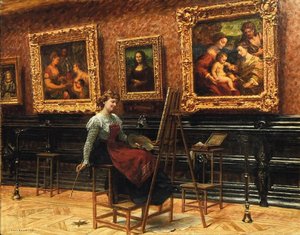
Louis Beroud
1852 - 1930 , Frankrike
Kortfakta
- Artistic Movement Or Style: Akademisk realism
- Artists Or Movements Influenced By This Artist: ['Art déco']
- Artists Who Influenced This Artist: ['Gustave Moreau']
- Date Of Birth: 1852 Lyon Frankrike
- Date Of Death: 1930
- Full Name: Louis Beroud
- Nationality: Fransk
- Notable Artworks:
- Avenue de la Gare i Nice
- Le dôme central de la galerie des machines à l'exposition universelle de 1889
- Bureau du Baron Schlichting
- Place Of Birth: Lyon Frankrike
Relaterade artiklar

Drama and Light: Discover the Captivating Grandeur of Baroque Art
Immerse yourself in the dramatic splendor of Baroque art. Explore the profound impact of light, shadow, and the Counter-Reformation through an expert historical lens, celebrating the masters who defined an era of unparalleled grandeur and emotional intensity.

The Drama of Light: Capturing the Grandeur and Emotional Intensity of Baroque Art
Explore the breathtaking drama of Baroque art. Discover how masters like Rubens and Caravaggio used chiaroscuro to evoke profound emotion, faith, and grandeur through the masterful interplay of light and shadow in this expert art history guide.

Drama in Nature: The Captivating Grandeur of Baroque Landscapes and the Art of Emotional Spectacle
Explore the breathtaking drama of Baroque landscapes. From Rubens's grand vistas to the mastery of chiaroscuro, discover how 17th-century artists transformed nature into a theatrical stage of emotion and light. A deep dive for true art enthusiasts.