


 Visa i rummet
 Skicka
 Dela
Dela
 Detaljer
 Studentguide för konstverk

 Ladda ner
 Liknande objekt
 Röntgen
 Bildspel
 Besökstatistik
Carnival in Arcueil


Lyonel Feininger's "Carnival in Arcueil" (1911) bursts with Expressionist energy! Witness vibrant colors, dynamic figures, and a captivating Parisian carnival scene – a masterpiece by a pioneering artist.
 Läs mer
Lyonel Feininger (1871-1956) var en tysk-amerikansk konstnär känd för sina expressionistiska målningar och sin roll på Bauhaus. Hans verk blandar kubism, arkitektur och havstema – en pionjär inom modern konst!
Giclée / Konsttryck
Giclée- eller canvasprint av museumskvalitet med snabb produktion och flexibla ytbehandlingsalternativ. ( Köp handmålat konstverk Byt till digital bildförsäljning)




P118B Skr10

P118H Skr10

P118W Skr10

P438Z Skr10

P508JH Skr12

P508YH Skr12

P805H Skr10

P805Z Skr10

P919BZ Skr10

P919G Skr10

P919XJ Skr10

P959ZH Skr10

P968JZ Skr12

W106C Skr8

W218G Skr10

W218JH Skr8

W218Y Skr10

W307PJ Skr10

W316G Skr10

W316PJ Skr8

W316Y Skr10

W398PJ Skr8

W4111J Skr10

W500HY Skr15

W500JH Skr15

W692G Skr12

W849H Skr8

W940BG Skr15

W953PJ Skr8




Standardstorlek
anpassad
CM
INCH
Välj bland våra förinställda storlekar som motsvarar konstverkets ursprungliga proportioner.
Loading sizes...

bredd
höjd
Ange den bredd och höjd du behöver, för att passa din ram eller din vägg. Ett tryck kan endast beskäras, aldrig göras större än bilden, vilket innebär att ett format med en annan formform leder till att en del av bilden går förlorad. Vi skickar en digital mockup för godkännande innan vi trycker något. Bilden som visas på denna sida visar inte den faktiska beskärningen — det är endast mockuppen som gör det.
Leverans över hela världen () på 2 veckor istället för standard 4/5 veckor. (23 oktober)

Fri expressfrakt över hela världen

Högkvalitativ linnecanvas

Fullständig fraktförsäkring

Garantier för återbetalning av tullavgifter

Garantier för exakt färgåtergivning

100 dagars returrätt vid fabrikationsfel

100% pengarna tillbaka-garanti

Mängdrabatt erbjuds
 Glasalternativet är endast tillgängligt i storlekar under 110 cm.

Carnival in Arcueil
Giclée / Konsttryck
Reproduktionsstorlek
-


Totalpris
Skr 684
A Burst of Joy: Lyonel Feininger’s “Carnival in Arcueil”
Lyonel Feininger's "Carnival in Arcueil," painted in 1911, isn’t merely a depiction of a festive street scene; it’s a vibrant distillation of Expressionist energy and a testament to the artist’s unique ability to imbue everyday life with an extraordinary sense of movement and emotion. Housed within the Art Institute of Chicago, this oil on canvas transports us to the heart of a Parisian carnival, capturing not just the visual spectacle but also the palpable excitement and slightly surreal atmosphere that defines the moment. Feininger, a German-American painter deeply rooted in both European artistic traditions and American popular culture, masterfully blends elements of Cubism with the passionate intensity of Expressionism, creating an image that is both familiar and strikingly original.
The painting immediately draws the eye to its central figure: a man in black, balancing precariously on one leg while juggling three balls. This dynamic pose isn’t simply illustrative; it embodies the spirit of the carnival itself – a celebration of skill, daring, and joyful abandon. Surrounding him is a throng of figures, rendered with a remarkable degree of detail despite the overall impression of movement. They are not portraits in the traditional sense, but rather archetypes of carnival revelers—a mix of faces, costumes, and gestures that collectively contribute to the painting’s lively energy. The artist's use of color is particularly noteworthy; bold yellows, reds, blues, and greens dominate the palette, creating a dazzling visual effect that mirrors the vibrancy of the event itself.
The Architectural Backdrop: Bridges and Parisian Identity
Beyond the figures, it’s crucial to consider the setting – two prominent bridges that frame the scene. These aren't merely architectural elements; they are integral to the painting’s narrative. Arcueil, a town just south of Paris, was a frequent subject for Feininger, and these bridges became recurring motifs in his work. They represent not only the physical connection between different parts of the city but also a sense of Parisian identity—a blend of urban dynamism and historical heritage. The bridges’ solid forms provide a grounding element to the swirling chaos of the carnival, anchoring the scene within a recognizable, yet subtly stylized, reality.
Feininger's fascination with architecture is evident throughout his oeuvre, reflecting a broader interest in geometric form and spatial relationships. He often depicted buildings not as static objects but as dynamic forces shaping the urban landscape. In “Carnival in Arcueil,” the bridges serve as both structural supports and visual anchors, guiding the viewer’s eye through the composition and contributing to the painting's overall sense of depth and movement.
Expressionist Techniques: Color, Form, and Emotion
The painting’s distinctive style is firmly rooted in Expressionism—a movement that sought to convey subjective emotions rather than objective reality. Feininger achieves this through a number of key techniques. His use of flattened perspective and fragmented forms creates a sense of disorientation and immediacy, as if the viewer is swept up in the carnival's frenetic energy. The colors are applied with thick impasto—a technique that adds texture and physicality to the surface of the canvas—further enhancing the painting’s emotional impact.
Furthermore, Feininger employs a masterful use of color theory. He utilizes contrasting hues to heighten visual interest and create a sense of dynamism. The vibrant yellows and reds of the carnival scene are juxtaposed with cooler blues and greens in the background, generating a powerful visual tension. This interplay of colors not only captures the sensory experience of the carnival but also reflects the artist’s own emotional response to it—a mixture of excitement, wonder, and perhaps even a touch of melancholy.
A Legacy of Modernity: Feininger's Place in Art History
“Carnival in Arcueil” stands as a pivotal work in Lyonel Feininger’s career and a significant example of early 20th-century art. His exploration of urban life, combined with his innovative use of color and form, foreshadowed many of the developments that would characterize modernism. The painting's influence can be seen in the works of later Expressionist artists such as Max Beckmann and Emil Nolde, while its stylistic elements also resonate with the Cubist explorations of Picasso and Braque.
Today, “Carnival in Arcueil” continues to captivate viewers with its vibrant energy and emotional depth. It’s a reminder of the power of art to capture not just what we see but also what we feel—a celebration of joy, movement, and the enduring spirit of human connection.
Frågor och svar
Vilken storlek rekommenderas för "Carnival in Arcueil" i ett Living Room?
För ett Living Room är den rekommenderade tryckstorleken för "Carnival in Arcueil" av Lyonel Feininger Medium.
Är "Carnival in Arcueil" typisk för vad Lyonel Feininger vanligtvis skapade?
"Carnival in Arcueil" skildrar carnival, arcueil, feininger, expressionism, bridge, figures, joy, celebration, medan Lyonel Feiningers dokumenterade teman är german expressionism, vibrant colors, post-impressionist, architectural focus, urban life, festive scenes, feininger's exploration of joy, bridging art and caricature. En jämförelse mellan dessa visar hur verket förhåller sig till konstnärens vanliga motiv.
Vilket motiv och vilken atmosfär förenar "Carnival in Arcueil" av Lyonel Feininger?
"Carnival in Arcueil" av Lyonel Feininger skildrar carnival, arcueil, feininger, expressionism, bridge, figures, joy, celebration i en Dramatic stämning. Motiv och atmosfär beskriver tillsammans verket.
Om konstnären
Lyonel Feininger – En Pionjär inom Expressionismen och Bauhaus
Lyonel Charles Adrian Feininger (uttal: /'lajənəl 'fainiŋər/), född 17 juli 1871 i New York, USA, död 13 januari 1956 i New York, var en tysk-amerikansk målare, grafiker och serieskapare. Han var en pionjär inom den amerikanska seriekonsten och senare även inom den abstrakta expressionismen. Hans son var den kände fotografen Andreas Feininger.- Tidiga år: Feininger föddes av tysk-amerikanska föräldrar i New York; hans far var den tyska violinisten och kompositören Karl Feininger och hans mor var amerikansk sångerska Elizabeth Feininger. Han fick sin utbildning (musik) i Berlin, dit han flyttade som 16-åring.
- Musikaliskt Bakgrund: Hans musikaliska utbildning präglades av ett stort intresse för klassisk musik och komposition, vilket senare skulle påverka hans konstnärliga stil.
- Konstutbildning och Europeiska Resor: År 1887 reste han till Europa för att studera musik men växte snart bort från detta fokus och började studera konst i Hamburg och Berlin.
Kommersiell Grafik och Seriekonsten
Från 1894 arbetade Feininger som kommersiell satirist för flera tyska, franska och amerikanska tidningar. Hans seriekonster, särskilt ”The Kin-der-Kids” och ”Wee Willie Winkie’s World”, blev mycket populära och visade upp hans unika grafiska stil. Detta arbete gav honom ett stort erkännande och gjorde honom till en av de mest framgångsrika konstnärerna inom sitt område.Övergången till Konst och Bauhaus
Efter två decennier i kommersiell grafik övergick Feininger till konst vid åldern 36 och blev direkt lärare vid Bauhaus i Weimar där Walter Gropius grundade skolan år 1919. Han var den första läraren och ansvarig för printmaking-verkstäderna och hade en enorm inverkan på många av sina elever. Hans stil präglades av prismatiskt brutna former, genomskinliga färger och hänvisningar till arkitektur och havet vilket gjorde honom till en av de viktigaste konstnärerna inom klassisk modernism.Stil och Teknik
Feininger använde sig av innovativa tekniker för att skapa sina verk, särskilt när det gäller användningen av färger och perspektiv. Hans målningar är kända för sina dynamiska kompositioner och användning av ljus och skugga vilket bidrog till deras konstnärliga kvalitet.Viktiga Verk och Konstnärlig Utveckling
Feininger skapade många marinmålningar under sommaren på ön Usedom mellan 1909 och 1918 där han hämtade inspiration från havet och dess ljus. Bland hans mest betydelsefulla verk finns ”Werder I”, ”Gaberndorf II” och ”Boats”. Dessa målningar visar upp hans unika blandning av expressionistiska tekniker och arkitektoniska teman.Slutskede och Eftermäle
Efter andra världskrigets utbrott emigrerade Feininger till USA där han fortsatte att skapa konst och undervisade vid Mills College innan han slutligen återvände till New York. Han blev vald till American Academy of Arts and Letters år 1955 och hans verk har lämnat ett bestående avtryck på världskonsten och inspirerat många konstnärer och entusiaster.
Lyonel Feininger
1871 - 1956 , USA
Snabbfakta
- Artistic Movement Or Style: Expressionism
- Artists Or Movements Influenced By This Artist: ['Bauhaus']
- Artists Who Influenced This Artist:
- Gustav Först
- Robert Delaunay
- Date Of Birth: 17 juli 1871
- Full Name: Lyonel Charles Adrian Feininger
- Nationality: Tysk-amerikansk
- Notable Artworks:
- Werder I
- Gaberndorf II
- Boats
- Place Of Birth: New York City, USA
Relaterade artiklar
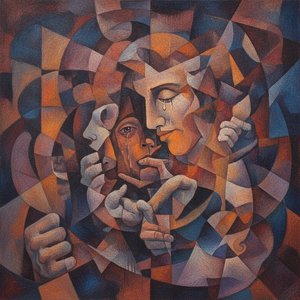
Beyond the Surface: Exploring the Emotional Depth of Cubist Expressionism
Discover the profound emotional resonance within Cubist Expressionism. Explore how fragmented forms and geometric abstraction convey deep human feeling through an expert art-historical lens for the discerning collector.