Ateljé — Fri frakt i hela världen — Leveranstid 2–6 veckor
Sell Your Art Önskelista Varukorg
PreviewPreview Köp tryck Köp tryckBeställ målning Beställ målning SkickaSkicka
Visa detaljerVisa detaljer Lägg till i favoriter Lägg till i favoriter Ladda nerLadda ner Liknande objektLiknande objekt RöntgenRöntgen BildspelBildspel

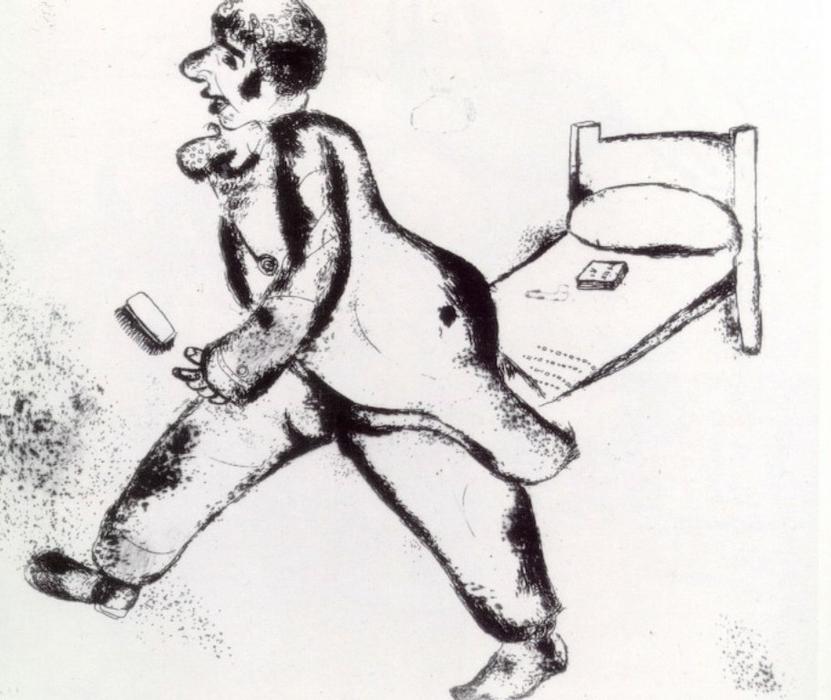
Petrouchka

Marc Chagall’s ‘Petrouchka’ (1923) – a dynamic black & white drawing of a burdened man, showcasing expressive lines and caricature style. Explore this symbolic work of social commentary.

Upplev Marc Chagalls drömlika "En sommarnattsdröm" (Midsummer Night's Dream). Ett surrealistiskt mästerverk fyllt av symbolik, kärlek och magi – fånga konstens essens!

Köp en högupplöst, förbättrad digital bild som är vida överlägsen förhandsvisningen online.

Varje fil är noggrant förberedd av våra interna specialister med hjälp av avancerade verktyg och professionell manuell retuschering. Vi säkerställer att varje bild har exceptionell skärpa, exakt färgåtergivning och fina detaljer.

Den slutgiltiga filen levereras via e-post inom 72 timmar, optimerad för omedelbar användning i professionella sammanhang, redaktionellt bruk och tryckmiljöer. Detta är samma kvalitet som används med förtroende av ledande designstudior, förlag och gallerier.

Digital bild

Ladda ner en högupplöst fil för personlig visning, utskrift och kreativa projekt.

Totalpris

$9.99

Ingår i varje beställning av digital bild

Professionell digital leverans, garanterad

När du väljer TopImpressionists.com får du inte bara en bild – du får ett professionellt förädlat digitalt konstverk, skapat med precision och med en garanterad tillfredsställelse. Här är allt som ingår i din beställning, automatiskt:

shipping_icon
Snabb leverans via e-post

Din högupplösta digitala bildfil skickas till dig via e-post inom 72 timmar efter beställning – redo för omedelbar användning.

canvas_icon
AI-förbättrad digital bild

Ditt konstverk optimeras professionellt med hjälp av avancerade AI-verktyg och manuell redigering, vilket garanterar maximal detaljrikedom, skärpa och färgnoggrannhet.

insurance_icon
Gratis livstidsåterutskick

Har du råkat radera eller tappa bort din fil? Ingen oro – vi skickar den kostnadsfritt till dig när som helst.

tax_icon
Inga importavgifter – någonsin

Njut av ditt konstverk omedelbart utan tull, importavgifter eller leveranskostnader – digitala nedladdningar är alltid skattefria.

color_icon
Garanterad färgåtergivning

Vi säkerställer att din digitala bild återger de ursprungliga färgerna så exakt som möjligt med hjälp av professionella verktyg och färghantering.

return_icon
60 dagars nöjdhetsgaranti

Om du inte är nöjd med din digitala bild kommer vi att revidera den eller återbetala 100% inom 60 dagar – utan frågor.

guarantee_icon
100% pengarna-tillbaka-garanti

Inte nöjd? Få full återbetalning inom 60 dagar efter att du har tagit emot din digitala fil – inga frågor åsett.

discount_icon
Rabatt vid storköp

Köp 3 bilder, spara 10% - Köp 5, spara 15% - Köp 10+, spara 20%. Perfekt för kreativa projekt, gallerier och byråer.

Kortfakta

  • notable elements: Exaggerated features, dynamic composition, expressive lines, symbolic weight of the chair
  • medium: Pen and ink on paper
  • artist: Marc Chagall
  • year: 1923
  • style: Early Modernism, Caricature, Symbolism

Konstquiz

Det finns endast ett korrekt svar på varje fråga.

Fråga 1:
In what year was Marc Chagall's 'Petrouchka' created?
Fråga 2:
What is the primary medium used in 'Petrouchka'?
Fråga 3:
The depiction of a man carrying a chair in 'Petrouchka' can be interpreted as representing what?
Fråga 4:
Which artistic style is most evident in the exaggerated features and dynamic lines of 'Petrouchka'?

Beskrivning av samlarobjektet

A Burden Carried: Decoding Chagall’s ‘Petrouchka’ (1923)

This striking black and white drawing, titled *Petrouchka*, offers a compelling glimpse into Marc Chagall's early modernist explorations. Created in 1923, the work immediately draws the eye with its dynamic composition and expressive linework – a departure from the vibrant color palettes he would later become renowned for, yet undeniably imbued with his signature emotional depth.

Subject & Composition: A Moment of Strain

The artwork depicts a man in a suit, clearly burdened by the weight of a chair he carries. The figure is rendered with exaggerated features – a large head and prominent mustache contributing to a somewhat caricatured aesthetic. This isn’t a portrait striving for realism; instead, it's a study in *movement* and perhaps even *struggle*. The composition is deliberately flattened, minimizing depth and focusing all attention on the central figure and his awkward load. The lack of background detail further intensifies this focus, isolating the man and emphasizing his solitary experience.

Technique & Style: Expressive Linework

Chagall masterfully employs pen and ink in *Petrouchka*, utilizing hatching and cross-hatching to create a rich sense of volume and texture. The lines are thick, bold, and incredibly expressive – they aren’t merely outlining forms but actively conveying energy and emotion. This technique lends the drawing a graphic quality reminiscent of political cartoons or social commentary, suggesting a narrative beyond the literal depiction. The style aligns with early modernist tendencies, hinting at influences from Cubism in its simplification of form, though remaining distinctly Chagallian in its emotional resonance.

Historical Context & Symbolism: Echoes of Russian Folklore

The title *Petrouchka* is significant. Petrushka (or Petrouchka) is a traditional Russian puppet character – often depicted as an innocent, somewhat hapless figure caught in difficult circumstances. Chagall was deeply rooted in his Belarusian-Jewish heritage and frequently drew inspiration from folklore and Jewish life. While this drawing doesn’t explicitly depict the puppet itself, it evokes the *spirit* of Petrouchka: a sense of vulnerability, burden, and perhaps even tragic fate. The chair, therefore, can be interpreted as representing responsibility, obligation, or the weight of societal expectations – a symbolic load carried by an individual navigating a complex world. It’s worth noting Chagall was also designing sets for ballet productions around this time, including *Aleko* (1925) and later, *Petrushka* itself in 1947, suggesting a continued engagement with theatrical themes.

Emotional Impact & Interpretation

*Petrouchka* is not simply a drawing of a man carrying a chair; it’s an exploration of the human condition. The artwork evokes feelings of empathy and perhaps even unease. The frantic energy conveyed through the lines suggests a sense of urgency or desperation. It's a powerful image that resonates with anyone who has felt overwhelmed by life’s burdens. The drawing invites viewers to contemplate their own responsibilities and the weight they carry, making it a thought-provoking piece for any collection.

Collecting & Reproduction

  • As an early work from a master of modern art, *Petrouchka* represents a valuable insight into Chagall’s artistic development.
  • Its strong graphic quality and monochromatic palette make it exceptionally versatile for interior design – complementing both contemporary and traditional spaces.
  • High-quality reproductions capture the expressive linework and emotional depth of the original, offering an accessible way to bring a piece of art history into your home or office.

Konstnärsbiografi

A Life Painted in Dreams: The World of Marc Chagall

Marc Chagall, born Moishe Shagal in 1887 in the small Belarussian town of Liozna near Vitebsk, wasn’t merely a painter; he was a poet of color, a weaver of dreams, and a chronicler of memory. His life, spanning nearly a century, mirrored the tumultuous currents of the 20th century, yet his art remained steadfastly rooted in a deeply personal vision—one infused with the folklore of his Hasidic Jewish upbringing and an unwavering belief in the power of imagination. Vitebsk itself was more than just a birthplace; it became the emotional core of his artistic universe, a recurring motif populated by flying figures, whimsical animals, and the vibrant hues of remembered landscapes. The town’s unique blend of cultures—Russian Orthodox churches alongside bustling Jewish marketplaces—forged an aesthetic sensibility that would defy easy categorization throughout his long career. Though he sought formal training first with a local sign painter and later in St. Petersburg under Léon Bakst, and then in Paris at the Académie de la Grande Chaumière, Chagall never fully embraced any single artistic movement. He absorbed elements of Cubism, Symbolism, and Fauvism, but always filtered them through his own intensely personal lens, creating a style that was uniquely, unmistakably Chagall.

Early Influences and Artistic Beginnings

Chagall’s formative years were marked by the traditions of Vitebsk’s Jewish community—a world steeped in ritual, storytelling, and vibrant visual culture. These influences would permeate his artistic vision throughout his life. His initial training was modest, focusing on practical skills as a sign painter, but he quickly developed an interest in broader artistic concepts. St. Petersburg provided him with access to influential teachers like Léon Bakst, who encouraged experimentation and challenged conventional stylistic norms. This exposure to theatrical design—particularly Ballets Russes productions—would prove crucial in shaping his approach to composition and visual storytelling. However, Chagall resisted the allure of rigid academic doctrines, prioritizing intuition and emotional expression over technical precision. He sought inspiration from Impressionism and Post-Impressionism, particularly Cézanne and Gauguin, recognizing their ability to capture fleeting moments of beauty and emotion.

The Symbolist Vision: Fragments of Memory

Chagall’s early paintings—such as I and the Village (1911)—demonstrate his fascination with Symbolism's exploration of psychological states and subconscious imagery. The village isn’t rendered realistically but as a fragmented collection of recollections, imbued with symbolic meaning. Figures float and dance across the canvas, defying gravity and logic, creating a dreamlike atmosphere that invites viewers into his inner world. This stylistic approach wasn’t accidental; it stemmed from a desire to move beyond mere imitation of reality and capture the essence of feeling, the weight of memory, and the power of folklore. The use of color—bold, non-naturalistic hues—served as a conduit for emotion rather than literal representation. Recurring motifs like birds, apples, and musical instruments reflect Chagall’s preoccupation with themes of flight, fertility, and artistic inspiration. These images are not simply decorative; they carry profound symbolic significance, conveying ideas about identity, spirituality, and the relationship between humanity and nature.

Cubism's Influence and Artistic Evolution

Despite his rejection of formal academic movements, Chagall absorbed elements of Cubism, particularly Picasso’s pioneering explorations of fractured perspectives. This influence is evident in works like The Musicians (1917), where figures are depicted simultaneously from multiple viewpoints—a technique that disrupts traditional spatial conventions and emphasizes the multiplicity of experience. However, Chagall skillfully blended Cubist principles with his own distinctive visual language, retaining a lyrical quality and emotional depth that distinguishes him from more intellectually rigorous artists. He continued to experiment with color and form throughout his career, refining his style while maintaining its core expressive power. The Russian Revolution profoundly impacted Chagall’s life and artistic practice, returning him to Vitebsk where he established an art school—a brief but significant endeavor aimed at fostering creativity and cultural renewal amidst the upheavals of the era.

International Recognition and Legacy

Chagall's emigration to Paris in 1923 marked a turning point in his artistic trajectory, propelling him onto the international stage. He embraced Surrealism’s fascination with dreams and irrationality, producing canvases that pulsate with imaginative energy—works like *White Crucifixion* (1938) reflecting the anxieties of wartime Europe. His subsequent move to New York City during World War II provided him with a new creative impetus, resulting in monumental paintings inspired by biblical narratives and American landscapes. Chagall’s influence extended far beyond his own lifetime, inspiring countless artists across disciplines—painting, sculpture, theater, and film—who sought to emulate his poetic vision and expressive style. His enduring legacy resides not only in his iconic artworks but also in the profound exploration of human emotion and spiritual yearning that characterizes his oeuvre. Marc Chagall remains one of the most celebrated artists of the twentieth century, a testament to the transformative power of imagination and the unwavering pursuit of artistic truth.

Marc Chagall

Marc Chagall

1887 - 1985 , Belarus

Kortfattad information

  • Artistic Movement Or Style: Modernism, Kubism
  • Artists Or Movements Influenced By This Artist: ['Surrealism']
  • Artists Who Influenced This Artist:
    • Bakst
    • Delaunay
    • Borovikovsky
  • Date Of Birth: 7 juli 1887
  • Date Of Death: 28 mars 1985
  • Full Name: Marc Chagall
  • Nationality: Russisk, senare fransk
  • Notable Artworks:
    • I och byen
    • Den Liggande Poeten
    • Valentina
  • Place Of Birth: Liozna, Belarus
© TopImpressionists.com — Alla rättigheter förbehållna  ·  100% handmålad · Nöjdhetsgaranti · Fri frakt i hela världen
VISA MASTERCARD