

 Visa i rummet
 Skicka
 Dela
Dela
 Detaljer
 Studentguide för konstverk

 Ladda ner
 Liknande objekt
 Röntgen
 Bildspel
 Besökstatistik
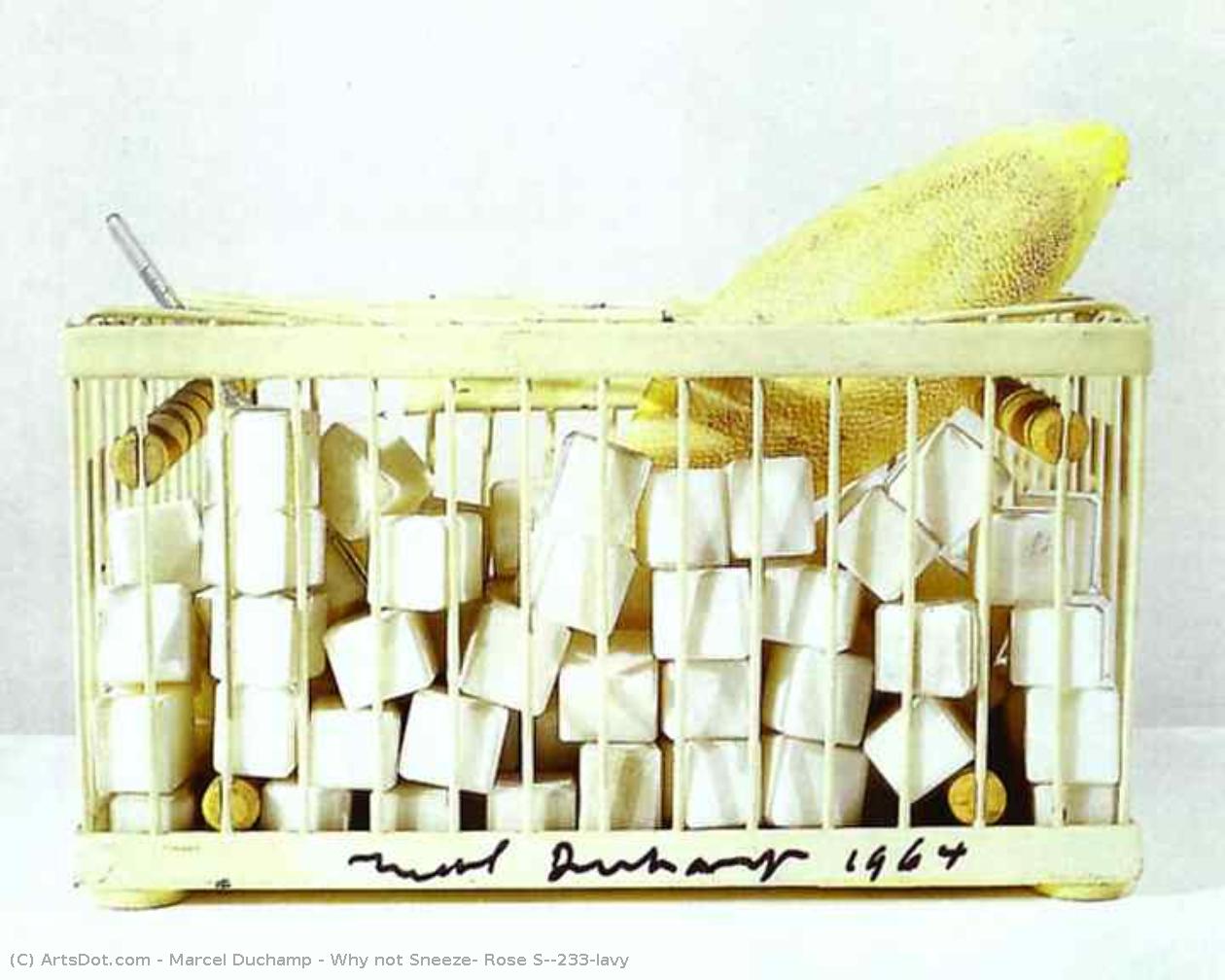
Why not Sneeze, Rose Sélavy
 Acrylic On Canvas
- WallArt
- Dada Gesamtkunstwerk
 1921
1921 12.0 x 22.0 cm
 Tate Modern
 Läs mer
Köp en högupplöst, förbättrad digital bild med betydligt högre kvalitet än förhandsvisningen online.
Varje fil är noggrant förberedd av våra interna specialister med hjälp av avancerade verktyg och professionell manuell retuschering. Vi säkerställer att varje bild har exceptionell skärpa, exakt färgåtergivning och fina detaljer.
Den slutgiltiga filen levereras via e-post inom 72 timmar, optimerad för omedelbar användning i professionella sammanhang, redaktionellt bruk och tryckmiljöer. Detta är samma kvalitet som med förtroende används av ledande designstudior, förlag och gallerier.
Digital bild
Ladda ner en högupplöst fil för personlig visning, utskrift och kreativa projekt. ( Byt till tryckta exemplar Köp handmålat konstverk)
Ingår i varje beställning av digital bild
Professionell digital leverans, garanterad
När du väljer TopImpressionists.com får du inte bara en bild – du får ett professionellt förädlat digitalt konstverk, skapat med precision och med en garanterad tillfredsställelse. Här är allt som ingår i din beställning, automatiskt:

Snabb leverans via e-post
Din högupplösta digitala bild skickas till dig via e-post inom 72 timmar efter beställning – redo för omedelbar användning.

AI-förbättrad digital fil
Ditt konstverk optimeras professionellt med hjälp av avancerade AI-verktyg och manuell redigering, vilket garanterar maximal detaljrikedom, skärpa och färgnoggrannhet.

Gratis livstidsåterutskick
Har du råkat radera eller tappa bort din fil? Ingen oro – vi skickar den kostnadsfritt till dig när som helst.

Inga importavgifter – någonsin
Njut av ditt konstverk omedelbart utan tull, importavgifter eller leveranskostnader – digitala nedladdningar är alltid skattefria.

Garanterad färgåtergivning
Vi säkerställer att din digitala bild återger de ursprungliga färgerna så exakt som möjligt med hjälp av professionella verktyg och färghantering.

100 dagars nöjdhetsgaranti
Om du inte är nöjd med din digitala bild kommer vi att revidera den eller återbetala 100% inom 100 dagar – utan frågor.

100% pengarna-tillbaka-garanti
Inte nöjd? Få full återbetalning inom 100 dagar efter att du mottagit din digitala fil – utan frågor.

Rabatt vid storköp
Köp 3 bilder, spara 10% – Köp 5, spara 15% – Köp 10+, spara 20%. Perfekt för kreativa projekt, gallerier och byråer.
A Provocative Pause: Unpacking “Why Not Sneeze, Rose Sélavy”
Marcel Duchamp’s "Why Not Sneeze, Rose Sélavy," painted in 1921, isn't merely a still life; it’s an audacious declaration. This deceptively simple image – a white box containing a yellow banana alongside several cups and spoons – immediately throws the viewer off balance, demanding they reconsider their assumptions about art itself. Duchamp, a pivotal figure in the Dada movement, wasn’t interested in replicating reality or expressing personal emotion through traditional means. Instead, he sought to dismantle established artistic conventions, forcing us to confront the very definition of what constitutes “art” and its role within society.
The painting's genesis lies within Duchamp’s exploration of chance and readymades – everyday objects presented as art without alteration. "Why Not Sneeze" exemplifies this approach perfectly. The choice of a banana, an utterly mundane item, elevates it to the status of subject matter through its placement within the box, transforming it into something worthy of contemplation. The inclusion of the cups and spoons further complicates the scene, suggesting a potential for consumption or ritual – elements deliberately devoid of inherent meaning, yet imbued with a subtle tension.
Dadaist Disruptions: Style and Technique
“Why Not Sneeze” is firmly rooted in the principles of Dadaism, a movement born from the disillusionment following World War I. Rejecting logic and reason, Dada artists embraced absurdity, chance, and anti-art sentiments. Duchamp’s technique reflects this ethos; he employed a precise, almost clinical approach to rendering the objects, using oil paint on canvas with a smooth, matte finish. There's no attempt at illusionistic depth or vibrant color – instead, the focus is entirely on the arrangement of the elements and their juxtaposition. The stark white box acts as a frame, isolating the objects and intensifying their impact.
Interestingly, Duchamp’s process involved a degree of chance. He reportedly placed the banana in the box after it had been emptied, allowing the positioning to be determined by accident. This element of randomness underscores the movement's core belief that art should not be dictated by conscious intention but rather emerge from unexpected encounters and unforeseen circumstances.
Symbolic Whispers: Interpretation and Context
The symbolism within “Why Not Sneeze” is deliberately ambiguous, inviting multiple interpretations. The banana itself has been suggested to represent fertility, sexuality, or even a subtle critique of consumer culture – a small, yellow object placed in an enclosed space, hinting at both abundance and confinement. The cups and spoons could symbolize hospitality, offering, or perhaps the act of consuming – again, devoid of any specific narrative but laden with potential meanings.
Furthermore, the title itself, “Why Not Sneeze?”, is a direct challenge to conventional artistic expectations. Duchamp’s question implies that there are no rules governing art, no prescribed methods for creating it. It's an invitation to embrace spontaneity and reject rigid constraints. The painting can be viewed as a meditation on the absurdity of artistic norms and a playful provocation against established aesthetic values.
A Timeless Dialogue: Emotional Impact and Legacy
Despite its seemingly simple composition, “Why Not Sneeze, Rose Sélavy” possesses a profound emotional impact. It’s unsettling, humorous, and thought-provoking – qualities that have cemented its place as one of the most significant works in modern art history. Duchamp's work continues to resonate today, prompting us to question our own perceptions of beauty, value, and the very nature of artistic expression. A reproduction of this iconic piece offers a unique opportunity to engage with a pivotal moment in art history and contemplate the enduring legacy of Marcel Duchamp’s revolutionary spirit.
Frågor och svar
Finns "Why not Sneeze, Rose Sélavy" tillgänglig som ett konsttryck?
För att beställa ett tryck av "Why not Sneeze, Rose Sélavy" av Marcel Duchamp, gå helt enkelt till dess sida för Konsttryck i hög kvalitet: ett konsttryck på bomullscanvas eller arkivbeständigt canvaspapper.
Vilket stämningsläge och vilken känsla förenas i "Why not Sneeze, Rose Sélavy"?
I "Why not Sneeze, Rose Sélavy" ackompanjeras en Playful stämning av en Playful känsla.
Var i Marcel Duchamps karriär placerar sig "Why not Sneeze, Rose Sélavy"?
"Why not Sneeze, Rose Sélavy" tillhör Marcel Duchamps Dada Phase i konstnärskarriären. Denna klassificering relaterar verket till konstnärens utveckling.
Konstnärsbiografi
En revolutionär anda: Marcel Duchamps liv och konst
Marcel Duchamp, född Henri-Robert-Marcel Duchamp 1887 i Blainville-Crevon, Normandie, var mer än bara en konstnär; han var en filosofisk provokatör som fundamentalt förändrade den moderna konstens kurs. Hans tidiga liv, även om det verkade konventionellt – uppfostrad inom en familj som värderade konstnärligt uttryck med båda bröderna med framgångsrika karriärer som konstnärer – antydde den ikonoklasm som skulle komma. Duchamp sökte initialt formell utbildning, bemästrade traditionella tekniker och experimenterade med postimpressionistiska stilar. Denna akademiska grund fungerade dock inte som ett mål i sig, utan som en språngbräda för att ifrågasätta själva konstens natur, dess syfte och dess definition. Han var inte nöjd med att bara avbilda världen; han strävade efter att utmana hur vi uppfattar den och vad som utgör ett konstnärligt värde. Denna rastlösa intellektuella nyfikenhet skulle bli det definierande kännetecknet för hans produktiva karriär.Från kubism till dadaism: Ett avståndstagande från konventionerna
Duchamps konstnärliga resa präglades av en ständig evolution, ett medvetet borttagande av etablerade normer. Hans tidiga engagemang i kubismen, tydligt i verk som Porträtt av schackspelare (1ansi), uppvisade ett intresse för fragmenterade former och multipla perspektiv – ett brott mot traditionell representation. Ändå rörde han sig snabbt bortom rent estetiska frågor, då han insåg att det inte räckte med att bara arrangera om visuella element för att adressera de djupare frågor som bubblade inom honom. Förfärdelserna under första världskriget gav näring åt detta missnöje och ledde Duchamp till att omfamna dadaismen, en rörelse född ur desillusion och ett avvisande av logik, förnuft och traditionella konstnärliga värden. Det var inom den dadaistiska ramen som Duchamp verkligen började montera ner konventionella föreställningar om konst. Han var inte intresserad av att skapa vackra objekt; han ville provocera fram tankar, utmana antaganden och blottlägga det godtyckliga i estetiska omdömen. Denna period såg födelsen av hans mest radikala innovation: ”readymaden”.Readymades och konstens subversion
Introduktionen av readymades – vardagliga, massproducerade föremål som valts ut och presenterats som konst – var Duchamps mest betydelsefulla bidrag till 1900-talet. Dessa var inte bara funna föremål; de var medvetna handlingar av konstnärlig subversion. Genom att ta ett vardagligt föremål, som en urinoar (Fontänen, 1917), signera det med ”R. Mutt” och skicka in det till en konstutställning, utmanade Duchamp själva definitionen av konstnärlig skicklighet och upphovsmannaskap. Var det konstnärens hand som skapade verket, eller var det konstnärens idé? Denna fråga blev central för hans praktik och lade grunden för konceptkonsten. Andra betydelsefulla readymades, såsom L.H.O.O.Q. (1919) – en reproduktion av ett vykort av Mona Lisa som vandaliserats med mustasch och bockskägg – var lekfulla men skarpa kritiker av konsthistorien och etablerade kulturella ikoner. Dessa verk var inte tänkta att beundras för sina estetiska kvaliteter; de var avsedda att väcka debatt och tvinga betraktaren att ompröva sina förutfattade meningar om vad som utgör konst. Duchamp trodde att konsten skulle existera i sinnet, inte enbart i ögat.Arv och bestående inflytande
Marcel Duchamps inverkan på efterföljande generationer av konstnärer är omätbar. Han förändrade fundamentalt vår förståelse av konst och banade väg för rörelser som konceptkonst, minimalism, popkonst och många andra. Hans betoning av konstnärens idé – konceptet bakom verket – framför dess estetiska egenskaper fortsätter att inspirera konstnärer än idag.- Kubism: Tidig utforskning av brutna former och rumslig representation.
- Dadaism: Avvisande av logik, förnuft och traditionella konstnärliga värden som svar på första världskriget.
- Konceptkonst: Fokus på idén bakom konstverket snarare än dess estetiska kvaliteter.

Marcel Duchamp
1887 - 1968 , Frankrike
Kortfattad info
- Artistic Movement Or Style:
- Cubism
- Dadaism
- Konceptuell konst
- Artists Or Movements Influenced By This Artist: ['Minimalism']
- Date Of Birth: 28 juli 1887
- Date Of Death: 2 oktober 1968
- Full Name: Marcel Duchamp
- Nationality: Fransk-Amerikansk
- Notable Artworks:
- Fontänen
- El gran vidrio - La novia desnudada por sus solteros
- Fountain
- Place Of Birth: Blainville-sur-Mer, Frankrike