


 Visa i rummet
 Skicka
 Dela
Dela
 Detaljer
 Studentguide för konstverk

 Ladda ner
 Liknande objekt
 Röntgen
 Bildspel
 Besökstatistik
St Catherine
 Chalk
Chalk- Northern Renaissance
 1520
1520 316.0 x 215.0 cm
 Staatliche Museen zu Berlin
Admire Matthias Grünewald's 'St Catherine,' a captivating chalk drawing from 1520. Explore the Northern Renaissance master’s unique style, featuring a serene saint and symbolic details – available as a hand-painted replica.
 Läs mer
Matthias Grünewald: Tysk konstnär känd för den dramatiska Isenheim Altarpiecen och sin intensiva, religiösa stil från tidig renässans. Upptäck hans unika uttryck och mästerverk!
Giclée / Konsttryck
Giclée- eller canvasprint av museumskvalitet med snabb produktion och flexibla ytbehandlingsalternativ. ( Köp handmålat konstverk Byt till digital bildförsäljning)




P118B Skr10

P118H Skr10

P118W Skr10

P438Z Skr10

P508JH Skr12

P508YH Skr12

P805H Skr10

P805Z Skr10

P919BZ Skr10

P919G Skr10

P919XJ Skr10

P959ZH Skr10

P968JZ Skr12

W106C Skr8

W218G Skr10

W218JH Skr8

W218Y Skr10

W307PJ Skr10

W316G Skr10

W316PJ Skr8

W316Y Skr10

W398PJ Skr8

W4111J Skr10

W500HY Skr15

W500JH Skr15

W692G Skr12

W849H Skr8

W940BG Skr15

W953PJ Skr8




Standardstorlek
anpassad
CM
INCH
Välj bland våra förinställda storlekar som motsvarar konstverkets ursprungliga proportioner.
Loading sizes...

bredd
höjd
Ange den bredd och höjd du behöver, för att passa din ram eller din vägg. Ett tryck kan endast beskäras, aldrig göras större än bilden, vilket innebär att ett format med en annan formform leder till att en del av bilden går förlorad. Vi skickar en digital mockup för godkännande innan vi trycker något. Bilden som visas på denna sida visar inte den faktiska beskärningen — det är endast mockuppen som gör det.
Leverans över hela världen () på 2 veckor istället för standard 4/5 veckor. (23 oktober)

Fri expressfrakt över hela världen

Högkvalitativ linnecanvas

Fullständig fraktförsäkring

Garantier för återbetalning av tullavgifter

Garantier för exakt färgåtergivning

100 dagars returrätt vid fabrikationsfel

100% pengarna tillbaka-garanti

Mängdrabatt erbjuds
 Glasalternativet är endast tillgängligt i storlekar under 110 cm.

St Catherine
Giclée / Konsttryck
Reproduktionsstorlek
-


Totalpris
Skr 684
The Enigmatic Saint: Matthias Grünewald’s St Catherine
Matthias Grünewald's 1520 chalk drawing, “St Catherine,” is more than just a portrait; it’s a profound meditation on faith, scholarship, and the enduring power of medieval symbolism. This remarkable work, currently residing in the Staatliche Museen zu Berlin, offers a captivating glimpse into the artist’s unique vision – a synthesis of late Gothic sensibilities with nascent Renaissance influences. Grünewald, a pivotal figure in German art, deliberately eschewed the prevailing Italian humanist trends, instead drawing deeply from the rich traditions of Central European religious painting, resulting in an intensely personal and emotionally resonant style.
The image depicts St Catherine from the waist up, her head tilted slightly downwards as if lost in contemplation. Her posture exudes a quiet dignity, while the subtle turn of her neck invites us into her inner world. She’s dressed in a gown with voluminous sleeves – a detail that speaks to both the formality of her status and the luxurious fabrics favored by wealthy patrons during the period. Crucially, she holds two objects: an open book or manuscript, symbolizing her role as a learned scholar, and a sword raised upright, representing her martyrdom and unwavering faith. These symbols aren’t merely decorative; they are potent visual statements about Catherine's life and devotion.
A Study in Northern Renaissance Technique
Grünewald’s masterful technique is immediately apparent. The drawing is executed with exquisite detail using chalk on paper, a medium that allowed for the delicate shading and fine lines characteristic of his work. Notice the subtle gradations of tone – the way light catches on her dress, the modeling of her face, and the atmospheric haze in the background. This meticulous attention to texture and form creates a remarkable sense of depth and realism, despite the relatively small scale of the piece. The artist’s use of chalk also lends a slightly ethereal quality to the image, contributing to its contemplative mood.
Furthermore, Grünewald's style deviates significantly from the prevailing Renaissance aesthetic. Unlike the idealized figures favored by artists like Albrecht Dürer, Catherine is rendered with a certain distortion – her proportions aren’t perfectly symmetrical, and her features possess an expressive intensity. This deliberate departure from classical ideals reflects Grünewald’s commitment to conveying emotional truth rather than purely visual accuracy. The background, deliberately minimalistic, consists of only a few suggestive lines—perhaps hinting at a cloudy sky or an abstract representation of the heavens – further emphasizing the saint's presence and drawing our focus entirely onto her.
Historical Context and Symbolic Resonance
Created in 1520, “St Catherine” exists within a fascinating transitional period in art history. Grünewald was working at a time when the influence of Italian Renaissance humanism was beginning to spread across Europe, yet he remained firmly rooted in the traditions of late medieval Central European painting. The saint herself holds significant religious importance – she is venerated as a martyr and patron saint of scholars, librarians, and translators. Her story, recounted in early Christian hagiographies, details her conversion after being saved from execution by St Peter, who recognized her divine calling.
Interestingly, the figure of Catherine has been associated with intellectual pursuits for centuries. Her association with learning stems from her devotion to scripture and her role as a translator of the Bible. The book she holds in the drawing symbolizes this scholarly dedication, while the sword represents her willingness to defend her faith against persecution. The combination of these symbols creates a powerful image of a woman who embodies both spiritual strength and intellectual prowess.
A Legacy of Emotion and Innovation
“St Catherine” is a testament to Matthias Grünewald’s artistic genius – a work that seamlessly blends technical skill with profound emotional depth. It's a poignant reminder of the artist’s ability to capture not just the likeness of his subject, but also her inner world. The drawing’s enduring appeal lies in its ability to evoke a sense of quiet contemplation and spiritual yearning. As a significant example of Northern Renaissance art, it continues to inspire artists and scholars alike, offering a valuable window into the artistic and intellectual landscape of 16th-century Germany.
Frågor och svar
Vilket format och vilken storlek har "St Catherine"?
"St Catherine" av Matthias Grünewald har proportionerna hos ett Portrait-verk på 316 x 215 cm.
Vad rekommenderas en reproduktion av "St Catherine" av Matthias Grünewald för?
En reproduktion av "St Catherine" av Matthias Grünewald rekommenderas för Statement. Detta förslag grundar sig på verkets motiv, stämning och färger.
Vilken typ av konstverk är "St Catherine" av Matthias Grünewald?
"St Catherine" är ett verk av typen wall art.
Om konstnären
Matthias Grünewald - Life and Artistic Beginnings
Matthias Grünewald (sannolikt Mathis Gothart Neithardt) född 1475 eller 1480 i Würzburg, död 31 augusti 1528 i Halle, var en tysk målare av religiös konst som förkunnade den nordliga renässansens visionära och uttrycksfulla stil. Han följde efter Albrecht Dürer och Lucas Cranach den Äldre och skapade ett eget konstnärligt språk som präglades av djupa känslor och detaljrikedom. Hans verk var unika i sitt sätt att förmedla religiösa berättelser genom dramatiska färger och dynamiska kompositioner, vilket skiljer honom från sina mest framstående samtida. Han var särskilt verksam inom den tyska renässansen och är en av de största konstnärerna inom denna epok. Det är mycket lite känt om Grünewalds barndom och utbildning, trots att hans verk har haft ett enormt inflytande på senare konsthistoria. Han fick träna som konstnär i lokala workshops och utvecklade sina färdigheter genom att studera mästarnas teknik och stil. Hans första målningar är av religiös karaktär och visar en stark påverkan från den senmedeltida konsttraditionen, där realism och emotionell intensitet var viktiga kvaliteter. Detta skiljer honom från den italienska renässansens fokus på klassisk harmoni och symmetri.- Han är född omkring 1475 eller 1480 i Würzburg.
- Han fick träna som konstnär i lokala workshops.
Major Works and Artistic Style
Grünewalds konstnärliga utveckling präglades av influenser från Albrecht Dürer och Martin Schongauer, men han skapade också ett eget stilistiskt språk som skiljer honom från sina samtida. Han var särskilt verksam inom den tyska renässansen och är en av de största konstnärerna inom denna epok. Hans verk visar ofta komplexa kompositioner och användning av färger som förmedlar djupa känslor och psykologisk komplexitet. Detta skiljer honom från många andra konstnärer av sin tid, särskilt Albrecht Dürer och Lucas Cranach den Äldre. Han var en mästare på att skapa dramatiska bilder genom användningen av ljus och skugga samt genom detaljrikedom i sina verk.- Kristusbäraren (Isenheim Altarpiece): Detta mästerverk är Grünewalds största prestation och anses vara ett av världens viktigaste religiösa målningar.
- Kristi korsfästelse: Tidigt verk som visar hans utvecklande stil och användning av dramatiska färger och anatomisk detaljrikedom.
The Isenheim Altarpiece - A Masterpiece of Suffering and Redemption
Det mest ikoniska arbetet av Grünewald är utan tvekan *Kristusbäraren*, som skapades mellan 1512 och 1516 för St. Hildegardis kyrka i Colmar, Frankrike. Detta altarpiece är ett exempel på den nordliga renässansens konstnärliga stil och är känt för sin häpnadsväckande realism och dramatiska användning av färger. Altarpiecen föreställer scenen från Kristi korsfästelse och uppståndelse med hjälp av detaljerade figurer och komplexa kompositioner som förmedlar både lidande och hopp om räddning. Grünewald använde sig av teknik där grisaille används för att skapa effektiva ljus och skuggor samt för att förstärka känslan av djup och perspektiv, vilket var ovanligt för tiden och skiljer honom från många andra konstnärer av sin generation. Detta arbete är ett exempel på hur Grünewald lyckades förmedla komplexa religiösa teman genom visuella element och tekniska färdigheter. Altarpiecen är också ett viktigt verk inom konsthistorien eftersom den visar hur Grünewald kunde skapa bilder som både var estetiskt imponerande och psykologiskt träffsäkra. Detta arbete har inspirerat många senare konstnärer och fortsätter att fascinera publiken över hela världen."
Matthias Grünewald
1480 - 1528 , Tyskland
Snabbfakta
- Artistic Movement Or Style: Senmedelhavskonst
- Artists Who Influenced This Artist:
- Albrecht Dürer
- Martin Schongauer
- Date Of Birth: c. 1475/1480
- Date Of Death: 31 augusti 1528
- Full Name: Matthias Grünewald
- Nationality: Tysk
- Notable Artworks:
- Isenheim Altarpiece
- Kristi begabbelse
- Raphael Sadeler I
- Place Of Birth: Würzburg, Tyskland
Relaterade artiklar
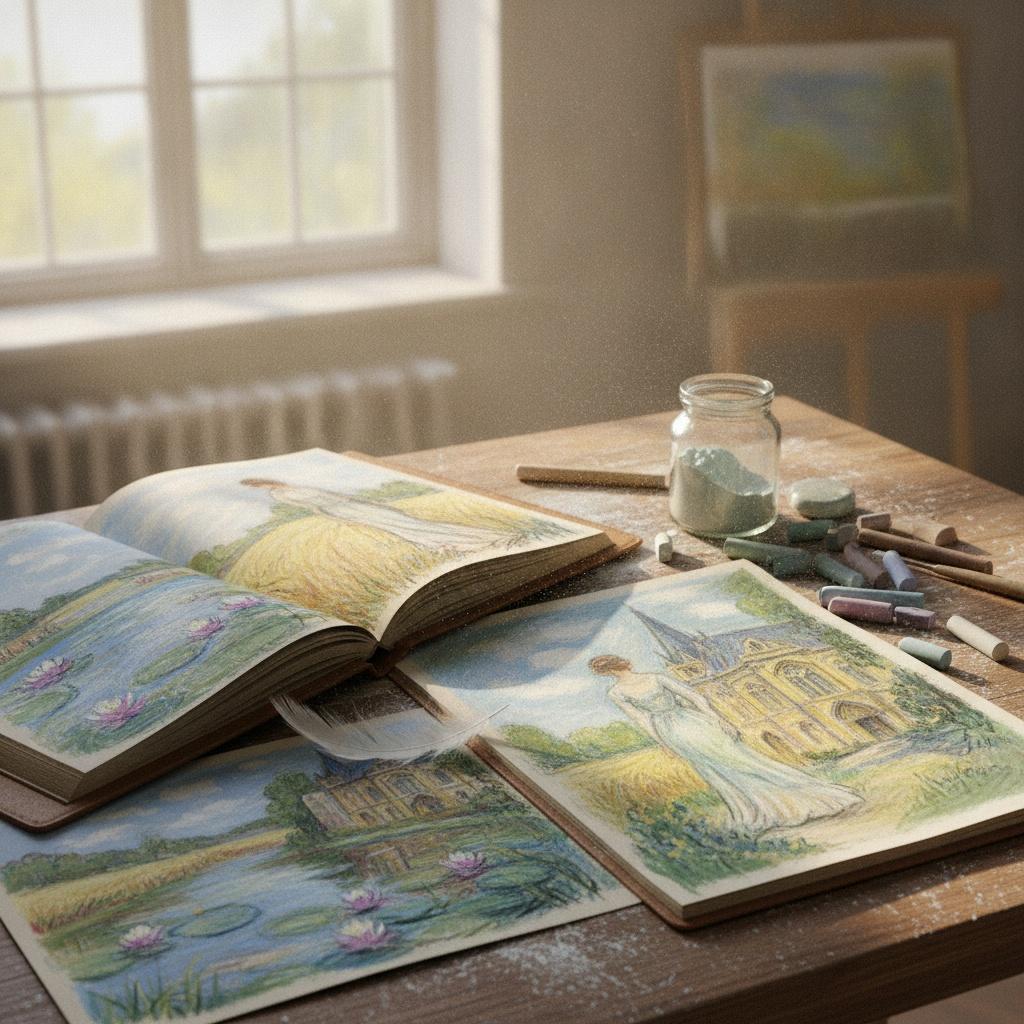
The Soft Magic of Chalk: Capturing Light, Texture, and the Ethereal Soul of Impressionist Masterpieces
Discover the ethereal beauty of pastel and chalk art. Explore how Impressionist masters like Van Gogh and Degas captured light and texture to create timeless, soulful masterpieces for the discerning collector.

Divine Light & Golden Splendor: A Journey Through the Sacred Grandeur of High Medieval Art
Embark on a soulful journey through High Medieval art. Explore the divine light of Gothic cathedrals, Byzantine splendor, and sacred masterpieces that shaped Western history with our expert-led cultural reflections.
Utforska konstverk sorterade efter tema, stil och egenskaper.


