

 Förhandsvisa
 Skicka
 Dela
Dela
 Visa detaljer
 Guide
Guide

 Ladda ner
 Liknande objekt
 Röntgen
 Bildspel
 Statistik
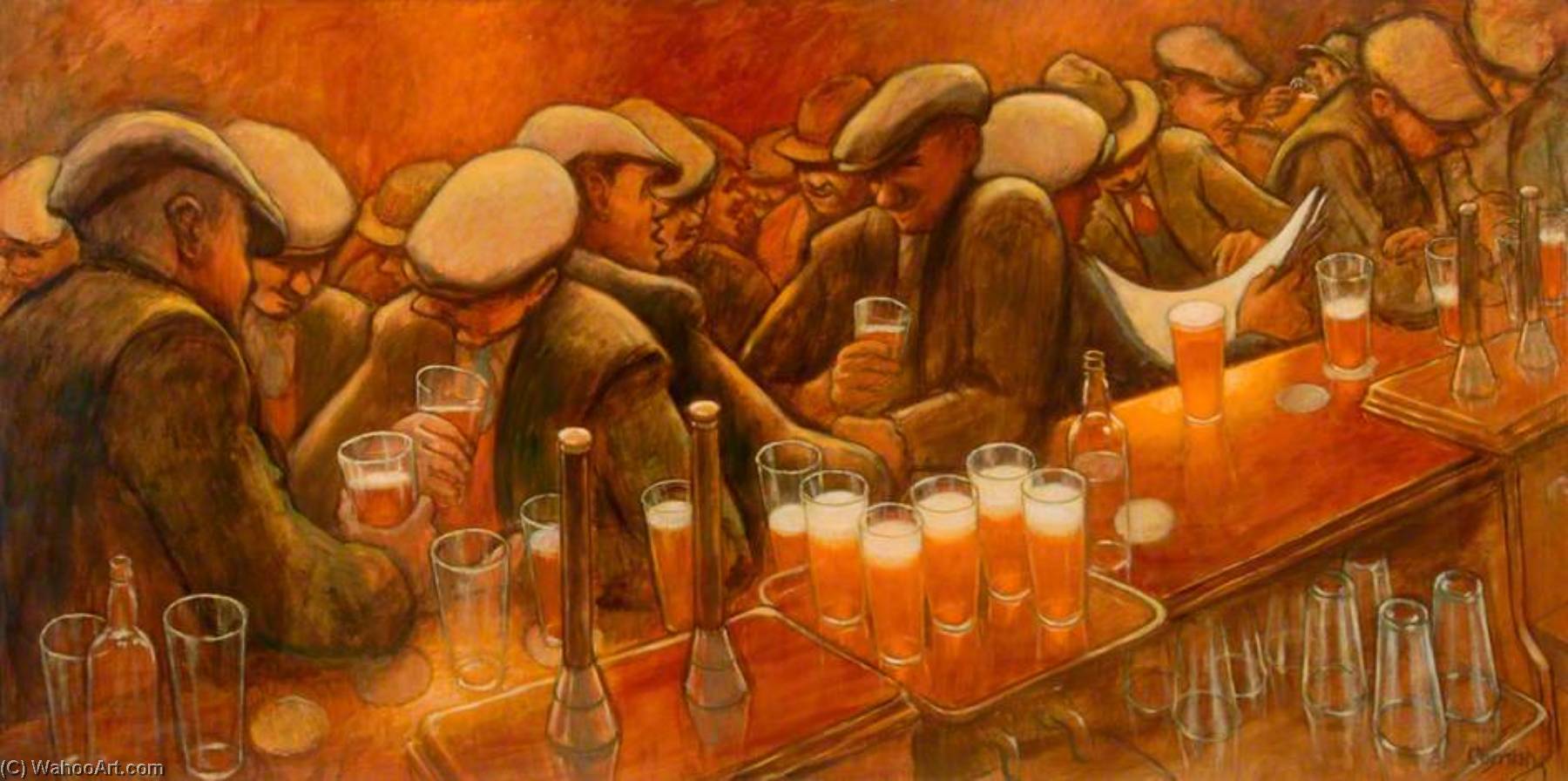
Busy Bar
 104.0 x 208.0 cm
 Northumbria University Gallery
Norman Cornish (1919-2014) was a British artist celebrated for his poignant paintings & drawings of Northern England's mining life and communities. A 'Pitman Painter,' his work captures the everyday realities & spirit of coal miners with warmth & hum
 Visa mer
Konstverket som visas på denna sida skyddas av upphovsrättslagen, vilket innebär att vi inte lagligt kan skapa eller sälja en identisk reproduktion. Detta skydd upprätthålls genom internationella avtal såsom den Bernkonventionen och genom nationella lagar, inklusive de som fastställs av Amerikansk upphovsrättslag – Titel 17. Alla rättigheter förbehållna. Återgivning av konstverk är förbjuden utan skriftligt tillstånd från WahooArt.
Som ett respektfullt och lagligt alternativ erbjuder vi skräddarsydda, handmålade konstverk inspirerade av originalet. Våra skickliga och professionella konstnärer studerar noggrant originalets stil, stämning och konstnärliga essens för att skapa ett nytt, unikt verk som väcker samma känsla – samtidigt som det förblir en originell skapelse i egen rätt.
Denna metod följer fullt ut upphovsrättsliga regler eftersom den inte innebär kopiering eller duplicering av det skyddade konstverket. Istället är det en kreativ nytolkning – en ny målning som är influerad av originalet men inte identisk med det.
Handgjord oljereproduktion
Handmålad olja på duk i din valda storlek och ram, tillverkad efter beställning av våra konstnärer. ( Byt till tryck Byt till digital bild)




































Standardstorlek
skräddarsydd
CM
INCH
Välj bland våra förinställda storlekar som motsvarar konstverkets ursprungliga proportioner.
Loading sizes...

bredd
höjd
Ange den bredd och höjd du behöver för att passa din ram eller din vägg. Eftersom detta är handmålat kan konstnären, vid ett annat format, måla lite mer runt bilden eller beskära den något – det är du som väljer. Vi skickar en digital mockup för godkännande innan målningen påbörjas. Bilden som visas på denna sida representerar inte det slutgiltiga resultatet — det är endast mockuppen som visar det.
Exempel på vad som kan anpassas: Byt ut ansiktet mot ett foto av kunden; Lägg till ett husdjur (t.ex. byt ut en katt mot en hund); Inkludera ett dolt meddelande i bakgrunden; Ändra bakgrundens landskap eller element.
Efter beställning kommer TopImpressionists.com team att mejla kunden för instruktioner och tillhandahålla en skissförhandsvisning
Efter beställning kommer TopImpressionists.com team att mejla kunden för instruktioner och tillhandahålla en skissförhandsvisning
Leverans över hela världen () på 3–4 veckor istället för standard 5 veckor. (26 oktober). Inga kompromisser med kvaliteten.

Fri expressfrakt över hela världen

Högkvalitativ linnecanvas

Fullständig fraktförsäkring

Garantier för återbetalning av tullavgifter

Garantier för exakt färgåtergivning

100 dagars returrätt (endast vid fel)

100% pengarna tillbaka-garanti

Mängdrabatt erbjuds
 Glasalternativet är endast tillgängligt i storlekar under 110 cm.

Busy Bar
Reproduktionsmetod
Storlek på reproduktion
-


Slutgiltigt pris
Skr 2666
Konstnärsbiografi
Norman Cornish: A Chronicle of the Pit and the Palette
Norman Stansfield Cornish (1919-2014) wasn’t merely an artist; he was a living embodiment of Northern England's industrial heartland, meticulously rendered onto canvas and paper. His life story is inextricably linked to the mines that shaped his identity and fueled his artistic vision – a poignant narrative of a miner who traded his pickaxe for brushes, capturing the dignity, hardship, and enduring spirit of his community with an unparalleled sensitivity. Born in Spennymoor, County Durham, a town synonymous with coal mining, Cornish’s early life was defined by the rhythms of the pit, a reality that would profoundly influence every aspect of his work.
Cornish's journey into art began unexpectedly. Initially destined for a career within the mines, he found solace and inspiration in the Spennymoor Settlement, a unique recreational and artistic hub established to provide social and cultural opportunities for the local community. It was here, amidst workshops and gatherings, that Cornish discovered his talent for drawing and painting – a revelation sparked by the encouragement of Bill Farrell, the Settlement’s warden, who recognized the potential within the miner's eye. This formative experience marked a pivotal shift in Cornish’s life, transforming him from a dedicated worker into an artist deeply invested in documenting the lives of his fellow miners.
The ‘Pitman Painter’ and His Subjects
Cornish quickly established himself as the foremost “Pitman Painter,” a title earned through his unwavering dedication to portraying the everyday realities of mining life. Unlike many artists who sought grand, romanticized depictions of industry, Cornish focused on the intimate details – the weary faces of men returning from their shifts, the damp and claustrophobic tunnels, the communal spaces where miners found respite and camaraderie. His paintings aren’t dramatic landscapes; they are studies in human endurance, resilience, and community spirit.
His subjects weren't merely miners; they were families, friends, and neighbors – rendered with a remarkable warmth and empathy. Cornish captured not just the physical labor but also the emotional landscape of these communities, portraying their joys, sorrows, and unwavering bonds. He frequently depicted scenes from Gala Days, village fetes, and moments of shared celebration, offering glimpses into the social fabric of mining towns. His work is deeply rooted in realism, yet infused with an expressive quality that transcends mere representation. Thick impasto, dramatic lighting, and a muted color palette contribute to a sense of isolation and beauty, reflecting both the harshness and the inherent dignity of the pit.
Technique and Influences
Cornish’s artistic style evolved over time, influenced by a diverse range of sources. Initially, his work bore a strong resemblance to L.S. Lowry, with whom he maintained a close friendship and mutual admiration. However, Cornish quickly developed his own distinctive voice, characterized by bold brushstrokes, expressive use of color, and an intimate understanding of human psychology. He employed a technique known as “expressionism,” prioritizing emotional impact over strict realism. His paintings are not photographic representations but rather subjective interpretations of the world around him.
The influence of his mining background is undeniable. Cornish’s meticulous observation of detail, combined with his deep understanding of light and shadow, created a powerful sense of atmosphere. He skillfully used texture to convey the roughness of the coal dust, the dampness of the tunnels, and the weight of the men's burdens. His use of color – predominantly browns, grays, and blues – evoked the somber mood of the mines while also capturing the warmth and resilience of the human spirit.
Legacy and Recognition
Norman Cornish’s work gained increasing recognition throughout his career, culminating in numerous exhibitions across Britain. He was celebrated for his ability to capture the essence of Northern England's mining communities with honesty, compassion, and artistic skill. His paintings are now held in major collections, including the National Museum of Wales and the Laing Art Gallery in Newcastle upon Tyne. Cornish’s legacy extends beyond his artistic achievements; he remains a symbol of resilience, community spirit, and the enduring power of art to document and celebrate the lives of ordinary people.
In 2019, a ‘Norman Cornish Trail’ was created in Spennymoor, allowing visitors to trace the locations depicted in his paintings – a testament to his profound connection with his hometown. His life story serves as an inspiration, demonstrating how personal experience can be transformed into powerful and enduring art.

Norman Stansfield Cornish
1919 - 2014
Kortfakta
- Artistic Movement Or Style: Pitman Painter
- Artists Or Movements Influenced By This Artist: ['Social Realism']
- Artists Who Influenced This Artist: ['L.S. Lowry']
- Date Of Birth: 1919
- Date Of Death: 2014
- Full Name: Norman Stansfield Cornish
- Nationality: British
- Notable Artworks:
- Pit Road at Night
- The Crowd at Gala Day
- Place Of Birth: Spennymoor, UK