


 Förhandsvisa
 Skicka
 Dela
Dela
 Visa detaljer
 Guide
Guide

 Ladda ner
 Liknande objekt
 Röntgen
 Bildspel
 Statistik
Bather from the Back
 Olja på duk
- Väggkonst
- Post-Impressionism
 1878
1878- talet
 24.0 x 19.0 cm
Cézanne's 'Bather from the Back' (1878) is a captivating post-impressionist oil painting showcasing his unique style & exploration of form, color, and human figure.
 Visa mer
Upptäck Paul Cézanne (1839-1906)! Pionjär inom postimpressionismen som brobyggare mellan impressionism och kubism. Geometriska former, stilleben & modern konst.
Handgjord oljereproduktion
Handmålad olja på duk i din valda storlek och ram, tillverkad efter beställning av våra konstnärer. ( Byt till tryck Byt till digital bild)




P118B Skr10

P118H Skr10

P118W Skr10

P438Z Skr10

P508JH Skr12

P508YH Skr12

P805H Skr10

P805Z Skr10

P919BZ Skr10

P919G Skr10

P919XJ Skr10

P959ZH Skr10

P968JZ Skr12

W106C Skr8

W218G Skr10

W218JH Skr8

W218Y Skr10

W307PJ Skr10

W316G Skr10

W316PJ Skr8

W316Y Skr10

W398PJ Skr8

W4111J Skr10

W500HY Skr15

W500JH Skr15

W692G Skr12

W849H Skr8

W940BG Skr15

W953PJ Skr8




Standardstorlek
skräddarsydd
CM
INCH
Välj bland våra förinställda storlekar som motsvarar konstverkets ursprungliga proportioner.
Loading sizes...

bredd
höjd
Ange den bredd och höjd du behöver för att passa din ram eller din vägg. Eftersom detta är handmålat kan konstnären, vid ett annat format, måla lite mer runt bilden eller beskära den något – det är du som väljer. Vi skickar en digital mockup för godkännande innan målningen påbörjas. Bilden som visas på denna sida representerar inte det slutgiltiga resultatet — det är endast mockuppen som visar det.
Exempel på vad som kan anpassas: Byt ut ansiktet mot ett foto av kunden; Lägg till ett husdjur (t.ex. byt ut en katt mot en hund); Inkludera ett dolt meddelande i bakgrunden; Ändra bakgrundens landskap eller element.
Efter beställning kommer TopImpressionists.com team att mejla kunden för instruktioner och tillhandahålla en skissförhandsvisning
Efter beställning kommer TopImpressionists.com team att mejla kunden för instruktioner och tillhandahålla en skissförhandsvisning
Leverans över hela världen () på 3–4 veckor istället för standard 5 veckor. (27 oktober). Inga kompromisser med kvaliteten.

Fri expressfrakt över hela världen

Högkvalitativ linnecanvas

Fullständig fraktförsäkring

Garantier för återbetalning av tullavgifter

Garantier för exakt färgåtergivning

100 dagars returrätt (endast vid fel)

100% pengarna tillbaka-garanti

Mängdrabatt erbjuds
 Glasalternativet är endast tillgängligt i storlekar under 110 cm.

Bather from the Back
Reproduktionsmetod
Storlek på reproduktion
-


Slutgiltigt pris
Skr 2679
Bather from the Back: A Study in Form and Perspective
Paul Cézanne's "Bather from the Back," painted in 1878, is more than just a depiction of a nude figure; it’s a pivotal work demonstrating Cézanne's burgeoning exploration of form, perspective, and the underlying structure of objects. This oil on canvas exemplifies his transition away from Impressionism towards a style that would profoundly influence Cubism and modern art. The painting portrays a woman standing with her back to the viewer, immersed in a natural setting—a scene both intimate and contemplative.
Style and Technique: Bridging Impressionism and Modernity
"Bather from the Back" showcases Cézanne's unique approach to rendering reality. While retaining some elements of Impressionism – particularly the use of color to capture light and atmosphere – he moves beyond simply recording visual impressions. Cézanne’s brushstrokes are visible, yet they build up a solid form rather than dissolving into fleeting effects. He uses planes of color and subtle tonal variations to define the contours of the figure and integrate her with the landscape. The composition is deliberately structured; Cézanne isn't striving for photographic realism but instead seeks to represent his perception of the scene—a subjective interpretation built on careful observation and geometric analysis. The deliberate flattening of perspective, a hallmark of his later work, is already subtly present here, foreshadowing his revolutionary approach to spatial representation.
Historical Context: A Turning Point in Art History
Created during a period of artistic experimentation, "Bather from the Back" reflects Cézanne's desire to move beyond the fleeting moments captured by Impressionists. He was actively questioning traditional academic conventions and seeking new ways to represent three-dimensional space on a two-dimensional surface. This painting emerged as part of a series exploring bathers—a recurring motif in Cézanne’s oeuvre—which served as a vehicle for his investigations into form, composition, and the relationship between figure and landscape. The late 19th century was a time of significant change in art; artists were beginning to challenge established norms and explore new avenues of expression, paving the way for the radical innovations of the 20th century.
Symbolism and Emotional Impact: Contemplation and Connection
While seemingly straightforward, "Bather from the Back" carries a subtle emotional weight. The figure's posture—turned away from the viewer—evokes a sense of introspection and solitude. She is absorbed in her own thoughts, disconnected from the external world. This creates an atmosphere of quiet contemplation, inviting viewers to project their own interpretations onto the scene. The integration of the figure with the natural landscape suggests a deeper connection between humanity and nature, hinting at themes of harmony and belonging. The painting’s enduring appeal lies in its ability to evoke a sense of peacefulness and introspection—a timeless exploration of human presence within the vastness of the natural world.
Frågor och svar
Var kan jag köpa ett tryck av "Bather from the Back" av Paul Cézanne?
"Bather from the Back" finns tillgänglig som ett konsttryck på bomullscanvas eller arkivbeständigt canvaspapper. Beställningar görs via dess Konsttryck i hög kvalitet-sida, i den storlek du själv väljer.
Vilken storlek rekommenderas för tryck av "Bather from the Back"?
Rekommenderad tryckstorlek för "Bather from the Back" av Paul Cézanne är Mellanformat.
Vid vilket tillfälle rekommenderas "Bather from the Back" av Paul Cézanne som present?
"Bather from the Back" föreslås som en gåva till Årsdag.
Liknande konstverk


Konstnärsbiografi
Paul Cézannes revolutionerande vision
Paul Cézanne, född 1839 i Aix-en-Provence, är en av de mest betydelsefulla konstnärerna inom europeisk målerihistoria. Han utgör en avgörande brygga mellan impressionismens flyktiga intryck och kubismens fragmenterade former. Cézannes väg mot erkännandet var inte omedelbar; den präglades av perioder av tvekan och kritik, men kulminerade i ett arv som för alltid förändrade modern konst. Född i en välbärgad familj – hans far var till en början hattmakare men blev senare bankman – åtnjöt Cézanne en ekonomisk trygghet som var ovanlig för aspirerande konstnärer, vilket gav honom friheten att ägna sig åt sin passion utan omedelbara kommersiella krav. Även om han inledningsvis styrdes mot en juridisk karriär av faderns ambitioner, visade sig den konstnärliga uttryckslustan vara för stark och han övergav slutligen juriststudierna till förmån för måleriet, ett beslut som skulle definiera hans liv. Tidiga influenser inkluderade romantiken som var populär under hans ungdom och barbizonskolans hängivenhet åt landskapet, men det var genom möten med konstnärer som Paul Gauguin och Georges Seurat, och deras innovativa syn på färg och form, som Cézanne började forma sin egen särpräglade stil.Från mörker till struktur: En stils utveckling
Cézannes tidiga verk speglade ofta de dramatiska, känsloladdade teman som är karakteristiska för romantisk målning – mörka färgpaletter och uttrycksfull penseldräkt dominerade hans dukar. Denna inledande fas var dock bara ett steg på vägen mot en mycket mer analytisk och banbrytande approach. Missnöjd med att enbart fånga flyktiga ljusintryck, som impressionisterna föredrog, gav sig Cézanne ut i en strävan efter att förstå och representera objekts underliggande struktur. Han sökte inte bara *vad* han såg, utan *hur* han uppfattade de grundläggande formerna som utgjorde verkligheten. Detta ledde honom till att bryta ner naturliga former i deras geometriska motsvarigheter – koner, cylindrar, sfärer – och förutse kubistrevolutionen årtionden innan den materialiserades. Hans teknik kännetecknades av små, repetitiva penseldrag, noggrant lager på lager för att bygga upp komplexa färgfält och texturer, vilket skapade en känsla av soliditet och djup som tidigare var osedd i måleriet. Han var inte intresserad av illusionistiskt rum; istället presenterade han ofta objekt från flera synvinklar samtidigt, utmanade traditionella perspektivbegrepp och tvingade betraktaren att aktivt engagera sig i hans kompositioners konstruerade natur. Denna medvetna förvrängning var inte godtycklig utan snarare ett försök att förmedla en mer fullständig förståelse av formen, representera inte bara ett ögonblick i tiden utan en syntes av perception.Landskap, stilleben och den mänskliga formen: Viktiga verk och återkommande motiv
Cézannes oeuvre är anmärkningsvärt mångsidig och omfattar landskap, stilleben, porträtt och skildringar av badare, men alla förenas av hans unika syn på form och färg. Dammen vid Jas de Bouffan, målad 1880, exemplifierar hans landskapsarbete och visar hans förmåga att fånga naturens essens genom en noggrann arrangering av former och toner. Porträtt av Émile Zola, skapat 1866, avslöjar hans utvecklande stil och ger ett övertygande inblick i den intellektuella intensiteten hos sin nära vän och medförfattare. Hans stilleben, som de med äpplen och annan frukt, är inte bara representationer av objekt utan snarare utforskningar av volym, ljus och rumsliga relationer. Mont Sainte-Victoire-serien blev en besatthet för Cézanne, ett återkommande motiv som gav honom möjlighet att obevekligt undersöka form och perspektiv under årtionden. Dessa målningar är inte bara skildringar av ett berg; de är studier i hur vi uppfattar djup, volym och samspelet mellan ljus och skugga. Slutligen representerar hans serie Badare, som visar nakna figurer i idylliska landskap, en djupgående utforskning av den mänskliga formen och dess koppling till naturen, ofta genomsyrad av en känsla av tidlöshet och stilla kontemplation.Ett arv smitt av innovation: Cézannes inflytande på modern konst
Paul Cézannes inverkan på efterföljande generationer av konstnärer är omätbar. Han betraktas allmänt som ”modern konsts fader” för sina banbrytande bidrag till bildspråket och banade väg för många av de stora konstnärliga rörelserna under 1900-talet. Pablo Picasso och Georges Braque var djupt skuldsatta till Cézannes betoning på geometriska former och multipla perspektiv, vilket blev centrala principer inom kubismen. Hans djärva användning av färg inspirerade också fauviströrelsen, ledd av konstnärer som Henri Matisse, som omfamnade livfulla, icke-naturalistiska nyanser. Även surrealistiska konstnärer fann resonans i Cézannes utforskning av subjektiv perception och psykologiskt djup. Bortom specifika rörelser befriade Cézannes insisterande på konstnärens personliga vision och hans förkastande av traditionella akademiska begränsningar generationer av målare att utforska nya uttrycksformer. Han utmanade själva definitionen av representation, skiftade fokus från att imitera verkligheten till att konstruera en visuell upplevelse baserad på underliggande struktur och subjektiv perception. Hans död 1906 markerade inte ett slut utan en början – gryningen av en ny era inom konsthistorien, en som präglades djupt av hans revolutionerande vision.
Paul Cézanne
1839 - 1906 , Frankrike
Kortfakta
- Artistic Movement Or Style: Postimpressionism
- Artists Or Movements Influenced By This Artist:
- Kubismen
- Fauvismen
- Artists Who Influenced This Artist:
- Romantiken
- Barbizonskolan
- Date Of Birth: 1839-01-19
- Date Of Death: 1906-10-22
- Full Name: Paul Cézanne
- Nationality: Fransk
- Notable Artworks:
- The Pond at Jas de Bouffan
- Portrait of Émile Zola
- Mont Sainte-Victoire
- Place Of Birth (City And Country): Aix-en-Provence, Frankrike
Relaterade artiklar
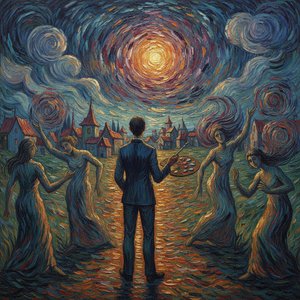
Beyond the Light: Capturing Emotion Through the Expressive Soul of Post-Impressionism
Explore the profound emotional depth of Post-Impressionism. Discover how masters like Van Gogh and Cézanne moved beyond light to capture raw feeling through color and texture. A journey into art history for the true connoisseur.
Utforska konstverk sorterade efter tema, stil och egenskaper.


