


 Visa i rummet
 Skicka
 Dela
Dela
 Detaljer
 Studentguide för konstverk

 Ladda ner
 Liknande objekt
 Röntgen
 Bildspel
 Besökstatistik
Celtic Tale
 Oil On Canvas
- WallArt
- Synthetist Painting
 1894
1894- 19th Century
 110.0 x 101.0 cm
 Dallas Museum of Art
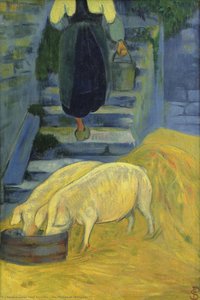
Paul Sérusier's 'Celtic Tale' (1894) is a vibrant Synthetist masterpiece, showcasing bold forms and nature’s harmony within a lush forest setting. Explore this Cloisonnism-inspired artwork.
 Läs mer
Paul Sérusier (1864-1927) var en fransk konstnär pionjär inom abstrakt konst och inspiration till Nabis-rörelsen. Känd för sin cloisonnism-stil, influerades han av Gauguin och skapade verk som "The Talisman" – en tidig modernism.
Handgjord oljereproduktion
Handmålad olja på duk i din valda storlek och ram, tillverkad efter beställning av våra konstnärer. ( Byt till tryckta exemplar Byt till digital bildförsäljning)




P118B Skr10

P118H Skr10

P118W Skr10

P438Z Skr10

P508JH Skr12

P508YH Skr12

P805H Skr10

P805Z Skr10

P919BZ Skr10

P919G Skr10

P919XJ Skr10

P959ZH Skr10

P968JZ Skr12

W106C Skr8

W218G Skr10

W218JH Skr8

W218Y Skr10

W307PJ Skr10

W316G Skr10

W316PJ Skr8

W316Y Skr10

W398PJ Skr8

W4111J Skr10

W500HY Skr15

W500JH Skr15

W692G Skr12

W849H Skr8

W940BG Skr15

W953PJ Skr8




Standardstorlek
anpassad
CM
INCH
Välj bland våra förinställda storlekar som motsvarar konstverkets ursprungliga proportioner.
Loading sizes...

bredd
höjd
Du kan ange egna mått för att passa en specifik ram eller yta. Om den valda storleken inte matchar originalbildens proportioner kommer vi antingen att beskära konstverket eller utöka målningen med ytterligare handmålade element. En digital skiss skickas till dig för godkännande innan produktionen påbörjas.
Observera att förhandsvisningen på skärmen inte återspeglar den faktiska beskärningen eller utökningen. Endast skissen visar den slutgiltiga kompositionen korrekt.
Även om anpassade storlekar är möjliga, rekommenderar vi att du väljer en dimension från den fördefinierade listan för att bevara originalproportionerna.
Exempel på vad som kan anpassas: Byt ut ansiktet mot ett foto av kunden; Lägg till ett husdjur (t.ex. byt ut en katt mot en hund); Inkludera ett dolt meddelande i bakgrunden; Ändra bakgrundens landskap eller element.
Efter beställning kommer TopImpressionists.com team att mejla kunden för instruktioner och tillhandahålla en skissförhandsvisning
Efter beställning kommer TopImpressionists.com team att mejla kunden för instruktioner och tillhandahålla en skissförhandsvisning
Leverans över hela världen () på 3–4 veckor istället för standard 5 veckor. (11 oktober). Inga kompromisser med kvaliteten.

Fri expressfrakt över hela världen

Högkvalitativ linnecanvas

Fullständig fraktförsäkring

Garantier för återbetalning av tullavgifter

Garantier för exakt färgåtergivning

100 dagars returrätt vid fabrikationsfel

100% pengarna tillbaka-garanti

Mängdrabatt erbjuds
 Glasalternativet är endast tillgängligt i storlekar under 110 cm.

Celtic Tale
Tryckteknik
Reproduktionsstorlek
-


Totalpris
Skr 2609
Paul Sérusier’s “Celtic Tale”: A Window into Synthetist Vision
Paul Sérusier's "Celtic Tale," painted in 1894, isn’t merely a depiction of a forest scene; it’s a profound exploration of light, color, and the nascent principles of abstract art. This oil on canvas, now residing within the Dallas Museum of Art, offers a captivating glimpse into the artist's innovative approach to capturing the essence of nature – a style he would later define as Synthetism. Born in Paris in 1864, Sérusier’s artistic journey was marked by a restless pursuit of new forms of expression, culminating in his groundbreaking work with the Nabis movement and his pioneering experiments with Cloisonnism.
The painting immediately draws the eye with its vibrant palette. Bold swathes of emerald green, sapphire blue, and ochre yellow dominate the composition, creating a sense of luminous intensity. These colors aren’t applied realistically; instead, Sérusier employs them in a flattened, almost geometric manner – a hallmark of Synthetism. He deliberately rejects traditional perspective, opting for simplified forms and strong contours that delineate shapes rather than mimicking their three-dimensional appearance. This technique, reminiscent of the decorative art of cloisonné enamelwork (hence “Cloisonnism”), creates an arresting visual effect, pulling the viewer into the heart of the scene.
The Spirit of Pont-Aven: Synthetism and its Roots
Sérusier’s artistic evolution was profoundly shaped by his summer sojourn in 1888 to Pont-Aven, a small village in Brittany. There, he encountered Paul Gauguin, who became a mentor and introduced him to the principles of Synthetism. Gauguin encouraged Sérusier to abandon academic realism and instead focus on capturing the *feeling* of a subject – its essence rather than its literal representation. This shift is powerfully evident in "Celtic Tale," where the forest itself becomes a symbolic entity, imbued with an almost mystical quality.
The painting’s composition echoes the work of Seurat and Signac, key figures in Pointillism and Neo-Impressionism, both movements that influenced Sérusier's development. However, unlike their meticulous application of tiny dots of color, Sérusier utilizes broader brushstrokes and bolder blocks of pigment to achieve a similar effect – creating an impression of light and atmosphere through the manipulation of color itself. The figures within the scene are deliberately simplified, almost dissolving into the surrounding landscape, further emphasizing the painting’s abstract qualities.
Symbolism Within the Scene: Nature, Community, and Mystery
Beyond its formal innovations, “Celtic Tale” is rich in symbolic meaning. The gathering of individuals amidst the forest evokes a sense of community and shared experience – a celebration of life and connection with nature. The two dogs present add to this feeling of warmth and conviviality. However, there’s also an underlying current of mystery and perhaps even melancholy. The cloaked figures, their faces obscured, suggest a ritualistic gathering, hinting at ancient Celtic traditions and the enduring power of myth.
The dappled sunlight filtering through the trees creates a sense of ethereal beauty, while the dark, rocky outcrop in the background provides a stark contrast, representing both obstacles and hidden depths. The painting’s overall mood is one of serene contemplation – an invitation to lose oneself in the beauty of the natural world and reflect on its timeless mysteries. It's a testament to Sérusier's ability to translate complex emotions and ideas into a visually arresting and deeply resonant work of art.
A Legacy of Innovation: Paul Sérusier’s Enduring Influence
Paul Sérusier’s “Celtic Tale” stands as a pivotal work in the history of modern art. It represents a crucial step towards abstraction, demonstrating the power of color and form to convey emotion and meaning independently of representational accuracy. His pioneering use of Synthetism paved the way for subsequent movements such as Fauvism and Cubism, solidifying his place as one of the most important figures in the development of 20th-century art. Reproductions of this captivating painting continue to inspire artists and collectors alike, offering a window into the visionary world of Paul Sérusier.
Frågor och svar
När skapades "Celtic Tale"?
"Celtic Tale" av Paul Sérusier skapades år 1894.
Vem har skapat "Celtic Tale"?
Konstnären bakom "Celtic Tale" är Paul Sérusier. Verket är katalogiserat under Paul Sérusiers namn.
Hur gammal var Paul Sérusier när "Celtic Tale" skapades år 1894?
När "Celtic Tale" skapades år 1894, var Paul Sérusier – född 1864 – 30 år gammal.
Var placerar sig "Celtic Tale" bland Paul Sérusiers återkommande motiv?
"Celtic Tale" skildrar forest, figures, sunlight, community, breton, landscape, synthetism, medan Paul Sérusiers dokumenterade teman är nabis, gauguin, synthetism, brittany, celtic folklore, symbolic landscape, ritual, early 20th-century france. En jämförelse mellan dessa visar hur verket förhåller sig till konstnärens vanliga motiv.
Vad förklarar upphovsrättssituationen för "Celtic Tale" av Paul Sérusier?
"Celtic Tale" av Paul Sérusier är allmän egendom – upphovsrätten har löpt ut. Upphovsrätten beräknas från konstnärens dödsår, och Paul Sérusier avled 1927.
Kan jag se "Celtic Tale" som ett bildspel i helskärm?
Ett bildspel finns tillgängligt på sidan Bildspel för "Celtic Tale" av Paul Sérusier.
Hur kan "Celtic Tale" av Paul Sérusier användas i heminredningen?
"Celtic Tale" rekommenderas för Reflective, och det föreslagna utrymmet är ett Living Room.
Liknande konstverk




Om konstnären
Paul Sérusier: Pioneer of Abstraction and the Nabis
Paul Sérusier, född i Paris 1864 och död i Morlaix 1927, var en fransk konstnär vars verk markerade ett avgörande ögonblick i utvecklingen av modern konst. Han är främst känd som en pionjär inom abstrakt konst och en nyckelperson i den inflytelserika konströrelsen Nabis. Sérusiers konstnärliga resa präglades av en djupgående strävan efter att uttrycka känslor och perceptioner genom färg och form, vilket ledde till banbrytande experiment som inspirerade framtida generationer av konstnärer. Sérusier fick sin utbildning vid den prestigefyllda Académie Julian i Paris, där han studerade klassisk konst och utvecklade sina färdigheter. Det var under hans tid på akademien som han kom i kontakt med andra framstående konstnärer, inklusive Maurice Denis och Édouard Vuillard, vilka skulle bli viktiga samarbetspartners och inflytelserika figurer i den franska konströrelsen. En avgörande händelse i Sérusiers konstnärliga utveckling var hans vistelse vid Pont-Aven under sommaren 1888. Här deltog han i en grupp av konstnärer som leddes av Paul Gauguin, och det var under Gauguins inflytande som Sérusier började utforska nya sätt att uttrycka sig visuellt. Gauguin uppmuntrade Sérusier att frigöra sig från traditionella målningsmetoder och istället fokusera på att förmedla sina egna intryck och känslor genom rena färger och enkla former. Denna inspiration ledde till Sérusiers mest kända verk, *Bois d’Amour* (1888), som är ett exempel på cloisonnism – en teknik där formerna avbildas genom distinkta konturer och färgblock. Detta verk markerade ett viktigt steg mot abstraktion och visade Sérusiers förmåga att bryta sig loss från traditionella konstkonventioner.The Nabis and the Pursuit of Synthesis
Sérusier spelade en central roll i bildandet av den kortlivade men inflytelserika konströrelsen Nabis, som uppstod 1889. Namnet "Nabis" kommer från det hebreiska ordet för "profet", och rörelsen syftade till att skapa en ny form av konst som skulle vara både dekorativ och fin – en syntes mellan konst och hantverk. Sérusier, tillsammans med Paul Gauguin, Maurice Denis, Pierre Bonnard och Édouard Vuillard, bildade kärnan i Nabis-gruppen och utforskade gemensamt nya sätt att uttrycka sig visuellt. Nabis-konstnärerna var intresserade av att skapa konst som inte bara representerade den yttre världen utan också förmedlade inre känslor och idéer. De använde ofta dämpade färger, enkla former och dekorativa mönster för att skapa en atmosfär av mystik och andlighet. Sérusiers bidrag till Nabis-rörelsen var särskilt viktiga, eftersom han var en av de första konstnärerna som experimenterade med abstraktion och utforskade möjligheterna att uttrycka sig genom färg och form utan att nödvändigtvis försöka återskapa den yttre verkligheten.Key Works and Artistic Innovations
Sérusiers konstverk kännetecknas av en djupgående känsla för färg, form och ljus. Han var en mästare på att förmedla atmosfär och stämning genom sina målningar, och hans verk är ofta fyllda med en subtil melankoli och längtan efter något bortom den yttre världen. Några av Sérusiers mest kända verk inkluderar: * **Bois d’Amour (1888):** Ett banbrytande verk som visar Sérusiers experimenterande med cloisonnism och abstraktion. * **L'Averse (1893):** En målning som fångar en regnig dag i Pont-Aven, och där Sérusier använder dämpade färger och enkla former för att skapa en atmosfär av melankoli och stillhet. * **Portrait of Paul Ranson (1890):** Ett porträtt av konstnären Paul Ranson som visar Sérusiers förmåga att fånga essensen av ett mänskligt ansikte genom färg och form. * **The Snake Eaters (1894):** En surrealistisk målning som utforskar teman kring död, förgänglighet och det okända. Sérusier var också en framstående teoretiker inom konsten, och han skrev boken "ABC de la peinture" (1921), i vilken han beskriver sina idéer om konstens natur och hur den bör skapas.Legacy and Influence
Paul Sérusiers verk har haft ett betydande inflytande på utvecklingen av modern konst. Hans experimenterande med abstraktion, färg och form inspirerade en hel generation av konstnärer, inklusive Henri Matisse och Wassily Kandinsky. Han är ofta betraktad som en pionjär inom abstrakt konst och en nyckelperson i den franska avant-gardets historia. Sérusiers konst fortsätter att fascinera och inspirera konstintresserade världen över, och hans verk representerar ett viktigt steg mot en mer subjektiv och känslomässig form av konst. Han lämnade ett arv av innovation och kreativitet som fortsätter att forma konsten än idag.
Paul Sérusier
1864 - 1927 , Frankrike
Snabbfakta
- Artistic Movement Or Style: Post-Impressionism
- Artists Or Movements Influenced By This Artist:
- Nabis
- Synthetism
- Artists Who Influenced This Artist:
- Paul Gauguin
- Maurice Denis
- Date Of Birth: 9 nov 1864
- Date Of Death: 7 okt 1927
- Full Name: Louis-Paul-Henri Sérusier
- Nationality: Fransk
- Notable Artworks:
- L'averse
- Porträtt Paul Ranson
- Melancholy
- Snakesätare
- Place Of Birth: Paris, Frankrike
Relaterade artiklar

Beyond Impressionism: Exploring the Emotional Depth of Post-Impressionist Painting
Explore the profound emotional depth & innovative techniques of Post-Impressionism with TopImpressionists. Discover Cézanne, Van Gogh, Gauguin & more – and their lasting impact on modern art.

Paul Klees 25 Mästerverk: En Konstnärlig Resa för Hemmet och Själens Fröjd
Utforska Paul Klees 25 mest ikoniska målningar! Fördjupa dig i hans abstrakta värld av färg, expressionism och unik konstnärlig stil. Hitta inspiration till ditt hem med reproduktioner av högsta kvalitet på TopImpressionists.com – din källa för tidlös konst.

Paul Sérusier: Pioneering Synthetism & The Nabis’ Symbolic Revolution
Discover Paul Sérusier's pivotal role in the Nabis movement & the birth of Synthetism. Explore 'The Talisman,' his influence on modern art, and a deeper understanding of this symbolic revolution. Expert analysis & insights.

Paul Cézannes 25 Mästerverk: En Konsthistorisk Resa för Hemmet
Utforska Paul Cézannes 25 mest ikoniska målningar! Fördjupa dig i impressionismens värld, från Mont Sainte-Victoire till stillsben. Hitta inspiration & museumkvalitativa konsttryck på TopImpressionists.com.

Impressionismens Mästverk: Topp 10 Verk som Fångar Ögonblicket | TopImpressionists
Upptäck impressionismens magi! Utforska 10 ikoniska verk av Monet, Renoir & Degas. Lär känna historien bakom mästerverken och hitta inspiration till din inredning med konsttryck från TopImpressionists.com.
Utforska konstverk sorterade efter tema, stil och egenskaper.


