


 Visa i rummet
 Skicka
 Dela
Dela
 Detaljer
 Studentguide för konstverk

 Ladda ner
 Liknande objekt
 Röntgen
 Bildspel
 Besökstatistik
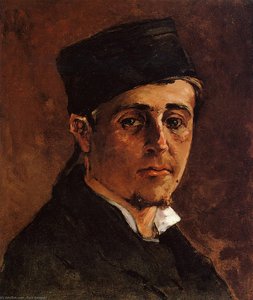
Self Portrait
 Acrylic On Canvas
- WallArt
- British Impressionism
 1920
1920 74.0 x 59.0 cm
 Fitzwilliam College
Philip Wilson Steer's "The President Woodrow Wilson House" captures a contemplative man in a suit, showcasing his signature Impressionistic style and masterful use of light & shadow. Explore this evocative portrait.
 Läs mer
Philip Wilson Steer (1860-1942) var en framstående brittisk impressionist känd för sina ljusa landskap och havslandskap. Inspirerad av Manet & Whistler, hans verk finns på Tate & Uffizi – en pionjär inom modern konst.
Giclée / Konsttryck
Giclée- eller canvasprint av museumskvalitet med snabb produktion och flexibla ytbehandlingsalternativ. ( Köp handmålat konstverk Byt till digital bildförsäljning)




P118B Skr10

P118H Skr10

P118W Skr10

P438Z Skr10

P508JH Skr12

P508YH Skr12

P805H Skr10

P805Z Skr10

P919BZ Skr10

P919G Skr10

P919XJ Skr10

P959ZH Skr10

P968JZ Skr12

W106C Skr8

W218G Skr10

W218JH Skr8

W218Y Skr10

W307PJ Skr10

W316G Skr10

W316PJ Skr8

W316Y Skr10

W398PJ Skr8

W4111J Skr10

W500HY Skr15

W500JH Skr15

W692G Skr12

W849H Skr8

W940BG Skr15

W953PJ Skr8




Standardstorlek
anpassad
CM
INCH
Välj bland våra förinställda storlekar som motsvarar konstverkets ursprungliga proportioner.
Loading sizes...

bredd
höjd
Du kan ange egna mått för att passa en specifik ram eller yta. Om det valda måttet inte överensstämmer med originalbildens proportioner kommer vi antingen att beskära konstverket eller utöka bilden med en speglad eller enfärgad kant. En digital mockup skickas för ditt godkännande innan produktionen påbörjas.
Vänligen notera att förhandsvisningen på skärmen inte återspeglar den faktiska beskärningen eller utökningen. Endast mockuppen visar den slutgiltiga kompositionen korrekt.
Även om anpassade storlekar är möjliga, rekommenderar vi att du väljer ett mått från den fördefinierade listan för att bevara de ursprungliga proportionerna.
Leverans över hela världen () på 2 veckor istället för standard 4/5 veckor. (7 oktober)

Fri expressfrakt över hela världen

Högkvalitativ linnecanvas

Fullständig fraktförsäkring

Garantier för återbetalning av tullavgifter

Garantier för exakt färgåtergivning

100 dagars returrätt vid fabrikationsfel

100% pengarna tillbaka-garanti

Mängdrabatt erbjuds
 Glasalternativet är endast tillgängligt i storlekar under 110 cm.

Self Portrait
Giclée / Konsttryck
Reproduktionsstorlek
-


Totalpris
Skr 662
A Portrait of Quiet Intensity: Philip Wilson Steer’s “The President Woodrow Wilson House”
Philip Wilson Steer's "The President Woodrow Wilson House," painted in 1920, isn’t merely a depiction of a building; it’s a carefully constructed tableau brimming with subtle symbolism and imbued with the melancholic beauty characteristic of the artist. This oil-on-canvas work, measuring 74 x 59 cm, transports us to a moment suspended between formality and introspection – a visual poem reflecting on leadership, memory, and the quiet dignity of American history. Steer, a pivotal figure in British Impressionism, masterfully employs a muted palette dominated by greys, blues, and browns, creating an atmosphere of subdued light and contemplative stillness. The composition itself is deliberately restrained, focusing intently on the imposing façade of the Wilson House in Washington D.C., rendered with a remarkable sensitivity to texture and light.
The Impressionist’s Lens: Technique and Style
Steer's approach aligns closely with the tenets of Impressionism, yet he transcends simple replication. He doesn’t strive for photographic accuracy but rather captures an *impression* – a fleeting moment imbued with feeling. Notice how he utilizes broken brushstrokes to suggest the play of light on the stone walls and the subtle shifts in shadow. The artist's layering technique is particularly evident in the rendering of the building’s surface, where individual strokes coalesce to create a sense of depth and volume. Steer was deeply influenced by John Constable and J.M.W. Turner, artists known for their atmospheric landscapes and masterful use of light and color. This influence is palpable in Steer's ability to evoke a specific mood through his manipulation of tone and texture – a feeling of quiet contemplation and perhaps even a touch of wistful nostalgia.
Symbolism Within the Frame: Leadership and Reflection
The choice of subject matter—the Wilson House—is rich in symbolic potential. Woodrow Wilson, the 28th President of the United States, was a complex figure – lauded for his leadership during World War I but also criticized for his handling of racial issues at home. Steer’s painting doesn't offer a straightforward portrait of Wilson himself, instead focusing on the building that housed him and, by extension, representing the weight of responsibility and the enduring legacy of power. The muted colors and the solitary nature of the scene suggest a reflection on leadership itself – its burdens, its triumphs, and its inevitable passage of time. The composition’s stillness invites viewers to contemplate the unseen narratives contained within those walls.
A Legacy of Light: Steer's Influence and Artistic Context
Philip Wilson Steer was a significant figure in British art, bridging the gap between Impressionism and a more traditional English style. His work gained recognition during his time as a painting tutor at the Slade School of Fine Art, where he profoundly influenced generations of young artists. His exploration of coastal scenes, particularly those along the Suffolk coast, cemented his reputation for capturing the ethereal beauty of the British landscape. “The President Woodrow Wilson House” stands as a testament to Steer’s ability to imbue seemingly simple subjects with profound emotional resonance. It's a poignant reminder that even in grand architectural settings, moments of quiet contemplation and subtle symbolism can hold immense artistic value. Reproductions of this piece offer a captivating glimpse into the artist’s world and invite viewers to engage with the complexities of American history through the lens of Impressionist artistry.
Frågor och svar
Vilken fas i Philip Wilson Steers karriär tillhör "Self Portrait" (1920)?
Årtalet 1920 placerar "Self Portrait" i Late Period av Philip Wilson Steers utveckling.
Hur gammal var Philip Wilson Steer när hen skapade "Self Portrait"?
När "Self Portrait" skapades år 1920, var Philip Wilson Steer – född 1860 – 60 år gammal.
Vilken teknik och stil kännetecknar "Self Portrait" av Philip Wilson Steer?
"Self Portrait" är utförd i Acrylic On Canvas, i British Impressionism-stil.
Vilket stämningsläge uttrycker "Self Portrait" av Philip Wilson Steer inom British Impressionism?
Den Reflective känslan i "Self Portrait" ackompanjeras av dess British Impressionism-stil.
Under vilket år skapades "Self Portrait" av Philip Wilson Steer?
"Self Portrait" av Philip Wilson Steer skapades år 1920.
Vilken konstnär tillskrivs "Self Portrait"?
Konstnären bakom "Self Portrait" är Philip Wilson Steer. Verket är katalogiserat under Philip Wilson Steers namn.
Vilken konstnärlig inriktning tillhör "Self Portrait" av Philip Wilson Steer?
"Self Portrait" är ett verk inom British Impressionism. Denna stilriktning anger den konstnärliga tradition som verket tillhör.
Liknande konstverk


Om konstnären
En Pionjär inom Brittisk Impressionism: Philip Wilson Steer
Philip Wilson Steer, född i Birkenhead 1860, framträdde som en av de mest inflytelserika konstnärerna under den brittiska impressionismens gryning. Hans liv och verk är ett fascinerande exempel på hur konstnärliga traditioner kan smälta samman med nya influenser för att skapa något unikt och tidlöst. Steers barndom präglades av en stark konstnärlig atmosfär; hans far var både porträttmålare och engagerad konstlärare, vilket gav den unge Philip en tidig inblick i målerikonsten. Familjens flytt till Whitchurch nära Monmouth när han bara var tre år gammal etablerade en djup koppling till det brittiska landskapet som skulle genomsyra hans hela oeuvre. Hans formella utbildning började vid Hereford Cathedral School, följt av studier vid Gloucester School of Art och South Kensington Drawing Schools – en grundläggande förberedelse inför de avgörande åren i Paris. Det var under perioden 1880-1884 som Steer verkligen blomstrade konstnärligt, då han studerade vid Académie Julian och senare under Alexandre Cabanel vid École des Beaux Arts. Här mötte han en värld full av nya idéer och perspektiv på måleri.Paris, Impressionismen och En Egen Stil
Paris blev en smältdegel för Steers konstnärliga utveckling. Han fascinerades djupt av verk av Édouard Manet och James McNeill Whistler, absorberade deras innovativa tekniker för att fånga ljus, färg och atmosfär. Denna exponering tände en passion för impressionismen inom honom, men han nöjde sig inte med att bara imitera den franska stilen. Steer lyckades skickligt kombinera dessa influenser med sin egen engelska känslighet, vilket resulterade i en stil som var helt hans egen. Hans målningar utmärks av en anmärkningsvärd förmåga att fånga flyktiga ögonblick – solljusets spel på vattenytan, den efemära kvaliteten hos kustluften. Han använde lösa penseldrag och vibrerande färger inte bara för att avbilda scener utan också för att framkalla känslor och skapa en uppslukande känsla av omedelbarhet. Återkommande teman i hans verk inkluderar strandscener och havskap, ofta badade i silverfärgat, genomskinligt ljus, vilket visar hans behärskning av att skildra dessa miljöers fräschör och lyster. Tidiga verk som The Music Room demonstrerar redan hans begynnande talang för komposition och ljussättning, medan målningar som Girls Running: Walberswick Pier exploderar av energi och vitalitet från en Suffolk kuststad.En Förkämpe för Modern Konst och Etapleskolan
Steer var inte bara en konstnär, han var också en aktiv gestalt i det brittiska konstlivet. Han spelade en avgörande roll i grundandet av New English Art Club, en organisation dedikerad till att främja modern konst – ett djärvt steg vid en tid då traditionella smaker fortfarande dominerade. Genom detta forum och regelbundna utställningar på Royal Academy, inklusive deltagande i den banbrytande London Impressionist Exhibition 1889, bidrog han till att introducera nya idéer och utmana konventionella normer. Hans tid vid konstnärkolonin i Etaples 1887 förfinade ytterligare hans konstnärliga vision. Denna livliga gemenskap av konstnärer erbjöd en stimulerande miljö för experiment och samarbete, vilket stärkte hans förmåga att fånga ljus och atmosfär med ökande nyans och skicklighet. Steer hämtade inspiration från ett brett spektrum av mästare – John Constable, J.M.W. Turner och till och med François Boucher – men filtrerade alltid dessa influenser genom sitt eget unika perspektiv.Arv, Erkännande och Bestående Inflytande
Philip Wilson Steer fortsatte att måla flitigt fram till 1940 då hälsoproblem tvingade honom att sluta, han avled två år senare vid 81 års ålder. Hans bidrag erkändes vida under hans livstid och kulminerade i en Order of Merit. Idag finns hans verk representerade i prestigefyllda samlingar världen över, inklusive Tate Gallery och till och med Uffizierna – ett bevis på hans internationella anseende. Utöver sina målningar sträcker sig Steers arv genom hans långa tid som målarinstruktör vid Slade School of Art. I många år influerade han djupt generationer av unga konstnärer, och förmedlade inte bara tekniska färdigheter utan också en djup uppskattning för observation och konstnärlig integritet. Hans bidrag till utvecklingen och acceptansen av impressionismen i Storbritannien är obestridligt, vilket befäster hans plats som en betydande figur inom brittisk konsthistoria – en målare som framgångsrikt överbryggade klyftan mellan tradition och modernitet och lämnade ett bestående märke på det brittiska konstlandskapet. Verk som Convalescent, med sina rika texturer och uttrycksfulla blickar, och The Teme at Ludlow, som framhäver stillheten och mästerliga penselföringen, fortsätter att fängsla publiken än idag, vilket visar den tidlösa kvaliteten i hans konstnärliga vision.
Philip Wilson Steer
1860 - 1942 , Storbritannien
Snabbfakta
- Artistic Movement Or Style: Impressionism
- Artists Or Movements Influenced By This Artist: ['Brittisk Impressionism']
- Artists Who Influenced This Artist:
- Manet
- Whistler
- Date Of Birth: 1860
- Date Of Death: 1942
- Full Name: Philip Wilson Steer
- Nationality: Brittisk
- Notable Artworks:
- The Music Room
- Girls Running
- Convalescent
- Place Of Birth: Birkenhead, UK
Relaterade artiklar

Beyond the Light: Discovering the Soul and Emotional Depth of Post-Impressionism
Embark on a cultural journey through Post-Impressionism. Discover the profound emotional depth of masters like Van Gogh and Cézanne, exploring how they moved beyond light to capture the very soul of human experience through vibrant color and symbolic form.

Capturing the Light: A Journey Through the Ethereal Magic of Impressionism and Post-Impressionism
Embark on a cultural journey through the luminous world of Impressionism. Discover the profound beauty of Monet, Van Gogh, and Cézanne through expert art history insights and explore how to bring these timeless masterpieces into your home with museum-quality hand-painted reproductions.
Utforska konstverk sorterade efter tema, stil och egenskaper.
