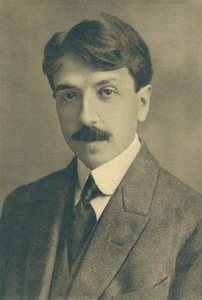
The Architect of the Portuguese Soul
Raul Lino da Silva, known to the world simply as Raul Lino, was far more than a mere designer of structures; he was a philosopher of space and a guardian of national identity. Born in Lisbon in 1879 to a family of prosperous merchants, his early life was shaped by an international perspective that would later serve as the foundation for his unique architectural synthesis. His formative years took him from the historic streets of Portugal to the classrooms of Windsor, England, and eventually to Germany, where he studied under the influential Albrecht Haupt. This diverse education allowed Lino to absorb the rigorous technical precision of German training while maintaining a deep, soulful connection to the Mediterranean traditions of his homeland. He emerged not as a follower of fleeting European trends, but as a visionary capable of translating historical reverence into a modern architectural language.
The heart of Lino’s enduring legacy lies in his profound Casa Portuguesa theory, a concept he articulated with passion and intellectual rigor in 1929. At a time when much of Europe was swept up in the stark, often impersonal currents of modernism, Lino sought to anchor Portuguese residential life in its own rich cultural soil. He believed that a home should be an organic extension of its landscape and history, embodying the craftsmanship, regional nuances, and symbolic values of the Portuguese people. To Lino, architecture was a vessel for social cohesion and spiritual contemplation; he envisioned dwellings that celebrated the warmth of tradition through the use of local materials and time-honored techniques, ensuring that even as the world modernized, the essence of the Portuguese spirit remained etched in stone and tile.
A Landscape Transformed
Lino’s influence is most tangibly felt along the breathtaking stretch of the Portuguese Riviera, particularly within the enchanting towns of Cascais and Sintra. In these coastal and mountainous regions, his work flourished as part of a summer architecture movement that redefined the aesthetic of the era. He played a pivotal role in the cosmopolitan evolution of Cascais, transforming it into a sophisticated summer retreat for the wealthy and notable, while simultaneously preserving Sintra as a romanticist sanctuary. His constructions in these areas are characterized by a seamless integration with nature, where the boundaries between the built environment and the lush, Atlantic-facing landscape seem to dissolve.
Beyond his physical structures, Lino’s significance is found in his multifaceted contributions to Portuguese culture:
- Architectural Theory: His ability to codify a national style through the Casa Portuguesa provided a blueprint for identity in an era of rapid globalization.
- Design and Literature: As a writer and theorist, he bridged the gap between technical architectural practice and the broader cultural discourse of his time.
- Urban Development: His work in Cascais helped shape the modern social fabric of one of Portugal's most iconic coastal destinations.
- Historical Preservation: By championing historical precedent, he ensured that the medieval and classical influences of Portugal were not lost to the industrial age.
Ultimately, Raul Lino stands as a monumental figure whose work transcends the boundaries of architecture. He was an artist who understood that to build for the future, one must first honor the past. His life’s work remains a testament to the idea that true innovation does not require the abandonment of heritage, but rather its thoughtful and beautiful reimagination.



 Visa i rummet
 Beställ tryck
 Skicka
 Dela
Dela
 Detaljer

 Ladda ner
 Liknande objekt
 Röntgen
 Bildspel

 Läs mer