Förhandsvisa
 Skicka
 Dela
Dela
 Visa detaljer
 Guide
Guide

 Ladda ner
 Liknande objekt
 Röntgen
 Bildspel
 Statistik
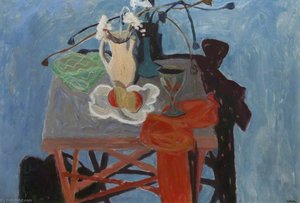
Path through Trees
 Acrylic
- WallArt
- Post-Impressionistic Landscape
 112.0 x 114.0 cm
 Royal Scottish Academy of Art - Architecture
Explore the serene landscapes and evocative still lifes of Sir William George Gillies RA RSA PRSW, a Scottish Colourist celebrated for capturing the beauty of Lothian and Fife with masterful Impressionistic brushstrokes.
 Visa mer
"Swedish Meta Description": "W.G. Gillies var en framstående skotsk konstnär känd för sina vackra landskap och stilliveter. Hans verk präglas av kubistiska influenser och en stark anknytning till den skotska naturen, vilket gjorde honom till en viktig figur i 20-talets konst."
Konstverket som visas på denna sida skyddas av upphovsrättslagen, vilket innebär att vi inte lagligt kan skapa eller sälja en identisk reproduktion. Detta skydd upprätthålls genom internationella avtal såsom den Bernkonventionen och genom nationella lagar, inklusive de som fastställs av Amerikansk upphovsrättslag – Titel 17. Alla rättigheter förbehållna. Återgivning av konstverk är förbjuden utan skriftligt tillstånd från WahooArt.
Denna metod följer fullt ut upphovsrättsliga regler eftersom den inte innebär kopiering eller duplicering av det skyddade konstverket. Istället är det en kreativ nytolkning – en ny målning som är influerad av originalet men inte identisk med det.
Giclée / Konsttryck
Giclée- eller canvasprint av museumskvalitet med snabb produktion och flexibla ytbehandlingsalternativ. ( Beställ handmålad reproduktion Byt till digital bild)




P118B Skr10

P118H Skr10

P118W Skr10

P438Z Skr10

P508JH Skr12

P508YH Skr12

P805H Skr10

P805Z Skr10

P919BZ Skr10

P919G Skr10

P919XJ Skr10

P959ZH Skr10

P968JZ Skr12

W106C Skr8

W218G Skr10

W218JH Skr8

W218Y Skr10

W307PJ Skr10

W316G Skr10

W316PJ Skr8

W316Y Skr10

W398PJ Skr8

W4111J Skr10

W500HY Skr15

W500JH Skr15

W692G Skr12

W849H Skr8

W940BG Skr15

W953PJ Skr8




Standardstorlek
skräddarsydd
CM
INCH
Välj bland våra förinställda storlekar som motsvarar konstverkets ursprungliga proportioner.
Loading sizes...

bredd
höjd
Ange den bredd och höjd du behöver för att passa din ram eller vägg. Ett tryck kan endast beskäras, aldrig göras större än originalbilden, vilket innebär att ett format med en annan proportion leder till att en del av bilden går förlorad. Vi skickar en digital mockup för godkännande innan vi påbörjar tryckningen. Bilden som visas på denna sida visar inte den faktiska beskärningen — det är endast mockuppen som gör det.
Leverans över hela världen () på 2 veckor istället för standard 4/5 veckor. (25 oktober)

Fri expressfrakt över hela världen

Högkvalitativ linnecanvas

Fullständig fraktförsäkring

Garantier för återbetalning av tullavgifter

Garantier för exakt färgåtergivning

100 dagars returrätt (endast vid fel)

100% pengarna tillbaka-garanti

Mängdrabatt erbjuds
 Glasalternativet är endast tillgängligt i storlekar under 110 cm.

Path through Trees
Giclée / Konsttryck
Storlek på reproduktion
-


Slutgiltigt pris
Skr 684
A Journey Through Light and Texture: Exploring Gillies’ “Path through Trees”
The painting "Path through Trees" by Sir William George Gillies stands as a testament to the enduring allure of Impressionism blended with a distinctly Scottish sensibility. Executed sometime before 1973, this piece captures not merely a visual representation of woodland scenery but delves into a deeper exploration of mood and atmosphere—a hallmark of Gillies’ artistic vision. Measuring 112 x 114 cm, the canvas invites contemplation as much as it pleases the eye with its harmonious blend of color and texture.The Impressionistic Embrace: Style and Technique
Gillies' stylistic choices firmly situate “Path through Trees” within the broader context of early 20th-century art movements. While undeniably influenced by Cubism’s geometric fragmentation – evident in his formative studies under André Lhote – Gillies swiftly moved beyond rigid formalism, prioritizing instead the expressive qualities of color and light. Characteristic Impressionistic brushstrokes dominate the composition, layering pigment onto the canvas with loose, visible marks that convey a palpable sense of spontaneity. Unlike meticulously rendered landscapes of earlier eras, Gillies eschewed detailed botanical accuracy; rather, he sought to distill the essence of the forest into its dominant hues—warm yellows and browns punctuated by subtle blues in the sky and foliage. This technique prioritizes capturing fleeting moments of illumination and shadow, mirroring the artist’s fascination with observing nature directly.Scottish Roots: Historical Context and Inspiration
Gillies' artistic development was profoundly shaped by his upbringing in Haddington, Scotland, where he absorbed the rugged beauty of the Lothian countryside. The painting reflects this connection to place, conveying a feeling of quiet contemplation and reverence for the natural world—a sentiment echoed throughout Gillies’ oeuvre. His encounter with Paul Klee proved particularly influential, prompting him to embrace a more imaginative approach to color palettes and compositional arrangements. Klee's playful use of childlike spontaneity resonated deeply with Gillies, encouraging him to infuse his paintings with an element of wonder and emotional resonance.Symbolism Within the Frame: Layers of Meaning
Beyond its aesthetic appeal, “Path through Trees” possesses symbolic depth. The dominant tree trunk serves as a focal point, representing resilience and strength—qualities associated with Scottish folklore and tradition. The dappled sunlight filtering through the branches symbolizes hope and renewal, mirroring the cyclical rhythms of nature. Furthermore, the fallen leaves at the base of the trunks subtly evoke themes of mortality and transformation, reminding viewers that beauty exists alongside impermanence. Gillies’ masterful manipulation of color and texture contributes to this layered interpretation, inviting contemplation on broader philosophical concepts.Emotional Resonance: A Tranquil Vista
Ultimately, “Path through Trees” succeeds in transporting the viewer into a serene woodland setting. The painting's subdued palette and expressive brushstrokes evoke feelings of peace and tranquility—a deliberate aim reflecting Gillies’ desire to capture not just what he saw but how he felt when observing the natural world. It is precisely this emotive quality, combined with Gillies’ skillful technique and stylistic innovation, that ensures “Path through Trees” continues to captivate audiences today, serving as an enduring emblem of Impressionistic beauty and Scottish artistic heritage.Frågor och svar
Var kan jag köpa en handmålad reproduktion av "Path through Trees" av William George Gillies?
Du kan beställa en handmålad reproduktion av "Path through Trees" av William George Gillies direkt på dess Handmålad reproduktion-sida: en handmålad oljereproduktion på linneväv, tillverkad efter beställning.
Hur harmonierar färgerna i "Path through Trees" med varandra?
Färgharmonin i "Path through Trees" beskrivs som Balanced Harmony.
Vilken konststil och vilken epok kan "Path through Trees" av William George Gillies placeras i?
"Path through Trees" av William George Gillies tillhör Post-Impressionistic Landscape-rörelsen och skapades under sin konstnärs Modernismen-era.
Liknande konstverk


Konstnärsbiografi
Early Life and Education
Sir William George Gillies, född i Haddington nära Edinburgh 1898, var en konstnär vars liv och verk är djupt förankrade i den skotska landskapskulturen. Hans tidiga utbildning vid Edinburgh College of Art präglades av ett kort uppehåll under första världskriget, då han tjänstgjorde som ingenjör i Royal Engineers. Efter kriget återvände Gillies till college och fullbordade sin konstutbildning, där han sedan dess skulle ägna över 40 år åt att undervisa – en roll som formade inte bara hans kollegor utan också den skotska konstscenen som helhet. Hans tidiga studier i Paris och Italien lade grunden för hans senare utveckling, men det var i Skottland han skulle finna sin sanna inspiration.Artistic Development and Influences
Gillies’ konstnärliga resa inleddes med en utforskning av kubismen efter att ha studerat under André Lhote i Paris 1923 och rest till Italien året därpå. Tidiga verk, som “Two Pots, Saucer and Fruit” (1933), visar tydligt denna kubistiska påverkan – en Cézanne-inspirerad komposition med de understatementfärger och subtila former som präglade Braque och Picassos arbete. En avgörande vändpunkt inträffade 1934 när han stötte på Paul Klees verk, vilket inspirerade honom att utforska en mer fantasifull användning av färg och att infusa sina kompositioner med barnsliga kvaliteter. Gradvis stegrade Gillies bort från strikt kubism och utvecklade ett distinkt stiluttryck som var rotat i skotska landskap och traditionella still lifes. Han sökte en balans mellan de abstrakta idéerna han hade lärt sig och den konkreta skönheten i sin hembygd.The 1922 Group and Collaborative Spirit
År 1922 grundade Gillies tillsammans med andra konstnärer, inklusive William Crozier, William Geissler och William MacTaggart, gruppen “1922 Group”. Denna utställningsförening blev en plattform för framväxande skotska konstnärer att visa upp sitt arbete på New Gallery i Edinburgh under ett decennium. Gruppen främjade en känsla av gemenskap och innovation inom den skotska konstscenen, och Gillies spelade en nyckelroll i dess utveckling. Det var genom denna grupp som många unga talanger fick sin chans att nå en bredare publik och etablera sig som professionella konstnärer.Themes and Subject Matter
Gillies är mest känd för sina skildringar av Lothian-, Fife- och Bordersregionerna i Skottland. Han fångade essensen av dessa landskap med ett öga för detalj och en känsla för ljus och atmosfär. Still lifes var en annan betydande fokuspunkt, ofta med keramik skapad av hans yngre syster, Emma Smith Gillies, vars plötsliga död 1936 djupt berörde honom. Denna sorg präglade många av hans senare verk, där han utforskade teman kring förgänglighet och det flyktiga i livet. Han skapade också porträtt, men det var landskapen och still lifes som dominerade hans produktion. Hans färgpalett var ofta jordnära och lugnande, med en tendens att framhäva de naturliga formerna och ljusförhållandena i hans motiv.Major Achievements and Recognition
Gillies’ konstnärliga karriär kulminerade med erkännanden från både akademiska och konstnärliga kretsar. Han blev medlem av Royal Scottish Academy 1947 och utsågs till Principal vid Edinburgh College of Art 1959, en position han innehavde fram till sin pensionering 1966. Under sin tid som lärare inspirerade han generationer av skotska konstnärer att utforska sina egna stilar och uttryck. Han mottog CBE (Commander of the Order of the British Empire) 1957 för sina tjänster till konsten i Skottland, och knytnecken 1970. Hans verk finns nu representerade i museer över hela landet, inklusive Aberdeen Art Gallery, Dundee’s McManus Gallery, Edinburgh National Gallery och Scottish National Gallery of Modern Art.Historical Significance and Legacy
Sir William George Gillies är en av Skottlands mest framstående konstnärer från 1900-talet. Hans verk representerar en brytning mellan tidig modernism och en distinkt skotsk konstidentitet. Han var inte bara en skicklig tekniker utan också en visionär som lyckades fånga den unika atmosfären i sitt landskap. Gillies’ inflytande sträcker sig bortom hans egna målningar, formade riktningen för skotsk konst genom sin undervisning och mentorskap. Han lämnade ett arv av skönhet, inspiration och en djup förståelse för den skotska kulturen som fortsätter att inspirera konstnärer och betraktare än idag.
William George Gillies
1898 - 1973 , Storbritannien
Kortfakta
- Artistic Movement Or Style: Kubism, Skotsk färgrikhet
- Artists Or Movements Influenced By This Artist:
- Cézanne
- Braque
- Picasso
- Artists Who Influenced This Artist:
- André Lhote
- Paul Klee
- Date Of Birth: 1898
- Date Of Death: 1973
- Full Name: Sir William George Gillies
- Nationality: Skotsk
- Notable Artworks:
- Two Pots, Saucer and Fruit
- Havslandskap
- Place Of Birth: Haddington, Storbritannien
Relaterade artiklar

Beyond the Light: Discovering the Soul and Emotional Depth of Post-Impressionism
Embark on a cultural journey through Post-Impressionism. Discover the profound emotional depth of masters like Van Gogh and Cézanne, exploring how they moved beyond light to capture the very soul of human experience through vibrant color and symbolic form.

Beyond the Light: Capturing Raw Emotion and Subjective Vision in Post-Impressionist Landscapes
Explore the profound emotional depth of Post-Impressionist landscapes. Discover how masters like Van Gogh moved beyond light to capture raw human feeling through vibrant color and expressive texture in this expert art history retrospective.
Utforska konstverk sorterade efter tema, stil och egenskaper.