

Visas: · Med ram:
 Förhandsvisa
 Skicka
 Dela
Dela
 Visa detaljer
 Guide
Guide

 Ladda ner
 Liknande objekt
 Röntgen
 Bildspel
 Frågor och svar
 Statistik

Skr 2687
Handgjord oljereproduktion
Handmålad olja på duk i din valda storlek och ram, tillverkad efter beställning av våra konstnärer. ( Byt till tryck Byt till digital bild)
Storlek
·Standardstorlek
skräddarsydd
CM
INCH
Välj bland våra förinställda storlekar som motsvarar konstverkets ursprungliga proportioner.
Laddar storlekar...

bredd
höjd
Ange den bredd och höjd du behöver för att passa din ram eller din vägg. Eftersom detta är handmålat kan konstnären, vid ett annat format, måla lite mer runt bilden eller beskära den något – det är du som väljer. Vi skickar en digital mockup för godkännande innan målningen påbörjas. Bilden som visas på denna sida representerar inte det slutgiltiga resultatet — det är endast mockuppen som visar det.
 Läs mer
Slutför
·
Vit kant Skr1

Suddig kantfinish Skr1

Fortsatt motiv Skr1

P118B Skr10

P118H Skr10

P118W Skr10

P438Z Skr10

P508JH Skr12

P508YH Skr12

P805H Skr10

P805Z Skr10

P919BZ Skr10

P919G Skr10

P919XJ Skr10

P959ZH Skr10

P968JZ Skr12

W106C Skr8

W218G Skr10

W218JH Skr8

W218Y Skr10

W307PJ Skr10

W316G Skr10

W316PJ Skr8

W316Y Skr10

W398PJ Skr8

W4111J Skr10

W500HY Skr15

W500JH Skr15

W692G Skr12

W849H Skr8

W940BG Skr15

W953PJ Skr8

H24-GOLD Skr30

H24-SILVER Skr30

H36-GOLD Skr45

H36-SILVER Skr45
Skickas i ett skyddande rör, redo att ramas in av din egen inramare.
För mått över 105 cm levereras ramen som ett kit för en professionell ramverkare — läs detaljerna.
Tillval
valfrittVad ingår i tilläggen?
Exempel på vad som kan ändras: Byt ut ansiktet mot kundens eget foto; Lägg till ett husdjur (t.ex. byt ut en katt mot en hund); Inkludera ett dolt meddelande i bakgrunden; Ändra landskap eller element i bakgrunden.
Efter beställning kommer TopImpressionists.com team att skicka ett e-postmeddelande till kunden för instruktioner och tillhandahålla en förhandsvisning av utkastet
Efter beställning kommer TopImpressionists.com team att skicka ett e-postmeddelande till kunden för instruktioner och tillhandahålla en förhandsvisning av utkastet
Leverans över hela världen () på 3–4 veckor istället för standard 5 veckor. (7 november). Inga kompromisser med kvaliteten.
Skyddande fernissa
Namnskylt
Detaljer för graverad bronsplatta
This elegant plaque features the artist's name and the title of the artwork, finely engraved for a timeless presentation.
It is made from bronze with a refined, elegant finish. The text is precisely laser-engraved for a sharp and permanent result. Measuring 9x2 cm, the plaque is compact yet easy to read. It's built to be durable and scratch-resistant, offering a professional, museum-quality look. Mounting is simple thanks to the included adhesive backing.
Detaljer för transparent akrylplatta
The plaque includes essential engraved details such as the artist's name, the title of the artwork, the date it was created, the type of media used-like oil on canvas or watercolor-a brief description of the piece, and a QR code that links to the complete artwork information.
It is crafted from clear acrylic, offering a sleek, modern appearance. The text is UV-engraved in black to ensure strong visual contrast. With a size of 10x15 cm, it ensures optimal readability. It comes equipped with two metal hooks for secure wall mounting. The plaque is designed to be weather-resistant, making it suitable for various environments, and it includes interactive features that work seamlessly with smartphone scanning.
Detaljer för svart akrylplatta
This elegant plaque includes engraved information such as the artist's name, the title of the artwork, the date it was created, the type of media used (like oil on canvas or watercolor), a short description of the artwork, and a QR code for quick access to more information.
The plaque itself is made from refined black acrylic with a premium finish. The text is laser-engraved in white for high contrast and readability. Its size is 10x15 cm, designed to be easy to read. It comes with two metal hooks for professional mounting. The design is sleek and fits any interior style. It is also weather-resistant and durable, with built-in digital integration for mobile compatibility.
Glasalternativet är endast tillgängligt i storlekar under 110 cm.
 Glasalternativet är endast tillgängligt i storlekar under 110 cm.
- Fri expressfrakt över hela världen
- Högkvalitativ linnecanvas
- Fullständig fraktförsäkring
- Garantier för återbetalning av tullavgifter
- Garantier för exakt färgåtergivning
- 100 dagars returrätt (endast vid fel)
- 100% pengarna tillbaka-garanti
- Mängdrabatt erbjuds


Beskrivning av samlarobjekt
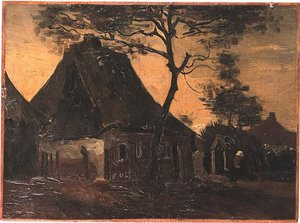
Experience Vincent van Gogh's 'Cottages,' a serene depiction of rural life brimming with vibrant colors and Post-Impressionist charm. A hand-painted reproduction captures the beauty of Dutch countryside.
Konstnärens biografi
Vincent van Gogh (1853-1890): Utforska livet och konsten hos den nederländska postimpressionistiska mästaren bakom 'Stjärnenatt' och 'Solrosor'. Upptäck hans djärva stil och bestående inflytande på modern konst.
Om målningen
Cottages: A Window into Post-Impressionist Tranquility
Vincent van Gogh’s “Cottages,” painted in 1883, isn't merely a depiction of a rural village; it’s an immersive experience—a carefully constructed tableau designed to evoke a profound sense of peace and nostalgia. This oil on canvas, residing within the broader series exploring peasant life, offers a glimpse into Van Gogh’s evolving artistic vision during a pivotal period in his career. The scene unfolds with a quiet dignity: humble cottages, their thatched roofs blending seamlessly with the surrounding greenery, nestled beneath a serene sky. It's a landscape imbued with a palpable sense of warmth and community, yet simultaneously tinged with a subtle melancholy—a characteristic hallmark of Van Gogh’s mature style.
The painting’s genesis lies within the burgeoning Post-Impressionist movement, an era defined by artists seeking to move beyond the fleeting impressions of light and color favored by their predecessors. Post-Impressionism wasn't a rigid school but rather a diverse collection of artists—including Van Gogh himself, Paul Cézanne, Paul Gauguin, and Georges Seurat—who experimented with subjective expression, symbolic content, and emotional depth. Van Gogh’s “Cottages” exemplifies this shift; he abandons the purely observational approach of earlier Impressionists, instead layering his own feelings and interpretations onto the scene. The vibrant yellows dominating the cottages aren't simply a representation of color but rather convey warmth, light, and perhaps even a hint of optimism—a deliberate choice to imbue the humble dwellings with an aura of comfort and security.
The Language of Color and Texture
Van Gogh’s distinctive technique is immediately apparent. He employs thick, impasto brushstrokes – literally building up layers of paint directly onto the canvas – creating a tactile surface that invites close inspection. The individual strokes are visible, contributing to the painting's dynamism and energy. Notice how he uses short, broken lines to depict the thatched roofs, suggesting their texture and movement in the breeze. The greens and blues of the landscape aren’t blended smoothly; instead, they’re applied with a sense of urgency, conveying a feeling of vitality and growth. This deliberate manipulation of color and texture is central to Van Gogh's expressive style—a means of communicating not just what he *saw*, but how he *felt* about what he saw.
The composition itself is carefully considered. The cottages are arranged in a loose, asymmetrical grouping, creating a sense of visual interest and preventing the scene from feeling static. A few figures—likely peasants engaged in daily tasks—are scattered throughout the landscape, adding to the painting’s narrative quality. These figures aren't idealized or romanticized; they appear as ordinary people going about their lives, contributing to the overall sense of authenticity and realism.
Symbolism and Emotional Resonance
Beyond its visual appeal, “Cottages” is rich in symbolism. The humble cottages represent a connection to rural life, a theme that was increasingly important to Van Gogh during this period. He saw in these simple dwellings a sense of stability and community—a stark contrast to the alienation and uncertainty he often experienced in urban environments. The sky, painted in shades of blue and grey, suggests both tranquility and melancholy – reflecting the artist’s own complex emotional state. The presence of animals, likely dogs, adds another layer of meaning, symbolizing loyalty, companionship, and a connection to nature.
Van Gogh's fascination with rural life stemmed from his desire to understand the lives of ordinary people—particularly the working class. He believed that art should serve as a means of social commentary, offering insights into the experiences of those often overlooked by society. “Cottages” is therefore not just a pretty picture; it’s a poignant meditation on themes of poverty, community, and the beauty of the natural world.
Bringing "Cottages" Home: A Hand-Painted Reproduction
At TopImpressionists.com, we are proud to offer meticulously hand-painted oil reproductions of Van Gogh's “Cottages,” capturing the essence of this iconic artwork with unparalleled detail and authenticity. Our skilled artists utilize only the finest materials—traditional oil paints on archival canvas—to faithfully recreate every brushstroke, color nuance, and textural element of the original. Each reproduction is a testament to our commitment to preserving Van Gogh’s legacy and making his art accessible to collectors and admirers worldwide.
Whether you're an avid art collector, an interior designer seeking to add a touch of Post-Impressionist charm to your home, or simply someone who appreciates the beauty of Van Gogh’s work, our hand-painted reproduction of “Cottages” offers a unique opportunity to own a piece of art history. Explore our collection and discover how you can bring this timeless masterpiece into your life today. Special offer on oil paintings.
Frågor och svar
Är bilden av "Cottages" av Vincent Van Gogh fri att återge?
Upphovsrättslig status för "Cottages" av Vincent Van Gogh: verket är allmän egendom – upphovsrätten har löpt ut. Detta avgör om reproduktioner av bilden får framställas fritt.
Vilken placering passar bäst för formatet på "Cottages" av Vincent Van Gogh?
Formatet Landscape för "Cottages" av Vincent Van Gogh rekommenderas för ett Living Room. Format och rymd samverkar för att vägleda placeringen av en reproduktion.
Hur mycket ljus verkar färgerna i "Cottages" reflektera?
Luminansen som registrerats för "Cottages" av Vincent Van Gogh är Soft Shadow.
Snabbfakta och konstquiz
Om Vincent Van Gogh

Vincent Van Gogh
1853 - 1890, Nederländerna
Konstnärsbiografi
Ett liv målat i passion: Vincent van Gogh
Vincent Willem van Gogh, ett namn synonymt med levande färger och rå emotion, förblir en av de mest igenkännbara och älskade gestalterna i konsthistorien. Han föddes den 30 mars 1853 i Zundert, Nederländerna, och hans resa från en sökande ung man till en konstnärlig visionär är en gripande berättelse om hängivenhet, kamp och slutligen ett evigt arv. Trots att han uppnådde liten kommersiell framgång under sin livstid – med endast ett sålt verk, The Red Vineyard, före sin död – är Van Goghs inverkan på den moderna konsten omätbar; han banade väg för expressionismen och inspirerade otaliga efterföljande konstnärer. Hans historia handlar inte bara om penseldrag och dukar, utan är ett vittnesbörd om den mänskliga uttrycksförmågan i mötet med motgångar.
De tidiga åren och den konstnärliga uppvaknandet
Van Goghs tidiga liv präglades av en serie ouppfyllda ambitioner. Han prövade olika yrken – som konsthandlare, lärare och till och med missionär – innan han slutligen ägnade sig åt måleriet vid den relativt sena åldern av 27 år. Dessa tidigare erfarenheter formade hans världsbild djupt och fann sin väg in i hans konst. Hans tidiga verk, som skildrade scener ur bondelivet på den belgiska landsbygden, speglar en djup empati för arbetarklassen och en dämpad palett som reflekterar deras hårda livsvillkor. Inspirerad av konstnärer som Jean-François Millet strävade Van Gogh efter att fånga dessa människors värdighet och motståndskraft genom en karg realism. Det var dock flytten till Paris 1886 som blev transformativ. Där mötte han impressionismen och postimpressionismen, och sög åt sig teknikerna från mästare som Monet, Renordination, Renoir och Pissarro. Detta möte vidgade hans konstnärliga horisonter och ledde honom till att experimentera med ljusare färger och lösare penseldrag, även om han behöll en distinkt emotionell intensitet som saknades hos många av hans samtida. Hans bror Theo, en konsthandlare, spelade en avgörande roll under denna period genom att erbjuda ekonomiskt stöd och fungera som en livsviktig länk till den parisiska konstvärlden. Deras omfattande korrespondens erbjuder ovärderliga inblickar i Van Goghs konstnärliga utveckling och personliga kamp.
Det södra ljuset och den explosiva kreativiteten
I sökandet efter ett mer levande landskap och en känsla av förnyelse flyttade Van Gogh till Arles i södra Frankrike 1888. Denna flytt markerade en period av intensiv kreativ produktion, kännetecknad av en explosion av färg och en distinkt impastoteknik – där färgen applicerades tjockt på duken för att skapa en texturerad yta som tycks pulsera av energi. Det var här han skapade några av sina mest ikoniska verk: Solrosor, Nattcaféet och Stjärnnatt. Det intensiva solljuset i Provence tycktes tända hans fantasi och ledde honom till att avbilda landskap och stilleben med en tidigare osedd vitalitet. Hans önskan om konstnärligt samarbete fick honom att bjuda in Paul Gauguin till Arles, i hopp om att etablendo en utopisk konstnärskoloni. Deras relation visade sig dock vara instabil och kulminerade i en dramatisk konfrontation som resulterade i att Van Gogh skar av sitt eget öra. Denna händelse underströk hans mentala tillstånd skörhet och markerade början på en period av institutionalisering och ökande psykisk nöd.
De sena åren och det bestående arvet
Efter sitt sammanbrott lade sig Van Gogh frivilligt in på ett asyl i Saint-Rémy, där han fortsatte att måla flitigt och fångade de omgivande landskapen med både skönhet och turbulens. Verk som Stjärnnatt, målade under denna tid, är genomdränkta av en känsla av kosmiskt förundran och ett djupt emotionellt djup. Han flyttade senare till Auvers-sur-Oise under vård av Dr. Paul Gachet, men hans kamp fortsatte. Den 29 juli 1890, vid 37 års ålder, dog Van Gogh tragiskt av ett skott orsakat av honom själv. Trots att han fick lite erkännande under sin livstid, började hans verk vinna eftermäle, mycket tack vare den outtröttliga insatsen från hans svägerska, Johanna van Gogh-Bonger, som ärvde hans kvarlåtenskap och vigde sitt liv åt att främja hans konst. Idag firas Van Goghs målningar över hela världen för sin emotionella intensitet, sina innovativa tekniker och sin tidlösa skönhet. Hans arv sträcker sig långt bortom duken; han har blivit en symbol för konstnärlig passion, uthållighet inför motgångar och konsten att uttrycka de djupaste mänskliga känslorna.
Viktiga influenser och konstnärlig utveckling
- Tidig realism: Jean-François Millet’s skildringar av bondelivet påverkade Van Goghs tidiga verk.
- Impressionism & Postimpressionism: Mötet med Monet, Renoir, Pissarro och andra i Paris vidgade hans palett och teknik.
- Japanska träsnitt: Van Gogh var djupt influerad av japanska träsnitt som han samlade på med stor entusiasm. Deras djärva kompositioner och plana färgfält påverkade hans egen stil.
- Emotionellt uttryck: Framför allt strävade Van Gogh efter att förmedla känslor genom sin konst, där han prioriterade den subjektiva upplevelsen framför objektiv representation. Detta fokus på emotionell intensitet blev ett definierande drag i hans arbete och banade väg för expressionismen.
Snabbfakta om Vincent Van Gogh
- Artistic Movement Or Style: Postimpressionism
- Artists Or Movements Influenced By This Artist:
- Expressionism
- Fauvismer
- Artists Who Influenced This Artist:
- Rembrandt
- Millet
- Date Of Birth: 30 mars 1853
- Date Of Death: 29 juli 1890
- Full Name: Vincent Willem van Gogh
- Nationality: Nederländska
- Notable Artworks:
- Potatösograferna
- Solrosor
- Stjärnkval
- Nattkaféet
- Place Of Birth: Zundert, Nederländerna
Liknande konstverk




Utforska konstverk sorterade efter tema, stil och egenskaper.


Vincent Van Gogh
Cottages
() ·
Med ram: · Handmålad med olja på linne
Totalt