


 Visa i rummet
 Skicka
 Dela
Dela
 Detaljer
 Studentguide för konstverk

 Ladda ner
 Liknande objekt
 Röntgen
 Bildspel
 Besökstatistik
Castle Eden Dene
 Romanticism
 43.0 x 34.0 cm
 Darlington Library
Admire 'Castle Eden Dene' by William Bewick – a captivating landscape painting. Hand-painted reproduction available in various sizes. Bring timeless art into your home!
William Bewick var en engelsk konstnär och träsnidare som är mest känd för sina detaljerade illustrationer av brittisk fauna och sitt arbete med Sir William Dunn School of Pathology. Han skapade mästerverk genom att fånga naturens skönhet och komplexitet samt främja utbildning och vetenskapliga framsteg – en riktig konstnärlig arvtagare!
 Läs mer
Konstverket som visas på denna sida skyddas av upphovsrättslagen, vilket innebär att vi inte lagligt kan skapa eller sälja en identisk reproduktion. Detta skydd upprätthålls genom internationella avtal såsom den Bernkonventionen och genom nationella lagar, inklusive de som fastställs av Amerikansk upphovsrättslag – Titel 17. Alla rättigheter förbehållna. Återgivning av konstverk är förbjuden utan skriftligt tillstånd från WahooArt.
Denna metod följer fullt ut upphovsrättsliga regler eftersom den inte innebär kopiering eller duplicering av det skyddade konstverket. Istället är det en kreativ nytolkning – en ny målning som är influerad av originalet men inte identisk med det.
Giclée / Konsttryck
Giclée- eller canvasprint av museumskvalitet med snabb produktion och flexibla ytbehandlingsalternativ. ( Köp handmålat konstverk Byt till digital bildförsäljning)




P118B Skr10

P118H Skr10

P118W Skr10

P438Z Skr10

P508JH Skr12

P508YH Skr12

P805H Skr10

P805Z Skr10

P919BZ Skr10

P919G Skr10

P919XJ Skr10

P959ZH Skr10

P968JZ Skr12

W106C Skr8

W218G Skr10

W218JH Skr8

W218Y Skr10

W307PJ Skr10

W316G Skr10

W316PJ Skr8

W316Y Skr10

W398PJ Skr8

W4111J Skr10

W500HY Skr15

W500JH Skr15

W692G Skr12

W849H Skr8

W940BG Skr15

W953PJ Skr8




Standardstorlek
anpassad
CM
INCH
Välj bland våra förinställda storlekar som motsvarar konstverkets ursprungliga proportioner.
Loading sizes...

bredd
höjd
Ange den bredd och höjd du behöver, för att passa din ram eller din vägg. Ett tryck kan endast beskäras, aldrig göras större än bilden, vilket innebär att ett format med en annan formform leder till att en del av bilden går förlorad. Vi skickar en digital mockup för godkännande innan vi trycker något. Bilden som visas på denna sida visar inte den faktiska beskärningen — det är endast mockuppen som gör det.
Leverans över hela världen () på 2 veckor istället för standard 4/5 veckor. (18 oktober)

Fri expressfrakt över hela världen

Högkvalitativ linnecanvas

Fullständig fraktförsäkring

Garantier för återbetalning av tullavgifter

Garantier för exakt färgåtergivning

100 dagars returrätt vid fabrikationsfel

100% pengarna tillbaka-garanti

Mängdrabatt erbjuds
 Glasalternativet är endast tillgängligt i storlekar under 110 cm.

Castle Eden Dene
Giclée / Konsttryck
Reproduktionsstorlek
-


Totalpris
Skr 678
Om konstnären
William Bewick: A Pioneer of British Wildlife Illustration
William Bewick (1824–1886) stands as a monumental figure in the annals of English art history, particularly revered for his groundbreaking contributions to wildlife illustration and his pivotal role in establishing the Sir William Dunn School of Pathology. Born in Ministeracres, Northumberland, he embarked on a remarkable artistic journey marked by unwavering faith and an unparalleled dedication to capturing the beauty and intricacies of the natural world—a passion that would profoundly shape his oeuvre and solidify his legacy as one of Britain’s foremost engravers and artists. Bewick's formative years were steeped in religious devotion, instilled by his parents who adhered to Roman Catholicism. This spiritual grounding served as a bedrock for his artistic sensibilities, fostering an appreciation for moral contemplation alongside meticulous observation—a duality that would permeate his work throughout his life. His early education encompassed Latin and Greek, equipping him with the intellectual tools necessary to engage critically with classical literature and philosophy, influences which subtly informed his artistic vision. His artistic apprenticeship began under John Harrison, a celebrated Newcastle engraver who imparted invaluable skills in printmaking techniques—a craft Bewick would master with exceptional precision. Harrison’s guidance instilled in Bewick not merely technical proficiency but also an understanding of the aesthetic principles underpinning masterful engraving, shaping him into a craftsman of discerning taste and unwavering dedication. This formative experience cemented his commitment to the art form and propelled him toward ambitious creative endeavors. Bewick's artistic breakthrough arrived with his collaboration on “Aesop’s Fables,” a monumental undertaking that showcased his unparalleled ability to transform literary narratives into stunning visual representations. Alongside John Harrison, Bewick meticulously crafted exquisitely detailed wood engravings—a technique demanding extraordinary patience and technical virtuosity—that breathed life into the timeless tales of Aesop's moral lessons. The resulting prints captivated audiences across Britain and cemented Bewick’s reputation as a visionary artist capable of elevating literature to new heights of artistic expression. He was particularly inspired by Benjamin Robert Haydon, whose encouragement fostered his own artistic fervor. The establishment of the Sir William Dunn School of Pathology in Newcastle represents perhaps Bewick’s most enduring contribution to British science and culture. Recognizing the transformative potential of immunological research—particularly the pioneering work on penicillin's origins—he championed the creation of this institution as a beacon of scientific innovation and educational excellence. Bewick tirelessly advocated for its funding, ensuring that it would continue to foster groundbreaking discoveries and nurture generations of aspiring scientists—a testament to his unwavering belief in the power of knowledge and its capacity to improve human wellbeing. His artistic output extended beyond “Aesop’s Fables” and the School's founding; Bewick produced a prolific body of work encompassing portraits, landscapes, and decorative prints—each imbued with a distinctive blend of realism and symbolic resonance. His meticulous attention to detail—evident in his engravings of British wildlife and his evocative depictions of Northumberland scenery—demonstrated an unwavering commitment to capturing the essence of his subjects with breathtaking accuracy. Furthermore, Bewick’s artistic explorations probed deeper into philosophical themes, reflecting his profound engagement with moral contemplation and spiritual inquiry—a characteristic that distinguishes him as a truly multifaceted artist. Bewick's legacy transcends mere artistic achievement; he served as Bishop of Hexham and Newcastle from 1882 until his death in 1886, embodying the virtues of piety, compassion, and intellectual rigor. During his episcopacy, he championed social reform initiatives aimed at alleviating poverty and promoting educational opportunities—a reflection of his unwavering conviction that faith should inspire action and contribute to the betterment of society. His steadfast devotion to his pastoral responsibilities cemented his reputation as a moral exemplar and underscored his commitment to upholding Christian values within the broader community. Ultimately, William Bewick’s artistic vision—rooted in religious faith, honed by masterful engraving techniques, and fueled by an ardent passion for capturing the beauty of British wildlife—established him as a pivotal figure in Victorian art history. His enduring influence continues to resonate today, inspiring artists and scholars alike to appreciate the transformative power of observation, meticulous craftsmanship, and moral contemplation—a testament to his indelible mark on the artistic landscape of Britain.
William Bewick
England
Snabbfakta
- Artistic Movement Or Style: Romanticism
- Artists Or Movements Influenced By This Artist: ['Romanticism']
- Artists Who Influenced This Artist: ['John Harrison']
- Date Of Birth: October 29, 1795
- Full Name: William Bewick
- Nationality: English
- Notable Artworks:
- Aesop's Fables
- The Sir William Dunn School
- Place Of Birth: Hexham-on-Tees
Relaterade artiklar
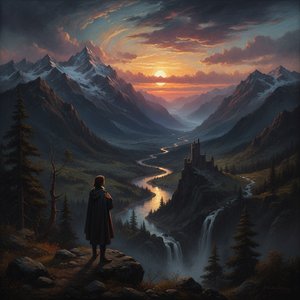
Capturing the Soul: The Emotional Majesty and Sublime Power of Romantic Landscape Painting
Explore the profound emotional depth of Romantic landscape painting. Discover how masters like Turner and Friedrich captured the sublime power of nature through intuition and imagination in this expert art history retrospective.

Capturing the Soul: The Emotional Magic and Sublime Grandeur of Romantic Landscape Painting
Explore the profound emotional depth of Romantic landscape painting. Discover how masters like Friedrich and Turner captured the sublime through light, shadow, and nature's power in this expert art history retrospective for discerning collectors.