

 Förhandsvisa
 Skicka
 Dela
Dela
 Visa detaljer
 Guide
Guide

 Ladda ner
 Liknande objekt
 Röntgen
 Bildspel
 Frågor och svar
 Statistik
Den Gröna bilen


Upplev William Glackens mästerverk 'Den Gröna bilen', en dynamisk vinterbild av ett nyckelverkande hästdrag i New Yorks Ashcan-skola. Inspirerad av Hassam och Klimt – utforska konstnärligheten!
 Visa mer
Utforska William Glackens realistiska målningar – fånga stadslivet i detalj och upplev Ashcan School rörelsens ikoniska verk! Inspirerad av Renoir och grundare till Barnes Foundation.
Giclée / Konsttryck
Giclée- eller canvasprint av museumskvalitet med snabb produktion och flexibla ytbehandlingsalternativ. ( Beställ handmålad reproduktion Byt till digital bild)




P118B Skr10

P118H Skr10

P118W Skr10

P438Z Skr10

P508JH Skr12

P508YH Skr12

P805H Skr10

P805Z Skr10

P919BZ Skr10

P919G Skr10

P919XJ Skr10

P959ZH Skr10

P968JZ Skr12

W106C Skr8

W218G Skr10

W218JH Skr8

W218Y Skr10

W307PJ Skr10

W316G Skr10

W316PJ Skr8

W316Y Skr10

W398PJ Skr8

W4111J Skr10

W500HY Skr15

W500JH Skr15

W692G Skr12

W849H Skr8

W940BG Skr15

W953PJ Skr8




Standardstorlek
skräddarsydd
CM
INCH
Välj bland våra förinställda storlekar som motsvarar konstverkets ursprungliga proportioner.
Loading sizes...

bredd
höjd
Ange den bredd och höjd du behöver för att passa din ram eller vägg. Ett tryck kan endast beskäras, aldrig göras större än originalbilden, vilket innebär att ett format med en annan proportion leder till att en del av bilden går förlorad. Vi skickar en digital mockup för godkännande innan vi påbörjar tryckningen. Bilden som visas på denna sida visar inte den faktiska beskärningen — det är endast mockuppen som gör det.
Leverans över hela världen () på 2 veckor istället för standard 4/5 veckor. (4 november)

Fri expressfrakt över hela världen

Högkvalitativ linnecanvas

Fullständig fraktförsäkring

Garantier för återbetalning av tullavgifter

Garantier för exakt färgåtergivning

100 dagars returrätt (endast vid fel)

100% pengarna tillbaka-garanti

Mängdrabatt erbjuds
 Glasalternativet är endast tillgängligt i storlekar under 110 cm.

Den Gröna bilen
Giclée / Konsttryck
Storlek på reproduktion
-


Slutgiltigt pris
Skr 703
William James Glackens och ”The Green Car”: Ett Ögonblick av Vardagsliv i Första Verdenskrigets Skugga
”The Green Car”, målad av William James Glackens år 1910, är ett verk som fångar essensen av amerikansk realism och erbjuder en unik glimt av livet i New York under början av första världskriget. Nuvarande hemvist är Metropolitan Museum of Art i New York stad, där detta imponerande konstverk fortsätter att fascinera besökare världen över. Glackens var en pionjär inom Ashcan School rörelsen, vilket väckte starkt intresse för konsthistoriker och även idag inspirerar många inom dekorationsbranschen. Rörelsens fokus låg på att dokumentera vardagslivet i storstäderna utan att försöka skapa någon estetisk idealbild – ett radikalt steg från den konservativa akademiska världen som då dominerade konstscenen.- Konstnärlig Stil och Teknik: Glackens använde sig av en teknik där han målade över flera lager av färg för att skapa djupa toner och ett imponerande perspektiv. Detta är särskilt tydligt i användningen av gröna och gula nyanser för att återge färgen på det gröna trolleybussen och dess omgivning, vilket bidrar till den atmosfäriska kvaliteten hos hela bilden.
- Historisk Kontext: Målningen skapades mitt under första världskrigets spänningar. Detta reflekteras i bildens detaljer – människorna på trolleybussen och gatorna är ett vittnesmål till den tidens vardagsliv, vilket ger oss en känsla för hur livet fortsatte trots kriget.
- Symbolism och Emotionell Inverkan: Trolleybussen själv kan ses som ett symboliskt element för utvecklingen och förändringen i samhället vid denna tidpunkt. Dessutom förmedlar Glackens en känsla av enkelhet och autenticitet genom sina färger och komposition, vilket väcker känslor av nostalgi och reflektion hos betraktaren.
Frågor och svar
Vem har skapat "Den Gröna bilen"?
"Den Gröna bilen" tillskrivs William James Glackens.
Går det att förhandsvisa "Den Gröna bilen" i augmented reality?
"Den Gröna bilen" har en förhandsvisning med förstärkt verklighet: konstverkets Förhandsvisning i AR-sida visar det i ditt eget utrymme på en kompatibel enhet.
Vilket rum passar bäst ihop med färgerna i "Den Gröna bilen" av William James Glackens?
De Jordnära färgerna i "Den Gröna bilen" av William James Glackens harmonierar med det rekommenderade rummet: ett Vardagsrummet.
Liknande konstverk


Konstnärsbiografi
A Pioneer of Ashcan Realism
William James Glackens (1870 – 1938) stands as a cornerstone of American realist painting, indelibly shaping the artistic landscape of his era and leaving behind a legacy celebrated for its unflinching portrayal of urban life. Born in Philadelphia, Pennsylvania, on March 13th, 1870, Glackens’ formative years instilled within him an enduring fascination with visual representation—a passion that would propel him toward a distinguished career as both artist and illustrator.Early Influences & Artistic Formation
Glackens' artistic journey commenced at the Pennsylvania Academy of Fine Arts, where he honed his skills under the tutelage of Thomas Anshutz, a pivotal figure in establishing Ashcan School realism. Anshutz’s unwavering commitment to capturing the gritty realities of New York City profoundly impacted Glackens’ approach to painting—a dedication to detail and an uncompromising gaze at the everyday experiences of ordinary people. This formative influence cemented his belief that art should serve as a mirror reflecting society, not merely embellishing it.The Ashcan School & Its Vision
Glackens was among the founders of the Ashcan School, a movement that decisively rejected the prevailing artistic conventions of its time. Rejecting idealized beauty and academic formalism, the Ashcan School championed a raw, honest depiction of urban life—particularly in New York City during the pre-World War I years. Artists like Glackens sought to portray the struggles and triumphs of ordinary individuals amidst the bustling streets and tenements of the metropolis, capturing not glamour but grit and truth. His canvases became windows into the lives of laborers, immigrants, and marginalized communities – a courageous stance for its time.Notable Works & Artistic Style
Glackens’ artistic style is characterized by its subdued palette—often dominated by earthy tones—and masterful technique. He meticulously rendered scenes of urban life with remarkable precision, capturing textures and nuances that conveyed the palpable atmosphere of his subjects. His most celebrated paintings include “The Shoppers,” a poignant depiction of a New York City grocery store teeming with shoppers—a piece now housed in the Chrysler Museum of Art’s New Realism Collection. Similarly, “View of Haarlem with Bleaching Grounds” showcases Glackens' ability to convey mood and atmosphere through subtle color choices and masterful brushwork – currently residing at Forzza Castle in Milan, Italy. Furthermore, he collaborated extensively with Albert C. Barnes, assisting him in assembling a significant collection of European paintings that would become instrumental in shaping American art history.Legacy & Enduring Significance
William James Glackens’ contribution to American art extends beyond his individual oeuvre; he championed the Ashcan School's ethos—a commitment to portraying life as it truly is—and fostered a dialogue between American and European artistic traditions. His unflinching realism continues to inspire artists today, reminding us that profound beauty can be found in confronting uncomfortable truths and celebrating the dignity of ordinary existence. Glackens’ work remains a testament to the power of art to illuminate social realities and elevate the human experience.
William James Glackens
1870 - 1938 , USA
Kortfakta
- Artistic Movement Or Style: Ashcan School
- Artists Or Movements Influenced By This Artist: ['Pierre Auguste Renoir']
- Artists Who Influenced This Artist: ['Thomas Anshutz']
- Date Of Birth: Philadelphia, USA (1870)
- Date Of Death: Westport, CT (1938)
- Full Name: William James Glackens
- Nationality: Amerikaner
- Notable Artworks:
- The Shoppers
- View of Haarlem
- Place Of Birth: Philadelphia, Pennsylvania
Relaterade artiklar
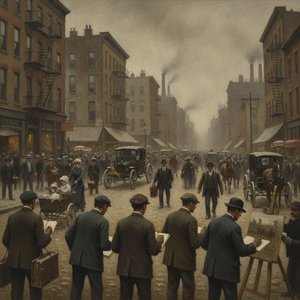
The Ashcan School: Capturing the Raw, Unfiltered Soul of Urban Life through American Realism
Discover the raw beauty of the Ashcan School. Explore how masters like Bellows and Henri captured the gritty, vibrant soul of early 20th-century New York through profound American Realism and evocative urban landscapes.

The Unvarnished Truth: A Cultural Journey Through the Soul of American Realism
Explore the profound beauty of American Realism. From the Ashcan School's urban grit to intimate portraits, discover how artists captured the authentic soul of a nation through unvarnished truth and masterful observation.
Utforska konstverk sorterade efter tema, stil och egenskaper.

