


 Förhandsvisa
 Skicka
 Dela
Dela
 Visa detaljer
 Guide
Guide

 Ladda ner
 Liknande objekt
 Röntgen
 Bildspel
 Statistik
May Day in Central Park


Experience William Glackens’ ‘May Day in Central Park’! A vibrant 1905 oil painting capturing NYC's energy. Ashcan School realism, dynamic brushwork & timeless beauty. Own a piece of art history!
 Visa mer
Utforska William Glackens realistiska målningar – fånga stadslivet i detalj och upplev Ashcan School rörelsens ikoniska verk! Inspirerad av Renoir och grundare till Barnes Foundation.
Handgjord oljereproduktion
Handmålad olja på duk i din valda storlek och ram, tillverkad efter beställning av våra konstnärer. ( Byt till tryck Byt till digital bild)




P118B Skr10

P118H Skr10

P118W Skr10

P438Z Skr10

P508JH Skr12

P508YH Skr12

P805H Skr10

P805Z Skr10

P919BZ Skr10

P919G Skr10

P919XJ Skr10

P959ZH Skr10

P968JZ Skr12

W106C Skr8

W218G Skr10

W218JH Skr8

W218Y Skr10

W307PJ Skr10

W316G Skr10

W316PJ Skr8

W316Y Skr10

W398PJ Skr8

W4111J Skr10

W500HY Skr15

W500JH Skr15

W692G Skr12

W849H Skr8

W940BG Skr15

W953PJ Skr8




Standardstorlek
skräddarsydd
CM
INCH
Välj bland våra förinställda storlekar som motsvarar konstverkets ursprungliga proportioner.
Loading sizes...

bredd
höjd
Ange den bredd och höjd du behöver för att passa din ram eller din vägg. Eftersom detta är handmålat kan konstnären, vid ett annat format, måla lite mer runt bilden eller beskära den något – det är du som väljer. Vi skickar en digital mockup för godkännande innan målningen påbörjas. Bilden som visas på denna sida representerar inte det slutgiltiga resultatet — det är endast mockuppen som visar det.
Exempel på vad som kan anpassas: Byt ut ansiktet mot ett foto av kunden; Lägg till ett husdjur (t.ex. byt ut en katt mot en hund); Inkludera ett dolt meddelande i bakgrunden; Ändra bakgrundens landskap eller element.
Efter beställning kommer TopImpressionists.com team att mejla kunden för instruktioner och tillhandahålla en skissförhandsvisning
Efter beställning kommer TopImpressionists.com team att mejla kunden för instruktioner och tillhandahålla en skissförhandsvisning
Leverans över hela världen () på 3–4 veckor istället för standard 5 veckor. (26 oktober). Inga kompromisser med kvaliteten.

Fri expressfrakt över hela världen

Högkvalitativ linnecanvas

Fullständig fraktförsäkring

Garantier för återbetalning av tullavgifter

Garantier för exakt färgåtergivning

100 dagars returrätt (endast vid fel)

100% pengarna tillbaka-garanti

Mängdrabatt erbjuds
 Glasalternativet är endast tillgängligt i storlekar under 110 cm.

May Day in Central Park
Reproduktionsmetod
Storlek på reproduktion
-


Slutgiltigt pris
Skr 5401
A Vibrant Snapshot of Urban Life: William James Glackens’ “May Day in Central Park”
William James Glackens' "May Day in Central Park," painted in 1905, isn’t merely a depiction of a park scene; it’s a vibrant portal into the heart of early 20th-century New York City. Captured during the height of the Ashcan School movement, this oil on canvas offers a raw and unvarnished glimpse of everyday life – a bustling celebration unfolding amidst the verdant backdrop of Central Park. Glackens, a key figure in this revolutionary artistic circle, eschewed the idealized portrayals favored by academic art, instead choosing to document the gritty realities of urban existence with an honesty that resonated deeply with his contemporaries and continues to captivate viewers today.
The painting immediately draws the eye into a scene brimming with energy. A diverse crowd – men in suits, women in fashionable dresses, children playing – are engaged in various activities: picnicking beneath towering trees, chatting animatedly, and simply enjoying the sunshine. The composition is masterfully balanced, guiding the viewer’s gaze through the lively tableau. Notice the careful placement of details—an apple resting on a blanket, a handbag casually draped over a chair—these small touches ground the scene in a palpable sense of realism, reminding us that this isn't a staged spectacle but an authentic moment captured by Glackens’ discerning eye.
The Ashcan School and its Rejection of Tradition
To fully appreciate “May Day in Central Park,” it’s crucial to understand the context of the Ashcan School. Emerging in the late 19th and early 20th centuries, this movement represented a deliberate break from the established norms of American art. Artists like Glackens, Robert Henri, and John Sloan rejected the polished surfaces and mythological subjects favored by the National Academy of Design, instead focusing on depicting the lives of ordinary people in their urban environments. Glackens’ work embodies this ethos—he doesn't shy away from portraying the less glamorous aspects of city life, capturing its energy, its chaos, and its inherent beauty with a bold and unapologetic style.
His technique reflects this commitment to realism. Glackens employs a distinctive palette dominated by dark hues – deep greens, browns, and blues—contrasted sharply with the vibrant pinks, creams, and whites of the figures. This creates a dynamic visual effect, emphasizing the movement and vitality of the scene. His brushwork is loose and expressive, conveying a sense of immediacy and capturing the fleeting moments of urban life. The impasto technique – applying paint thickly to the canvas – adds textural richness and depth, further enhancing the painting’s visceral impact.
Symbolism and Emotional Resonance
Beyond its realistic depiction of a park gathering, “May Day in Central Park” carries deeper symbolic weight. May Day itself represents renewal, celebration, and the arrival of summer – themes powerfully conveyed through the painting's joyful atmosphere. The figures engaged in various activities—picnicking, playing, conversing—suggest a sense of community and shared experience. The presence of the trees, bathed in dappled sunlight, evokes feelings of tranquility and connection to nature, offering a welcome respite from the hustle and bustle of city life.
Glackens’ masterful use of light and color contributes significantly to the painting's emotional resonance. The warm hues create a sense of warmth and vitality, drawing the viewer into the scene and inviting them to share in the joy of the moment. The composition is carefully balanced, ensuring that all elements contribute to the overall feeling of optimism and celebration. “May Day in Central Park” isn’t just a painting; it's an invitation to step back in time and experience the vibrant spirit of early 20th-century New York City.
Bringing History Home: Reproductions Available
Today, reproductions of "May Day in Central Park" are available through TopImpressionists.com, offering art lovers the opportunity to own a piece of this iconic American masterpiece. These meticulously crafted reproductions capture the essence of Glackens’ original work, allowing you to bring the energy and beauty of Central Park into your home or office. For further insights into William James Glackens and the Ashcan School, we encourage you to explore resources like Wikipedia and WikiArt.
Frågor och svar
Vilken känsla förmedlar "May Day in Central Park" av William James Glackens?
"May Day in Central Park" av William James Glackens förmedlar en Tranquil emotionell ton.
Vilket motiv och vilken atmosfär förenar "May Day in Central Park" av William James Glackens?
"May Day in Central Park" av William James Glackens förenar central park, new york city, urban scene, leisure, social gathering, 1905, american art, impressionism med en Calm atmosfär.
Var kan jag se originalet av "May Day in Central Park" av William James Glackens?
Originalet av "May Day in Central Park" av William James Glackens finns på Fine Arts Museums of San Francisco, San Francisco, USA. En reproduktion gör det möjligt att visa verket i hemmet.
Liknande konstverk


Konstnärsbiografi
A Pioneer of Ashcan Realism
William James Glackens (1870 – 1938) stands as a cornerstone of American realist painting, indelibly shaping the artistic landscape of his era and leaving behind a legacy celebrated for its unflinching portrayal of urban life. Born in Philadelphia, Pennsylvania, on March 13th, 1870, Glackens’ formative years instilled within him an enduring fascination with visual representation—a passion that would propel him toward a distinguished career as both artist and illustrator.Early Influences & Artistic Formation
Glackens' artistic journey commenced at the Pennsylvania Academy of Fine Arts, where he honed his skills under the tutelage of Thomas Anshutz, a pivotal figure in establishing Ashcan School realism. Anshutz’s unwavering commitment to capturing the gritty realities of New York City profoundly impacted Glackens’ approach to painting—a dedication to detail and an uncompromising gaze at the everyday experiences of ordinary people. This formative influence cemented his belief that art should serve as a mirror reflecting society, not merely embellishing it.The Ashcan School & Its Vision
Glackens was among the founders of the Ashcan School, a movement that decisively rejected the prevailing artistic conventions of its time. Rejecting idealized beauty and academic formalism, the Ashcan School championed a raw, honest depiction of urban life—particularly in New York City during the pre-World War I years. Artists like Glackens sought to portray the struggles and triumphs of ordinary individuals amidst the bustling streets and tenements of the metropolis, capturing not glamour but grit and truth. His canvases became windows into the lives of laborers, immigrants, and marginalized communities – a courageous stance for its time.Notable Works & Artistic Style
Glackens’ artistic style is characterized by its subdued palette—often dominated by earthy tones—and masterful technique. He meticulously rendered scenes of urban life with remarkable precision, capturing textures and nuances that conveyed the palpable atmosphere of his subjects. His most celebrated paintings include “The Shoppers,” a poignant depiction of a New York City grocery store teeming with shoppers—a piece now housed in the Chrysler Museum of Art’s New Realism Collection. Similarly, “View of Haarlem with Bleaching Grounds” showcases Glackens' ability to convey mood and atmosphere through subtle color choices and masterful brushwork – currently residing at Forzza Castle in Milan, Italy. Furthermore, he collaborated extensively with Albert C. Barnes, assisting him in assembling a significant collection of European paintings that would become instrumental in shaping American art history.Legacy & Enduring Significance
William James Glackens’ contribution to American art extends beyond his individual oeuvre; he championed the Ashcan School's ethos—a commitment to portraying life as it truly is—and fostered a dialogue between American and European artistic traditions. His unflinching realism continues to inspire artists today, reminding us that profound beauty can be found in confronting uncomfortable truths and celebrating the dignity of ordinary existence. Glackens’ work remains a testament to the power of art to illuminate social realities and elevate the human experience.
William James Glackens
1870 - 1938 , USA
Kortfakta
- Artistic Movement Or Style: Ashcan School
- Artists Or Movements Influenced By This Artist: ['Pierre Auguste Renoir']
- Artists Who Influenced This Artist: ['Thomas Anshutz']
- Date Of Birth: Philadelphia, USA (1870)
- Date Of Death: Westport, CT (1938)
- Full Name: William James Glackens
- Nationality: Amerikaner
- Notable Artworks:
- The Shoppers
- View of Haarlem
- Place Of Birth: Philadelphia, Pennsylvania
Relaterade artiklar
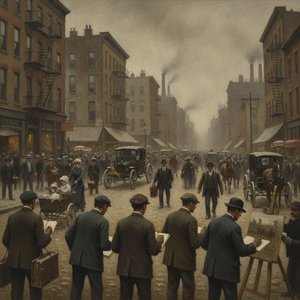
The Ashcan School: Capturing the Raw, Unfiltered Soul of Urban Life through American Realism
Discover the raw beauty of the Ashcan School. Explore how masters like Bellows and Henri captured the gritty, vibrant soul of early 20th-century New York through profound American Realism and evocative urban landscapes.
Utforska konstverk sorterade efter tema, stil och egenskaper.

