Difficult Trial - A Portrait of Scientific Observation
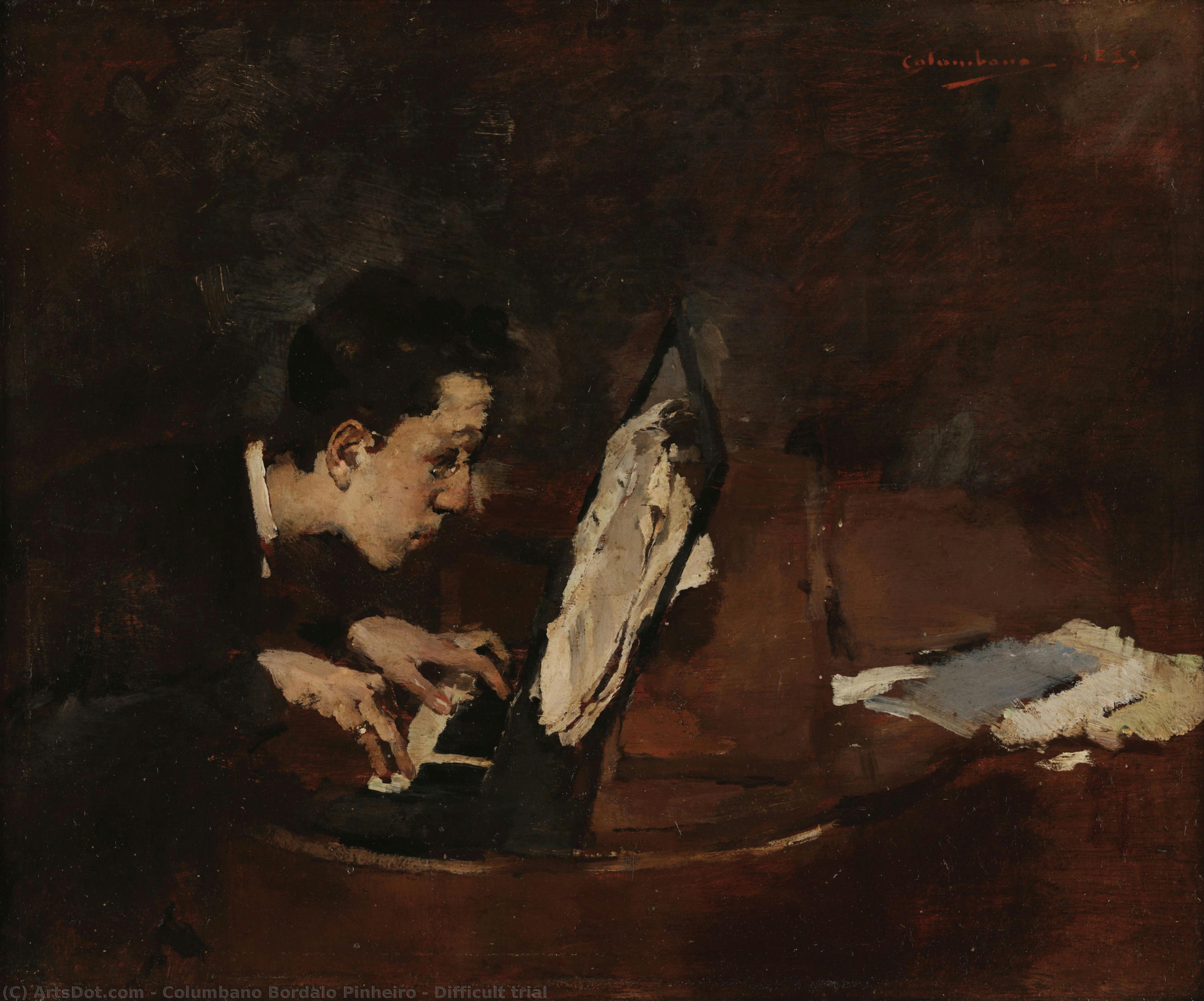
Columbano Bordalo Pinheiro’s “Difficult Trial,” completed in 1883, transcends mere depiction; it's an arresting meditation on intellectuality, vulnerability, and the profound connection between man and nature. This oil painting captures a moment frozen in time – a solitary figure meticulously examining a dissected fish specimen beneath the focused beam of a magnifying glass.
Painted during Portugal’s burgeoning artistic landscape influenced by Impressionism and Naturalism, Bordalo Pinheiro's work stands apart for its unwavering commitment to realism. Unlike many contemporaries preoccupied with idealized beauty, he sought truth in detail, mirroring the scientific rigor of his era. The artist himself was deeply rooted in Portuguese intellectual life, reflecting a fascination with observation and understanding the complexities of the natural world.
Technical Mastery: Impasto and Anatomical Precision
The painting’s visual impact stems largely from Bordalo Pinheiro's masterful technique – impasto. Thickly applied paint creates a palpable textural surface that lends itself to an almost sculptural quality, emphasizing the physicality of the subject matter. This deliberate layering captures not only the appearance but also the essence of the scene, conveying a sense of immediacy and engagement.
Furthermore, Bordalo Pinheiro’s anatomical accuracy is remarkable. The depiction of the fish specimen demonstrates meticulous attention to detail—muscle fibers, bones, and tissues rendered with painstaking precision. This dedication to realism speaks volumes about his artistic training and reflects the prevailing scientific spirit of the time.
Color Palette and Emotional Resonance
Dominating the canvas is a subdued color palette dominated by earthy tones – browns, ochres, and muted reds—creating an atmosphere of contemplative seriousness. The careful use of shading establishes depth and enhances the dramatic lighting, which casts long shadows that accentuate the contours of the figure and specimen.
The overall mood evoked by “Difficult Trial” is one of quiet introspection. It’s not a triumphant celebration of scientific achievement but rather an acknowledgement of struggle—the arduous process of gaining knowledge through careful study. The painting subtly conveys a sense of melancholy, mirroring perhaps the artist's own awareness of mortality and the limitations of human understanding.
Symbolic Significance: Beyond Representation
"Difficult Trial" operates on multiple levels beyond its surface realism. Dissection itself symbolizes intellectual curiosity and the pursuit of truth—a confrontation with complexity and vulnerability. The solitary figure embodies the individual confronting challenges, striving to grasp elusive concepts. Bordalo Pinheiro’s artwork invites viewers to contemplate not just what is seen but also what is felt – a timeless exploration of human intellect and its relationship to the natural world.
A Legacy of Portuguese Realism
Columbano Bordalo Pinheiro cemented his place as Portugal's foremost realist painter, leaving behind an enduring legacy of insightful portraits and evocative landscapes. “Difficult Trial” exemplifies this artistic vision—a testament to meticulous observation, technical skill, and a profound engagement with the human condition.


 Baskıyı satın al
 Paylaş
 Paylaş
 Detayları Gör

 İndir
İndir
 Benzerlerini gör
 X-Işını
 Slayt Gösterisi


 Tümünü Gör






































 Cam seçeneği yalnızca 110 cm altındaki boyutlar için mevcuttur.



