Atölye — Dünya çapında ücretsiz gönderim — 2–6 hafta içinde teslimat
      Balthus, 1908 – 2001

      The 100 Most Famous Balthus Paintings, Ranked

      The best-loved painting by Balthus is Balthus Sanat Eseri: Canlı Bir Sokak Manzarası genre painting 195 x 240 cm Metaphysical art Sokak 1933 (1933). Kediyle Kız (1937) and The Guitar Lesson (1934) come next among the canvases readers know best. Our catalogue holds 200 works by Balthus: here are the 100 most famous, each with its year, its museum and what makes it memorable.

      Ranked by our popularity score, which combines the searches, visits and orders for each work. Updated Ekim 2026.

      Portrait of Balthus
      Balthus · 1908 – 2001
      Born · died
      1908 – 2001, Paris
      Movement
      Symbolism
      Works in our catalogue
      200
      Most famous
      Balthus Sanat Eseri: Canlı Bir Sokak Manzarası genre painting 195 x 240 cm Metaphysical art Sokak 1933 (1933)
      Most works at
      Şikago Sanat Enstitüsü

      Top 10 Balthus paintings: the canvases everyone knows

      Balthus

Sanat Eseri: Canlı Bir Sokak Manzarası

genre painting

195 x 240 cm

Metaphysical art

Sokak

1933 (1933) by Balthus
      1

      Balthus Sanat Eseri: Canlı Bir Sokak Manzarası genre painting 195 x 240 cm Metaphysical art Sokak 1933

      1933 · Tuval Üzerine Yağlı Boya

      Balthus'un "Sokak": Günlük Hayatın Gizemli Aynası Balthus’un 1933 tarihli “Sokak” tablosu, sadece bir şehir manzarası değil, aynı zamanda insan varoluşunun derinliklerine inen, büyüleyici bir rüya gibi deneyim sunuyor. 195 x 240 cm boyutlarındaki bu devasa eser, Paris’in Rue Bourbon-le-Château sokağının alışılmadık bir anını yakalıyor; ancak Balthus, gerçekliği çarpıtarak, onu tuhaf ve gizemli bir atmosfere dönüştürüyor. Tablo, izleyiciyi günlük hayatın sıradanlığına rağmen yatan karmaşık duygusal ve sembolik katmanları keşfetmeye davet ediyor.…

      Kediyle Kız (1937) by Balthus
      2

      Kediyle Kız

      1937 · Tuval Üzerine Yağlı Boya · Şikago Sanat Enstitüsü, Chicago

      "Kediyle Kız" (1937), rüya benzeri kompozisyonları ve psikolojik derinliği olan portreleriyle tanınan Balthus'un büyüleyici bir şaheseridir. Bu sanat eseri, izleyicileri genç bir kız ile kedi dostu arasındaki mahrem bir ana davet ederken, beraberinde huzur ve içsel bir düşünce hali duygusu uyandırır.

      The Guitar Lesson (1934) by Balthus
      3

      The Guitar Lesson

      1934 · Oil On Canvas

      The air in the room feels heavy, thick with a silence that is not peaceful. A young girl lies arched across the lap of a woman, her body a pale curve against the darker tones of the setting. The teacher’s hands are positioned with a clinical, almost musical intent, yet the gesture is fraught with a strange, unsettling weight. One hand reaches toward the girl's hair, pulling it downward, while…

      La Patience (Solitaire) by Balthus
      4

      La Patience (Solitaire)

      Oil On Canvas

      A young woman leans over a small wooden table, her body forming a heavy diagonal that pulls the eye toward the lower right corner of the canvas. She is caught in a moment of stillness, her posture suggesting a quiet, inward focus. The room is defined by the sharp, vertical rhythm of window blinds, their white and tan stripes cutting through the warmth of the scene. Deep reds, ochres, and…

      Guitar lesson (1934) by Balthus
      5

      Guitar lesson

      1934 · Oil On Canvas

      The painting depicts a provocative encounter between a music teacher, a woman in her early twenties, and a student, a girl thought to be about twelve years old. The teacher has thrown the girl across her lap, pulling her black dress up over her waist. The girl is naked from her navel to her knees, though her lower legs are covered by white socks. The teacher's hand yanks a chunk…

      The white skirt (1937) by Balthus
      10

      The white skirt

      1937 · Oil On Canvas

      In the hushed atmosphere of Balthus’s 1937 masterpiece, The White Skirt, we are invited into a moment of profound stillness. The painting presents a solitary young woman seated within the embrace of an armchair, her presence commanding yet deeply introspective. There is an undeniable gravity to the composition; the figure does not merely sit, she exists in a state of quiet contemplation that seems to suspend time itself. As one…

      More Balthus canvases, 11 to 100

      The Dream (1955) by Balthus
      #14

      The Dream

      1955

      To stand before Balthus’s The Dream is to step across the threshold into a meticulously constructed, yet deeply unsettling, private moment. This painting, dating from around 1955, captures…

      Nude at Rest (1977) by Balthus
      #17

      Nude at Rest

      1977

      To stand before Balthus’s Nude at Rest is to enter a space suspended between wakefulness and dream. The composition centers on a figure seated in an armchair, enveloped…

      Figure in Front of a Mantel (1955) by Balthus
      #19

      Figure in Front of a Mantel

      1955

      In the quietude of mid-century modernism, Balthus captures a moment that feels both profoundly ordinary and hauntingly eternal. Figure in Front of a Mantel invites the viewer into…

      The Cat in the Mirror (1988) by Balthus
      #22

      The Cat in the Mirror

      1988

      The Cat in the Mirror is an oil on canvas work by the artist Balthus. Executed in 1990, the piece is categorized within the Expressionism style. The composition…

      Still Life with Lamp (1958) by Balthus
      #43

      Still Life with Lamp

      1958

      To gaze upon this depiction, Still Life with Lamp, is to step into a moment suspended in amber—a quiet drama played out across the canvas. Balthus, ever the…

      Nude with Cat (1949) by Balthus
      #52

      Nude with Cat

      1949

      To stand before Balthus’s Nude with Cat is to step into a meticulously constructed dreamscape, one steeped in the quiet melancholy and profound stillness characteristic of his genius.…

      The Cat in the Mirror (1990) by Balthus
      #53

      The Cat in the Mirror

      1990

      To stand before Balthus’s The Cat in the Mirror is not merely to observe a painting; it is to step through a veil into a meticulously constructed, dreamlike…

      Drawing room (1942) by Balthus
      #54

      Drawing room

      1942

      The Expressionism movement has given birth to some of the most thought-provoking and visually stunning works of art in history. One such masterpiece is the "Drawing Room" by…

      What Balthus painted most

      The four subjects that return most often on these canvases, each with its best-loved example.

      Where Balthus's canvases hang

      The 2 museums that hold the most of the paintings on this page.

      Museum City Works by Balthus Paintings from this list
      Şikago Sanat Enstitüsü, ChicagoŞikago Sanat Enstitüsü Chicago 1 Kediyle Kız
      İsrail Müzesi, Kudüsİsrail Müzesi Kudüs 1 La Place du Pantheon

      Balthus's best-loved canvas of each decade

      1. 1920s
      2. 1930s
      3. 1940s
      4. 1950s
      5. 1960s
      6. 1970s
        Nude at Rest (1977) by Balthus
        17 of 100

        Nude at Rest

        Age 62 – 71

        To stand before Balthus’s Nude at Rest is to enter a space suspended between wakefulness and dream. The composition centers on a figure seated in an armchair, enveloped…

      7. 1980s
      8. 1990s
        Waiting (1995) by Balthus
        Canvas 41 of 100

        Waiting

        Age 82 – 91

      About Balthus's canvases: your questions answered

      What is the best-known painting by Balthus?Read the answer

      Balthus Sanat Eseri: Canlı Bir Sokak Manzarası genre painting 195 x 240 cm Metaphysical art Sokak 1933 (1933), followed by Kediyle Kız (1937) and The Guitar Lesson (1934).

      What age was Balthus when Balthus Sanat Eseri: Canlı Bir Sokak Manzarası genre painting 195 x 240 cm Metaphysical art Sokak 1933 was painted?Read the answer

      Balthus, born in 1908, was 25 years old: Balthus Sanat Eseri: Canlı Bir Sokak Manzarası genre painting 195 x 240 cm Metaphysical art Sokak 1933 dates from 1933.

      What are the 10 most famous paintings by Balthus?Read the answer

      Balthus Sanat Eseri: Canlı Bir Sokak Manzarası genre painting 195 x 240 cm Metaphysical art Sokak 1933, Kediyle Kız, The Guitar Lesson, La Patience (Solitaire), Guitar lesson, Girl at the window, The King of the Cats, The Cat in the Mediterranean, Le passage du Commerce Saint-Andre Private and The white skirt. Each canvas in the ranking above comes with its year and its museum.

      How many works did Balthus paint in all?Read the answer

      200 works by Balthus are in our catalogue, dated 1926 to 1995.

      Where can I see Balthus's most famous canvases?Read the answer

      Mostly in Şikago Sanat Enstitüsü (Chicago) and İsrail Müzesi (Kudüs); the list above names each museum and its canvases.

      When did Balthus paint the best-loved canvases?Read the answer

      In 1930s, which gave 22 of the 100 works on this page, Balthus Sanat Eseri: Canlı Bir Sokak Manzarası genre painting 195 x 240 cm Metaphysical art Sokak 1933 among them.

      Which are Balthus's earliest and latest famous canvases?Read the answer

      The earliest canvas here is The First Communicants (1926); the latest is Waiting (1995).

      What did Balthus paint most often?Read the answer

      Nudes (11), Buildings (8) and Women (8), across the 100 works on this page.

      Which medium did Balthus paint in most often?Read the answer

      Oil On Canvas, used in 10 of the 100 works on this page.

      Which movement is Balthus's painting part of?Read the answer

      Symbolism, as the canvases on this page show.

      Balthus: a life in paint

      Gizemli Dünyanın Ressamı: Balthus

      Balthasar Klossowski de Rola, dünya tarafından Balthus olarak tanınan sanatçı, 20. yüzyıl sanatının en etkileyici ve tartışmalı figürlerinden biri olmuştur. 29 Şubat 1908’de Paris’te, entelektüel ve sanatsal çevrelere derinden bağlı bir aileye doğmuş, hayatı erken yaşta kültüre dalmışlık ve hakim sanat akımlarına karşı bilinçli bir duruşla şekillenmiştir. Babası Erich Klossowski saygın bir sanat tarihçisi, annesi Baladine Klossowska ise ressamdı; bu durum genç Balthus için estetik tefekkürün sadece teşvik edilmediği, yaşandığı bir ortam yaratmıştı. Bu yetiştirme tarzı, ona Eski Üstatlara derin bir saygı ve Paris sahnesine hakim avant-garde hareketlere karşı şüphecilik aşılamıştır. Gelenekle kopmak gibi bir amacı yoktu; aksine klasik formları özgün bir modern duyarlılıkla canlandırmaya çalışmış, kendine has—sık sık rahatsız edici, her zaman büyüleyici—bir dünya yaratmıştır.

      Biçimlenme Yılları ve Sanatsal Uyanış

      Balthus’un erken yaşamı, I. Dünya Savaşı'nın patlak vermesi ve ebeveynlerinin ayrılmasıyla kesintiye uğramıştır. Bu deneyimler, onun sanatsal vizyonunu derinden etkileyecek bir yerinden olma duygusu ve içe dönüklük aşılamıştır. Olağanüstü form yakalama yeteneğiyle dikkat çekerek şaşırtıcı derecede erken yaşta çizmeye başlamıştır. Annesinin şair Rainer Maria Rilke ile ilişkisi sırasında Rilke tarafından yönlendirilen Balthus, sanatsal eğilimlerini sürdürmesi için teşvik almıştır. Bu dönem, estetik duyarlılığını şekillendirmede çok önemliydi; Rilke’nin iç yaşamın şiirsel keşifleri genç sanatçıyla derin bir yankı uyandırmış, psikolojik derinliğe ve sembolik rezonansa dair bir merak uyandırmıştır. Pre-Rönesans İtalyan ressamları Piero della Francesca ve Simone Martini gibi çeşitli kaynaklardan etkilenmiş, Emily Brontë ve Lewis Carroll gibi edebi figürlerden ilham almış, kolayca sınıflandırılamayan benzersiz bir sanatsal dil yaratmıştır. Erken eserleri bile kariyerini tanımlayacak temaları—ergenlik, yalnızlık ve masumiyet ile arzu arasındaki karmaşık etkileşim—gösteriyordu.

      Tartışmalar ve Tanınma

      Balthus ilk kez 1934 yılında kamuya açık bir sergi açmış, hemen tartışma yaratan bir eser sunmuştur. *Gitar Dersi* gibi tabloları, yaşlı bir adamdan ders alan genç bir kızı belirsiz bir şekilde tasvir ederek sanatçının niyetleri ve bakış açısıyla ilgili tartışmaları alevlendirmiştir. Eleştirmenler bölünmüş, bazıları algılanan erotizmi kınarken diğerleri tablonun psikolojik karmaşıklığını ve teknik ustalığını övmüştür. Ancak bu tartışma, Balthus’un provokatif ve alışılmadık bir sanatçı olarak itibarını pekiştirmesine hizmet etmiştir. Kendisi hakkında gizemli bir hava yaratmaya çalışmış, biyografik yorum girişimlerine direnmiş ve tablolarının dış yorumların filtresi olmadan doğrudan deneyimlenmesi gerektiğini savunmuştur. 1930’lar ve 40’lar boyunca kendine özgü tarzını geliştirmeye devam etmiş, uzatılmış figürler, dramatik aydınlatma ve ayrıntılara titiz bir dikkatle karakterize edilmiştir. Kompozisyonları genellikle düş veya tefekkür halinde genç kızları içeriyor, pozları zarif ve rahatsız ediciydi.

      İçgörü Mirası ve Etkisi

      Ana akım sanat dünyasından biraz uzak kalmasına rağmen Balthus, yaşamı boyunca önemli bir tanınma kazanmıştır. 1956’da New York Modern Sanat Müzesi’nde ve Avrupa genelinde büyük sergiler düzenleyerek 20. yüzyıl resimlerinde önde gelen bir figür olarak konumunu sağlamlaştırmıştır. 1977’de Roma Akademisi yönetmenliğine atanması, sanatsal çevre içindeki statüsünü daha da güçlendirmiştir. Etkisi Jan Saudek, Will Barnet, Duane Michals ve John Currin gibi çağdaş sanatçıların eserlerinde görülebilir; bunlar figüratif resim, psikolojik gerçekçilik ve karmaşık duygusal durumların keşfedilmesiyle ilgilidir. Balthus’un mirası sadece teknik becerisinin ötesine uzanır; güzellik ve temsil hakkındaki geleneksel kavramlara meydan okumuş, izleyicileri arzu, güç ve insan durumuyla ilgili rahatsız edici gerçeklerle yüzleşmeye zorlamıştır. 2001 yılında hayatını kaybetmiş, gizemli dünyasını titizlikle yarattığı bir eser bırakmıştır. Fondation Beyeler ve Balthus Vakfı mirasını korumaya devam ederek gelecek nesillerin onun esrarengiz dünyasıyla karşılaşmasını sağlamaktadır. Tabloları sadece görüntüler değildir; rüyalara, kaygılara ve söylenmemiş arzulara açılan kapılardır—sanatın algılarımızı zorlama ve insan ruhunun gizli köşelerini aydınlatma gücünün bir kanıtıdır.

      Ana Eserler ve Kalıcı Temalar

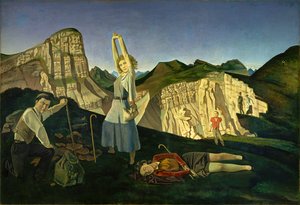
      Kariyeri boyunca Balthus sürekli olarak belirli motiflere ve temalara dönmüştür. La Rue (1933) erken dönemde kompozisyon ustalığını ve atmosferi örneklendiriyor, rahatsız edici bir tecrit duygusuyla tasvir edilen bir sokak sahnesi sunuyor. İki ergen kızın sert bir manzarada yer aldığı anıtsal bir çalışma olan The Mountain (1937), sanatçının gençlik ve yalnızlıkla ilgisini somutlaştırıyor. Daha sonraki eserler, François Truffaut’nun Domicile Conjugal filminde ünlü bir şekilde yer alan Girl at a Window (1957) gibi tabloları, iç gözlem anlarını yakalama yeteneğini gösteriyor. Tabloları genellikle durağanlık ve sessizlik ile karakterize ediliyor, izleyicileri konularının iç yaşamlarını düşünmeye davet ediyor. Ayrıca Wolfgang Amadeus Mozart’ın eserleri de dahil olmak üzere müziğe derinden ilgi duyuyordu; sanatında elde etmeyi amaçladığı düzen ve duygu dengesini yansıttığına inanıyordu. Balthus’un kalıcı çekiciliği sadece teknik virtüözlüğünde değil, aynı zamanda bağlantı özlemi, izolasyon korkusu ve kaotik bir dünyada anlam arayışı gibi evrensel insan deneyimlerine dokunma yeteneğinde de yatmaktadır.

      All 200 works by Balthus →