Atölye — Dünya çapında ücretsiz gönderim — 2–6 hafta içinde teslimat
      Berthe Morisot, 1841 – 1895

      Berthe Morisot: The 100 Best-Known Paintings

      Of all Berthe Morisot's paintings, Bebek Yatağı (1872) is the most famous; it hangs in the Musée d'Orsay, Paris. Close behind come Berthe Morisot Bourges France 1841 1885 1895 İzlenimci Huzurun Bir Bakışı Berthe Morisot'un "Gül Bahçesinin Bir Köşesi" adlı eseri, yumuşak ve sıcak gün batımı tonlarıyla yıkan sakin bir bahçe sahnesine izleyicileri davet ediyor. Bu büyüleyici eser, (1885) and Thatched Cottage in Normandy (1865). Among the 361 works by Berthe Morisot in our catalogue, these 100 are the most celebrated, each shown with its date, its museum and its story.

      Ranked by our popularity score, which combines the searches, visits and orders for each work. Updated Ekim 2026. Each painting on this page can be ordered as an oil reproduction painted by hand on linen canvas, or as a fine art print, made to the size you choose.

      Portrait of Berthe Morisot
      Berthe Morisot · 1841 – 1895
      Born · died
      1841 – 1895, Bourges
      Movement
      Impressionism
      Works in our catalogue
      361
      Most famous
      Bebek Yatağı (1872)
      Most works at
      Musée Marmottan Monet

      Berthe Morisot's 10 most celebrated paintings

      Bebek Yatağı (1872) by Berthe Morisot
      1

      Bebek Yatağı

      1872 · Tuval Üzerine Yağlı Boya · Musée d'Orsay, Paris

      Berthe Morisot’un 1872 yılında tamamladığı “Bebek Arabası” (Le Berceau), sadece bir tablo olmanın ötesinde, annelik duygusunun, evin sıcaklığının ve anlık bir mutluluğun dokunaklı bir yansımasıdır. İzleyiciyi, empresyonist fırça darbeleriyle yaratılmış yumuşak renklerin ve ışığın dansıyla, özel bir dünyanın içine çeken bu eser, Morisot’un sanatsal dehasının en çarpıcı örneklerinden biri olarak kabul edilir. Tabloda, kız kardeşini (Edma Portillon) ve onun uyuyan bebeğini tasvir eden Morisot, gündelik yaşamın sıradan bir anını, eşsiz…

      Berthe Morisot

Bourges

France

1841

1885

1895

İzlenimci Huzurun Bir Bakışı
Berthe Morisot'un "Gül Bahçesinin Bir Köşesi" adlı eseri, yumuşak ve sıcak gün batımı tonlarıyla yıkan sakin bir bahçe sahnesine izleyicileri davet ediyor. Bu büyüleyici eser, (1885) by Berthe Morisot
      2

      Berthe Morisot Bourges France 1841 1885 1895 İzlenimci Huzurun Bir Bakışı Berthe Morisot'un "Gül Bahçesinin Bir Köşesi" adlı eseri, yumuşak ve sıcak gün batımı tonlarıyla yıkan sakin bir bahçe sahnesine izleyicileri davet ediyor. Bu büyüleyici eser,

      1885 · Tuval Üzerine Yağlı Boya

      Bir Gül Bahçesinin Köşesi: Morisot'nun Huzurlu İzlenimi Berthe Morisot’nun “Bir Gül Bahçesinin Köşesi” adlı eseri, izleyiciyi yumuşak, sıcak renklerin banyosunda yüzen sakin bir bahçe sahnesine davet ediyor. 1885 yılında tamamlanan bu büyüleyici eser, Morisot'nun Empresyonist tarzındaki ustalığının bir kanıtı niteliğindedir; doğanın geçici güzelliğini gevşek fırça darbeleri ve canlı bir renk paletiyle yakalıyor. Bu tablo, sadece bir manzara değil, aynı zamanda modern yaşamın içtenlikli anlarını yansıtan, Morisot'nun kendine özgü bakış açısının…

      Thatched Cottage in Normandy (1865) by Berthe Morisot
      3

      Thatched Cottage in Normandy

      1865 · Oil On Canvas

      To stand before Berthe Morisot’s depiction of a Thatched Cottage in Normandy is to step through a veil and into the gentle embrace of a bygone French afternoon. This painting, executed in 1865, is far more than a mere record of rural architecture; it is an immersion into the very spirit of life lived at the rhythm of the seasons. Morisot captures that quintessential joie de vivre found in the…

      Study, The Water's Edge (1864) by Berthe Morisot
      4

      Study, The Water's Edge

      1864 · Oil On Canvas

      Berthe Morisot’s “Study, The Water’s Edge,” painted in 1864, is more than just a depiction of a serene lakeside scene; it’s an intimate glimpse into the heart of Impressionism. This small canvas – measuring 60 x 73 cm – vibrates with a delicate energy, capturing not just what Morisot saw but also the fleeting emotions and sensations of that particular moment. The painting immediately draws the viewer in with its…

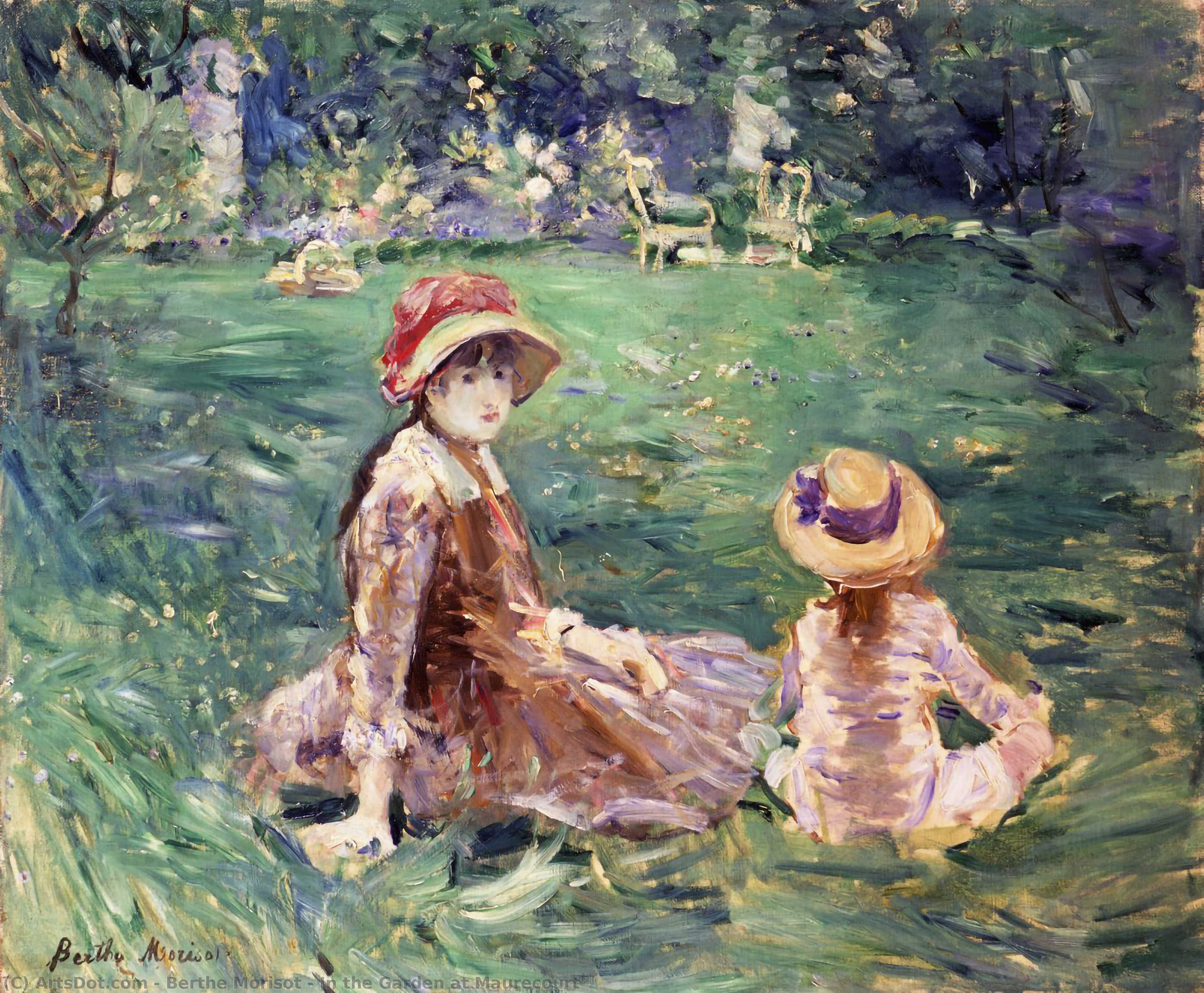
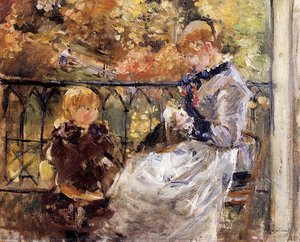
      In the Garden at Maurecourt (1884) by Berthe Morisot
      5

      In the Garden at Maurecourt

      1884 · Oil On Canvas · Toledo Sanat Müzesi, Toledo

      In the soft, dappled sunlight of a French afternoon, Berthe Morisot’s “In the Garden at Maurecourt” invites the viewer into a sanctuary of profound stillness. Completed in 1884, this masterpiece serves as a window into the Belle Époque, capturing a moment that feels both fleeting and eternal. The scene unfolds within a lush, verdant garden—likely the Morisot estate near Maurecourt—where two young figures, including the artist’s daughter Julie, are nestled…

      Portrait of Edma (1870) by Berthe Morisot
      6

      Portrait of Edma

      1870 · Oil On Canvas · Courtauld Galerisi, Londra

      In the soft, flickering light of a Parisian afternoon, Berthe Morisot captures more than just a likeness in her 1871 masterpiece, Portrait of Edma. This painting serves as a profound window into the intimate domesticity that defined much of the Impressionist movement’s early explorations. The subject, Edma Pontillon—Morisot’s own sister-in-law—is not presented with the stiff, formal grandeur typical of academic portraiture. Instead, she is nestled within a private, quiet moment,…

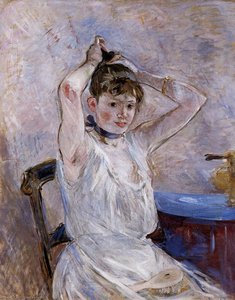
      The Bath (1886) by Berthe Morisot
      7

      The Bath

      1886 · Oil On Canvas

      To stand before Berthe Morisot’s The Bath is to step into a moment suspended in time—a breath held within the soft glow of an afternoon indoors. This painting, executed in 1886, transcends a mere depiction of daily routine; it captures the very essence of private contemplation. The scene unfolds with remarkable delicacy: a woman seated amidst the quiet rituals of self-care, brushing her hair. Morisot does not merely record what…

      The Quay at Bougival (1883) by Berthe Morisot
      8

      The Quay at Bougival

      1883 · Oil On Canvas · Nasjonalgalleriet, Oslo

      To gaze upon Berthe Morisot’s “The Quay at Bougival” is to step through a portal into the heart of French Impressionism, where the boundaries between reality and perception begin to dissolve. Completed in 1883, this exquisite oil on canvas serves as much more than a mere landscape; it is a rhythmic, breathing snapshot of life along the Seine. The scene captures the bustling waterfront of Bougival, a serene suburb of…

      Daffodils (1885) by Berthe Morisot
      9

      Daffodils

      1885 · Oil On Canvas

      To stand before Berthe Morisot’s Daffodils is not merely to observe a still life; it is to step directly into a sun-drenched, breathlessly beautiful moment captured by the brush. Painted in 1885, this work radiates the delicate spirit of Impressionism, inviting the viewer into an intimate contemplation of nature’s cyclical promise. The composition centers on a simple arrangement: vibrant yellow daffodils gathered within a vase accented with cool blue hues,…

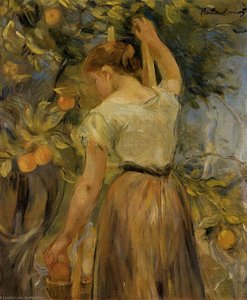
      Young Woman Picking Oranges (1889) by Berthe Morisot
      10

      Young Woman Picking Oranges

      1889 · Oil On Canvas

      To stand before Berthe Morisot's Young Woman Picking Oranges is to step directly into a sun-dappled moment suspended in time. This exquisite oil on canvas, dating from 1889, is not merely a depiction of an afternoon chore; it is a lyrical meditation on leisure, femininity, and the very nature of light itself. Morisot, a central figure whose genius blossomed within the vibrant currents of Impressionism, captures life with an almost…

      Berthe Morisot paintings ranked 11 to 100

      The Garden at Bougival (1884) by Berthe Morisot
      #11

      The Garden at Bougival

      1884 · Musée Marmottan Monet

      Berthe Morisot’s “The Garden at Bougival,” painted in 1884, is more than just a depiction of a sun-drenched garden; it's an intimate glimpse into the heart of the…

      Bring this light home →
      Woman in Black (1878) by Berthe Morisot
      #12

      Woman in Black

      1878 · National Gallery of Ireland

      To stand before Berthe Morisot's Woman in Black is to step directly into the luminous, fleeting moments of late nineteenth-century Parisian life. This portrait, painted in 1878, transcends…

      Have it painted by hand →
      Little Dancer (1885) by Berthe Morisot
      #14

      Little Dancer

      1885

      To stand before Berthe Morisot's Little Dancer is not merely to observe a painting; it is to step into a suspended moment of quiet contemplation. This exquisite oil…

      Order this canvas →
      Roses (1894) by Berthe Morisot
      #15

      Roses

      1894

      In this 1894 oil on canvas, Berthe Morisot presents us with Roses, a quiet study within the flower painting genre. This work emerged during a period when the…

      Have it painted by hand →
      Mother and Sister of the Artist (1869) by Berthe Morisot
      #17

      Mother and Sister of the Artist

      1869 · National Gallery of Art

      In the quiet corners of art history, few works capture the ephemeral beauty of domestic life as tenderly as Berthe Morisot’s 1869 masterpiece, "Mother and Sister of the…

      Order this canvas →
      Young Girl with Basket (1892) by Berthe Morisot
      #18

      Young Girl with Basket

      1892 · Philadelphia Museum of Art

      In this 1892 oil on canvas, we find ourselves in a private, intimate space, observing a young girl seated in a wicker chair. She is captured in profile,…

      Have it painted by hand →
      Portrait of a Child (1894) by Berthe Morisot
      #19

      Portrait of a Child

      1894 · Philadelphia Museum of Art

      A Luminous Encounter with Innocence Portrait of a Child unfolds in a soft, golden glow that seems to emanate from within the canvas itself. A young subject sits…

      Have it painted by hand →
      Young Girl with Hat (1891) by Berthe Morisot
      #23

      Young Girl with Hat

      1891 · Şikago Sanat Enstitüsü

      A young girl is captured in a moment of quietude, her form emerging from a dark, indistinct background. She is positioned slightly off-center, viewed from the waist up…

      Order this canvas →
      The Port of Nice (1882) by Berthe Morisot
      #33

      The Port of Nice

      1882

      Painted during a pivotal moment in art history, “The Port of Nice” reflects the burgeoning Impressionist movement’s challenge to traditional academic painting. Berthe Morisot, alongside artists like Monet…

      Have it painted by hand →
      Port of Gorey (1886) by Berthe Morisot
      #34

      Port of Gorey

      1886

      The Port of Gorey is a stunning oil on canvas painting by the renowned French artist Berthe Morisot, created in 1886. This beautiful representation of the ocean, measuring…

      Bring this light home →
      Çubuk Sütü (1890) by Berthe Morisot
      #35

      Çubuk Sütü

      1890

      Berthe Morisot’s “The Bowl of Milk”: A Moment Frozen in Impressionist Light Berthe Morisot's "The Bowl of Milk," painted in 1890, stands as a quintessential example of Impressionism—a…

      Have it painted by hand →
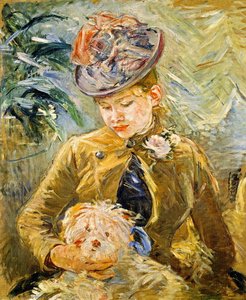
      Girl with a Dog (1887) by Berthe Morisot
      #65

      Girl with a Dog

      1887

      Berthe Morisot's "Girl with a Dog," painted in 1887, is a captivating portrait that showcases her unique style and skill as an artist. This oil on canvas painting…

      Have it painted by hand →
      Hide and Seek (1873) by Berthe Morisot
      #68

      Hide and Seek

      1873

      “Hide and Seek” is an oil on canvas painting created by Berthe Morisot in 1873, showcasing a beautiful depiction of everyday life in the 19th century. This artwork…

      Have it painted by hand →
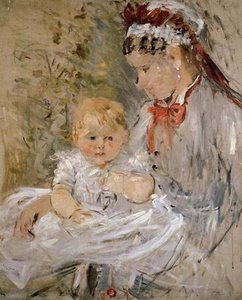
      Julie with Her Nurse (1880) by Berthe Morisot
      #75

      Julie with Her Nurse

      1880 · Ny Carlsberg Glyptotek

      Berthe Morisot's Julie with Her Nurse, painted in 1880, is more than just a portrait; it’s a tender exploration of motherhood and domestic life within the burgeoning Impressionist…

      Have it painted by hand →
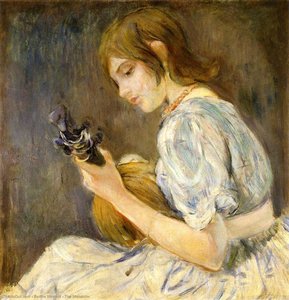
      The Mandolin (1889) by Berthe Morisot
      #78

      The Mandolin

      1889

      In the delicate brushstrokes of Berthe Morisot’s The Mandolin, we find ourselves transported to a private, melodic moment captured within the fleeting essence of the Impressionist era. The…

      Order this canvas →
      Haying at Mezy (1891) by Berthe Morisot
      #79

      Haying at Mezy

      1891

      Berthe Morisot's "Haying at Mezy," painted in 1891, is a captivating example of Impressionist art that transports viewers to the serene landscapes of rural France. This oil on…

      Have it painted by hand →
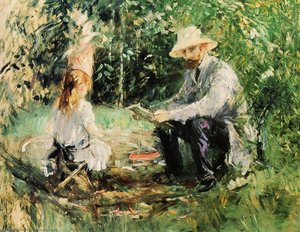
      Julie and Eugene Manet (1883) by Berthe Morisot
      #80

      Julie and Eugene Manet

      1883

      To gaze upon Berthe Morisot’s Julie and Eugene Manet is to step directly into the luminous, fleeting moments of late nineteenth-century Parisian life. This oil on canvas, dating…

      Order this canvas →
      Rosbras (Finistere) (1866) by Berthe Morisot
      #81

      Rosbras (Finistere)

      1866

      Berthe Morisot was a French painter and one of the leading figures in the Impressionist movement. Her painting, Rosbras (Finistère), created in 1866, is a beautiful representation of…

      Order this canvas →
      Child in the Rose Garden (1881) by Berthe Morisot
      #86

      Child in the Rose Garden

      1881 · Wallraf-Richartz Müzesi

      Berthe Morisot's Child in the Rose Garden, painted in 1881, is a quintessential example of Impressionism, capturing a fleeting moment of childhood innocence within a tranquil garden setting.…

      Have it painted by hand →
      The Basket Chair (1882) by Berthe Morisot
      #87

      The Basket Chair

      1882 · Museum of Fine Arts

      The Basket Chair is an oil on canvas created by Berthe Morisot. This work emerged in 1882, capturing a quiet moment within the garden. The paint settles upon…

      Have it painted by hand →
      Peasant Girl among Tulips (1890) by Berthe Morisot
      #88

      Peasant Girl among Tulips

      1890

      To gaze upon this depiction, Peasant Girl among Tulips, is to step directly into a sun-dappled moment suspended in time. The scene unfolds with an exquisite intimacy, centering…

      Order this canvas →
      Portrait of Jeanne Pontillon (1894) by Berthe Morisot
      #89

      Portrait of Jeanne Pontillon

      1894 · Musée d'Art et d'Histoire de Genève

      The Portrait of Jeanne Pontillon is a stunning oil on canvas painting created by the renowned French artist Berthe Morisot in 1894. This beautiful piece of art measures…

      Order this canvas →

      Berthe Morisot's canvases, period by period

      What Berthe Morisot painted most

      The four subjects that return most often on these canvases, each with its best-loved example.

      Where Berthe Morisot's canvases hang

      The 8 museums that hold the most of the paintings on this page.

      Museum City Works by Berthe Morisot Paintings from this list
      Musée Marmottan Monet, ParisMusée Marmottan Monet Paris 15 The Garden at Bougival, On the edge of the lake, In the apple tree
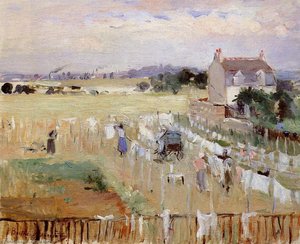
      National Gallery of Art, WashingtonNational Gallery of Art Washington 13 Two Sisters on a Couch (also known as The Sisters), Mother and Sister of the Artist, Hanging the Laundry out to Dry
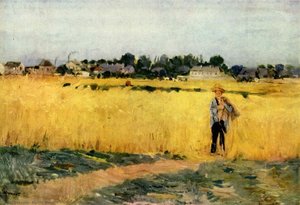
      Musée d'Orsay, ParisMusée d'Orsay Paris 10 Bebek Yatağı, On a Bench in the Bois de Boulogne, In the Wheatfield at Gennevilliers
      Wallraf-Richartz Müzesi, KölnWallraf-Richartz Müzesi Köln 3 Child among the Hollyhocks, Child in the Rose Garden
      Philadelphia Museum of Art, PhiladelphiaPhiladelphia Museum of Art Philadelphia 2 Young Girl with Basket, Portrait of a Child
      Museum of Fine Arts, HoustonMuseum of Fine Arts Houston 2 Young Woman, The Basket Chair
      Yale University Art Gallery, New HavenYale University Art Gallery New Haven 2 Young Woman and Child, The Harbor at Cherbourg
      Şikago Sanat Enstitüsü, ChicagoŞikago Sanat Enstitüsü Chicago 4 Young Girl with Hat

      Decade by decade: Berthe Morisot's most celebrated canvas

      1. 1860s
        Thatched Cottage in Normandy (1865) by Berthe Morisot
        3 of 100

        Thatched Cottage in Normandy

        Age 19 – 28

        To stand before Berthe Morisot’s depiction of a Thatched Cottage in Normandy is to step through a veil and into the gentle embrace of a bygone French afternoon.…

      2. 1870s
        Bebek Yatağı (1872) by Berthe Morisot
        Ranked 1 of 100

        Bebek Yatağı

        Age 29 – 38 · Musée d'Orsay

        Berthe Morisot’un 1872 yılında tamamladığı “Bebek Arabası” (Le Berceau), sadece bir tablo olmanın ötesinde, annelik duygusunun, evin sıcaklığının ve anlık bir mutluluğun dokunaklı bir yansımasıdır. İzleyiciyi, empresyonist fırça…

      3. 1880s
        Berthe Morisot

Bourges

France

1841

1885

1895

İzlenimci Huzurun Bir Bakışı
Berthe Morisot'un "Gül Bahçesinin Bir Köşesi" adlı eseri, yumuşak ve sıcak gün batımı tonlarıyla yıkan sakin bir bahçe sahnesine izleyicileri davet ediyor. Bu büyüleyici eser, (1885) by Berthe Morisot
        2 of 100

        Berthe Morisot Bourges France 1841 1885 1895 İzlenimci Huzurun Bir Bakışı Berthe Morisot'un "Gül Bahçesinin Bir Köşesi" adlı eseri, yumuşak ve sıcak gün batımı tonlarıyla yıkan sakin bir bahçe sahnesine izleyicileri davet ediyor. Bu büyüleyici eser,

        Age 39 – 48

        Bir Gül Bahçesinin Köşesi: Morisot'nun Huzurlu İzlenimi Berthe Morisot’nun “Bir Gül Bahçesinin Köşesi” adlı eseri, izleyiciyi yumuşak, sıcak renklerin banyosunda yüzen sakin bir bahçe sahnesine davet ediyor. 1885…

      4. 1890s
        Roses (1894) by Berthe Morisot
        Canvas 15 of 100

        Roses

        Age 49 – 54

        In this 1894 oil on canvas, Berthe Morisot presents us with Roses, a quiet study within the flower painting genre. This work emerged during a period when the…

      Your questions on Berthe Morisot's paintings, answered

      Which is the most celebrated painting by Berthe Morisot?Read the answer

      Bebek Yatağı (1872), Musée d'Orsay, Paris. Berthe Morisot Bourges France 1841 1885 1895 İzlenimci Huzurun Bir Bakışı Berthe Morisot'un "Gül Bahçesinin Bir Köşesi" adlı eseri, yumuşak ve sıcak gün batımı tonlarıyla yıkan sakin bir bahçe sahnesine izleyicileri davet ediyor. Bu büyüleyici eser, (1885) and Thatched Cottage in Normandy (1865) follow.

      How old was Berthe Morisot at the time of Bebek Yatağı?Read the answer

      Berthe Morisot, born in 1841, was 31 years old: Bebek Yatağı dates from 1872.

      Which ten paintings is Berthe Morisot most famous for?Read the answer

      Bebek Yatağı, Berthe Morisot Bourges France 1841 1885 1895 İzlenimci Huzurun Bir Bakışı Berthe Morisot'un "Gül Bahçesinin Bir Köşesi" adlı eseri, yumuşak ve sıcak gün batımı tonlarıyla yıkan sakin bir bahçe sahnesine izleyicileri davet ediyor. Bu büyüleyici eser,, Thatched Cottage in Normandy, Study, The Water's Edge, In the Garden at Maurecourt, Portrait of Edma, The Bath, The Quay at Bougival, Daffodils and Young Woman Picking Oranges. Each canvas in the ranking above comes with its year and its museum.

      How many paintings by Berthe Morisot are known?Read the answer

      361 works by Berthe Morisot are in our catalogue, dated 1863 to 1894.

      Which museums hold Berthe Morisot's best-known canvases?Read the answer

      Mostly in Musée Marmottan Monet (Paris), National Gallery of Art (Washington) and Musée d'Orsay (Paris); the list above names each museum and its canvases.

      In which years did Berthe Morisot paint the most celebrated canvases?Read the answer

      In 1880s, which gave 35 of the 100 works on this page, Berthe Morisot Bourges France 1841 1885 1895 İzlenimci Huzurun Bir Bakışı Berthe Morisot'un "Gül Bahçesinin Bir Köşesi" adlı eseri, yumuşak ve sıcak gün batımı tonlarıyla yıkan sakin bir bahçe sahnesine izleyicileri davet ediyor. Bu büyüleyici eser, among them.

      What are the first and the last of Berthe Morisot's famous canvases?Read the answer

      The earliest canvas here is Memory of the Banks of l'Oise (1863); the latest is Roses (1894).

      Which subjects return most often in Berthe Morisot's paintings?Read the answer

      Portrait (14), Women (12) and Domestic scene (10), across the 100 works on this page.

      What did Berthe Morisot usually paint with?Read the answer

      Oil On Canvas, used in 39 of the 100 works on this page.

      To which art movement does Berthe Morisot belong?Read the answer

      Impressionism, as the canvases on this page show.

      What can I see by Berthe Morisot at the Musée Marmottan Monet?Read the answer

      The Musée Marmottan Monet, Paris holds 4 of the works on this page, among them The Garden at Bougival, On the edge of the lake and In the apple tree.

      Can I order a hand-painted copy of a painting by Berthe Morisot?Read the answer

      Yes. Every painting on this page can be ordered from its own page as an oil reproduction painted by hand, or as a fine art print, in the size you choose.

      Berthe Morisot: the painter's story

      Erken Yaşam, Aile ve Sanatsal Eğitim

      Berthe Morisot, 14 Ocak 1841 tarihinde Fransa'nın Bourges şehrinde dünyaya geldi. Ev yaşamı ile sanat arasındaki sınırların sık sık birbirine karıştığı, varlıklı bir burjuva ailesinin içinde büyüdü. Babası Edmé Tiburce Morisot, Cher departmanında kaymakamlık görevini yürütüyordu. Annesi Marie-Joseph-Cornélie Thomas ise, Jean-Honoré Fragonard'ın büyük yeğeni olarak Rokoko geleneğiyle olan bağıyla aileye sanatsal bir miras katmıştı. Bu köklü soy, onun en erken yaşlarından itibaren sanatla iç içe bir geçmişin temelini oluşturdu.

      Sanatsal eğitimi, Geoffroy-Alphonse Chocarne ve Joseph Guichard'dan aldığı özel derslerle başladı. 1858 yılına gelindiğinde, vaktinin büyük bir kısmını Louvre Müzesi'nde geçiriyor, Eski Üstatların eserlerini kopyalayarak boyanın mekaniğini öğreniyordu. Bu yoğun çalışma dönemi, Jean-Baptiste-Camille Corot ve Achille-Francois Oudinot'nun rehberliğiyle zenginleşti. 1863-64 kış mevsiminde ise Aimé Millet'in yanında heykel üzerine yaptığı çalışmalarla dikkati fiziksel formun derinliklerine de yöneldi.

      İzlenimcilik Hareketi ve Sergiler

      1864 yılında Morisot, çalışmalarını ilk kez Paris Salonu'nda izleyiciyle buluşturdu. Sanat dünyasının resmi kapı bekçisi sayılan Salon'da yer almak, onun için dönüm noktası niteliğinde bir adımdı. Ancak o, kendini bu geleneksel mekanların sınırlarıyla sınırlı tutmadı; aksine, zamanla İzlenimciler olarak tanınacak olan Parisli ressamlar çevresinin vazgeçilmez bir üyesi haline geldi. Bu grubun içindeki varlığı süreklilik arz ediyordu. 1874 ile 1886 yılları arasında düzenlenen sekiz İzlenimci sergisinden, biri hariç tamamında yer alarak sanat tarihine imzasını attı.

      Bu tarihi buluşmaların ilki, fotoğrafçı Nadar'ın stüdyosunda gerçekleşti. 15 Nisan'da kapılarını açan ve 15 Mayıs 1874'e kadar devam eden bu sergi, dönemin yerleşik normlarından radikal bir kopuşu temsil ediyordu. Morisot, diğer sanatçılarla birlikte orada, yeni bir görme biçimini tanımlamaya yardımcı olmak için bulunuyordu. Takip eden on yıl boyunca düzenlenen çeşitli sergilerde, kendi özgün bakış açısını ve benzersiz üslubunu sunmaya devam ederek grubun en güçlü seslerinden biri oldu.

      Özel Yaşamı ve Manet ile Olan Bağlantısı

      Morisot’nun özel yaşamı ile sanatı arasındaki sınırlar çoğu zaman birbirine karışır, iç içe geçerdi. İki ablası Yves ve Edma ile küçük kardeşi Tiburce ile birlikte, sıcak bir aile ortamında büyüdü. 1868 yılında Édouard Manet ile tanışması, zamanla derin bir karşılıklı etki ve dostluğa dönüştü. Manet, onu farklı kıyafetler ve ruh halleri içinde defalarca tuvale aktarırken; Morisot, Paris’in değişken ışığı içinde kendi özgün yolunu bulmaya devam etti. Onların arasındaki ilişki, sadece bir dostluk değil, aynı zamanda entelektüel bir alışveriş ve ortak bir sanatsal amaç üzerine kuruluydu.

      1874 yılında Morisot, Édouard’ın kardeşi Eugène Manet ile evlenerek modern resmi yeniden tanımlayan sanatçı çevresine daha da sıkı bağlarla bağlandı. 1878 yılında Paris’te dünyaya gelen kızı Julie Manet, ev yaşamı ile avangardın radikal tartışmaları arasındaki sınırların oldukça ince olduğu bir evde büyüyecekti; Julie, sanatın üretildiği ve üzerine derin tartışmaların yapıldığı o odaların en canlı tanıklarından biri olacaktı.

      Teknik ve Sanatsal Üslup

      Morisot’nun tuvalle kurduğu ilişki, dokunuşlarındaki o eşsiz hafifliğe dayanır. Işığın ve atmosferin değişken niteliklerini doğrudan doğadan yakalamak için sıklıkla plein air yöntemini kullanarak açık havada çalışmayı tercih etmiştir. Açık havada çalışma alışkanlığı, renklerin o geçici nüanslarını gevşek ve kendinden emin fırça darbeleriyle tuvale aktarmasına olanak tanımıştır. Fırça izleri akışkandır; yüzey üzerinde, ağır ve yorucu katmanlardan kaçınan, anlık bir canlılık hissiyle hareket eder. Sanat pratiği yalnızca yağlı boya ile sınırlı kalmamış; farklı dokuları ve ışık efektlerini keşfetmek adına suluboya ve pastel üzerine de yoğunlaşmıştır.

      Konularının kenarlarını işleyişinde kendine has bir yöntemi vardır. Sert ve belirgin hatlar kullanmak yerine, formu inşa etmek için kesikli renkler ve küçük pigment darbeleri tercih eder. Bu teknik, nesneler arasında titreyen bir efekt yaratarak, nesnelerin kendisi kadar somut bir hava hissi oluşturur. Ev yaşamını tasvir ettiği eserlerinde bu yöntem, ten üzerindeki yumuşak parıltıyı veya ışığın bir bahçenin içinden süzülüşünü ustalıkla yakalar. Sonuç, sanki sahne tek bir, aceleye getirilmemiş gözlem anında kaydedilmişçesine ortaya çıkan o doğal ve kendiliğinden gelişen duygu halidir.

      Başlıca Eserleri ve İkonik Tabloları

      1872 yılında Morisot, kız kardeşi Edma'nın uyuyan kızı Blanche'ı izleyişini tuvale aktardığı The Cradle adlı yağlı boya çalışmasıyla derin bir duygu dünyası sunar. Kompozisyonda, annenin bakışları ile beşikteki kumaşın oluşturduğu diyagonal hat, izleyicinin gözünü doğrudan bebek üzerine çeker. Bu eser, sanatçının annelik temasını ilk kez bu denli güçlü bir şekilde keşfettiği anlardan biridir; sınırlı bir renk paleti ve akışkan fırça darbeleriyle sessiz, koruyucu bir sevgi atmosferi yaratır.

      Morisot'nun varlığı, diğer sanatçıların eserlerinde de sıkça karşımıza çıkar; bunun en çarpıcı örneği, 1872 yılında Édouard Manet'nin Berthe Morisot with a Bouquet of Violets tablosunu yapmasıdır. Bu portrede Morisot, siyah yas kıyafetleri içinde, boyun kısmında zarif bir menekşe buketi ile tasvir edilir. Işığın bir yandan yüzüne vurması, yüzünün diğer yarısını derin bir gölge içinde bırakırken; siyah tonlar üzerindeki bu çalışma, kıyafetlerin koyuluğu ile arka planın aydınlığı arasındaki çarpıcı kontrastı vurgular.

      Sanatçının külliyatındaki diğer önemli yapıtlar arasında şunlar yer alır:

      Kariyerinin ilerleyen dönemlerinde, 1894 yılında The Hydrangea eserini üretmiştir. Işığın ve rengin en ince nüanslarını, gevşek ve kendinden emin fırça darbeleriyle tuvale aktarma yeteneği, resim yaptığı yıllar boyunca onun değişmez imzası olmuştur.

      Eserlerini Bugün Nerede Görebilirsiniz?

      Berthe Morisot'nun o eşsiz fırça darbelerini yakından hissetmek isteyen bir sanatsever için yolculuk Paris'ten başlayabilir. Musée d'Orsay, aralarında The Cradle eserinin de bulunduğu altı tablosuna ev sahipliği yapmaktadır. 1872 yılında resmettiği bu dokunaklı çalışma, sanatçının kız kardeşi Edma'nın uyuyan bir çocuğun başında bekleyişini gözler önüne serer. Paris'teki bir diğer durak olan Musée Marmottan Monet ise koleksiyonunda sanatçının beş değerli eserini barındırmaktadır.

      Sanatçının izleri Fransa sınırlarını aşarak Washington, D.C.'ye kadar uzanır. National Gallery of Art, Berthe Morisot'nun altı tablosuna ev sahipliği yapmaktadır. Bu zengin koleksiyon içerisinde, 1869 yılında kaleme aldığı Mother and Sister of the Artist eserini bulmak mümkündür. Washington'daki diğer önemli parçalar arasında, her ikisi de 1875 tarihli olan In the Dining Room ve Hanging the Laundry out to Dry yer almaktadır.

      Sanatçının diğer bazı eserleri ise Madrid'deki Thyssen-Bornemisza Museum ve Stockholm'deki Nationalmuseum gibi farklı coğrafyalarda yaşamaktadır. Bu eserler, sanatçının farklı mekanlarda ışığı ve ev yaşamı sahnelerini nasıl ustalıkla işlediğine dair derinlemesine ve huzurlu bir bakış sunmaktadır.

      All 361 works by Berthe Morisot →