
Atölye — Dünya çapında ücretsiz gönderim — 2–6 hafta içinde teslimat
      Maria Primachenko, 1908 – 1997

      Maria Primachenko: The 97 Best-Known Paintings

      Of all Maria Primachenko's paintings, Three Parrots on a Soldier's Grave (1982) is the most famous. Close behind come I Give My Little Stars to Children (1983) and The Little Elephant Who Wanted to Be a Sailor (1973). Among the 97 works by Maria Primachenko in our catalogue, these 97 are the most celebrated, each shown with its date, its museum and its story.

      Ranked by our popularity score, which combines the searches, visits and orders for each work. Updated Ekim 2026.

      Portrait of Maria Primachenko
      Maria Primachenko · 1908 – 1997
      Born · died
      1908 – 1997
      Movement
      Naive art / primitivism
      Works in our catalogue
      97
      Most famous
      Three Parrots on a Soldier's Grave (1982)

      Maria Primachenko's 10 most celebrated paintings

      Let Us Go to the Betrothal Party (1968) by Maria Primachenko
      7

      Let Us Go to the Betrothal Party

      1968 · Gouache

      In the vibrant tapestry of twentieth-century Naive Art, few works radiate as much warmth and cultural vitality as Maria Primachenko’s 1968 masterpiece, "Let Us Go to the Betrothal Party." This gouache painting is far more than a mere depiction of a festive occasion; it is an immersive window into the heart of Ukrainian folklore. At its center, a man and a woman stand in a tender embrace, their figures rendered…

      Flax Blooms and a Cossack Goes to a Girl (1982) by Maria Primachenko
      8

      Flax Blooms and a Cossack Goes to a Girl

      1982 · Acrylic On Canvas

      In the enchanting realm of Maria Primachenko’s artistry, the boundaries between reality and folklore dissolve into a vibrant tapestry of color and cultural memory. Her masterpiece, Flax Blooms and a Cossack Goes to a Girl, serves as a breathtaking window into the soul of Ukraine. At first glance, the viewer is swept up in a whirlwind of saturated hues and whimsical forms that evoke the joyous spirit of a traditional…

      Maria Primachenko paintings ranked 11 to 97

      My Flowers To Those Who Love Peace (1983) by Maria Primachenko
      #11

      My Flowers To Those Who Love Peace

      1983

      In this 1983 work, Maria Primachenko offers a quiet, colorful meditation on the concept of tranquility. The composition centers on a stylized, ornamental structure, reminiscent of a central…

      Wild Bull and Raven Are Friends (1983) by Maria Primachenko
      #14

      Wild Bull and Raven Are Friends

      1983

      In the enchanting realm of Maria Primachenko’s 1983 masterpiece, "Wild Bull and Raven Are Friends," the boundaries between reality and folklore dissolve into a vibrant tapestry of color…

      Crane Makes Friends with a Fox (1979) by Maria Primachenko
      #15

      Crane Makes Friends with a Fox

      1979

      The Maria Primachenko painting, "Crane Makes Friends with a Fox", is a captivating example of Naive Art/Primitivism, a style characterized by its simplicity, flat rendering, and lack of…

      Lovely Spring, What Did You Bring. (1977) by Maria Primachenko
      #16

      Lovely Spring, What Did You Bring.

      1977

      In the vibrant masterpiece "Lovely Spring, What Did You Bring," the legendary Ukrainian artist Maria Primachenko invites us into a world where nature and myth intertwine with breathtaking…

      Two-Headed Chicken (1977) by Maria Primachenko
      #17

      Two-Headed Chicken

      1977

      In this 1977 composition, two large yellow birds occupy the central space of a 62 x 85 cm canvas. These avian figures possess elongated necks and are positioned…

      Ukrainian Wedding (1966) by Maria Primachenko
      #18

      Ukrainian Wedding

      1966

      In the vibrant tapestry of twentieth-century Naive Art, few threads are as luminous and emotionally resonant as those woven by Maria Primachenlyko. Her 1966 masterpiece, Ukrainian Wedding, serves…

      Ukraine Blooming (1979) by Maria Primachenko
      #19

      Ukraine Blooming

      1979

      In the enchanting realm of Naive Art, few works capture the pure, unadulterated joy of nature quite like Maria Primachenko’s Ukraine Blooming. Created in 1979, this masterpiece serves…

      Flax Blooms, a Bride Goes to Her Groom (1983) by Maria Primachenko
      #20

      Flax Blooms, a Bride Goes to Her Groom

      1983

      In the enchanting realm of Maria Primachenko’s imagination, reality dissolves into a tapestry of myth and memory. Flax Blooms, a Bride Goes to Her Groom serves as a…

      Do I Love Orchards, Do I Love Forests (1968) by Maria Primachenko
      #21

      Do I Love Orchards, Do I Love Forests

      1968

      In the vibrant masterpiece Do I Love Orchards, Do I Love Forests, created in 1968, the legendary Ukrainian artist Maria Primachenko invites us into a world where the…

      Wild and Big-Eared (1977) by Maria Primachenko
      #22

      Wild and Big-Eared

      1977

      The Naive Art/Primitivism style has always been a fascinating genre, and one artist who embodies its spirit is Maria Primachenko. Her painting, Wild and Big-Eared, created in 1977,…
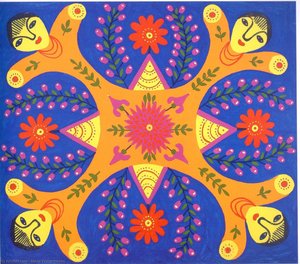
      Tablecloth (1976) by Maria Primachenko
      #23

      Tablecloth

      1976

      Created in 1976, this gouache work by Maria Primachenko utilizes a flattened perspective to organize a complex visual field. The composition centers on a large circle, which is…

      Ukrainian Dancers (1983) by Maria Primachenko
      #24

      Ukrainian Dancers

      1983

      In the vibrant tapestry of twentieth-century Ukrainian art, few works capture the pure, unadulterated joy of nature quite like Maria Primachenko’s Ukrainian Dancers. Created in 1983, this masterpiece…

      Monkey Riding a Four-Headed Beast (1982) by Maria Primachenko
      #25

      Monkey Riding a Four-Headed Beast

      1982

      The painting Monkey Riding a Four-Headed Beast by Maria Primachenko is a vibrant and captivating example of Naive Art/Primitivism, a style characterized by its simplicity, flat rendering, and…

      Dumplings on the Shelf (1979) by Maria Primachenko
      #26

      Dumplings on the Shelf

      1979

      In the tender, vibrant strokes of "Dumplings on the Shelf," we encounter the enchanting world of Maria Primachenko, a master of Naive Art who transformed the mundane into…
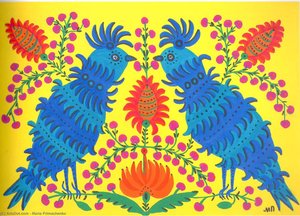
      Two Kites (1982) by Maria Primachenko
      #27

      Two Kites

      1982

      In the vibrant realm of Naive Art, few works capture the whimsical essence of nature as tenderly as Maria Primachenko’s 1982 masterpiece, Two Kites. This enchanting gouache painting…

      Red Poppies (1982) by Maria Primachenko
      #29

      Red Poppies

      1982

      Red Poppies is a work by Maria Prymachenko, executed in 1982. Measuring 85 x 61 cm, the piece belongs to the Naive Art and Primitivism movements. It reflects…

      Poppy (1983) by Maria Primachenko
      #52

      Poppy

      1983

      In the enchanting realm of Naive Art, few works capture the rhythmic pulse of life as tenderly as Maria Primachenko’s Poppy. Created in 1983, this masterpiece serves as…

      This Bear Wants to Have Some Flour Milled (1972) by Maria Primachenko
      #54

      This Bear Wants to Have Some Flour Milled

      1972

      In the enchanting realm of Maria Primachenko’s imagination, the boundaries between the mundane and the magical dissolve into a vibrant tapestry of color and folklore. Her captivating gouache…

      Tiger Laughs (1982) by Maria Primachenko
      #66

      Tiger Laughs

      1982

      Here are the cantos, eighteen of them, each one different in form, mood, color, beat, scale, and key. There are no cadenzas. Each is separate. Each can stand…

      Pigeons (1968) by Maria Primachenko
      #75

      Pigeons

      1968

      In the vast landscape of twentieth-century art, few voices resonate with as much pure, unadulterated joy as that of Maria Primachenko. Her 1968 masterpiece, "Pigeons," serves as a…

      A Cow Like That Gives 5,000 Liters a Day (1978) by Maria Primachenko
      #76

      A Cow Like That Gives 5,000 Liters a Day

      1978

      The painting "A Cow Like That Gives 5,000 Liters a Day" by Maria Primachenko is a stunning example of Naive Art/Primitivism, a style characterized by its simplicity, flat…

      Ukrainian Dough Looks Into Every House (1977) by Maria Primachenko
      #77

      Ukrainian Dough Looks Into Every House

      1977

      In the enchanting realm of Maria Primachenko’s 1977 masterpiece, "Ukrainian Dough Looks Into Every House," the boundaries between reality and myth dissolve into a vibrant, dreamlike landscape. This…

      My Bouquet to Grain Growers (1983) by Maria Primachenko
      #78

      My Bouquet to Grain Growers

      1983

      In the vibrant tapestry of twentieth-century Ukrainian art, few works capture the whimsical essence of life quite like Maria Primachenko’s My Bouquet to Grain Growers. Created in 1983,…

      Our Army, Our Protectors (1978) by Maria Primachenko
      #79

      Our Army, Our Protectors

      1978

      The painting "Our Army, Our Protectors" by Maria Primachenko is a stunning example of Naive Art/Primitivism, a style characterized by its simplicity, flat rendering, and lack of formal…

      Savage Hump-Shaker (1977) by Maria Primachenko
      #80

      Savage Hump-Shaker

      1977

      The Naive Art/Primitivism style has always been a fascinating genre, and one artist who embodies its spirit is Maria Primachenko. Her painting, Savage Hump-Shaker, created in 1977, is…

      Maiden and Cossack Enjoying a Ride on Horseback (1982) by Maria Primachenko
      #81

      Maiden and Cossack Enjoying a Ride on Horseback

      1982

      The painting Maiden and Cossack Enjoying a Ride on Horseback by Maria Primachenko is a stunning example of Naive Art, a style characterized by its simplicity, flat rendering,…

      A Hare's Birthday Party (1977) by Maria Primachenko
      #82

      A Hare's Birthday Party

      1977

      The Naive Art/Primitivism style has always been a fascinating genre, and one artist who embodies its spirit is Maria Primachenko. Her painting, "A Hare's Birthday Party", created in…

      A Coward Went A-Hunting (1983) by Maria Primachenko
      #83

      A Coward Went A-Hunting

      1983

      The Naive Art/Primitivism movement has long been a source of fascination for art enthusiasts, and Maria Primachenko's work is a stunning example of this style. Her painting, A…

      A Bunch of Red Flowers on Read Army Day (1970) by Maria Primachenko
      #84

      A Bunch of Red Flowers on Read Army Day

      1970

      The painting A Bunch of Red Flowers on Read Army Day is a stunning example of Naive Art/Primitivism, a style characterized by its simplicity, flat rendering, and lack…

      October Flowers (1968) by Maria Primachenko
      #85

      October Flowers

      1968

      The painting October Flowers is a stunning example of Naive Art/Primitivism, a style characterized by its simplicity, flat rendering, and lack of formal training. Created in 1968 by…

      This Beast is Making Magic (1983) by Maria Primachenko
      #86

      This Beast is Making Magic

      1983

      The painting "This Beast is Making Magic" by Maria Primachenko is a captivating example of Naive Art/Primitivism, a style characterized by its simplicity, flat rendering, and lack of…

      Menagerie (1977) by Maria Primachenko
      #87

      Menagerie

      1977

      The Menagerie by Maria Primachenko is a captivating example of Naive Art/Primitivism, a style characterized by its simplicity, flat rendering, and lack of formal training. Created in 1977,…

      An Outer Space Memory (1977) by Maria Primachenko
      #88

      An Outer Space Memory

      1977

      The Maria Primachenko painting, An Outer Space Memory, is a fascinating example of Naive Art/Primitivism. Created in 1977, this piece showcases the artist's unique style and perspective. The…
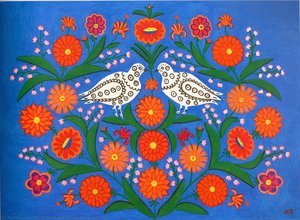
      Pigeon and Dove (1982) by Maria Primachenko
      #89

      Pigeon and Dove

      1982

      The painting "Pigeon and Dove" by Maria Primachenko is a stunning example of Naive Art/Primitivism, a style characterized by its simplicity, flat rendering, and lack of formal training.…

      Blue Birds in Flowers (1983) by Maria Primachenko
      #90

      Blue Birds in Flowers

      1983

      The painting Blue Birds in Flowers by Maria Primachenko is a stunning example of Naive Art, a style characterized by its simplicity, flat rendering, and lack of formal…

      Dear Cosmonauts, I Give You These Red Poppies (1983) by Maria Primachenko
      #91

      Dear Cosmonauts, I Give You These Red Poppies

      1983

      The painting Dear Cosmonauts, I Give You These Red Poppies is a stunning example of Naive Art/Primitivism, a style characterized by its simplicity, flat rendering, and lack of…

      Wild Cat (1977) by Maria Primachenko
      #92

      Wild Cat

      1977

      The Wild Cat painting by Maria Primachenko is a stunning example of Naive Art/Primitivism, a style characterized by its simplicity, flat rendering, and lack of formal training. Created…

      Red Snowball Tree Blooms Over a Well (1982) by Maria Primachenko
      #93

      Red Snowball Tree Blooms Over a Well

      1982

      The painting "Red Snowball Tree Blooms Over a Well" by Maria Primachenko is a stunning example of Naive Art/Primitivism, a style characterized by its simplicity, flat rendering, and…

      A Dove Has Spread Her Wings and Asks for Peace (1982) by Maria Primachenko
      #94

      A Dove Has Spread Her Wings and Asks for Peace

      1982

      The painting A Dove Has Spread Her Wings and Asks for Peace by Maria Primachenko is a stunning example of Naive Art/Primitivism, a style characterized by its simplicity,…

      Ukrainian Milkmaids Work Hard Like Miners (1970) by Maria Primachenko
      #95

      Ukrainian Milkmaids Work Hard Like Miners

      1970

      The Ukrainian Milkmaids Work Hard Like Miners painting by Maria Primachenko is a stunning example of Naive Art/Primitivism, a style characterized by its simplicity, flat rendering, and lack…

      Ola Man and Old Woman Carry a Turnip (1983) by Maria Primachenko
      #96

      Ola Man and Old Woman Carry a Turnip

      1983

      The painting "Ola Man and Old Woman Carry a Turnip" by Maria Primachenko is a stunning example of Naive Art/Primitivism, a style characterized by its simplicity, flat rendering,…

      The Lark (1976) by Maria Primachenko
      #97

      The Lark

      1976

      The Maria Primachenko painting, The Lark, is a stunning example of Naive Art/Primitivism, a style characterized by its simplicity, flat rendering, and lack of formal training. Created in…

      Maria Primachenko's canvases, period by period

      What Maria Primachenko painted most

      The four subjects that return most often on these canvases, each with its best-loved example.

      Decade by decade: Maria Primachenko's most celebrated canvas

      1. 1930s
      2. 1960s
        Let Us Go to the Betrothal Party (1968) by Maria Primachenko
        7 of 97

        Let Us Go to the Betrothal Party

        Age 52 – 61

        In the vibrant tapestry of twentieth-century Naive Art, few works radiate as much warmth and cultural vitality as Maria Primachenko’s 1968 masterpiece, "Let Us Go to the Betrothal…

      3. 1970s
      4. 1980s

      Your questions on Maria Primachenko's paintings, answered

      Which is the most celebrated painting by Maria Primachenko?Read the answer

      Three Parrots on a Soldier's Grave (1982), followed by I Give My Little Stars to Children (1983) and The Little Elephant Who Wanted to Be a Sailor (1973).

      How old was Maria Primachenko at the time of Three Parrots on a Soldier's Grave?Read the answer

      Maria Primachenko, born in 1908, was 74 years old: Three Parrots on a Soldier's Grave dates from 1982.

      Which ten paintings is Maria Primachenko most famous for?Read the answer

      Three Parrots on a Soldier's Grave, I Give My Little Stars to Children, The Little Elephant Who Wanted to Be a Sailor, Corncob Horse in Outer Space, Lamd Has Harnesed a Wolf, Magpie in Roses, Let Us Go to the Betrothal Party, Flax Blooms and a Cossack Goes to a Girl, Black Beast and Taras Hryhorovych Shevchenko Arrives From His Exile to Flowering Ukraine. Each canvas in the ranking above comes with its year and its museum.

      How many paintings by Maria Primachenko are known?Read the answer

      97 works by Maria Primachenko are in our catalogue, dated 1936 to 1983.

      In which years did Maria Primachenko paint the most celebrated canvases?Read the answer

      In 1980s, which gave 46 of the 97 works on this page, Three Parrots on a Soldier's Grave among them.

      What are the first and the last of Maria Primachenko's famous canvases?Read the answer

      The earliest canvas here is Black Beast (1936); the latest is I Give My Little Stars to Children (1983).

      Which subjects return most often in Maria Primachenko's paintings?Read the answer

      Animals (30), Flowers (23) and Birds (14), across the 97 works on this page.

      What did Maria Primachenko usually paint with?Read the answer

      Gouache, used in 24 of the 97 works on this page.

      To which art movement does Maria Primachenko belong?Read the answer

      Naive art / primitivism, as the canvases on this page show.

      Maria Primachenko: the painter's story

      Ukrayna Topraklarına Köklenmiş Bir Yaşam

      1908 yılında Kiev yakınlarındaki küçük Bolotnya köyünde dünyaya gelen Maria Aksentievna Primachenko, eserleri kategorize edilemeyen gerçek bir vizyoner olarak Ukrayna'nın en ünlü ve kendine özgü sanatçılarından biri olarak öne çıktı. Hayatı; kadim folklorun, canlı geleneklerin ve doğayla kurulan samimi bir bağın hüküm sürdüğü kırsal yaşamın ritimleriyle derinlerak iç içe geçmişti. Küçük yaşlardan itibaren Maria'nın yolu alışılagelmiş beklentilerden saptı; çocukken yakalandığı çocuk felci onu uzun süreler eve mahkûm etse de, bu izolasyon beklenmedik bir şekilde sanatsal bir çiçeklenme için bereketli bir zemin oluşturdu. Yetenekli nakış sanatçıları olan annesi ve büyükannesi, ona Ukrayna halk sanatının karmaşık tekniklerini ve sembolik dilini aşıladılar; bu miras, onun eşsiz üslubunun temel taşı olacaktı. Bu erken dönem dersleri yalnızca teknik birer eğitim değil, aynı zamanda kültürel belleğin aktarımı, dünyayı anlam ve büyüyle dolu bir şekilde görme biçimiydi. Maria, renkli iplikler ve asırlık desenlerle çevrili bu biçimlendirici yıllarda, olağanüstü bir görsel kelime dağarcığı geliştirmeye başladı.

      Saf Bir Keşif: Sınır Tanımayan Bir Üslup

      Primachenko'nun sanatı genellikle "naif" olarak tanımlanır; ancak bu terim yanıltıcı derecede kısıtlayıcı olabilir. Her ne kadar resmi bir sanat eğitimi almamış olsa da, eserleri derin bir sofistike yapıya sahiptir; ham ve evcilleşmemiş bir enerji, kompozisyon ve renk konusundaki derin bir anlayışla birleşir. 1930'larda sanatçı Tetiana Floru tarafından keşfedildikten sonra Maria, yeteneğinin kısa sürede fark edildiği Kiev Kooperatif Nakış Derneği'ne katıldı. Bu durum, sanatsal yolculuğunda dönüm noktası olan Kiev Ukrayna Sanat Müzesi'ndeki deneysel atölyelere davet edilmesini sağladı. İşte burada, nakış motiflerini ve tekniklerini resme dönüştürmeye başladı; fantastik yaratıkların, canlı çiçeklerin ve gündelik yaşam sahnelerinin benzersiz bir kişisel mercekten yeniden kurgulandığı devasa tuvaller ortaya çıktı. Konuları yalnızca gözlemden ibaret değildi; rüyalardan, anılardan ve derin bir hayal gücü kaynağından fışkırıyordu. İnsan yüzlü aslanlar, oyunbaz kur yapma ritüelleri içindeki kuşlar, karmaşık desenlerle süslenmiş atlar... Bunlar sadece birer temsil değil, Ukrayna'nın umutlarının, korkularının ve sarsılmaz ruhunun somutlaşmış halleriydi.

      Her Fırça Darbesine İşlenmiş Sembolizm

      Primachenko'nun sanatının gücü, yalnızca görsel coşkusu değil, aynı zamanda zengin sembolizmidir. Resimleri, Ukrayna folklorundan alınan motiflerle doludur: yaşamı ve yenilenmeyi temsil eden kadim güneş çarkları, özgürlüğü ve barışı simgeleyen kuşlar ve kötü ruhlara karşı koruyucu rol üstlenen atlar. Bu semboller bilinçli bir şifreli mesaj yöntemi olarak kullanılmamış; aksine, kültürel geçmişinden ve doğal dünyaya dair sezgisel anlayışından organik olarak doğmuştur. Resimlerindeki hayvanlar sıklıkla insani özellikler kazanarak düğünlere, doğum günlerine ve diğer sosyal etkinliklere katılır; böylece hayvanlar alemi ile insan dünyası arasındaki sınırları bulanıklaştırırlar. Bu kişileştirme (antropomorfizm) basit bir hayal ürünü değil, tüm canlılara duyulan derin saygının ve onların içsel onuruna olan inancın bir yansımasıdır. Renk kullanımı da aynı derecede önemlidir; neşe, canlılık ve dünya dışı bir güzellik hissi uyandıran cesur, doygun tonlar... Desenlerin ve dokuların katmanlanması, izleyiciyi kendi fantastik dünyasına çeken dinamik bir görsel yüzey yaratır.

      Tanınma ve Ölümsüz Miras

      Maria Primachenko'nun yeteneği gözden kaçmadı. 1937 yılında eserleri Paris Dünya Fuarı'nda sergilendi ve burada izleyicileri büyülemeyi başardı; hatta Pablo Picasso'nun bile hayranlığını kazandı. Picasso, eğer Fransa'da yaşasaydı kendisinden daha ünlü olabileceğini söyleyerek ona olan takdirini dile getirmişti. Sergi sırasında altın madalya alan sanatçı, eşsiz üslubuyla uluslararası bir tanınırlık kazandı. Zorluklarla ve siyasi çalkantılarla dolu dönemlere rağmen Primachenko, hayatı boyunca boyamaya devam ederek Ukrayna'nın güzelliğini ve dirençliliğini yücelten 800'den fazla eser üretti. Sanatı, bir ulusal kimlik sembolü haline geldi; halk geleneklerinin ve insan ruhunun kalıcı gücünün bir kanıtı oldu. Bugün Maria Primachenko, bir ulusun kalbi ve ruhunu temsil eden kültürel bir hazine olarak saygı görmektedir; hatırası pullarda ve madeni paralarda yaşamaya devam etmektedir. Birçok eserine ev sahipliği yapan Ivankiv Tarihi ve Yerel Tarih Müzesi'ne yapılan son saldırılar, onun mirasını korumanın önemini bir kez daha vurgulamıştır.

      Barış İçin Bir Çağrı: Modern Dünyada Primachenko

      2022 Rusya'nın Ukrayna'yı işgaliyle birlikte, Maria Primachenko'nun sanatı yeni bir anlam kazandı. İnsanlar ve hayvanlar arasındaki uyum sahnelerini betimleyen canlı tabloları, barışın ve direnişin güçlü sembolleri haline geldi. Ivankiv saldırıları sırasında bazı eserlerinin yok edilmesi, çatışma zamanlarında kültürel mirasın kırılganlığını sarsıcı bir şekilde hatırlattı. Ancak bu durum, aynı zamanda sanatına duyulan yenilenmiş bir takdiri de tetikledi; bu, onun kalıcı gücünün ve evrensel mesajının bir kanıtıdır. Primachenca'nın tabloları yalnızca estetik nesneler değildir; onlar umudun, direncin ve Ukrayna'ya duyulan derin sevginin ifadeleridir. Mirası, dünyanın dört bir yanındaki sanatçılara ve izleyicilere ilham vermeye devam ederek, bize kültürel gelenekleri korumanın ve zorluklar karşısında insan yaratıcılığının güzelliğini kutlamanın önemini hatırlatmaktadır. Onun eseri, sanatın sarsılmaz gücünün canlı bir kanıtı olarak durmaktadır; karanlığın gölgesinde kalan bir dünyada umudun ışığıdır.

      All 97 works by Maria Primachenko →