

 Переглянути в інтер'єрі
 Надіслати як листівку
 Поділитися
 Деталі витвору
 Посібник

 Завантажити
 Схожі екземпляри
 Рентгенівське дослідження
 Слайд-шоу
 Питання та відповіді
 Статистика
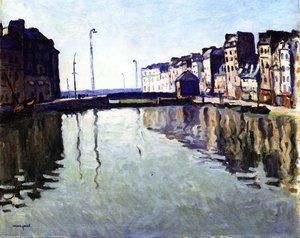
Rotterdam


This painting showcases Albert Marquet’s distinctive Fauvist approach to landscape art. Featuring a panoramic view of Rotterdam harbor filled with boats, it exemplifies Marquet's use of bold color palettes and simplified forms—a hallmark of his artistic legacy.
 Розгорнути текст
Альбер Марек (1875-1947) – французький художник, відомий своїми спокійними пейзажами та морськими краєвидами з акцентом на світло та атмосферу. Його роботи – це витончені інтерпретації природи, що вплинули на розвиток сучасного мистецтва.
Гікле / Художній принт
Друк جيкле або на полотні музейної якості з оперативним виготовленням та різноманітними варіантами фінішної обробки. ( Замовити картину ручної роботи Перейти до цифрових зображень)




P118B ₴10

P118H ₴10

P118W ₴10

P438Z ₴10

P508JH ₴12

P508YH ₴12

P805H ₴10

P805Z ₴10

P919BZ ₴10

P919G ₴10

P919XJ ₴10

P959ZH ₴10

P968JZ ₴12

W106C ₴8

W218G ₴10

W218JH ₴8

W218Y ₴10

W307PJ ₴10

W316G ₴10

W316PJ ₴8

W316Y ₴10

W398PJ ₴8

W4111J ₴10

W500HY ₴15

W500JH ₴15

W692G ₴12

W849H ₴8

W940BG ₴15

W953PJ ₴8




Стандартний розмір
індивідуальний розмір
CM
INCH
Обирайте з наших стандартних розмірів, що відповідають оригінальним пропорціям твору мистецтва.
Loading sizes...

ширина
висота
Введіть необхідну ширину та висоту, щоб принт ідеально підійшов до вашої рами або стіни. Принт можна лише обрізати, але не можна зробити більшим за оригінал, тому при зміні пропорцій частина зображення буде втрачена. Перед друком ми надсилаємо вам цифровий макет для затвердження. Зображення на цій сторінці не відображає реальну обрізку — її можна побачити лише на макеті.
Доставка по всьому світу () за 2 тижні замість стандартних 4/5 тижнів. (11 Листопад)

Безкоштовна експрес-доставка по всьому світу

Високоякісне лляне полотно

Повне страхове покриття доставки

Гарантія повернення митних зборів

Гарантія точного відтворення кольорів

Політика повернення протягом 100 днів (лише у разі виявлення дефектів)

Гарантія повернення 100% коштів

Пропозиція на оптові замовлення
 Скляний варіант доступний лише для розмірів до 110 см

Rotterdam
Гікле / Художній принт
Розмір репродукції
-


Підсумкова вартість
₴ 3148
Identification of Rotterdam by Albert Marquet
Albert Marquet produced Rotterdam in 1914. The oil on canvas captures the harbor city of Rotterdam, focusing on the expansive water and the numerous boats that populate the port. The scene reflects the industrial activity of the era, including the presence of several ships and a car visible in the upper corner.
The work belongs to a period when Marquet was moving away from the intense color palettes of Fauvism toward a more naturalistic exploration of light and atmosphere. His approach emphasizes tonal harmony and the interplay between sunlight and the water's surface. This specific composition focuses on the everyday movements of maritime life rather than dramatic vistas.
Other works by the artist include:
- Flood in Paris, 1910
- Matisse in Manguin's Studio, 1905
Composition and Visual Elements
The composition offers a panoramic view of the harbor, organized around an expansive expanse of water. This aquatic plane is dominated by at least 14 boats of varying sizes and positions, which establish a sense of depth and perspective across the harbor. These vessels are distributed from the immediate foreground toward the distant horizon, creating a layered arrangement that guides the eye through the maritime activity.
Human presence is integrated into the landscape through several people scattered throughout the scene, appearing as small figures attending to vessels or observing the water. In the upper left corner, a car is visible, a detail that situates the scene within an era of increasing urban mechanization. The arrangement of these elements emphasizes the continuous movement of port life.
Питання та відповіді
Як я можу придбати принт «Rotterdam» роботи Альбер Марке?
«Rotterdam» доступний як художній принт на бавовняному полотні або архівному канвас-папері. Замовити його у будь-якому обраному вами розмірі можна на сторінці Художній принт.
Який відтінок переважає у творі "Rotterdam"?
Переважаючий відтінок твору «Rotterdam» роботи Альбер Марке — Golden Yellow Range. Цей колір є основою всієї палітри.
Чи належить «Rotterdam» роботи Альбер Марке до найбільш затребуваних творів Fauvist Landscape?
«Rotterdam» роботи Альбер Марке має рівень популярності Recognized і належить до течії Fauvist Landscape.
Схожі твори мистецтва




Біографія митця
A Life Immersed in Light and Color
Albert Marquet, a name synonymous with serene landscapes and the evocative dance of light, was born in Bordeaux, France, on March 27, 1875. His artistic journey wasn’t one of sudden bursts of brilliance but rather a gradual unfolding, beginning within the vibrant chaos of Fauvism before settling into a deeply personal style characterized by meticulous observation and atmospheric sensitivity. From his early years, Marquet displayed an innate ability to capture the essence of a scene—a talent nurtured initially in the bustling streets of Bordeaux and later refined during his formative years in Paris. It was here, at fifteen, that he enrolled at the École des Arts Décoratifs, laying the foundation for his future as a painter. A pivotal moment arrived when he crossed paths with Henri Matisse – a friendship that would prove to be one of the most influential relationships in the artist’s career. Together, they shared a studio, fostering an environment brimming with creative exchange and mutual inspiration. This collaboration wasn't merely about sharing space; it was about absorbing each other’s techniques and approaches, shaping Marquet’s artistic vision in profound ways. Marquet continued his formal training at the prestigious École des Beaux-Arts under Gustave Moreau, a renowned Symbolist painter. Moreau’s influence is evident in Marquet’s early works—a subtle infusion of symbolism and an appreciation for the expressive potential of line. However, it was during this period that Marquet began to diverge from the purely symbolic approach, embarking on a path toward a more modern style. He participated in the groundbreaking 1905 Salon d'Automne alongside Matisse, André Derain, and Maurice de Vlaminck – artists who would become known as the Fauves ("wild beasts") for their audacious use of color. While embracing the bold palette of this movement, Marquet’s approach remained distinctively his own. Unlike some of his contemporaries, he possessed a remarkable control over drawing and light, skillfully modulating colors to create harmonious compositions that were both dynamic and balanced. This inherent restraint hinted at the evolution towards a more naturalistic style that would define much of his later work.From Fauve Ferocity to Serene Landscapes
Marquet’s emergence as an artist coincided with the birth of Fauvism, a movement celebrated for its unrestrained use of color and expressive brushwork. His participation in the 1905 Salon d'Automne cemented his place within this revolutionary artistic circle. The critics’ derisive label – “les fauves” – didn’t deter Marquet; instead, it fueled his determination to explore the possibilities of color as a means of conveying emotion and atmosphere. However, around 1910, he began distancing himself from the purely expressive fervor of Fauvism, increasingly turning to landscapes as his primary subject matter. This shift wasn't a rejection of color but rather a refinement of its application—a move toward capturing the subtle nuances of light and shadow that define the natural world. He embarked on extensive travels throughout Europe and North Africa, seeking inspiration in the diverse environments he encountered. These journeys weren’t merely about documenting locations; they were explorations of atmosphere, light, and the quiet poetry of everyday life. The ports of Marseilles, Rouen, and Le Havre became recurring subjects, as did the coastal landscapes of North Africa—each painting imbued with Marquet's unique sensibility.- Key Locations:** Normandy, France; Algeria; Italy; Germany; Scandinavia
- Travel Focus:** Capturing light and atmosphere in diverse environments.
A Master of Atmosphere and Light
Marquet’s artistic vision was deeply rooted in a sensitivity to light and atmosphere. His landscapes are not simply representations of places but rather evocations of mood and sensation—a testament to his profound understanding of color theory and composition. He masterfully captured shimmering reflections on water, the hazy glow of sunlight filtering through mist, and the subtle nuances of color that define a particular time of day or season. His technique involved abbreviated brushstrokes and a muted palette—grays, blues, and ochres—allowing him to convey both form and atmosphere with remarkable economy. He wasn’t interested in replicating reality exactly; instead, he sought to capture the *feeling* of being present within a landscape – its warmth, coolness, stillness, or movement. Matisse himself recognized a kinship between Marquet’s work and that of Japanese masters like Hokusai, noting a shared emphasis on calligraphic simplicity and the evocative power of line. The artist wasn't interested in merely reproducing what he saw; he sought to capture the feeling of being there.Legacy and Enduring Influence
Albert Marquet passed away in La Frette-sur-Seine, France, on June 14, 1947, leaving behind a body of work that continues to captivate audiences with its quiet beauty and subtle emotional depth. His paintings are held in prestigious museums worldwide, including the Musée National d'Art Moderne in Paris, the Tate Gallery in London, and The Museum of Modern Art, attesting to his enduring significance in the history of modern art. While initially recognized as a key figure in Fauvism, Marquet’s lasting legacy lies in his ability to transcend stylistic labels and create a uniquely personal vision. He demonstrated that it was possible to embrace modernity without sacrificing traditional values such as draftsmanship and composition. His influence can be seen in the work of subsequent generations of landscape painters who sought to capture the fleeting beauty of the natural world with sensitivity and restraint. Marquet’s art reminds us of the power of observation, the importance of light, and the enduring appeal of a serene and contemplative vision. He remains a testament to the artist's ability to find profound meaning in the everyday.Key Characteristics of Marquet’s Style
- Fauvist Beginnings: Early works demonstrate bold color palettes characteristic of Fauvism, though with more restraint than some contemporaries.
- Emphasis on Light and Atmosphere: A defining feature of his mature work, focusing on capturing the ephemeral qualities of light and its effect on landscapes.
- Muted Palette: A preference for grays, blues, and ochres to convey atmosphere and form with economy.
- Abbreviated Brushstrokes: A technique used to suggest rather than define details, enhancing the sense of movement and light.
- Influence of Japanese Art: A noted appreciation for the calligraphic simplicity and evocative power of line found in Japanese prints.

Альбер Марке
1875 - 1947 , Франція
Короткі факти
- Artistic Movement Or Style: Фавзм, Реалізм
- Artists Or Movements Influenced By This Artist: ['Фавзм']
- Artists Who Influenced This Artist:
- Г. Моро
- Маттьюс
- Date Of Birth: 1875
- Date Of Death: 1947
- Full Name: Albert Marquet
- Nationality: Француз
- Notable Artworks:
- Морські привиди
- Порт Марсеї
- Place Of Birth: Бурдо, Франція
Пов'язані статті

Capturing the Mist: The Timeless Beauty of British Landscape Impressionism
Explore the ethereal beauty of British Landscape Impressionism. Discover how masters captured light and mist through plein air techniques, offering a profound connection to the English countryside's timeless, atmospheric soul.