


 Надіслати
 Поділитися
 Деталі
 Посібник

 Завантажити
 Схожі предмети колекціонування
 Слайд-шоу
 Статистика переглядів
Venus and Mars


Marvel at Antonio Canova's 'Venus and Mars,' a neoclassical sculpture celebrating peace & harmony. This iconic marble masterpiece, commissioned by the Prince Regent, embodies love and war’s union.
 Читати далі
Відкрийте для себе Антоніо Канова (1757-1822), неперевершеного скульптора епохи неокласицизму! Насолоджуйтесь його шедеврами, такими як "Купідон і Псіхея", "Три Грації" та іншими. Дізнайтеся про життя та спадщину цього генія!
Гікле / Художній принт
Музейна якість друку جيкле або на полотні з оперативним виготовленням та різноманітними варіантами фінішної обробки. ( Купити картину ручної роботи Перейти до цифрових зображень)




































Стандартний розмір
на замовлення
CM
INCH
Обирайте з наших стандартних розмірів, що відповідають оригінальним пропорціям твору мистецтва.
Loading sizes...

ширина
висота
Ви можете вказати власні розміри, щоб репродукція ідеально підійшла до конкретної рами або інтер'єру. Якщо обраний вами розмір не відповідає пропорціям оригіналу, ми або обріжемо полотно, або розширимо зображення за допомогою дзеркального відображення чи суцільної заливки країв. Перед початком виробництва вам буде надіслано цифровий макет для затвердження.
Будь ласка, зверніть увагу, що попередній перегляд на екрані не відображає фактичне обрізання або розширення. Тільки макет точно покаже фінальну композицію.
Хоча можливість замовлення індивідуальних розмірів доступна, ми рекомендуємо обирати формат із попередньо визначеного списку, щоб зберегти оригінальні пропорції.
Доставка по всьому світу () за 2 тижні замість стандартних 4/5 тижнів. (10 Жовтень)

Безкоштовна експрес-доставка по всьому світу

Високоякісне лляне полотно

Повне страхове покриття доставки

Гарантія повернення митних зборів

Гарантія точного відтворення кольорів

Політика повернення протягом 100 днів (лише у разі виявлення дефектів)

Гарантія повернення 100% коштів

Знижка на оптові замовлення
 Скляний варіант доступний лише для розмірів до 110 см

Venus and Mars
Гікле / Художній принт
Розмір репродукції
-


Загальна вартість
₴ 3076
A Moment of Divine Union: Antonio Canova’s “Venus and Mars”
Antonio Canova's "Venus and Mars," completed in 1822, is more than just a sculpture; it’s a carefully orchestrated tableau of opposing forces achieving an unexpected harmony. This magnificent marble work, currently residing within the Royal Collection at Buckingham Palace, offers a profound meditation on love, war, peace, and the enduring power of artistic creation. Commissioned by Prince Regent George IV during his visit to London, the sculpture represents a pivotal moment in Canova’s career – a bold departure from the rigid formality of Neoclassicism while firmly rooted in classical ideals.
The subject matter itself is strikingly original for its time. Rather than depicting Venus and Mars engaged in battle or mythological drama, as was common in earlier representations, Canova presents them in an intimate embrace. The goddess Venus, a figure synonymous with beauty, fertility, and love, is rendered with exquisite sensuality – her flesh soft and yielding, her limbs draped in delicate folds of fabric that hint at both vulnerability and power. Her gaze is directed towards Mars, the god of war, creating a dynamic tension within the composition. Mars, traditionally portrayed as a stern and imposing figure, stands powerfully upright, his musculature meticulously sculpted to convey strength and resolve. He holds his spear firmly in one hand, a symbol of his dominion over conflict, yet his posture suggests a willingness to yield to the allure of Venus’s affection.
The Neoclassical Masterstroke: Technique and Form
Canova's mastery of marble carving is immediately evident. The sheer scale of “Venus and Mars” – standing nearly two meters tall – commands attention, while the intricate detail of each muscle fiber, wrinkle, and drapery fold speaks to his unparalleled skill. The sculpture exemplifies the Neoclassical style, drawing inspiration from the idealized forms and balanced compositions of ancient Greek and Roman art. However, Canova transcends mere imitation; he infuses these classical elements with a profound sense of emotion and psychological depth. The smooth, polished surface of the marble creates an illusion of life, capturing the subtle nuances of human expression and movement.
The technique employed is particularly noteworthy. Canova utilized a subtractive method, carefully removing material from a larger block of Carrara marble to reveal the desired form. This process demanded immense patience and precision, allowing him to achieve an astonishing level of realism and anatomical accuracy. The subtle gradations in tone – achieved through meticulous polishing and shading – further enhance the sculpture’s three-dimensionality, creating a captivating interplay of light and shadow.
A Symbol of Reconciliation: Historical Context and Meaning
The creation of “Venus and Mars” coincided with the Congress of Vienna (1814–1815), an international conference that reshaped Europe after Napoleon’s defeat. The sculpture, therefore, can be interpreted as a potent symbol of reconciliation – a visual representation of the end of war and the dawn of a new era of peace. Venus, representing love and harmony, gently embraces Mars, signifying the triumph of diplomacy over conflict. This theme resonated deeply with Prince George IV, who commissioned the work to celebrate the restored stability of Europe.
Furthermore, Canova’s choice of depicting the figures in the nude was a deliberate artistic statement. In classical art, nudity served as a means of celebrating human beauty and virtue, stripping away artificial conventions to reveal the inherent dignity of the human form. By presenting Venus and Mars unclothed, Canova elevates their union to a realm of pure emotion and spiritual significance.
An Enduring Legacy: Emotional Impact and Artistic Significance
“Venus and Mars” continues to captivate viewers with its profound emotional resonance. The sculpture’s inherent tension – the interplay between love and war, beauty and strength – invites contemplation on the complexities of human nature. The figures' embrace is not merely a physical gesture; it represents a merging of opposing forces, suggesting that even the most seemingly irreconcilable elements can find harmony within themselves.
Beyond its historical and symbolic significance, “Venus and Mars” stands as a testament to Canova’s artistic genius. It remains one of his most celebrated works, admired for its technical brilliance, emotional depth, and enduring beauty. Reproductions of this iconic sculpture offer an opportunity to experience the power and grace of Canova's vision in any setting – a timeless reminder of the transformative potential of art.
Запитання та відповіді
Де я можу завантажити «Venus and Mars» Антоніо Канава?
Для твору «Venus and Mars» доступне завантаження: на сторінці Завантажити ви можете завантаження цифрового зображення високої роздільної здатності.
Хто є автором "Venus and Mars" і до якого напряму він належить?
«Venus and Mars» була створена Антоніо Канава у стилі Neoclassical Sculpture. Автор та художній напрям визначають традицію цього твору.
У якому році було створено "Venus and Mars"?
«Venus and Mars» Антоніо Канава було створено у 1816 році.
Хто створив "Venus and Mars"?
«Venus and Mars» приписують Антоніо Канава.
Наскільки відомим є твір "Venus and Mars" автора Антоніо Канава?
«Venus and Mars» Антоніо Канава має рівень популярності Iconic. Ця класифікація відображає ступінь впізнаваності цього твору.
Скільки років було Антоніо Канава, коли створювався твір "Venus and Mars" у 1816 році?
Антоніо Канава було 59 років, коли він створив «Venus and Mars» у 1816 році. Вік обчислено на основі року народження митця, 1757.
Чи є «Venus and Mars» Антоніо Канава суспільним надбанням?
Статус авторського права для «Venus and Mars» Антоніо Канава: цей твір є є суспільним надбанням — термін дії авторського права закінчився. Це визначає, чи можна вільно створювати репродукції зображення.
Біографія митця
Антоніо Канова: Життя в мармурі
- Народився: Поссаґно, Італія (1757)
- Помер: 1822
Антоніо Канова постає величчю в історії західного мистецтва, по праву вважаючись найвидатнішим скульптором епохи неокласицизму. Його майстерність у різьбленні по мармуру та здатність наповнювати класичні форми глибокою емоцією закріпили його місце серед найвеличніших митців усіх часів. Народившись у Поссаґно, Італія, у родині П’єтро Канова, каменяра, юний Антоніо ріс у середовищі, де мистецтво було невід'ємною частиною повсякденного життя.
Ранні роки та навчання
- Сімейне коріння: Професія батька забезпечила перше знайомство з обробкою каменю, а його дідусь, Пасіно Канова, скульптор, що спеціалізувався на вівтарях та рельєфах, відіграв вирішальну роль у плеканні його таланту.
- Ранній художній розвиток: Ще до десятиріччя Канова демонстрував надзвичайні здібності, створюючи маленькі мармурові святині, що свідчили про його вроджений дар. Він проходив навчання під керівництвом Джузеппе Бернарді («Торретто») та Джованні Феррарі, невпинно вдосконалюючи свою майстерність.
- Академічні студії: Його навчання в Академії витончених мистецтв Венеції принесло численні нагороди, що зміцнило його репутацію перспективного молодого митця. Майстерня в монастирі стала для нього простором, де він міг розвивати своє ремесло.
- Перші замовлення: Ранні роботи, такі як статуї Орфея та Еврідіки для сенатора Джованні Фальєра (1т775-1777), демонстрували ще зростаючий стиль рококо, що став передвісником його майбутньої неокласичної витонченості.
Шлях до слави та неокласичний стиль
- Визначення неокласицизму: Творчість Канови характеризується елегантними формами, ідеалізованими постатями та поверненням до естетичних принципів Давньої Греції та Риму. Він майстерно уникав мелодраматизму бароко, водночас протистоячи холодности, яка часто супроводжувала ранні спроби класичного відродження.
- Ключові роботи та визнання: Скульптури, як-от Купідон і Псіхея (бл. 1787-1793), Каяття Магдалини та Геркулес і Ліка, утвердили його славу по всій Європі. Його роботи користувалися величезним попитом серед королівських осіб та шляхетної знаті. му
- Просування своєї репутації: Канова стратегічно розвивав свою кар'єру через публікацію гравюр своїх робіт та створення мармурових версій гіпсових відливків, забезпечуючи широке поширення свого мистецтва.
- Міжнародне визнання: Замовлення з усієї Європи, зокрема статуя Тесея та Мінотавра для Джироламо Зуліана (венеціанського посла в Римі), закріпили за ним статус одного з найпрославленіших митців континенту.
Великі шедеври та спадщина
- Визначні скульптури: Окрім уже згаданих, до значущих робіт Канови належать Італійська Венера, Муза Полігімнія,
Танцюючі три Грації та його щемливе зображення Евридики. - Монументальні замовлення: Він отримував престижні замовлення на створення гробниць, найбільш визначною з яких є вишукана Гробниця Папи Климента XIII у соборі Святого Петра в Римі — справжнє свідчення його майстерності як у скульптурі, так і в архітектурному дизайні.
- Гіпсотека Антоніо Канови: Музей Гіпсотека Антоніо Канови зберігає найважливішу колекцію його робіт, що дає безцінне розуміння його творчого процесу та художньої еволюції.
- Вплив на наступні покоління: Вплив Канови виходить далеко за межі його життя, формуючи шлях неокласичної скульптури та надихаючи покоління митців своєю технічною досконалістю та експресивною силою.
Історичне значення
- Втілення неокласицизму: Ім'я Антоніо Канови стало синонімом неокласичного руху, втілюючи його ідеали порядку, ясності та повернення до античності.
- Придворний скульптор та дипломат: Його статус придворного скульптора численних європейських правителів надав йому значного політичного впливу та дозволив формувати художні смаки по всьому континенту.
- Технічні інновації: Неперевершена майстерність Канови в обробці мармуру розширила межі можливого, встановивши новий стандарт скульптурної досконалості.
- Незгасна мистецька спадщина: Його скульптури продовжують захоплювати глядачів у всьому світі, закріплюючи за ним місце одного з найважливіших та найвпливовіших митців в історії.

Антоніо Канава
1757 - 1822 , Італія
Довідкова інформація
- Artistic Movement Or Style: Неокласицизм
- Artists Or Movements Influenced By This Artist: ['Неокласицизм']
- Artists Who Influenced This Artist: ['Барокові скульптори']
- Date Of Birth: 1757
- Date Of Death: 1822
- Full Name: Antonio Canova
- Nationality: Італійський
- Notable Artworks:
- Евріда та Орфей
- Три Грації
- Венера Італіка
- Place Of Birth (City And Country): Possagno, Італія
Схожі статті
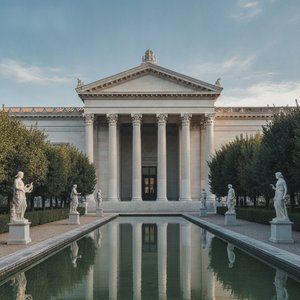
Neoclassicism Unveiled: Discovering the Timeless Elegance and Rational Order of Classical Art
Unveil the timeless elegance of Neoclassicism. Journey through an era defined by reason, order, and the revival of Greco-Roman ideals. Our expert exploration offers a sophisticated look at the transition from Rococo excess to classical precision for the true art enthusiast.

The Timeless Elegance of Academic Classicism: A Journey Through Order, Precision, and the Pursuit of Perfection
Explore the profound beauty of Academic Classicism. Discover how masters used order, precision, and classical ideals to achieve timeless perfection in art history, from Neoclassical portraits to the pursuit of ideal beauty.

The Eternal Beauty of Marble: A Guide to Sculpting Light, Stone, and the Soul of Art History
Explore the sublime artistry of marble sculpture. From Greek antiquity to the masters of light, discover how stone captures the eternal essence of human beauty and emotion through expert craftsmanship and historical mastery.
Досліджуйте твори мистецтва, впорядковані за темами, стилями та характеристиками.
